WHAT IS CARDANO?

Cardano is a groundbreaking proof-of-stake blockchain network, being developed into a decentralized application (DApp) development platform with a multi-asset ledger and verifiable smart contracts. Built with the rigor of high-assurance formal development methods, Cardano aims to achieve the scalability, interoperability, and sustainability needed for real-world applications. Cardano is designed to be the platform of choice for the large-scale, mission-critical DApps that will underpin the economy of the future.

Based on peer-reviewed academic research, Cardano has an ethos of openness and transparency. All of the research and technical specifications that underpin Cardano are publicly published, and all Cardano development activity is made available to the public. Cardano is designed by a global team of experts who are leaders in disciplines ranging from distributed systems to programming languages and game theory and is jointly developed by IOHK and partners. IOHK develops the technology, the Cardano Foundation is responsible for supervising development and promoting Cardano, while Emurgo drives commercial adoption. While we are building Cardano, we are merely custodians. When the network is fully decentralized it will belong to the community, and it will be the community who decide its future through advanced governance features. Taken from https://roadmap.cardano.org/en
The event will signal full decentralization for blockchain networks, starting from deployment of distributed infrastructure during Shelleys era. According to IOHK, Cardano is one step closer to being fully decentralized, with participants in Cardano being able to interact with the Cardanos mainnet starting on July 7. As mentioned, Cardano is also working to be fully decentralized and remove itself from the control of IOHK.
In Voltaires Era, the Cardano team envisions the transformation of Cardano into a truly decentralized, self-sustainable system, placed into the hands of its community. The Voltaire era Cardano is designed to deliver additional pieces needed to make its network self-sustainable, including introducing voting and a treasury system. If the previous era focused on features and decentralization, Cardanos next era will be focused on improving the basic workings of Cardano, aiming to better support its growth and adoption.
The New Age Voltaire IT, seems like it is going to be about ways to continue decentralizing the network. The next era for Cardano is the moment where the community members can propose protocols for improving the network, vote them through, and take advantage of existing stake and delegation processes. With Voltaires final deliverable, the future of Cardano will rest in the hands of Cardano Blockchains, which will have all they need to develop and grow Cardano on a safe, decentralized foundation established by the IOG.
Project Catalyst is one of the building blocks for Cardanos Voltaire Era, expected to introduce decentralized governance into the ecosystem. According to the projects development roadmap, Project Catalyst is the precursor of this coming evolution. A tweet from Cardano founder Charles Hoskinson indicates the new era is aimed at the builders and users of Cardano.
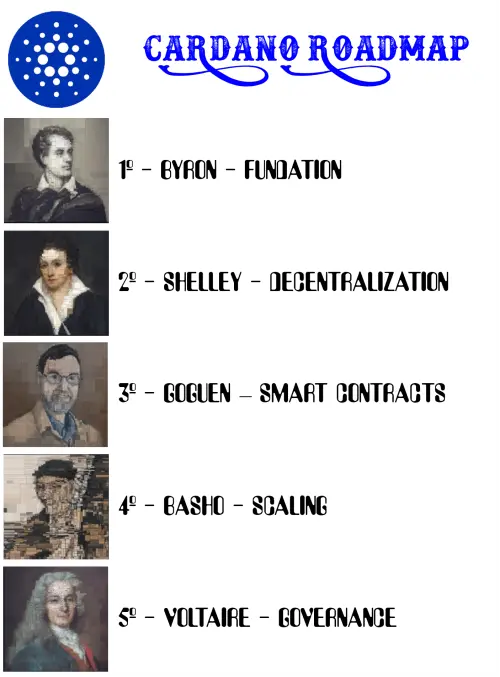
In that context, an altcoin investor could see Cardano (ADA) needing to be much more decentralized, evolving a process started during the Byron Era. What makes the governance process significant, apart from it growing and evolving along with Cardano (ADA), is that it is available to every coin issued in the Cardano network. Stablecoins and other types of digital assets will not need to invent their own governance processes, then spend time and resources getting it deployed to Cardano -- they can take advantage of Voltaire, and set their own voting thresholds and other governance parameters.






