"The answer to the first question—what does the marketplace think an option is worth?—is the basis for the simplest of all market-making techniques"
Any investor can buy cryptocurrencies via cryptocurrency exchanges such as Coinbase, Cash App, etc. Investors can earn with cryptocurrency, mining bitcoins, or just selling their bitcoins for a profit.
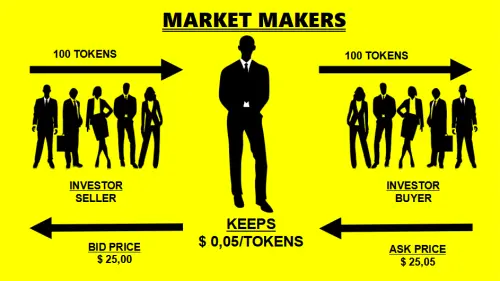
A market maker holds large inventories of stocks or digital currencies and sells them to other brokerages, ensuring investors have access on demand and markets stay liquid (i.e., full of buyers and sellers, as well as low trading fees). Market making is the activity of an exchanger who provides liquidity to both buyers and sellers simultaneously on financial markets. Market maker services are typically provided by larger financial institutions because of the amount of volume required, however, individual traders may also participate in this activity on occasion.
Market makers, are instrumental in increasing cryptocurrencys availability and liquidity for traders, investors, and market participants worldwide. Due to decentralization in cryptocurrency markets, the prices of assets can vary substantially between different exchanges, particularly in smaller-scale exchanges that do not utilize the services of a market maker. Without market makers, it is highly probable that the prices of cryptocurrency will vary significantly from the prices in the markets.
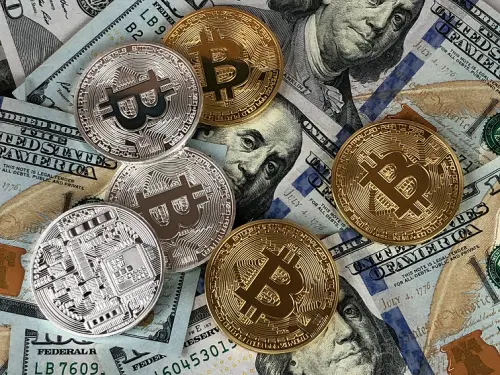
Because the market price for cryptocurrency is based on supply and demand, the rate at which one cryptocurrency may be traded for another currency may vary greatly, as many cryptocurrencies are designed with high degrees of scarcity in mind. Some studies, however, have identified that the cost to produce Bitcoin, which requires increasingly high amounts of energy, is directly related to its market price.
"Market-making algorithms monitor the way orders are hitting the bids and offers, and they identify large market orders taking a lot of liquidity as potentially informed traders"
Bringing in more market makers into an exchange would greatly mitigate the risk of dwindling liquidity. Markets with lower liquidity would have wider bid-ask spreads on their order books, which could raise the volatility of assets. Liquid markets are more appealing to investors and traders, so the token projects and exchanges that are able to show higher liquidity are bound to succeed over others.
The amount of spread depends on several conditions, including an agreement between a market maker and the exchange, the volatility, and global liquidity of specific trading pairs.
To make sure that no conflicts of interest occur, cryptocurrency traders who are trading on cryptocurrency exchanges must do due diligence and check whether exchanges and market makers are two clearly separated entities. Approaching an exchange without already having a market maker partner shows the exchange you have thought about liquidity and you realize how important it is. The benefits of market making in the cryptocurrency space are it increases liquidity, decreases volatility, helps in honest price discovery, drastically reduces slippage, alleviates large swings in prices, and helps to cater to larger institutional investors.
Investors speculation about future possibilities for this emerging technology has driven much of the present market cap, and it is likely that will continue to do so until some measure of price stability and market adoption is achieved. Whatever the reasons for lack of liquidity, if your company is operational and the token is still listed on an exchange, there could still be the chance that the markets creation could turbocharge your token and reinvigorate it.
"Besides, the option market is based on a market-making principle, which allows the dealer to continuously change bid and ask volumes depending on many factors: the market situation, his own holdings, and even the current stream of trading orders he is entrusted with"






