For years, cryptocurrency advocates claimed cryptocurrencies such as bitcoin were a perfect hedge against inflation. More investors, both institutional and retail, are looking to Bitcoin as a hedge against rising prices - inflation. Some investors are already using Bitcoin and other cryptos as hedges against inflation. As the monetary economy of inflation and the liquidity traps of 0% or even negative interest rates become more visible, many are looking at Bitcoin as a hedge or inflation protection. [Sources: 1, 4, 6, 10]
Bitcoin is essentially a deflationary asset, so citizens in countries with volatile fiat currencies are increasingly using it as a store of value, protecting themselves from hyperinflation and rising costs for everyday goods and services. As fiat currencies lose value, many invest in cryptocurrency as a way of saving money. After the recent cryptocurrency boom, many of the largest banks around the world are desperately looking at cryptocurrencies as the next best way to protect their money and hedge against inflation. [Sources: 2, 9, 11]

Historically, crypto experts and investors have touted bitcoin, due to its limited 21 million-unit supply, as a hedge against inflation. Bitcoin supporters long believed its scarcity would protect its value in times of rising inflation. [Sources: 7, 8]
Interestingly, the growth in bitcoin and cryptocurrency has probably reduced demand for gold as an inflation hedge, driving down its price. The value of the cryptocurrency market has generally fallen along with rising inflation, with bitcoin losing half its Bitcoin value since January. Inflation reached a 40-year high during 2021 and 2022, whereas during that same time, the cryptocurrency market lost about two-thirds of its value. [Sources: 3, 4, 7]
Bitcoin has plummeted in value this year, undermining an argument frequently made by cryptocurrency enthusiasts that it could be an effective hedge against inflation in times of economic upheaval. When the value of fiat currencies declines, this leads to increased inflation, and cryptocurrency could be the solution to combating this type of crisis. [Sources: 5, 7]
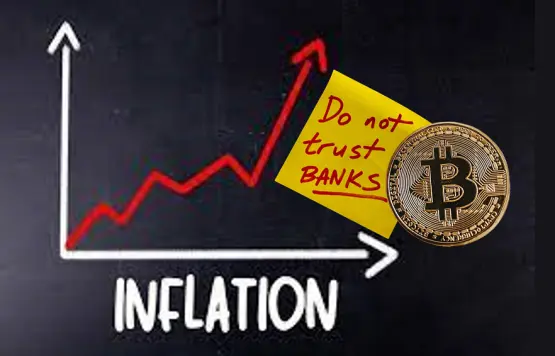
If inflation is degrading the value of a dollar over time, then individuals are usually looking for assets that are capable of outlasting inflations increase in value on an ongoing basis. These factors may cushion the prices of cryptocurrencies to a certain extent, because investors look for assets that can beat higher inflation, though this comes with some risks. Top-tier cryptos such as bitcoin, Ethereum, and BNB could prove to be more vulnerable to outside market factors than some crypto enthusiasts like to believe. [Sources: 0, 3, 6]
We mentioned how increased market uncertainty and institutional adoption could be a reason for Bitcoin and crypto markets tanking lately, despite recording highs. While Bitcoin has been moving above and below the $40,000 price mark for much of 2022, the recent drop in prices is a reminder for investors that decentralized digital tokens can still respond powerfully to factors like inflation, taxes, and the general performance of markets. After the steep 45 percent decline of Bitcoin in May, many investors have returned to gold, viewing cryptos as an immature sector that has neither proven to be a stable asset class, nor as a safe store of value. [Sources: 0, 4, 9]

As your cash declines, your cryptocurrencys value rises. Withdrawals may reduce cryptocurrency values in times of inflation, while during a downturn, they will double down on these losses. [Sources: 3]
TOOLS: CoinMarketCap | TradingView
OTHER ARTICLES: Traders and holders, some things we should know | Cryptocurrencies: brief summary for new investors | Cryptocurrencies: The Dark Side | Is Bitcoin A Ponzi Scheme? | Bitcoin As A Store Of Value | Inflation: Understanding The Terms | Decentralized Finance (Defi), blockchain-based solutions | Why Do Governments Hate Cryptocurrencies? | A Real Solution
SOCIAL MEDIA LINK: Telegram | Facebook | Twitter | Medium | Reddit | Pinterest | Instagram | Torum
SOURCES:
[0]: https://www.investopedia.com/cryptocurrencies-affected-by-inflation-taxes-trends-5235511
[1]: https://www.forbes.com/sites/rogerhuang/2020/05/18/bitcoin-vs-inflation/
[2]: https://www.youhodler.com/blog/cryptocurrency-inflation
[3]: https://finance.yahoo.com/news/does-inflation-affect-cryptocurrencies-120000743.html
[4]: https://supraoracles.com/academy/crypto-and-inflation-a-complex-relationship/
[5]: https://www.cudos.org/blog/how-cryptocurrencies-can-be-a-hedge-against-inflation/
[6]: https://www.ally.com/do-it-right/investing/how-does-inflation-impact-cryptocurrency/
[7]: https://www.cnbc.com/2022/07/08/why-bitcoin-doesnt-seem-to-be-a-hedge-against-inflation.html
[8]: https://time.com/nextadvisor/investing/cryptocurrency/crypto-inflation-hedge-investor-advice/
[9]: https://www.binance.com/en/blog/fiat/cryptocurrency-and-inflation-everything-you-need-to-know-421499824684902682
[10]: https://www.businessinsider.in/investment/news/bitcoin-is-the-newest-tool-in-the-the-battle-against-inflation-heres-why/articleshow/86988710.cms
[11]: https://www.benzinga.com/money/best-cryptos-to-hedge-against-inflation






