Cryptocurrency exchanges are platforms which enable users to exchange cryptocurrencies, which are generally differentiated into either centralised exchanges (CEX) or decentralized exchanges (DEX). A centralized exchange, or CEX, is a cryptocurrency trading platform that acts as a middleman between users and the blockchain in order to facilitate smoother transactions. A DEX, or decentralized crypto exchange, is like a centralized exchange, except that there is no third-party you can depend on. A decentralized crypto exchange is a platform that allows crypto traders to buy and sell digital assets such as cryptocurrency, without a middleman, meaning traders do not need to put their funds in a third-party account while trading. [Sources: 4, 6, 8, 9]
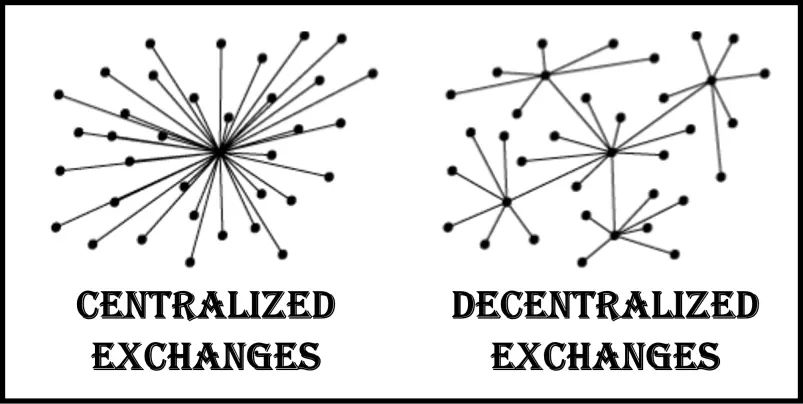
Decentralized exchanges provide greater control than centralized ones, as they utilize peer-to-peer systems, which gives users complete control over their accounts. That is, unlike centralized exchanges, decentralized exchanges enable trading to occur between two users with no middlemen. In centralized exchanges, third-party servers are responsible for managing funds deposits, while decentralized exchanges have no central servers, which means the user is free to contact individuals that he or she wants to transact with. A decentralized exchange, on the other hand, has blockchain protocols like smart contracts, allowing users to transact without any permissions or authentication issues. [Sources: 5, 9, 10]
Because of their marketing budgets, ease-of-use, and capital backing them, centralized exchanges are considerably more popular than decentralized ones, and they handle a majority of cryptocurrency trade volumes. Decentralized exchanges are less convenient for users compared to the centralized options, and might not have the funds to support large-scale trades because of fewer users. While a centralized exchange is more user-friendly and in theory safer, a decentralized exchange is a newer technology which is likely to be a standard going forward. Often, users will recognize it is easier to buy cryptocurrency using fiat currency using a centralized exchange, bring their purchased coins, usually Bitcoins or Ether, over to a decentralized exchange, which has a larger number of coins available to be traded. [Sources: 0, 1, 7, 8]
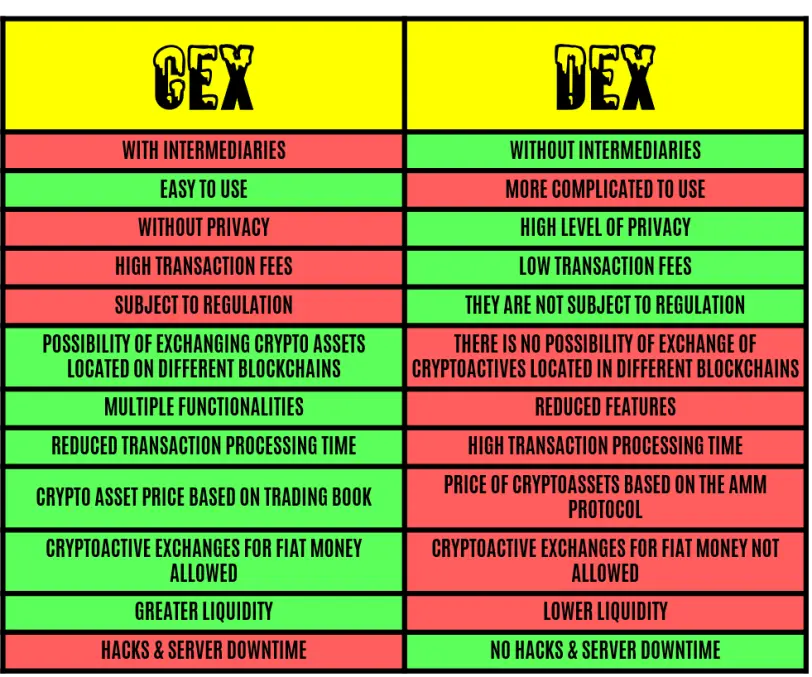
Centralized crypto exchanges have greater liquidity as multiple users place specific orders according to market trends. Centralized crypto exchanges offer users a broad variety of trade options, including cryptocurrency credit and debit, airdrops, futures trading, options, spot trading, and leverage. Centralized crypto exchanges are more popular than decentralized ones, as they were first in the market, but DEX is also becoming increasingly popular among crypto traders, and has already had a significant effect on the cryptocurrency exchange market. Several well-known crypto exchanges are also developing as decentralized versions of their blockchain trading platforms in order to distinguish different transactions. [Sources: 3, 4, 9, 11]
It is also important to understand the decentralized exchanges you will have to use if you wish to purchase specific types of cryptos and get involved with various parts of the cryptocurrency ecosystem. Decentralized currencies offer users much greater privacy protections compared to centralized counterparts. Additionally, decentralized exchanges may take as long as a minute to execute an order, a significant time frame in comparison with centralized counterparts. [Sources: 2, 4, 6]
TOOLS:
CoinMarketCap | TradingView
OTHER ARTICLES:
Traders and holders, some things we should know | Cryptocurrencies: brief summary for new investors | Cryptocurrencies: The Dark Side | Is Bitcoin A Ponzi Scheme? | Bitcoin As A Store Of Value | Inflation: Understanding The Terms | Decentralized Finance (Defi), blockchain-based solutions | Why Do Governments Hate Cryptocurrencies? | A Real Solution | Cryptocurrencies Against Economic Inflation
SOCIAL MEDIA LINK:
Telegram | Facebook | Twitter | Medium | Reddit | Pinterest | Instagram | Torum






