
At the turning of the fifth to the fourth centuries BC, over a thousand miles from Greece, ten-thousand Greek mercenaries employed by a Persian general found themselves stranded deep inside Persia, in what is now modern-day Iraq. The ensuing escape story - the “March of the Ten-Thousand” - is regarded as one of the greatest stories of the ancient world.
In this post, we will look at the battle that left these Greeks and their leaders stranded in the first place, as well as the events that led up to it: the great battle of Cunaxa.
Check out my previous post on the Fall of Athens and the Thirty Tyrants
BACKGROUND
This story begins in the Spring of 401 BC; Greece, while ruined by conflict, is finally free of the Peloponnesian War and its subsequent Spartan oligarchic rule in Athens. Sparta ruled over Greece, and the Athenian Empire was at and end.
Meanwhile, Persia was doing comparatively well. Sparta’s alliance with the empire during the war resulted in them trading vast sums of gold in exchange for warships. This new Spartan armada was used to finish off Athens at Aegosoptami in 405 BC, and the later collapse of Athens’s empire meant that Persia could reclaim lost land in Asia Minor, along the eastern Aegean coastline.
Persia’s empire was comprised of Satrapies, ruled by Satraps, semi-akin to modern US states being governed by senators. One of these Satraps was Cyrus the Younger, son of the former Persian Shah (King), Darius II, who ruled from 423 to 404 BC, through most of the Peloponnesian War. However, Darius and his wife Parysatis's older son, Artaxerxes, ascended to the throne in 404 BC, becoming Artaxerxes II. Cyrus was intent on seizing the throne from his older brother, but he wasn’t without allies; Sparta was still on good terms with the empire since their dealings during the war. Amongst those Greeks who would join Cyrus on his expedition into Persia was a young Athenian general, named Xenophon.
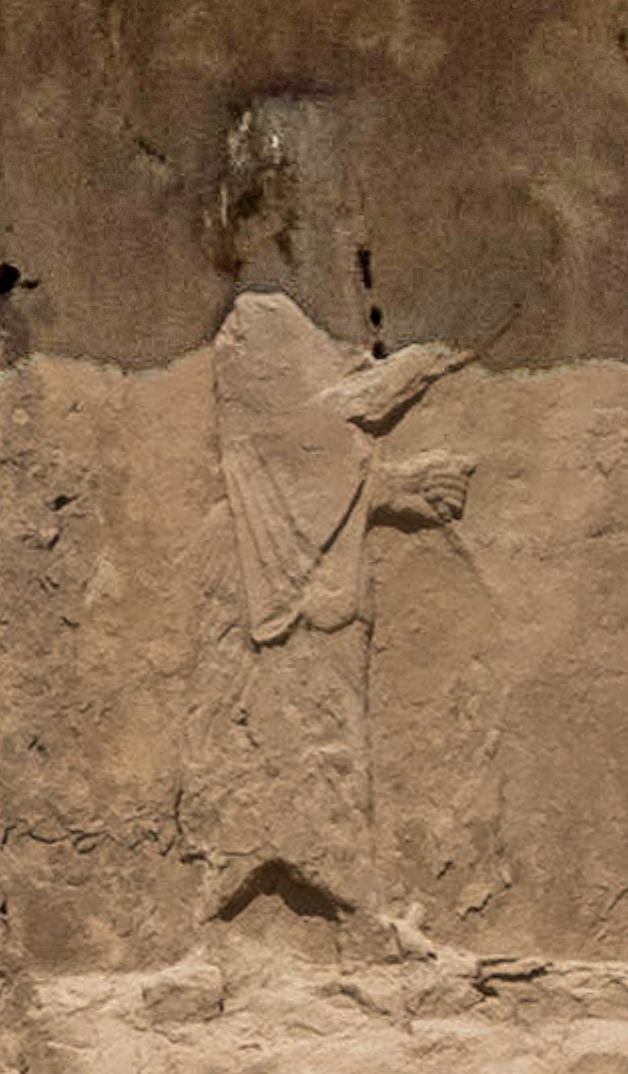
[ABOVE: Tomb relief of Shah Darius II in Naqsh-e Rostam, Iran]
XENOPHON
Not much is known of Xenophon’s early life; he was born into the knightly class of Athens in about 430 BC, just as the Peloponnesian War had begun. He and his family’s devotion to Athens’s democracy was always in question, and Xenophon’s political leanings must have been influenced by Athens’s failures and tumbles in events such as the disastrous Sicilian Expedition and the Coup of 411 BC, showing how men like Xenophon and his family were dissatisfied with Athens’s form of rule at the time.

[ABOVE: Marble bust of Xenophon, 120 AD, now held in the Bibliotheca Alexandrina Antiquities Museum, Alexandria, Egypt]
Dissuaded from coming to terms with Sparta following Athens’s naval victory at the Battle of Cyzicus, 410 BC, the Athenians continued their political instability, leading to the exile and death of their most capable general and statesman, the charismatic Alcibiades, who Xenophon showed great sympathies towards in his “Histories”. Amongst the targeted were several generals who were victorious at Arginusae in 406 BC, despite opposition from men such as Xenophon and even Socrates. It’s likely, given Xenophon’s detailed accounts of battles around and after 410 BC, including detailed accounts of cavalry manoeuvres during the war, that he may have served as a cavalryman himself, and given his knightly background, he may even have been a supporter of the Thirty Tyrants. Whatever his views, Xenophon had no intention of staying in Athens following the city’s democratic restoration in 403 BC.
CYRUS AND ARTAXERXES
When King Darius II was growing older and more feeble, he called for his two sons to be at hand. The elder son, Artaxerxes, happened to be there at the time, but Cyrus had to be called for. Cyrus was serving as the Satrap of Lydia and Ionia at the time in western Asia Minor (modern-day western Türkiye). He travelled to the Persian capital of, most likely, Babylon (the empire had several “capital cities”) alongside his Satrap predecessor, Tissaphernes, whom he regarded as his friend, alongside three-hundred Greek hoplites commanded by Xenias of Parrhasia.

[ABOVE: The Persian Satrap of Lydia, western Asia Minor (modern-day western Türkiye]
Feelings were not mutual, however, as Tissaphernes outwardly claimed that Cyrus was attempting to overthrow his own brother. Artaxerxes believed this to be true, and had his young brother Cyrus arrested and ordered to be killed. He would, however, be saved by his mother Parysatis, Darius II’s wife, who ordered him to be freed. Cyrus vowed revenge, wishing never to be under the thumb of his older brother ever again.

[ABOVE: "Queen Parysatis Flaying a Eunuch", etching by James Ensor, 1900]
[BELOW: Portrait of Tissaphernes from a coin]

THE CHARACTER OF CYRUS
Cyrus was described as kinglike and “deserving of an empire” by Xenophon, even from an early age. Regarded as the “best” of the siblings and friends he grew up around, Cyrus heeded the words of his elders, and became fond of horses, and a keen archer, javelineer, and hunter; one story recounts how the young Cyrus was charged by a female bear and grappled off his horse, yet managed to kill the animal.
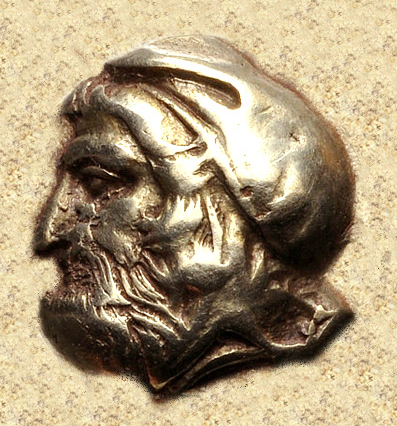
[ABOVE: Coin portrait of an anonymous Ionian Satrap, found in Phokaia, c.478-387 BC]
When he was sent to the Asian coast to be Satrap in Asia Minor, he made it clear that he would keep to his word as governor. His cities trusted him, so much so that his war with Tissaphernes saw all but one city in the entire Satrapy go over to Cyrus. He was just in dealing with crime, and strict in his punishments, resulting in cases of hands being cut off, and blindings. The result was that all in Cyrus’s provinces were free to walk the land without much fear of harassment, carrying openly whatever he pleased.

[ABOVE: Coin of Tissaphernes, with "ΤΙΣΣΑ" ("TISSA") visible below the portrait's neck (OBVERSE) and "ΑΣΤΥΡΑ" ("ASTYRA") visible on the coin's rear (CONVERSE). Coin from Astyra, Caria, south-western Asia Minor (modern-day south-western Türkiye)
He was also keen to put those in the army who he noticed were particularly brave up for governing positions of the cities they were so keen to fight for. Officers were keen to fight under Cyrus, including mercenaries; they knew their services would be better paid for under him than under any other commander out there. Those who lived in accordance with his standards became richer than those who wished profit from transgressing them. Administrators under his watch who proved themselves time and time again were rewarded justly, and given further responsibilities where appropriate.
A man who put others first, even choosing not to wear clothing or armour finer than that of his friends, Cyrus would even send his friends great wines that he loved, with personal messages attached to them that read,
Cyrus has not for a long time come across a better wine than this; so he has sent some to you and wants you to finish it up today with those whom you love best.”
or simply,
Cyrus enjoyed this; so he wants you to taste it too.
- Xenophon, “Anabasis”, Book 1 chapter 9
Xenophon thus came to the conclusion that no man was more generally beloved than Cyrus.
ARTAXERXES
Artaxerxes “the Mindful” was the grandson of Artaxerxes I, who in turn was the son of Xerxes I, the Shah who invaded Greece and led the Persians against Leonidas at Thermopylae. His original name was either Arsicas or Oarses. Where the young Cyrus showed signs of a strong-headed vehement character, Artaxerxes was gentler and more yielding. He grew up to marry a virtuous, beautiful wife against his parent’s wishes, since his father Darius had previously had her brother killed. Begging and weeping at his mother’s feet, Artaxerxes convinced his parents not to have his wife killed.

[ABOVE: Rock relief of Artaxerxes II in Persepolis, Iran]
CYRUS RECRUITS HIS ARMY
Plotting now to actually overthrow his older brother, Cyrus had backing from Parysatis, who favoured her younger son. He also won over the support of many in the Persian court, as well as the natives in his Lydian and Ionian provinces, the Greeks, who he recruited into his own private army. Recruiting other Greeks from across Spartan and Peloponnesian League territories under the guise that Tissaphernes - Lydia and Ionia’s former Satrap - was plotting against them, Cyrus was able to muster a large army.

[ABOVE: A Greek mercenary (left) depicted under the employ of a Persian cavalryman (centre) attacking a Greek psiloi (right) from the marble Altıkulaç Sarcophagus, found in Troas, north-western Asia Minor (modern Türkiye), early 4th century BC]
MILETUS
All Greek cities sided with Cyrus, except for the Ionian city of Miletus. There, Tissaphernes had gotten wind of conspiracies to follow Cyrus, and had several ring leaders executed or exiled. Many of these exiles went straight to Cyrus, bolstering his numbers and providing intel on Miletus. With his large army, Cyrus was able to blockade Miletus by land and sea in the hopes of restoring the city to his side. He used this conflict as a pretext to gain even more soldiers, cleverly asking his brother Artaxerxes for more soldiers to fight Tissaphernes. With their mother playing her part too to support him, Cyrus was able to sway Artaxerxes into believing that his younger brother was asking for money just to defeat Tissaphernes, completely unaware that he was funding a large, armed plot against himself.
CLEARCHUS
Another force was being recruited for Cyrus in the Chersonese when he met an exiled Spartan in the region: Clearchus. Impressed with the Spartan’s abilities, Cyrus gave Clearchus ten-thousand darics. With this wealth, Clearchus was able to raise a force, first making war on the Thracian tribes to the north of the Chersonese. This war and its loot attracted further military and financial support for Cyrus, again with no suspicion from Artaxerxes.

[ABOVE: Clearchus of Sparta, depicted at the coming Battle of Cunaxa, by Adrien Guignet, 19th century]
MORE GREEK SUPPORT
Further Greek support came from Aristippus in Thessaly, who asked for military and financial support against a political rival. Cyrus gave him twice of what he asked for, asking the Thessalian not to come to terms with his rivals unless consoling him first. With this, even more Greek mercenaries were secretly being recruited for Cyrus.
On top of this, in Boeotia, another friend of Cyrus, Proxenus, was asked to send more aid, to make war against Proxenus’s rivals in Pisidia, in south-western Asia Minor. More friends, such as Sophaenetus and Socrates - no, not that Socrates - were asked to bring further aid from Stymphalia and Achaea respectively to support his efforts in Miletus. With all of this, thousands of soldiers from across the Greek world were being mobilised east, and the Persian Shah was none the wiser.
FROM SARDIS TO TARSOS
The time had come for Cyrus’ vast force to march eastward, to the capital city of Babylon. Situated in modern-day Iraq, Babylon was the ancient capital of the Babylonian empire, which was finally brought to an end under Cyrus the Great's conquests, a century and a half before. Now, it served as one of five of Persia's ceremonial or administrative capital cities, and is where Darius II was currently laying in his sick bed. Now, Cyrus ordered for Clearchus, the Greek general he trusted the most, to rally all these Greek forces together under his command, alongside Xenias and his troops and those soldiers besieging Miletus while Aristippus the Thessalian was ordered to come to terms with his enemies at home and send the troops he had to Cyrus too.
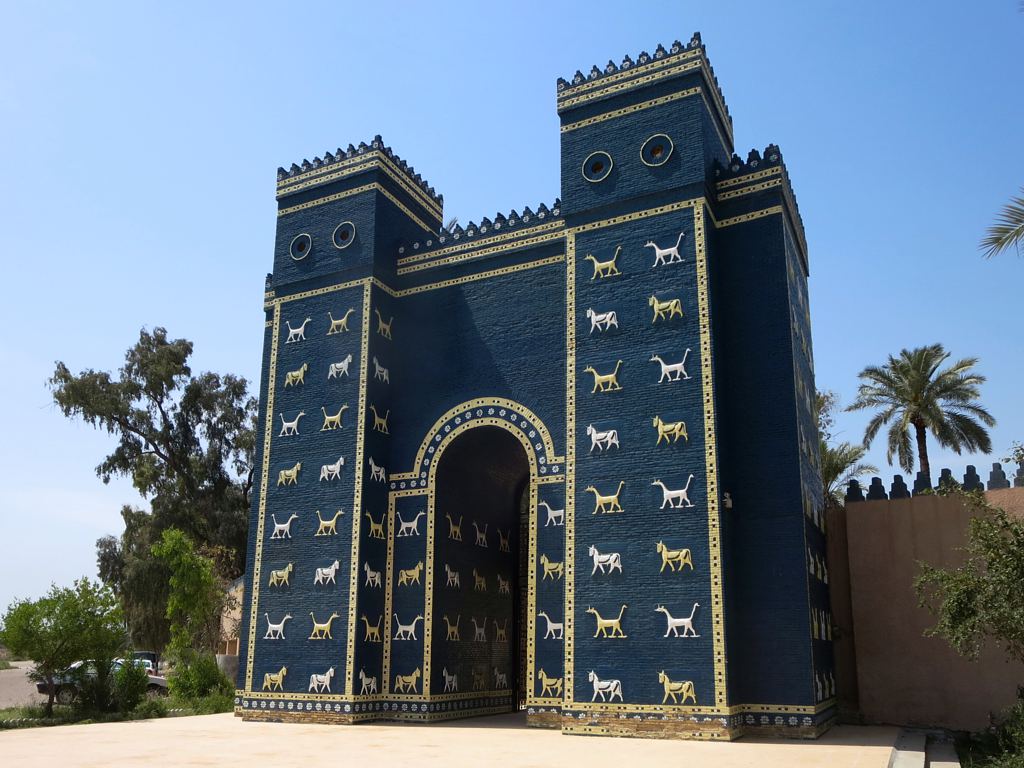
[ABOVE: The Ishtar Gate of Babylon in modern Hillah, Iraq. Photo taken by David Stanley, 2016]
Soon, the forces arrived at Sardis: Xenias with four-thousand hoplites, Proxenus with fifteen-hundred hoplites and five-hundred light cavalry, Sophaenetus with one thousand hoplites, and from Miletus Socrates with five-hundred hoplites, alongside another general named Pasion of Megara with three-hundred hoplites and three-hundred peltasts (javelin-armed skirmishers). Eventually, Tissaphernes got wind of this large army, and immediately set about with five-hundred horsemen to tell Darius II. The Shah immediately set about with plans to meet Cyrus’ force.
CYRUS’S TOTAL FORCE
Cyrus and his forces began their march east. From Sardis, the men marched to the city of Colossae. Staying here for seven days, reinforcements arrived: Menon of Thessaly arrived with a thousand hoplites and five-hundred peltasts. Next, the army marched east to the city of Celaenae, where Cyrus once had a palace built for himself with a large open park that he used for hunting wild animals for exercise. Staying here for thirty days, Clearchus arrived with his reinforcements: one thousand hoplites, eight-hundred peltasts and two-hundred archers from Crete Alongside the Spartan, Sosis of Syracuse arrived with three-hundred hoplites, and another general also named Sophaenetus arrived with a thousand hoplites.

[ABOVE: Attic black-figure amphora depicting a Greek hippeis (horseman), c.550-540 BC. Now held in the Louvre, Paris]
Here, Cyrus review his army; in total, there were 10,600 hoplites, 1,600 peltasts, 500 light cavalry and 200 Cretan archers: 12,900 Greek soldiers in total. As for native troops, Diodorus Siculus suggests Cyrus commanded 70,000 Persians on top of the Ten-Thousand, while Xenophon claims he had one-hundred thousand on his side, but this should be treated as an upper limit and the true number was likely much lower. Diodorus does that that three-thousand of the Persians were cavalry, which doesn’t seem implausible.
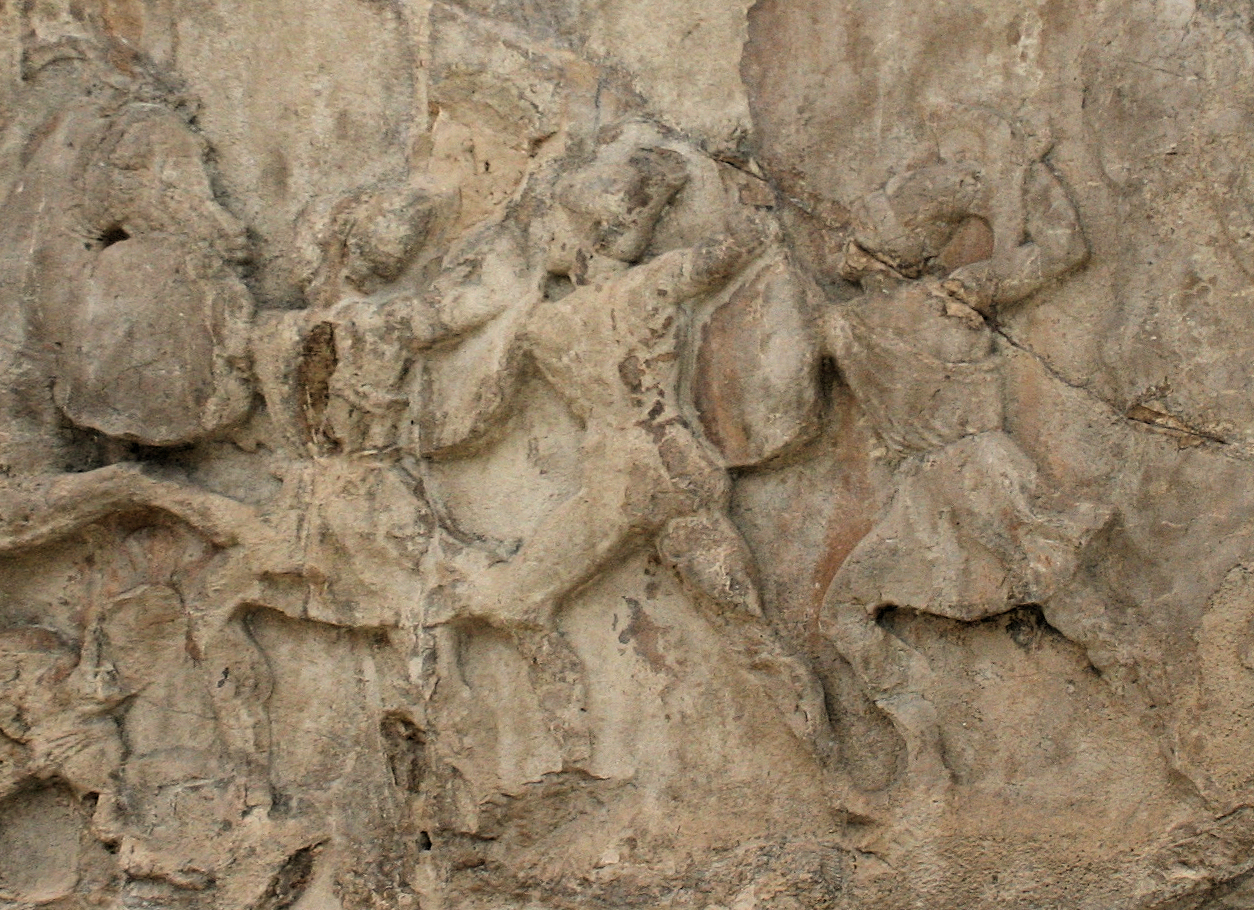

[ABOVE: East side of the Tomb of Payava, depicting Greek Peltasts, c.360 BC]
EPYAXA
Reaching the city of Cayster Plain, three months had past, and the army was due their pay. Cyrus uncharacteristically kept putting them off with promises of pay. When the wife of the king of Cilicia, Epyaxa, and it was said that she personally gave Cyrus a great cash injection, with rumours afloat saying that Cyrus and Epyaxa slept together. With this cash, Cyrus was able to pay the soldiers four months worth of pay, before marching through hostile territory and reaching Dana.
CILICIA
From here, the army now had to cross into Cilicia, across the Taurus Mountains. Cyrus wished to cross via a steep, nearly impassable carriage track, and reports came to him stating that Syennesis, king of Cilicia (Epyaxa’s husband), was guarding the pass, stationed on the high grounds. Cyrus thus ordered Menon’s force of one-thousand hoplites and five-hundred skirmishers to find a way around the mountain pass to surround Syennesis, forcing the Satrap to withdraw. Further naval support reinforced Cyrus’ position, and the Greek army was able to reach the peaks of the mountain range unopposed.

[ABOVE: The Kingdom of Cilicia (6th century BC) just before Persian occupation]
TARSOS
Cyrus descended upon Syennesis’s abandoned camp, in the extremely luscious lands below. Soon, the army reached the largest city in Cilicia: Tarsos, home of Syennesis’s palace. All except for the city’s shopkeepers and those who lived by the coast had abandoned the city to follow Syennesis. Epyaxa had actually reached the large city about five days before Cyrus. Meanwhile, two companies of Menon’s force, around a hundred hoplites, were lost in the mountains, either cut down by some of Syennesis’s men or simply lost and unable to regroup with Cyrus. Either way, then the rest of Menon’s soldiers arrived at Tarsos, they plundered the city and its royal palace.
Cyrus tried reaching out to Syennesis, hoping he would come meet him in Tarsos. Syennesis had never been bested before, and only agreed to come to Tarsos should his wife Epyaxa guarantee his safety. Eventually, Syennesis met Cyrus, and the two exchanged gifts, with Syennesis giving Cyrus large sums of money. Cyrus agreed not to plunder Cilicia anymore, nor take any more slaves.
CLEARCHUS’S SOLDIERS MUTINY
Cyrus’s army stayed in Tarsos for twenty days, as they refused to march further, since they claimed they never signed up for marching against the Persian Shah. Clearchus attempted to force his army into line, but they retaliated by pelting stones at him - nearly killing him - and at his personal baggage animals.
Calling an emergency meeting with them, Clearchus gave a speech while weeping, stating how he felt in debt to Cyrus for giving him so much after his exile, and how he chose not to spend his new fortune on himself but on his men. He reminded them of the victories they had recently won in Thrace, before saying he would follow his own Greek men before the natives. His army applauded him, with even over two-thousand of Xenias’s and Pasion’s men making their new camp besides Clearchus’s.
This all induced Cyrus with great anxiety, and he called for his Spartan ally, who refused to meet with him despite his reassurances to Cyrus. Clearchus again called for his soldiers for another speech, calling for his men to say what they think they should do. Some suggested asking Cyrus for help to get back to Greece, while others suggested seizing the high grounds before Cyrus did for a military advantage. One soldier stood up, stating it was obviously absurd to ask Cyrus, who brought them here in the first place, to help them return to Greece, and that instead they should ask what exactly Cyrus intends to use his Greek mercenaries for and base their decision upon that.
So it was decided; a delegation was organised and sent to Cyrus. His response was that an enemy of his, Abrocomas, the Satrap of Syria, was waiting for him with an army on the River Euphrates, a twelve day march form Tarsos, and Cyrus wanted revenge against him. Hearing this, the Greeks decided to march with Cyrus, asking however for more pay, which Cyrus agreed to: fifty percent more. They were not told, however, that the Persian Shah was still in Cyrus’s crosshairs.
TO THE EUPHRATES
With the army reunited, they left Tarsos, and a five day march soon took them to the coastal city of Issus. Here, the Spartan navarch Pythagoras reinforced Cyrus’s force with thirty-five triremes. Also aboard these ships was the Spartan Chirisophus, in command of seven-hundred hoplites. (These numbers come from the primary source, Xenophon, but historian Diodorus Siculus, writing centuries later, puts the numbers here at twenty-five triremes and eight-hundred infantry. We will use Xenophon’s numbers here.) The Greek vessels were also joined by fifty Persian ships. Here too, four-hundred hoplites once employed by Abrocomas, Cyrus’s Syrian enemy, now joined Cyrus’s employ.
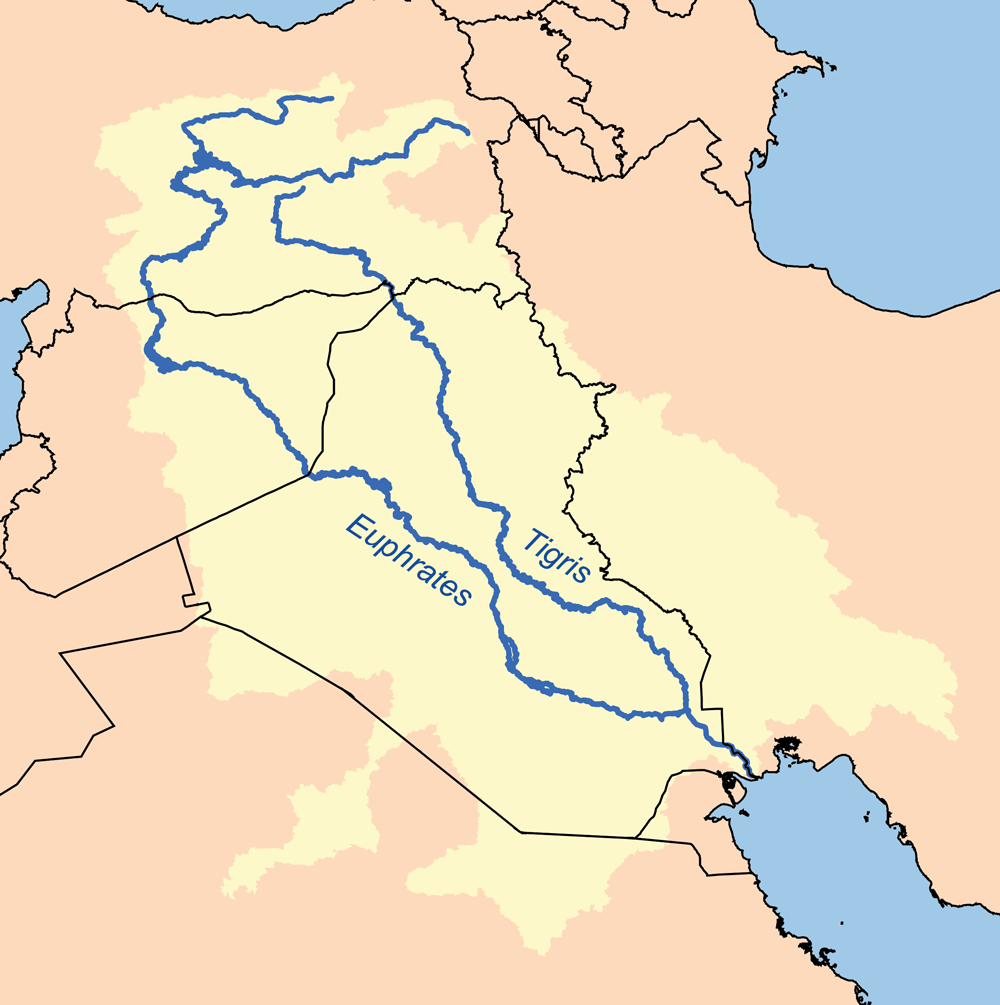
[ABOVE: The Rivers Euphrates and Tigris, modern-day Iraq/Syria/Türkiye]
THE SYRIAN GATES
Another day’s march from Issus took them to the Gates of Cilicia and Syria. Here, two options arose; there were two fortresses, divided by only six-hundred yards and split by the River Carsus: the inner fortress that covered Cilicia was held by Syennesis, and the other fortress covering Syria was held by the Persian Shah’s own personal garrison. Forcing their way through was simply not an option due to the pass’s narrowness, the walls extending down to the sea, and the sheer cliffs of the Taurus mountains staring them down.

[ABOVE: The Nur Mountains in Hatay, south-central Türkiye, the mountain range that encompasses the "Syrian Gates" that Cyrus's army will have passed through]
Cyrus conjured his plan: he called for his fleet, planning to land hoplites on each side of the fortress’s gates, planning to force through the Syrian Gates only if Abrocomas was manning the fortress. The Syrian Satrap, however, hearing of Cyrus’s recent advances, had withdrawn. He marched east to join the Persian Shah and his own army; together, they may have numbered a titanic three-hundred-thousand soldiers.
XENIAS AND PASION
A day’s march took them to the coastal city of Myriandrus, a wealthy trade centre. During the seven day stay, Xenias and Pasion boarded a trireme and left with their most valuable personal possessions. Rumours about them doing so because Cyrus allowed Clearchus to keep both of their troops under his own command began to spread, and further rumours began spreading that Cyrus was pursuing them. However, Cyrus reassured the army that he didn’t intend to pursue them, but to leave them. The soldiers they supplied were still with Cyrus and Clearchus anyway.
THAPSACUS ON THE EUPHRATES
Twelve days later, the army reached the great River Euphrates, and the city of Thapsacus. Staying for five days, Cyrus sent for the Greek generals, telling them he intended to march on Babylon against the Persian Shah. When the generals told their soldiers, they refused to march further, unless paid extra. Cyrus agreed once again to significantly up their pay, which won over the army aside from Menon, who remained undecided. He called for his own men - around 1,400 - to cross the Euphrates first before the rest of the army, for if they were across first then they would get credit for the Greek's decision ultimately, but if the Greeks decided otherwise then Cyrus would admire them for obeying him. They crossed the Euphrates, and soon received the following message from Cyrus:
Soldiers, I am pleased with you now. But I shall see to it that you too are pleased with me, or my name is not Cyrus.
- Xenophon, "Anabasis", Book 1 chapter 3.4

[ABOVE: Map depicting the plausible locations of Thapsacus (A, B, C) along the River Euphrates's banks]
With Menon rewarded, the whole army crossed the Euphrates on foot, since Abrocomas had passed through here earlier and burnt the local boats hoping it would stop Cyrus. The people of Thapsacus said that no one had ever crossed the river on foot. Xenophon writes of this event as if the gods were making way for Cyrus as the rightful Shah of Persia.
MENON VS CLEARCHUS
Marching now consisted of grudging through the arid Arabian deserts. Trees were rare, yet animals like asses, ostriches, bustards and gazelles seemed to thrive in the region. Several weeks of marching with the Euphrates on the army’s right saw many baggage animals succumb to the desert’s heat. Supplies began to run low, as the army started relying on the Lydian market among Cyrus’s army. When the army marched closer to the river for water, wagons often became stuck in the mud, lengthening the army’s days and wearing them down further. And when the army hadn’t marched so far in a day, Cyrus became impatient and urged them on further.

[ABOVE: The Arabian Desert, photo taken in 2015 near modern Sharjah, U.A.E.]
It was becoming clear that Cyrus was pushing his men through the arid desert a touch too far. Amidst this turmoil arose another; While Cyrus and his own men lagged behind the Greeks, Clearchus had ordered for one of Menon’s men to be beaten for a misdemeanour, and when he told his fellow troops about it, Menon's men became embittered towards Clearchus, so much so that while Clearchus happened to be riding by Menon’s men one day on horseback, some of Menon’s soldiers threw stones at him - one even threw an axe. Clearchus ordered his men to prepare for a fight against Menon’s, terrifying them.
PROXENUS AND CYRUS INTERVENE
Here, Proxenus and his men noticed the brewing fight, and ordered his column to march between the two forces, causing Clearchus to angrily tell him to move out the way. Eventually, even Cyrus had to ride with a small bodyguard contingent between the two forces, urging them that it will only make them more vulnerable once their numbers are diminished after the engagement. Clearchus came round, and the army could continue. The whole situation to me shows just how brutal the desert can be not only on the body, but on the mind and spirit of even the most disciplined of men.
CYRUS AND THE TRAITOR
Marching on, the army eventually came across tracks; an estimated two-thousand horses had ravaged the area of its supplies and ran off, depriving Cyrus’s army of vital supplies. Among Cyrus’s army was Orontas, the Satrap of Mysia related to the Shah with a fantastic military reputation behind him. Cyrus had previously been at war against Orontas, but the two had since reconciled. Noting the tracks, Orontas asked Cyrus for a thousand horsemen, promising to track down and beat the cavalry that left the tracks. Cyrus agreed, ordering Orontas to take soldiers from each contingent of his army. Certain he would receive the cavalry he wanted, Orontas wrote to the Shah, saying he would come to him with all the cavalry he could get, asking to be received as a friend. Giving this letter to a man to give to the Shah, the man instead gave the letter to Cyrus.

[ABOVE: Bronze coin of Orontas I (or "Orontes"), Satrap of Mysia. Coin from c.357-352 BC]
Enraged, Cyrus ordered Orontas arrested. Calling a meeting with seven of the most distinguished Persians of his staff in his personal tent - Clearchus too - and ordered his Greek generals to stand on guard with three-thousand hoplites. Cyrus spoke to Orontas, reminding him that the two had ended their quarrel from before, and that the two had since given each other the right of friendship. Orontas admitted wrong-doing, but said he was essentially being forced to admit so. Cyrus asked Cleachus for his opinion, who Laconically replied that the man should be dealt with immediately so that he cannot remain a problem to keep looking over the shoulder for.artagersess
Orontes was taken away, grabbed by the girdle, usually a sign of coming execution. He was thought to a tent and not seen again. Various guesses were made as to how he died, but no one knows.
PREPARING FOR BATTLE
Cyrus’s army was free to march through the region of Babylon, towards the great ceremonial capital. At midnight, Cyrus inspected his army, expecting the Shah to show up with his army at dawn to give battle. He ordered Clearchus to take up the right wing, and Menon the left, while he took up command of his own troops.

[ABOVE: Modern recreation of a Greek hoplite panoply, in Zappeio, Athens]
Come morning, deserters from the king's army came to inform Cyrus of his army. Calling his generals together, Cyrus discussed possible battle plans, while telling his Greek comrades that their greater expertise in combat was what encouraged him the most and promising them greater rewards and prestige still. The generals encouraged Cyrus to personally join in on the battle, but to take position in the rear lines, certain that his brother would take up a position on the battlefield also.
CYRUS'S FORCE
Cyrus’s army numbered as follows: ten-thousand four-hundred Greek hoplites and two-thousand five-hundred peltasts were accompanied by twenty scythe-wheeled chariots. Xenophon recounts that one-hundred-thousand native Persian troops accompanied the army, although this number is likely closer to ten-thousand, totalling Cyrus’s forces at twelve-thousand nine-hundred men, plus the twenty chariots. On top of at least ten-thousand native troops, Cyrus likely commanded some twenty-five thousand men.

[ABOVE: The Achaemenid golden Oxus chariot model, c.5th-4th century BC, from Takht-i Kuwad region, Tajikistan. Now held in the British Museum]
ARTAXERXES'S FORCE
Here, Xenophon gives almost certainly wildly inflated numbers for Artaxerxes’s forces: he claims a total of 1.2 million Persians took to the field under the Shah, alongside two-hundred chariots, while Plutarch give the smaller but still implausible number of nine-hundred thousand, and Diodorus Siculus states four-hundred thousand. Inflated numbers aside, Xenophon details that there were six-thousand cavalry in total under the command of Artagerses, defending the king’s central position in the rear ranks. Four commanders commanded the main bulk of the army: Tissaphernes, Gobrias, Arbaces, and Abrocomas who arrived five days late to the battle as he was marching from Phoenicia. Each commanded a respective quarter of the main force, including the chariots, which likely numbered closer to forty-thousand in total.
![Army of Artaxerxes II, as depicted on his tomb at Persepolis.[6]](https://upload.wikimedia.org/wikipedia/commons/thumb/2/25/Persepolis_Tomb_of_Artaxerxes_II_Mnemon_%28r.404-358_BCE%29_Upper_Relief_soldiers_with_labels.jpg/2560px-Persepolis_Tomb_of_Artaxerxes_II_Mnemon_%28r.404-358_BCE%29_Upper_Relief_soldiers_with_labels.jpg)
[ABOVE: Artaxerxes's army, as depicted on his tomb at Persepolis, Iran]
In total then, Cyrus was outnumbered likely by fifteen-thousand men - two-to-three odds.
Cyrus went around a day’s march - roughly nine miles - with his whole army in battle order, hoping Artaxerxes would follow and engage him on that following day; around midday, a ditch was dug into the plains, some thirty-six miles long, and the Persian Shah failed to give battle until the next day, but there were many signs seen of both men and horse in retreat. Cyrus sent for his soothsayer, Silanus, who had told Cyrus eleven days prior that the Shah would not give battle in the next ten days, adding,
îf he doesn’t fight in that time, he won’t fight at all. But if what you say turns out true, I promise you ten talents.
- Xenophon, “Anabasis”, Book 1 chapter 7
Ten days had passed, and Silanus paid up.
Not seeing any sign of Artaxerxes pressing forward, Cyrus, seated in his chariot, advanced less cautiously with his army; wagons followed the soldiers carrying their weapons, and no particular care was given to formations or battle order. It was here that the Persian Pategyas, a good friend of Cyrus, came into sight. Shouting in Persian and Greek, he warned that, just now, the Shah was advancing quickly with his force in full battle order. Acting quickly, Cyrus dismounted from his chariot, donned his breastplate, mounted his horse and bore his javelins, ordering his men to arm up as well and form into battle line.
THE BATTLE LINES
Clearchus held the right wing flanking the Euphrates with his one-thousand men. Beside him stood Proxenus and his one-thousand five-hundred men, followed by the rest of the Greek forces, with Menon’s one-thousand soldiers on the Greek left, altogether totalling fifteen-thousand Greeks.
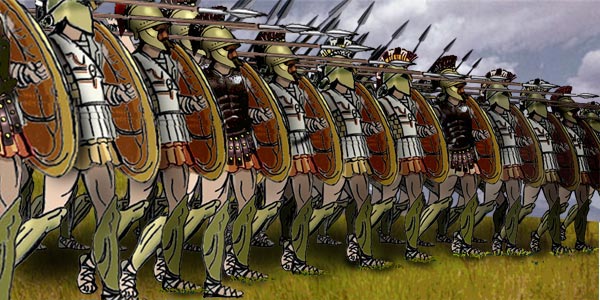
[ABOVE: Modern illustration of an ancient Greek hoplite phalanx formation, created in 2007]
Cyrus’s native forces were amassed as such: one-thousand Paphlagonian cavalry were positioned with Clearchus’s forces on the right. Cyrus’s second-in-command, Ariaeus, was on the far-left with the rest of the Persians and one-thousand horsemen, while Cyrus himself and around six-hundred of his personal cavalry guard took the centre (one thousand according to Diodorus). The rest of the army’s ten-thousand strong force made up the centre. His personal guard were described as donning sabres and being covered in armour, including the horses, even down to thigh plates, and all wore helmets except for Cyrus himself.
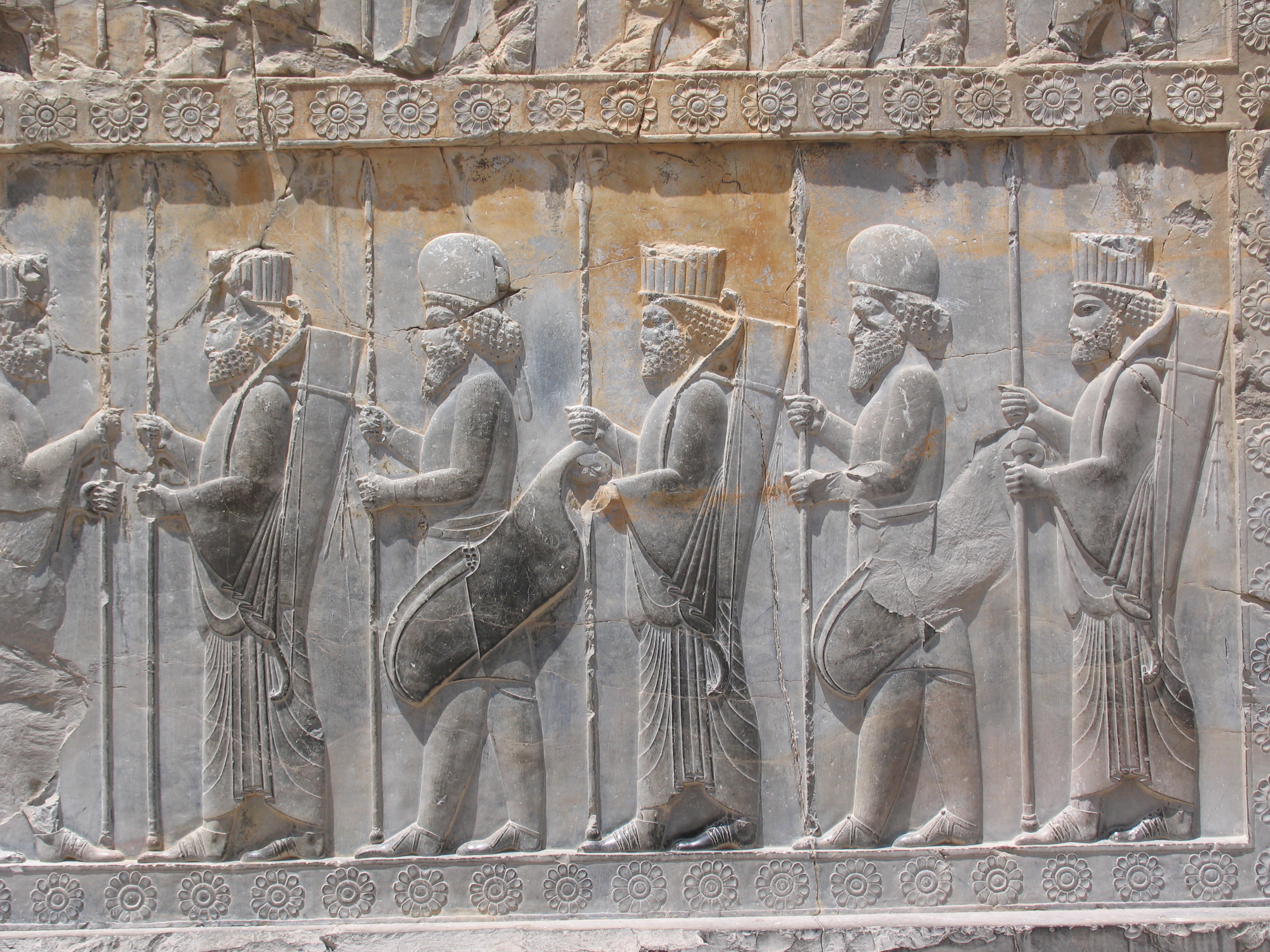
[ABOVE: Northern stairway base relief of Persian and Median (round-capped) soldiers from the Apadana Palace in Persepolis, Iran, 515 BC]
Artaxerxes II’s army too lined up; cavalry donned in white armour flanked the left under the command of Tissaphernes. To their right were soldiers with wicker-wood shields - likely the famous Persian Sparabara, lightly-armoured tower-shield spear infantry - and to their right were mercenary Egyptian hoplites. Next to them were yet more cavalry and some archers. All of these men marched grouped in their respective tribes and nations in dense oblong formations. In front of all of them stood the scythed chariots, with scythes both on the wheels pointing outwards and underneath the driver’s cart facing downwards to cut anything they might run beside or over. (Diodorus describes “no less than fifty-thousand” elite troops took up the centre with the king; being close to forty thousand, I personally think this could be Diodorus confusing the Persian centre’s total numbers with the actual entire army’s strength). Given how four Persian army corps arrived, and Persian Satraps typically commanded ten-thousand men, it can be safely assumed that Artaxerxes had around forty-thousand men.
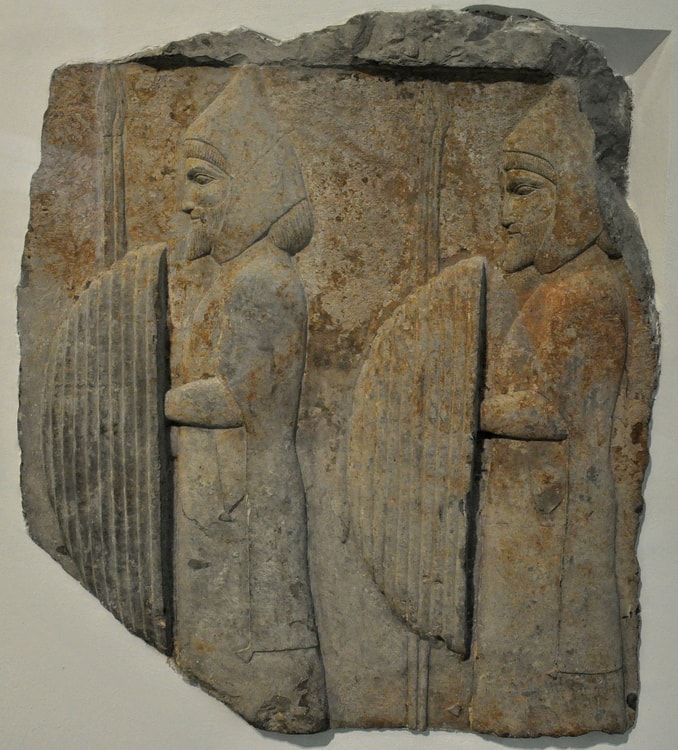
[ABOVE: Limestone wall relief of Persian spearmen, depicted on the Palace terrace of Darius I, Persepolis, Iran. Now held in the Pergamon Museum, Berlin, Germany]
The date was the third of September, 401 BC. By the banks of the great River Euphrates, some sixty-five thousand men were about to clash, around forty miles north of Babylon, among the great plains known as Cunaxa.
THE BATTLE OF CUNAXA
Come the early afternoon, dust appeared, described by Xenophon,
like a white cloud, and after some time s sort of blackness extending a long way over the plain.
- Xenophon, “Anabasis”, Book 1 chapter 8
Soon, the army’s glistening bronze armaments shone to Cyrus’s men. Cyrus had previously warned his men that Artaxerxes would advance with his soldiers chanting war cries, yet now they advanced silently and in good order. He therefore quickly mounted back up, riding near to Clearchus to tell him to get ready to march forward and attack Artaxerxes’s centre, where the Shah himself was:
And if we win there, the whole thing is over.
- Xenophon, “Anabasis”, Book 1 chapter 8
While still commanding from the centre, so wide was Artaxerxes’s army that he was still to the far left of Cyrus’s entire army. In spite of this, we was still reluctant to move his men too far from the Euphrates’s banks, yet he told the Persian that he would see to it that his task be carried out well.
Cyrus rode up and down between the two armies, examining both sides. It's here that Xenophon himself, only a mere soldier in the ranks, saw Cyrus and ran forward to ask if his men could supply any help right then, to which Cyrus responded,
The omens are good and the sacrifices are good.
- Xenophon, “Anabasis”, Book 1 chapter 8
THE FIRST CLASH
Telling Xenophon to relay this message to everyone, the two armies were no only some eight-hundred yards apart. Thus the Greeks began singing their paean war cry, and moved in to engage. Here, one part of the Greek line charged ahead of everyone else, forcing the others to march at the double. Collectively raising shouts of “Eleleu” to Ares, all the Greeks were now running forward, as commanded so by Clearchus, clashing their spears to their shields in the process to frighten the enemy, particularly their horses. As a result, many Persian soldiers pulled back, and the chariots upfront were thrown into panic; some did crash through the Greek lines, others passed through gaps in the lines the Greeks made specifically for this moment, while others turned and ran chaotically into their own Persian lines. Xenophon describes how, in this mess, one Greek was run down by a chariot’s scythe in the Greek centre, while another on the far left was shot with an arrow and killed.
![First phase of battle[5]](https://upload.wikimedia.org/wikipedia/commons/6/6a/Battle_of_Cunaxapng_Stage_1.png)
[ABOVE: The battle's first phase, created by Stephen Smith]
With the Persians in disarray and their chariots scattering and being abandoned, a grin grew on Cyrus’s face as many of his own men began to bow to him as the new Shah already. Keeping his six-hundred-strong cavalry guard with him, he watched to see what the enemy would do next. Seeing that no frontal attack was being made on himself, Cyrus wheeled off to the right to outflank Artaxerxes’s left. Fearing though that the Shah may attempt to get behind the Greek lines and surround them, Cyrus moved straight to Artaxerxes in the centre. With his six-hundred horsemen, he charged ferociously, breaking through the centre and driving off the six-thousand Persian heavy cavalry in the centre.

[ABOVE: Depiction of the Battle of Cunaxa by Adrien Guignet, 1843. Painting now held in the Louvre, Paris]
THE FATE OF CYRUS
It is said that Cyrus himself slew their commander Artagerses. Taunting Cyrus, Artagerses threw a javelin at him, but Cyrus’s mail coat repelled it, yet the strike’s force caused Cyrus to reel from it. Returning fire, Cyrus threw his own weapon at the commander, his javelin striking through the man’s neck near to the shoulder, killing him on the spot.
However, too many of Cyrus’s own horsemen pursued the routing enemy too far, and Cyrus was left dangerously exposed amongst the enemy ranks with just a few men by his side. Amidst the chaos, Cyrus made eye contact with Artaxerxes himself, shouting,
I see the man!
He charged straight for him in a gap in the lines, and struck the king’s chest plate, wounding him and his horse and bringing the Shah to the ground. Artaxerxes’s own doctor, the famed historian Ctesias, would later describe how he healed the wound. Tissaphernes temporarily took Artaxerxes’s place in command.
Amidst this personal glory, however, Cyrus was struck under the eye by a javelin. Many Persians rushed to save their Shah, and in the midst of this, Cyrus too was set upon, and killed. It was described by Xenophon that eight of his closest companions lay dead beside him also. Cyrus’s own most trusted servant, Artapatas, seeing his leader, threw himself on top of him. His fate was either by his own hand (he carried a golden scimitar), or he was slain by a Persian soldier. Cyrus’s right hand and head were cut off. Ariaeus, commanding Cyrus’s now-encircled left wing with the cavalry, took to flight upon hearing of the Satrap’s death. Plutarch details that Artaxerxes himself killed Cyrus, but this isn’t favoured by historians today.
Cyrus’s death was a huge turning point, geopolitically and personally; he was a beloved man, a cunning warrior and keenly dutiful. Beloved by many, even deserters of the Shah himself had turned to Cyrus instead, such was the reputation he’d built over his career. Generous, loyal, unflinching, skilled, and exceptionally brave, Cyrus would go down as one of Achaemenid Persia’s greatest Satraps.
THE SECOND PHASE
Following his death, the Shah’s army immediately turned to pursuit, breaking into Cyrus’s camp. Ariaeus had fled with his men through his own camp, to roughly twelve miles away. Artaxerxes was able to loot Cyrus’s camp, taking both of Cyrus’s mistresses, the younger of which was able to escape, at the cost of many brave soldiers who stayed to allow her to escape.
At this stage, the main Persian and Greek lines stood roughly three miles apart from one another. The Greeks pursued the enemy in front of them as though they had won, all while Artaxerxes and his men were looting their camp. Hearing of the opposing side’s actions, both armies regrouped to go back and face one another again. Under Clearchus and Proxenus’s command, the Greek army turned around to the rear to face the Persian army. However, as he had previously enveloped the Greeks from the left, Artaxerxes, having picked up many stragglers and deserters along the way, now emerged to the Greek left once again.
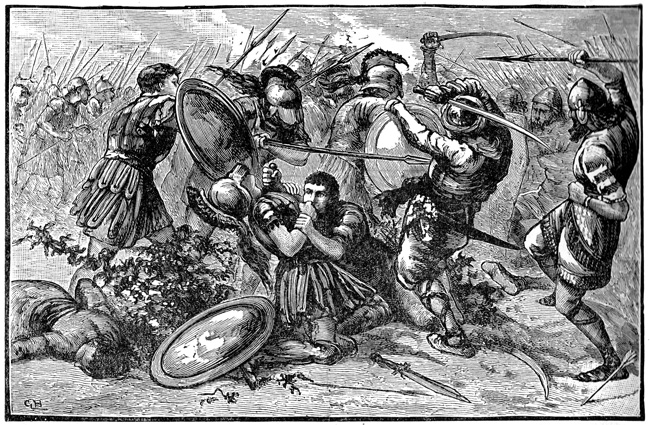
[ABOVE: English school depiction of the Battle of Cunaxa, 1850, from Cassell's Illustrated Universal History, 1882]
Tissaphernes, in charge of this Persian right wing, had driven down the Greek peltast skirmishers in the first charge and smashed into the main Greek infantry line, pushing through to meet the Shah in the Greek camp. Now holding the Persian right wing again, the Greek left wing were worried that they would be hit too hard and encircled. Thus, the Greek left stretched out their lines further to avoid encirclement. While discussing this manoeuvre, however, Artaxerxes changed course entirely, going past them to bring his line facing towards them head-on.
![Second phase of battle[5]](https://upload.wikimedia.org/wikipedia/commons/0/08/Battle_of_Cunaxapng_Stage_2.png)
[ABOVE: The battle's second phase, created by Stephen Smith]
Singing their paean again, the Greeks charged head-on, more aggressive than before, causing another Persian retreat. They pursued the Greeks until they came to a village, above which was a hill that the Persian army withdrew to, taking defensive positions on the high ground. Clearchus stopped at the hill’s feet to send contingents to scout ahead. The scouts returned to relay that the army was in full retreat. While resting in the village, they waited for some message to get to them regarding Cyrus’s whereabouts and manoeuvres, not knowing he had fallen or that the camp had been ransacked. As the sun began to set, they chose to abandon pursuing the Shah’s army up the hill and head back to their camp, finding it in complete desolation. And so, they passed the night.
Diodorus claims that Artaxerxes lost fifteen-thousand men - another likely ten-fold exaggeration - while Cyrus lost three-thousand Persian soldiers, but not one Greek was killed. Plutarch claims that nine to twenty-thousand on the Persian side were lost.
AFTERMATH
Come dawn, they received the news of Cyrus’s fate and Ariaeus’s withdrawal from local governors. Clearchus spoke as follows,
I wish that Cyrus was alive. However, as he is dead, you must tell Ariaeus that we have defeated the King and, as you see, there is now no opposition to us. Indeed, if you have not come, we should be marching against him now. We give Ariaeus our word that, if he comes to us, we will put him on the King’s throne. Those who win in battle have also the right to supreme power.
- Xenophon, “Anabasis”, Book 2 chapter 1
Making do with their ransacked camp, the baggage oxen and mules were slaughtered for food, and spare or broken weapons and chariots were stocked up for fuel, feeding them for the day. Just then, heralds from Artaxerxes arrived, stating that since Cyrus lay dead, had won the battle, and demanded the Greeks to surrender. While arguments flared up, some among the Greek ranks started loosing their resolution, saying that just as they had once been faithful to Cyrus, so too might the Persians be favourable of them now.
Clearchus, though, was not backing down. The Persian ambassador, Phalinus, a Greek himself, advised that for their own safety, they should lay down their arms. Ready to take Clearchus’s response back to Artaxerxes, Phalinus added a caveat: if the Greek army wished to make a truce, that would be fine, but if they were to move from their current position - either deeper into Persian territory or attempt a mass retreat all the way back to Greece - a state of war between them would resume. Clearchus agreed to this idea, but still gave no clear indication as to what exactly he would do.
MEETING WITH ARIAEUS
When Phalinus left, delegated from Ariaeus made it to Clearchus, telling him that Ariaeus had been halted by more Persian soldiers that had taken up higher ground to block off his retreat, and that if Clearchus wished to join then they should do it immediately. Clearchus knew they could not stay where they were, certainly not forever, nor could the nearby River Tigris be crossed as they had no boats. In a rousing speech, Clearchus said that therefore all that was left for the Greeks to do was to pack up all the belongings left, load them on the remaining animals, have whatever food remained, and march along the Tigris’s banks westward.
When night had descended, many Greek had deserted, including a contingent with forty cavalrymen and three-hundred Thracian infantry, over to the Shah’s ranks. As for Clearchus and the rest, they marched until they reached Ariaeus. There, both sides swore that they would stick together this time as true allies, while the natives among their ranks swore also to help them and not betray them.
Clearchus and Ariaeus discussed how they should withdraw from their current position, and whether going back the way they came was sensible. Ariaeus spoke of this as follows,
If we were to go back by the way we came, we should all die of hunger, as we have now no supplies left, and even when we were on our way here, we could get nothing from the country in the last seventeen days’ march - or, if there was anything, we have had it already on our way through.Now we propose to go by a route which is certainly longer, but on it we shall not be short of supplies. We must make our first marches as long as we can, so as to put the greatest possible distance between us and the King’s army. If we can once get a march of two or three days ahead of him, the King will have no further chance of catching up with us. With a small force he will not risk pursuing ; and if he comes with a large army he will not be able to march fast. Also, perhaps, he will be short of supplies.
- Xenophon, "Anabasis", Book 2 chapter 2
Either the Greeks would get away unnoticed or simply outdistance their opponents.
Regardless, when the day came, the combined Greek and native forces marched together, hoping to be able to make it to Babylonia by sunset. But as afternoon rolled in, they soon saw what looked to be enemy cavalrymen far ahead. Greek infantrymen lined up ready to march ahead and fight, however scouts who were sent ahead came back with news that they were simply grazing baggage animals, as the Greeks realised that therefore Artaxerxes’s camp must be close, as later smoke rising from nearby villages confirmed this theory. Keen not to lead his hungry and tired army too far forward but also not appear to be retreating, Clearchus ordered the army to continue forward, camping with his vanguard at the nearest village. When the rest of the Greek army caught up to make camp, even the enemy could hear all their commotion together, and many among their ranks took their baggage animals and left. Come dawn, calming his army, Clearchus told his men to form in battle lines as they had done at Cunaxa.
However, it also became clear that Artaxerxes himself was worried about this Greek army still, which became evident when he sent heralds to Clearchus to discuss terms. With his army donned in their full panoply in formation, and personally accompanied by his finest looking men, Clearchus came forward to meet the heralds. Clearchus told them that either battle was to be had or breakfast was to be provided for them. Artaxerxes liked this reply, and sent guides to Clearchus to show him and his men where they could go nearby for supplies, reassuring them that the truce would still apply while some Greeks would scout ahead to confirm that supplies were where they were told they were. Eventually, Clearchus agreed to the terms of truce, so long as he himself marched to the supposed supplies with his army in battle order. Reaching the village, the Greeks could see the supplies for themselves, including corn, wine and dates.

[ABOVE: Obverse side of a double daric coin depicting Artaxerxes II]
RETURNING HOME
It is here that Tissaphernes arrived with a large envoy. Speaking through interpreters, he addressed the Greek army. Tissaphernes states that, as governor of lands neighbouring the Greeks, he could guide them back home. Since he needed Artaxerxes’s approval for this first, the Shah had told Tissaphernes beforehand to acquire Clearchus’s reason for being here in the first place. Clearchus told them that Cyrus had given many reasons for their march, but since his death there was now no reason to be here at all or make war on Persia. All they wanted was to go home to Greece, unmolested by enemy forces. Clearchus asked Tissaphernes for help with his: to return home to Greece and defend the army against raids and attacks during that time.

[ABOVE: Persian coinage of a Satrap, with satrapal headwear clearly visible, possibly of Tissaphernes but not certainly so. Coin from Phokaia, Ionia, c.478-387 BC]
Eventually returning, it became clear that the Greek request was granted: they would be allowed to march back to Greece as though marching through friendly territory, although many Persians had opposed this. Help would be provided, but where it couldn’t, supplies must be peaceably acquired by themselves without harming the natives, and if help was provided by the Persians then they must pay up accordingly. Tissaphernes would return this word to the King, and come back to guide the Greek army back home. After some days, Tissaphernes returned, and the march could begin. But just how true was is that Artaxerxes would not pursue the Greeks?

[ABOVE: The route taken by Cyrus, Clearchus and Xenophon, showing their march into Persia and their return journey. (Cyrus's Satrapy is depicted in green, the route shown in red), 401-399 BC]
The march to follow would be a two-year death march deep through Persian territory. Clearchus and his men would march through modern-day Iraq, Turkey and the Caucasus in order to get back home, trusting only local, foreign and possibly-hostile intel. Blind, low on resources, desperate and far from home, the next post will follow these lost ten-thousand soldiers, as recorded by Xenophon among them, and would go down in history as one of the greatest stories of all time:
Xenophon’s “Anabasis”: the March of the Ten-Thousand.
NEXT POST: MARCH OF THE 10,000: Xenophon's Anabasis, 401 - 399 BC

Coming soon...
SOURCES
- Xenophon, “Anabasis”, Book 1-2.3
- Xenophon, “History of My Times”, Book 1.1.1-3
- Ctesias, “Persica”
- Diodorus Siculus, “Library of History”, Book XIV.19-26
- Plutarch, “Parallel Lives”, “Artaxerxes"
YOUTUBE LINKS
(I do NOT own these videos)
"Anabasis of Xenophon - Greatest Story Ever - Ancient Greek DOCUMENTARY" by "Kings and Generals"
"Ancient Greek History - Part 1 March of the 10000 - 33" by "Historyden"
"The Battle of Cunaxa - Epic Iranian Music" by "Farya Faraji"
MY ANCIENT GREEK HISTORY BLOG PAGE
MY ANCIENT PERSIAN HISTORY BLOG PAGE
MY RANDOM THOUGHTS BLOG PAGE
All feedback - positive and/or critical - is appreciated!
All images used are copyright-free
Don't forget to rate this post, share it and leave a tip if you enjoyed it
Follow my FACEBOOK
Follow my INSTAGRAM
Follow my REDDIT
Follow my TRUTH SOCIAL
Follow my TUMBLR
Thanks for reading :)






