
The Battle of Cyzicus in 410 BC had momentarily restored Athenian dominance at sea, but the consequences of the victory were far more complex than immediate celebrations suggested. While Alcibiades, Thrasybulus, and Theramenes had shattered the Spartan fleet and killed Mindarus, the deeper political repercussions of this event would shape the remainder of the war. Athens, still reeling from its devastating loss at Sicily in 413 BC, now found itself at a critical juncture. The victory at Cyzicus did little to resolve the economic crisis and internal political strife that had plagued the city since the oligarchic coup of 411 BC. Even with its naval superiority temporarily secured, the democratic state struggled to sustain the war effort.
Check out my last Peloponnesian War post on the Battle of Cyzicus, 410 BC
and my previous history post on the 2nd Greco-Punic Sicilian War, 410 - 404 BC
Hello again, been a while. Anyway, Greeks...
Political Upheaval
The Athenian leadership, particularly the democratic faction led by Cleophon, opposed any peace negotiations with Sparta. Cleophon, in a bold declaration before the Assembly, rejected Spartan offers for an armistice, believing that Athens could restore its empire and reclaim its lost prestige. However, his opponents within the city warned that Athens lacked the financial and military endurance for a prolonged conflict. Xenophon and Diodorus Siculus suggest that Athens, despite its naval successes, faced a dire shortage of manpower and resources, forcing it to rely heavily on tribute from remaining allies and loans from Persian satraps who had grown increasingly wary of the city’s resurgence.

Xenophon records that when Sparta sued for peace, Cleophon responded defiantly:
As long as an Athenian has a shield to carry and bread to eat, there shall be no peace with the Spartans.
[Xenophon, Hellenica, 1.7.12]
Meanwhile, in Sparta, the loss at Cyzicus was an unmitigated disaster, yet it did not spell the collapse of their war effort. The Spartan government, dominated by the ephors and military aristocracy, recognised that the war could not be won without securing a stronger alliance with Persia. While some factions within Sparta favoured abandoning naval warfare altogether and focusing on land campaigns in Greece, others saw the growing importance of naval dominance. The critical decision to appoint Lysander as navarch in 407 BC marked the beginning of a new phase in the war—one that would be shaped by the ambitions and tactical brilliance of a man who was determined to change the course of history.

[ABOVE: The modern-day ruins of Cyzicus's amphitheatre. Photo taken in 2019]
Lysander: Sparta’s Mastermind
Character
Lysander, the son of Aristocleitus, came from a modest Spartan family, far removed from the ruling Agiad and Eurypontid dynasties. His non-royal lineage meant that he had to climb the ranks through sheer ability rather than hereditary privilege. This background, however, did not diminish his ambitions. Plutarch describes him as calculating, disciplined, and unrelenting in his pursuit of power, though his outward demeanour was often one of humility and piety—a characteristic that masked his deeper political cunning.
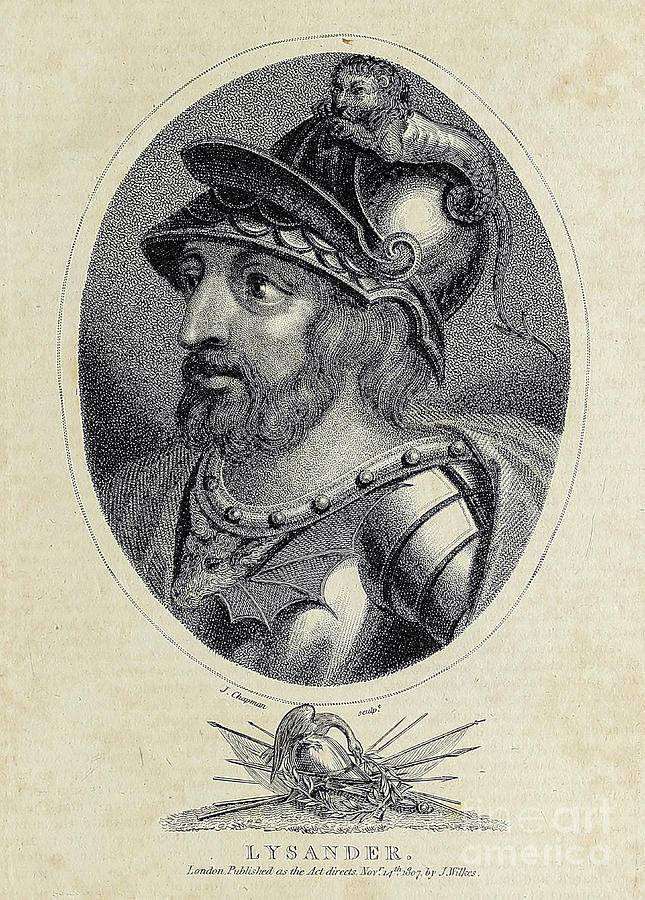
[ABOVE: Engraving portrait of Lysander by J. Chapman, 1807]
Early Career
Lysander’s early military career remains somewhat obscure, but by 407 BC, he had risen to prominence as a trusted commander within the Spartan naval forces. He had a keen understanding of warfare’s evolving nature, particularly the increasing significance of naval engagements. When he was appointed navarch (admiral) of the Spartan fleet, it was clear that his leadership would mark a decisive shift in Spartan strategy. Unlike previous Spartan commanders, Lysander was not averse to diplomatic manoeuvring and foreign alliances, a skill that would soon make him indispensable to the Spartan war effort.
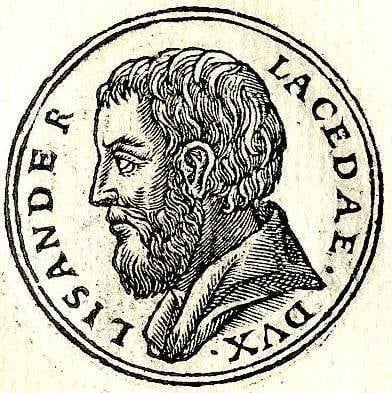
[ABOVE: Lysander's bust portrait, from Promptuarii Iconum Insigniorum, 1553]
Cyrus the Younger: Persia’s Role in the Spartan Resurgence
Early Life and Ambitions
Cyrus the Younger, the son of Darius II and Parysatis, was born into Persian royalty with a future of immense potential before him. Raised at court alongside his older brother Artaxerxes II, Cyrus was instilled with a warrior’s mentality and an intense sense of ambition. Unlike his more reserved brother, Cyrus was known for his military prowess, charisma, and decisive nature. His mother, Parysatis, strongly favoured him over Artaxerxes and encouraged his ambitions, hoping that he might one day claim the Persian throne.

[ABOVE: The tomb of Darius II, now in Marvdasht, Fars, Iran]
Satrap
When he came of age, Cyrus was appointed satrap of Lydia, Phrygia, and Cappadocia, placing him in control of some of the wealthiest regions in the empire. This also made him responsible for overseeing Persian interests in the ongoing Greek conflict. Unlike Tissaphernes, who had played both Athens and Sparta against each other for years, Cyrus was unapologetically pro-Spartan. His alliance with Lysander was not merely a strategic convenience—it was part of his broader vision for solidifying his own power base.
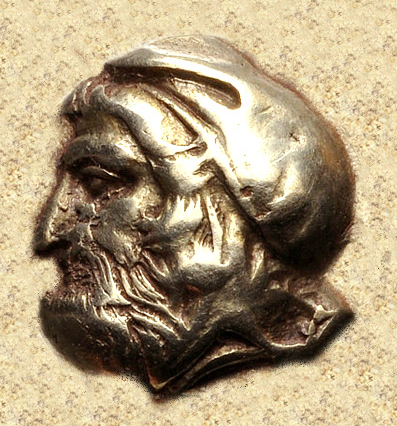
[ABOVE: Portrait of an anonymous satrap of Ionia around Cyrus the Younger's time, c.478 - 387 BC]
Xenophon, who would later serve under Cyrus during the Anabasis, paints a highly favourable portrait of him, describing him as a leader of unmatched generosity, intelligence, and courage. It was Cyrus who provided Lysander with the financial backing necessary to rebuild the Spartan fleet, ensuring that Sparta could recruit skilled rowers and challenge Athens’ naval supremacy. This pivotal support would lead directly to the Battle of Notium.
Xenophon later wrote of Cyrus’s unwavering support for Sparta:
Cyrus bore no love for the Athenian people, for he saw in Sparta a strength he wished to nurture.
[Xenophon, “Anabasis” 1.9.7]
The Battle of Notium, 406 BC: Alcibiades’ Final Fall from Grace
Alcibiades, now commanding the Athenian fleet, operated along the Ionian coast with considerable confidence. However, his overconfidence led to a fatal mistake in delegation. Leaving his fleet temporarily in the hands of Antiochus, his subordinate, Alcibiades ventured inland to secure additional support for the war effort. Antiochus, however, eager to prove himself, ignored orders and recklessly advanced on the Spartan fleet near Ephesus. Alcibiades specifically commanded Antiochus:
Do not attack Lysander's ships.
[Xenophon, “Hellenica”, 1.5.7]
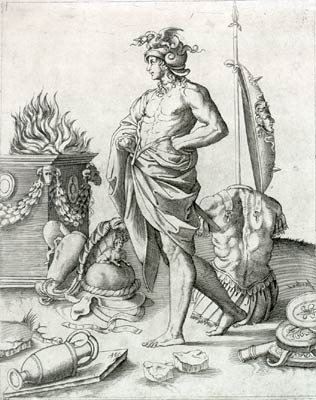
[ABOVE: A Renaissance engraving of Alcibiades by Agostino Veneziano (1490 - 1540)]
The Battle
Despite this, Antiochus attacked. Lysander, ever the tactician, immediately sprang into action. Rather than engaging in a chaotic skirmish, he held his forces back, allowing Antiochus to overextend his position. Once the Athenians had committed themselves, Lysander launched a devastating counterattack, encircling the enemy fleet and capturing 15 Athenian triremes, sinking 7 more while suffering no losses himself. Remaining Athenian ships barely escaped to the safety of Alcibiades’ main force. The defeat at Notium was not a major strategic disaster, but it provided Alcibiades’ enemies in Athens with the excuse they needed to remove him from command.
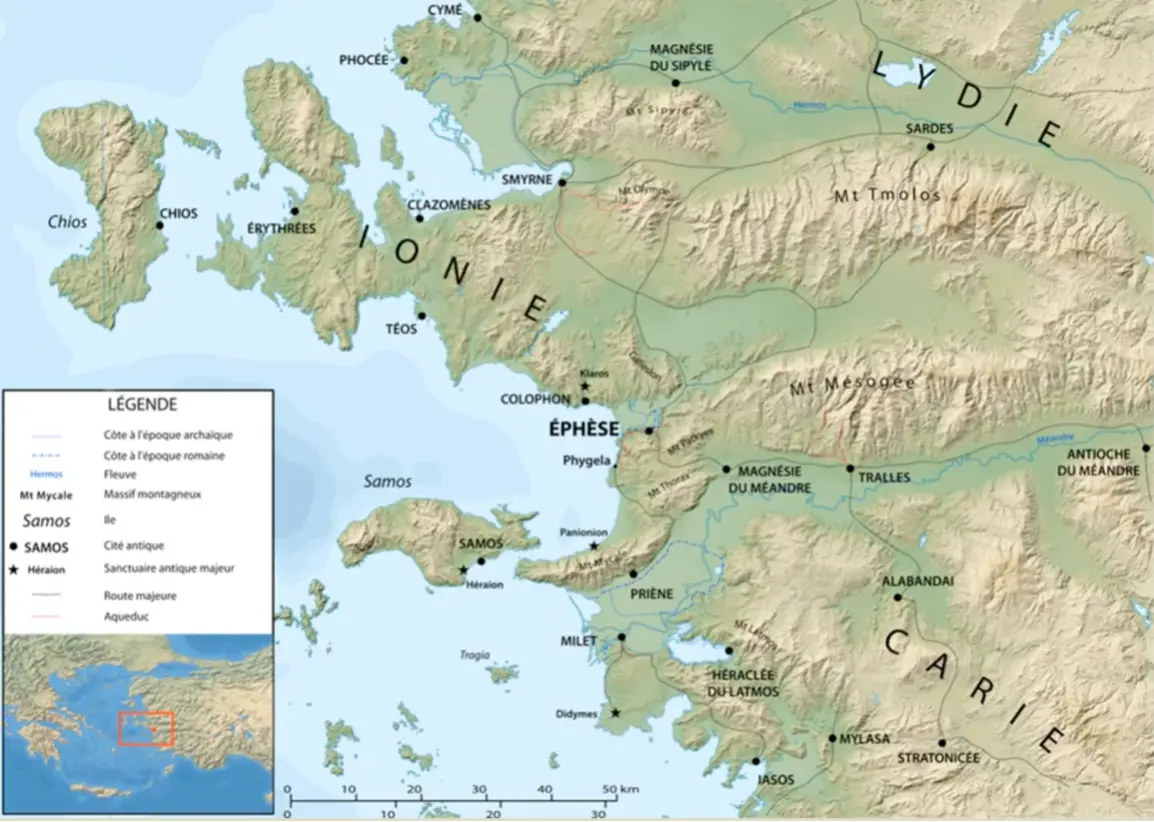
[ABOVE: Map of the region near the battle of Notium, 406 BC (near Ephesus)]
Xenophon describes the moment Athens turned against Alcibiades:
The people, ever fickle, found reason enough to cast him away, blaming him for misfortunes that were not of his making.
[Xenophon, “Hellenica” 1.5.17]
Aftermath
Diodorus Siculus and Plutarch both suggest that this battle was a political turning point rather than a military one. The loss itself was not catastrophic, but the political consequences were dire. Alcibiades, once again accused of recklessness, was stripped of his command and forced into permanent exile, never to return to Athens in a position of power. His removal marked a crucial shift in the Athenian war effort, leaving the city’s fleet in the hands of far less capable commanders.
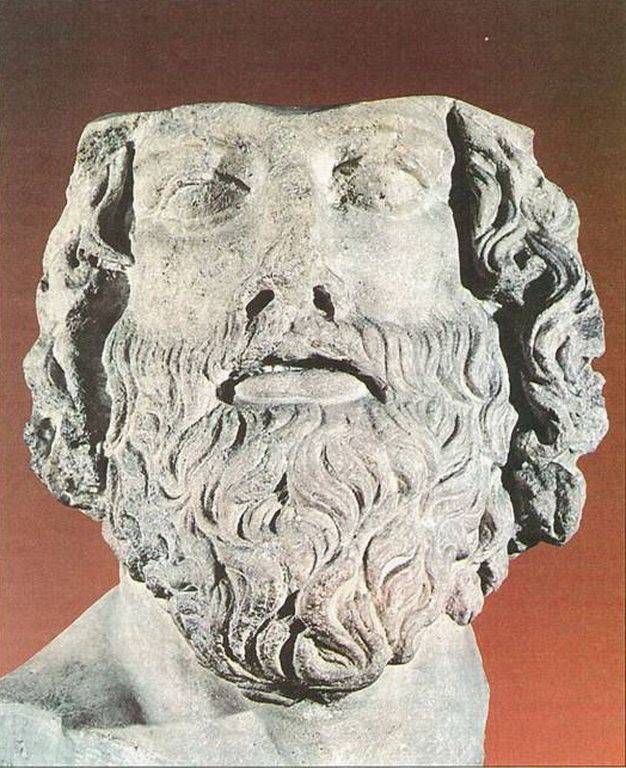
[ABOVE: Bust of Lysander]
Persian Influence in the War: Shifting Alliances and Satrap Politics
Persia had since recently become an external force manipulating the Peloponnesian War, using financial incentives to prolong the conflict and weaken both Athens and Sparta. The Persian satraps in Asia Minor—Tissaphernes and later Cyrus the Younger—operated with their own interests, often playing both sides to maximise Persian leverage in the Greek world. Tissaphernes, representing the cautious policy of King Darius II, had initially supported Sparta but later reduced financial aid, hoping to ensure that neither Greek power could dominate the Aegean.
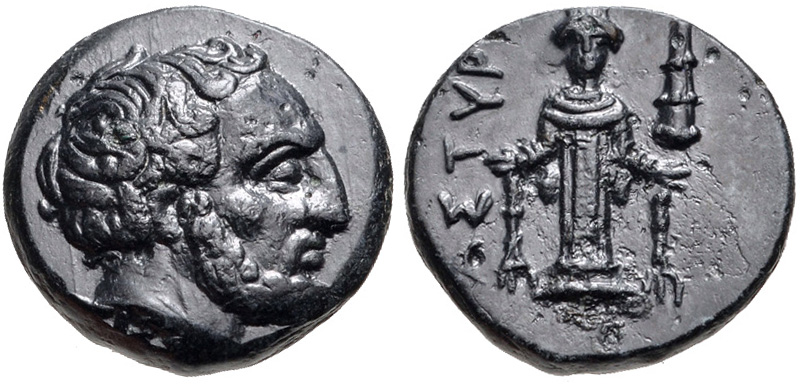
[ABOVE: Achaemenid coinage depicting Satrap Tissaphernes, who received Alcibiades as an advisor, from c.400 - 395 BC]
Xenophon later wrote of Cyrus’s unwavering support for Sparta:
Cyrus bore no love for the Athenian people, for he saw in Sparta a strength he wished to nurture.
[Xenophon, “Anabasis”, 1.9.7]
The Rise of Callicratidas: Sparta’s Traditionalist Admiral
Lysander’s term as navarch ended in 406 BC, as Spartan law prohibited a commander from serving consecutive terms. In his place, the ephors appointed Callicratidas, a stark contrast to his predecessor. Unlike Lysander, who was pragmatic and willing to collaborate with the Persians, Callicratidas was a staunch traditionalist, deeply committed to Spartan values and wary of foreign influence. Plutarch describes him as possessing a stern but honourable nature, loyal to the pure military ethos of Sparta and reluctant to engage in diplomacy with non-Greeks.
His tenure as fleet commander was marked by financial hardship, as he had no access to Persian funds. Unlike Lysander, who had cultivated a close relationship with Cyrus the Younger, Callicratidas saw Spartan reliance on Persian gold as shameful. He openly criticised Lysander’s diplomacy, stating:
I would rather return to Sparta with honour and a small fleet than rule the seas as a Persian servant.
[Plutarch, “Life of Lysander”, 7.4]
Despite these limitations, Callicratidas wasted no time in launching an aggressive naval campaign. He swiftly took control of Methymna on Lesbos, securing much-needed supplies and reinforcements. His next objective was to seize Mytilene, a strategically significant city that controlled access to the eastern Aegean. However, his campaign was met with resistance from Athens, leading to the Second Battle of Mytilene.
The Second Battle of Mytilene (406 BC): Sparta’s Naval Revenge
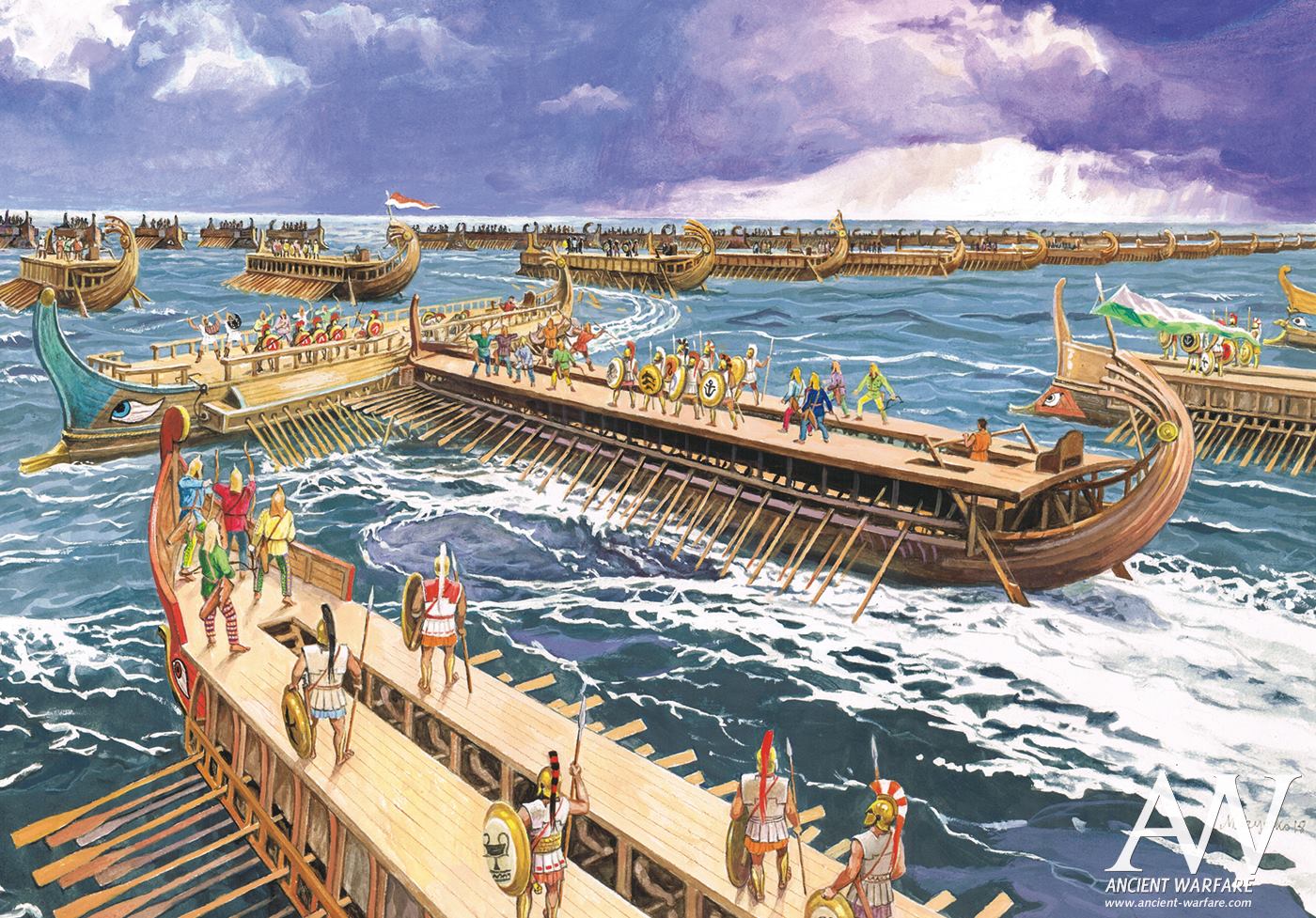
The Athenians, eager to prevent another major loss, dispatched a fleet of seventy triremes to relieve the besieged city. However, Callicratidas had prepared well, assembling a fleet of 120 ships, including many newly constructed triremes from Persian funding previously allocated by Lysander. The battle unfolded in the waters off Mytilene, after Callicratidas caught the Athenian commander's, Conon, 70 ship-strong fleet and pursued him to Mytilene. Callicratidas positioning his forces in a formation designed to outmanoeuvre the Athenians, his aggressive but disciplined command style ensuring that the Spartan fleet systematically broke the Athenian lines, sinking or capturing thirty triremes while forcing the rest into retreat.

[ABOVE: Portrait of Conon, from Promptuarii Iconum Insigniorum, 1553]
Plutarch describes Callicratidas’s philosophy before the battle:
Better to die with honour than to live as a beggar to Persia.
[Plutarch, Life of Lysander, 7.4]
Conon's remaining 40 ships drew up onto the local beach, but his forces were surrounded on land. 10 more Athenian ships sent to aid Conon were captured, with another one of Conon's being captured while on its way back to Athens to ask for aid, another ship having to be left on its own to make the plight. The Greek waters off Asia Minor were very much in Sparta's grasp.
Callicratidas’s fate would be sealed in the coming conflict, in which Athens would put up one large, final attempt to win the war. After plague, Pericles’s death, Archidamus’s assaults, Sicily and Persia having joined the war, the city was straining for a comeback - everything was on the line for Athens. at the Battle of Arginusae, where Athens would lead one final attempt to regain their prestige and turn the tides of the war for good, once and for all…
NEXT POST: THE EMPIRE STRIKES BACK, 406 BC: The Battle of Arginusae
SOURCES
- Xenophon:
- "Hellenica"
- "The Anabasis"
- Plutarch, "Life of Lysander, Alcibiades, Agesilaus"
- Diodorus Siculus, "Library of History"
- Cornelius Nepos, "Lysander"
- Justin, "Epitome of Pompeius Trogus"
- Polyaenus, "Stratagems of War"
- Aristophanes, "The Frogs"
- Pausanias, "Description of Greece"
- Diogenes Laertius, "Lives of Eminent Philosophers"
- Donald Kagan, "The Peloponnesian War"
- Paul Cartledge, "Sparta and Laconia: A Regional History, 1300 - 362 BC"
YOUTUBE LINKS
(I do NOT own these videos)
"Lysander: The SPARTAN who conquered ATHENS" by "Biographics"
"Ancient Greek History - Part 14 of the Peloponnesian War - 30" by "Historyden"
MY ANCIENT GREEK HISTORY BLOG PAGE
MY ANCIENT PERSIAN HISTORY BLOG PAGE
MY RANDOM THOUGHTS BLOG PAGE
All feedback - positive and/or critical - is appreciated!
All images used are copyright-free
Don't forget to rate this post, share it and leave a tip if you enjoyed it
Follow my FACEBOOK
Follow my INSTAGRAM
Follow my REDDIT
Follow my TRUTH SOCIAL
Follow my TUMBLR
Thanks for reading :)






