
The Peloponnesian War was underway. Athens was on the offensive, their navies proved successful, their walls impregnable and Pericles was at the helm. However, not even one year into the war, the scales would be tilted heavily as a new threat came onto the scene from afar; what's simply known as The Plague of Athens would rock the city, its empire and its great leader. The great war with Sparta would last longer than expected.
Check out my previous post on The Start of the Peloponnesian War, 431 - 430 BC
THE PLAGUE
Come the summer of 430 BC, one year after the start of the war, the Peloponnesians once again invaded Attica, under King Archidamus.
Thucydides, the Athenian historian of the time, records this next unexpected event, one which no amount of great military preparation, tactical genius or rousing speech could ever overcome: In Ethiopia, a disease of unknown identity - thought to possibly be the bubonic plague itself - broke out. Soon spreading, it reached Egypt and Libya, and through trade ships it made its way into the Aegean, into Port Piraeus, and into Athens itself. With the entire population - many from the countryside - crammed into the city walls, the disease spread like wildfire. It reportedly hit other areas of the Greek world like the isle of Lemnos, but struck nowhere quite so severe as Athens. Not knowing what the disease was, doctors were unable to cure anyone, and due to their over-exposure in trying were ultimately some of the first victims, and those with other illnesses were quick to catch the plague. No temples of prayer were of aid, and no consultation of oracles gave any answer - the people thought the Gods had abandoned them, and thus they abandoned hope. The great city, at the pinnacle of its golden age and with its greatest statesman at the helm, was in serious trouble.

[ABOVE: "Plague in an Ancient City", by Michiel Sweerts, c.1652 - 1654]
Speculation at the time pointed to the Peloponnesians having poisoned the wells in Piraeus. Thucydides - who himself caught the plague and survived - noted that those who were free of other illnesses were not spared the horror of the plague. Symptoms included a high fever in the head, followed by an inflammation and reddening of the eyes. Next, the tongue and throat begun bleeding, and the victim’s entire body began to smell of rot as they begun to sneeze and their voices begun to hurt them. Shortly after, the pain moved down to the chest as the victim begun violently coughing, and once the pains reached the stomach the victim would vomit vile in great pain. Most victims would then reportedly suffer from empty retching which brought on violent bodily spasms. The body itself, while not hot, would develop pustules and become livid and red, Internal burning feelings would make even the slightest pressure from clothing unbearable. Drinking water, however desirable to the sufferers, made no difference.
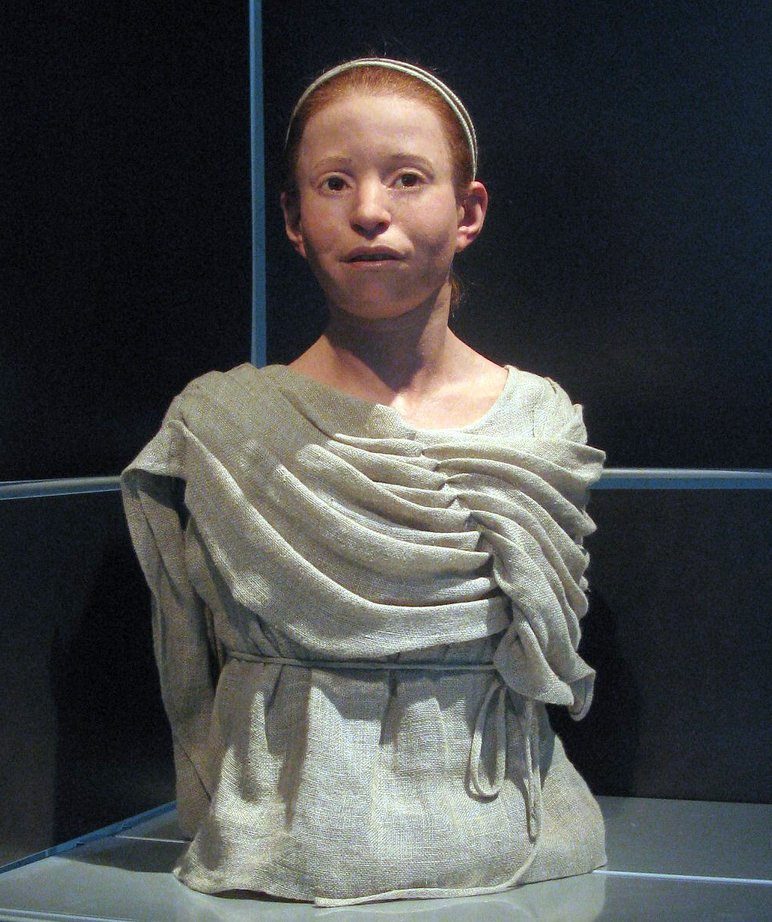
[ABOVE: A reconstruction of a statue of Myrtis, an 11 year-old girl who died during the plague and whose skeleton was found, now held in the National Archaeological Museum, Athens]
Victims also became restless and unable to rest or sleep, and after an average of between six to eight days, they would die of the internal fever. If that did not kill them, the heavy ulceration in the stomach and liquid diarrhoea would claim them later. Should they survive the worse effects, the extremities of the body - namely the fingers, toes and genitals - would come under attack, and they would be lost, as would their sight. The luckiest would recover, but were unable to remember who they, or who their friends and family, were. Even scavenging animals died after consuming the flesh of the fallen. Those who attempted to care for others died, and those who isolated themselves to stop the spread died of neglect. The only hope for the Athenians was that those who were lucky to survive after catching it seemed to be immune, at least fatally. Those who had lost hope turned to quick pleasures, hedonism and lawbreaking.
Pericles’s enemies would, again, put the blame of this plague outbreak on him, arguing that his restrained war efforts at home had led to many in the Athenian countryside having to retreat behind the city walls, packing too many people into the city and allowing the disease to spread quicker.
THE ECLIPSE
Meanwhile, Sparta’s army - unaffected by the plague - continued to plunder the Attic countryside, reaching as far south as Laurium, the location of the silver mines Themistocles used decades prior to fund the Athenian navy for the battle of the Artemisium Strait. Pericles, keen to stick to a defensive strategy in Athens, was still intent on raising navies to attack the coast of the Peloponnese; one-hundred triremes, manned with four-thousand hoplites and three-hundred cavalry and reinforced with fifty allied ships from Chios and Lesbos, to attack Epidaurus, Troezen, Halieis and Hermione and Prasiae, all on the Peloponnesian coastline, and the latter of which they successfully sacked. The Spartan army ravaging Attica only remained so for forty days out of fear for the plague
On the eve of his planned expedition’s voyage, however, the sky darkened in the middle of the day as a solar eclipse occurred. Bewildered Athenian peoples took this as a sign that Pericles’s expedition would not go according to plan. Pericles’s helmsman too was struck with fear, so Pericles lifted his clock above the man’s head to shroud him in darkness and, rationalising the moment, asked if that scared him, stating that the only difference between his cloak and celestial bodies in this case were their sizes.
Not much good for Athens emerged from this early expedition; the plague foiled Pericles' attempt to capture the key city of Epidaurus, and his army fell out of favour with him. Attempts to reconcile his men proved useless as the army together stripped him of his command and imposed a fine on him. It’s theorised that leading this prosecution was Cleon, although other suggestions have been put forward. When the Athenian raiding fleet returned to port, its attention was turned north towards Potidaea, still under siege. This expedition would fail, as the plague ravaged this army too, killing over one-thousand of the four-thousand hoplites and forcing these reinforcements to withdraw and leave the original besiegers to continue the siege.
THE FALL OF PERICLES
With failures abroad and within Athens, its people began to turn on Pericles himself, blaming him for leading the state into this war. With war, plunder, famine and plague ravaging Athens, so desperate were the people for an end that envoys were sent to Sparta to negotiate peace, to no avail. Calling another meeting, Pericles gave another speech, and did not give into the demands of the enemy to reconsider his strategy, still fearing facing the Spartan army on the field. No further emissaries were sent by Athens to Sparta, and put their efforts towards war, and the social issues of it; many from the countryside were now inside Athens and unable to farm, or dead from the plague, and the rich’s estates were unmanned. The people would not forgive this until Pericles was fined for it, and when this was done he was reelected as general. So long as Athens kept patient, maintained their navy, or did not expand their holdings too far, Athens would, Pericles promised, have a chance of winning the war.
LOOSING FAMILY
Loosing a large amount of his closest associates, friends and family to the plague, the state of Pericles’ domestic affairs were ruined. His oldest legitimate son, Xanthippus, (not to be confused with Pericles' father of the same name who partook in the Battle of Mycale) resented his father for only leaving him with a small allowance, in tiny payments at a time. And when Xanthippus resorted to borrowing money from some of Pericles’ associates, he did so under the guise that the financial request was from Pericles himself, leading Pericles to have to, of course, turn down his own friends when they asked for their money to be repaid, causing further resentment between the father and son. This lasted right up until Xanthippus caught the plague and died.
Around the same time, Pericles’ sister, among other close family members, also died of the plague. This apparently did not stray him from his duty, or lead his emotions to make him give up; he reportedly was never seen weeping for those close to him who died, either at their burials or later at their tombs. This was until he lost his last legitimate son, Paralus, to the plague, causing him to burst into tears once he saw his body. This flung Pericles into a deep depression, so much so that he abandoned many of his duties and secluded himself in his home, only coming out through the persuasion of his friend, Alcibiades.
PERICLES’S CHILD LAW
When Pericles was at the height of his political career before the start of the Peloponnesian War, he brought a law into effect, stating that only citizens whose parents were both Athenian themselves should be considered Athenian citizens. Pericles also abandoned his previously-introduced law, which stated that only Athenians whose parents themselves were both Athenian should be considered Athenian citizens; a recent cash injection of 40,000 medimni from the king of Egypt, which was to be divided between the Athenian citizens, led to a flurry of lawsuits against Pericles’ law on Athenian children and their citizenship, who had until then been largely ignored - around five-thousand of them were convicted and enslaved, while the other fourteen-thousand were left with their citizenships. While the fact that the very law which was passed by Pericles was now being repealed by Pericles should have enraged his critics, Pericles’ current familial crises moved those same critics to pity the statesman. and allowed him to enrol his last illegitimate son as a citizen of Athens.
DEATH
It was here, of all moments, that Pericles himself succumbed to the plague. He is reported to not have suffered the same intense attack like other victims, but his body and spirit instead wore down gradually, as his illness came and went. His days numbering and on his deathbed, Pericles was accompanied by his closest surviving friends, who soothed him with recounts of his glorious achievements in life, with Pericles responding that he was surprised by them not mentioning the most important thing:
And that… is that no Athenian has put on mourning clothes because of me.
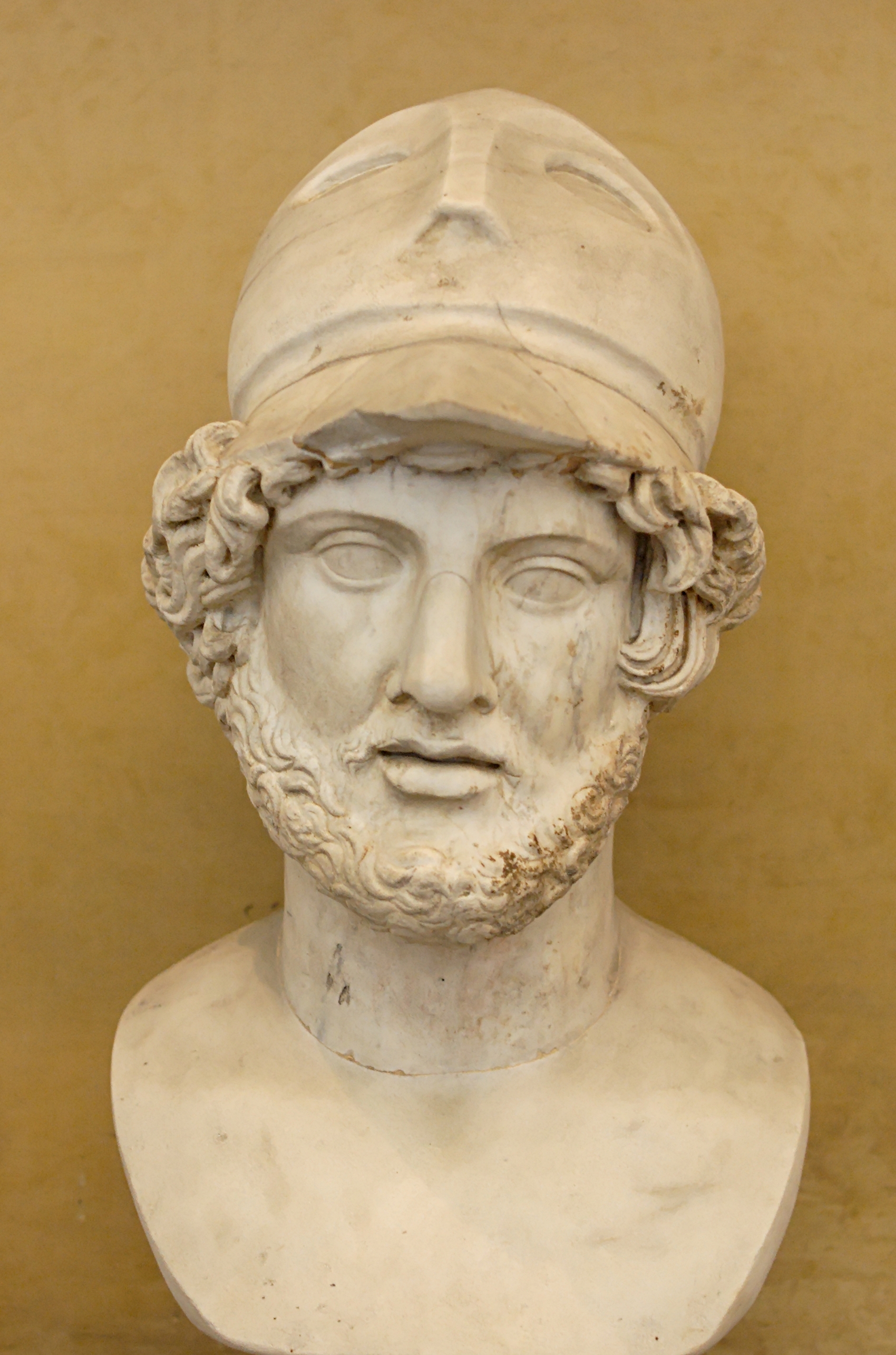
[ABOVE: A Roman marble copy of an original Greek bust of Pericles, now held in the Museo Chiaramonti, the Vatican Museums]
Pericles died sometime in 429 BC, a remarkably courteous and proud man, having never used his powerful position, essentially at the head of an empire, to self-indulge or judge an enemy as unworthy of reconciliation. Fittingly, he was often graciously nicknamed “Olympian”, in that he had such power over people yet knew he must use it responsibly. After his passing, even Pericles’ critics knew no one could live up to his modesty or good nature, and soon enough after his passing, the hordes of evil within Athenian politics, silenced by Pericles, would begin to emerge in his vacuum.
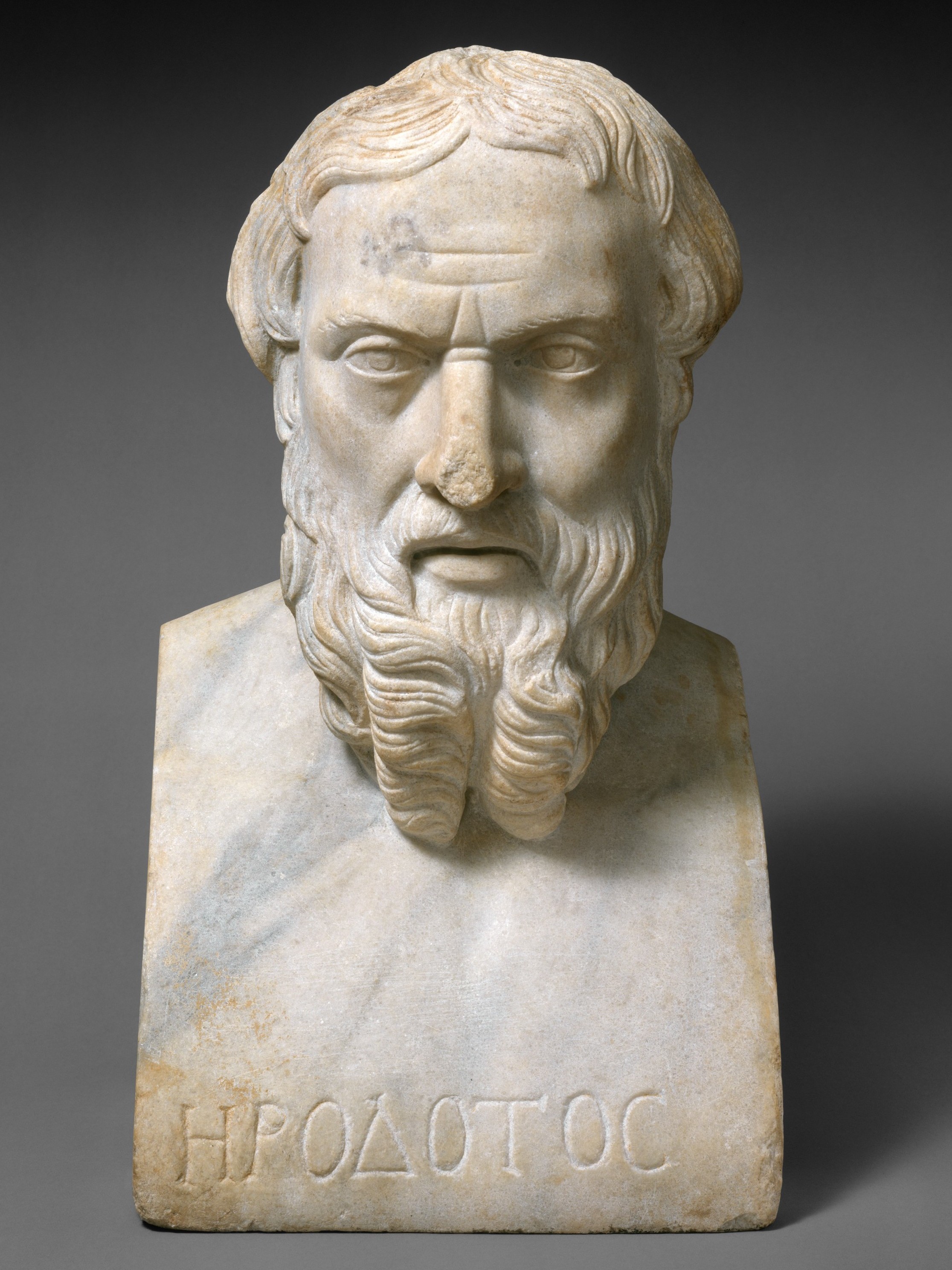
NEXT POST: HERODOTUS, 484 - 425 BC: The Father of History
SOURCES
- Thucydides, "The Peloponnesian War", book 2.48 - 2.65
- Plutarch, "Parallel Lives: Pericles"
- Donald Kagan, "The Peloponnesian War, Athens and Sparta in Savage Conflict 431-404 BC"
YOUTUBE LINK
(I do NOT own this video)
"Who fought the Peloponnesian War?" by "Ancient History Guy"
MY ANCIENT GREEK HISTORY BLOG PAGE
MY ANCIENT PERSIAN HISTORY BLOG PAGE
All feedback - positive and/or critical - is appreciated!
All images used are copyright-free
Don't forget to rate this post, share it and leave a tip if you enjoyed it
Thanks for reading :)






