
Artificial Intelligence (AI), and especially Large Language Models (LLMs) like ChatGPT, Claude, or Gemini, have become part of everyday life for millions of people. There are some concerns around them, though, including data privacy and concentration of power in a small number of big-tech companies. Luckily, we can fight these specific concerns with some open-source and free alternatives for ChatGPT and other LLMs.
They can offer familiar features, like helping with writing, research, or coding, while keeping all more private and open to the community. Their source codes are available on GitHub for anyone to check or collaborate on, and this also means they’re available on Kivach. This is an Obyte-powered crypto donation platform that lets users support any GitHub repo and their developers to optionally redistribute donations with other projects.
If you find these AI assistants useful, remember that you can send them crypto via Kivach!
LibreChat
Not exactly an LLM itself, but a good, private interface to bring together different models in one place. Created by Danny Avila in 2023, it supports providers like OpenAI, Anthropic, Google, Ollama, and many others while giving users the option to host everything on their own devices. This ensures that your data will remain yours and yours alone.
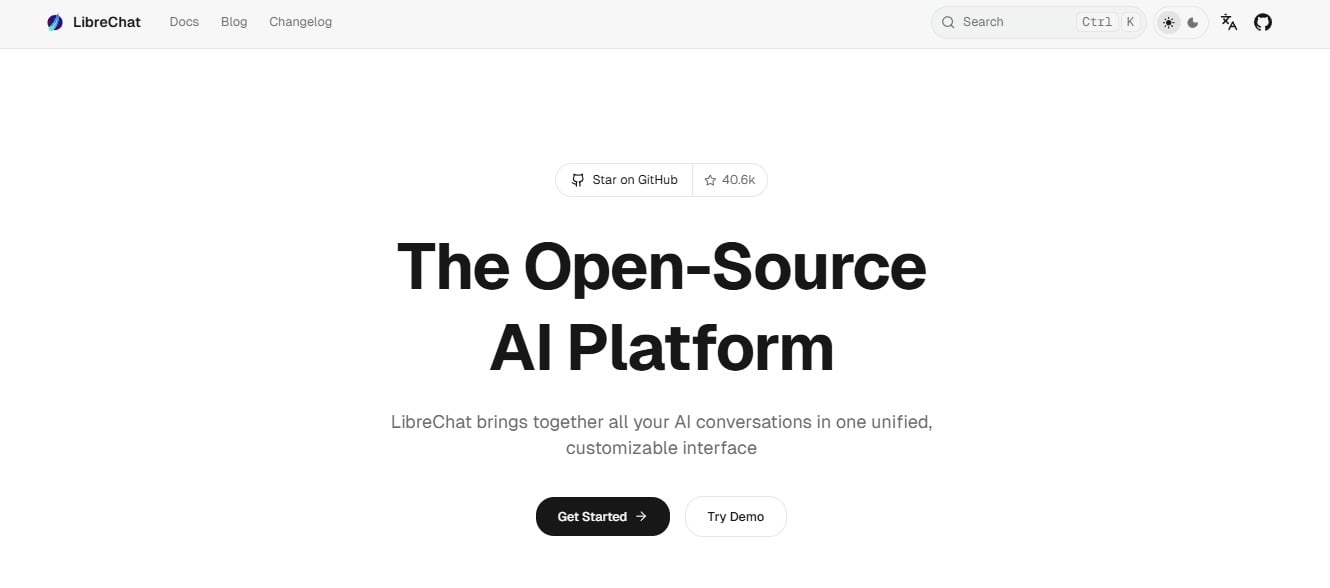
With LibreChat you can write, code, research, generate images, or simply chat. It can summarize a long report, organize travel ideas, or help debug a piece of code, for example. Meanwhile, history is kept in tidy folders, searchable keywords, and file uploads. The software also offers several plugins, specialized AI agents, collaborative sharing, reusable instructions, web search, and a customizable interface.
It's important to note that this is a self-hosted app, so some technical knowledge may be required to set it up initially. Guides for local installation and remote hosting are provided, in any case. LibreChat is maintained through community contributions and voluntary financial support, helping independent development continue over time. For crypto donations, visit Kivach.
LocalAI
Similar to LibreChat, this ChatGPT alternative was released by Ettore Di Giacinto in 2023 to give users a simple way to run modern language models on their own computers. Instead of sending prompts to remote servers, LocalAI provides an OpenAI-compatible API that works with many local models, allowing developers to build AI applications while keeping their data under their own control.
Key features include the basic pack: text and image generation, audio processing, coding tools, and document search. Besides, LocalAI allows the use of external apps, offers embeddings to search for context instead of exact words, and has interactive internal tools to improve navigation. It can run entirely on a single local machine or, optionally, distribute inference across a P2P network of trusted LocalAI instances, all without requiring a GPU.
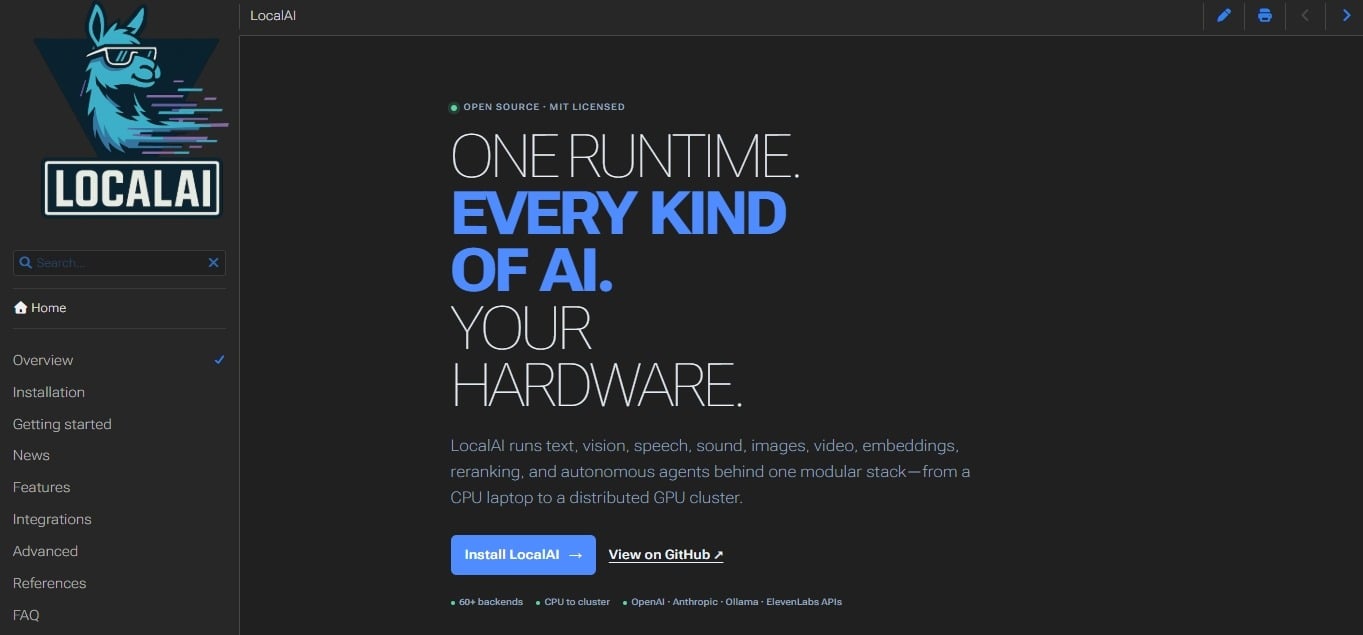
There are several options for installation, including Docker containers. Since this platform supports a wide variety of model formats, you can choose the one that best matches your hardware and performance needs. As for funding, LocalAI is a community project that has had sponsors in the past, but continues to receive donations. To send some tokens to its devs, you can use Kivach.
KoboldCpp
Like previous ChatGPT alternatives, KoboldCpp allows you to run language models locally. Created in 2023 by "LostRuins", it does so from a single executable file, without requiring installation or a GPU. It supports all GGML and GGUF models, including Llama, DeepSeek, Qwen, and Gemma.
Beyond text and image processing, it also offers music and video generation, multiple modes (chat, adventure, instruct, storywriter), Tavern Character Cards to import AI characters, web search, image recognition, many compatible APIs for external services, and different themes for personalization. In general, this versatile AI assistant is capable of handling conversations, creative writing, coding, and productivity tasks.
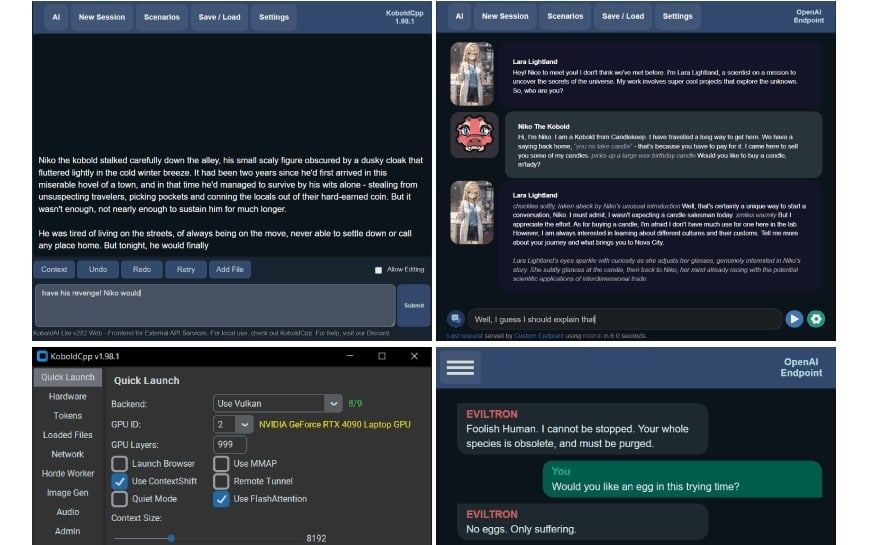
It works in the most popular OS, including Windows, Mac, and Linux. If self-compiled, it can support other platforms like Android and Raspberry Pi. It doesn’t need a GPU to run, but you can improve its performance with one. Currently, KoboldCpp is completely maintained by its founder and its own community on GitHub. If you wish to contribute to their team in crypto, you can do so through Kivach.
Leon
One remarkable thing to consider about this software is that, while ChatGPT had its initial release in 2022, Leon was released in early 2019. Its author, Louis Grenard, wanted to create a financial tracker at first, but it ended up evolving into a whole AI assistant that can understand a specific goal, create a plan around it, use tools, retrieve useful data, and fix mistakes —all locally, and even offline.
Depending on the assigned task, Leon can run in different modes. A “smart” mode makes automatic choices, a “controlled” mode sticks to its built-in tools and produces predictable responses, and “agent” mode plays step by step. Besides, Leon can actually perform different tasks by using external tools (skills), instead of only generating text. Its layered memory will remember your preferences and particular context.

The platform also includes speech recognition, text conversations, modular architecture, multilingual support, and an expanding library of skills contributed by the community. Leon is welcoming new contributors for a major transition period, where new features will come. The team accepts sponsors, too, and you can become one via Kivach.
AgenticSeek
Created by Martin Legrand, AgenticSeek debuted in 2025 as an ambitious experiment in autonomous AI agents that can perform multi-step tasks with limited user intervention. Rather than responding to a single prompt and stopping there, the software can plan, execute, and refine a sequence of actions while remaining fully open source.
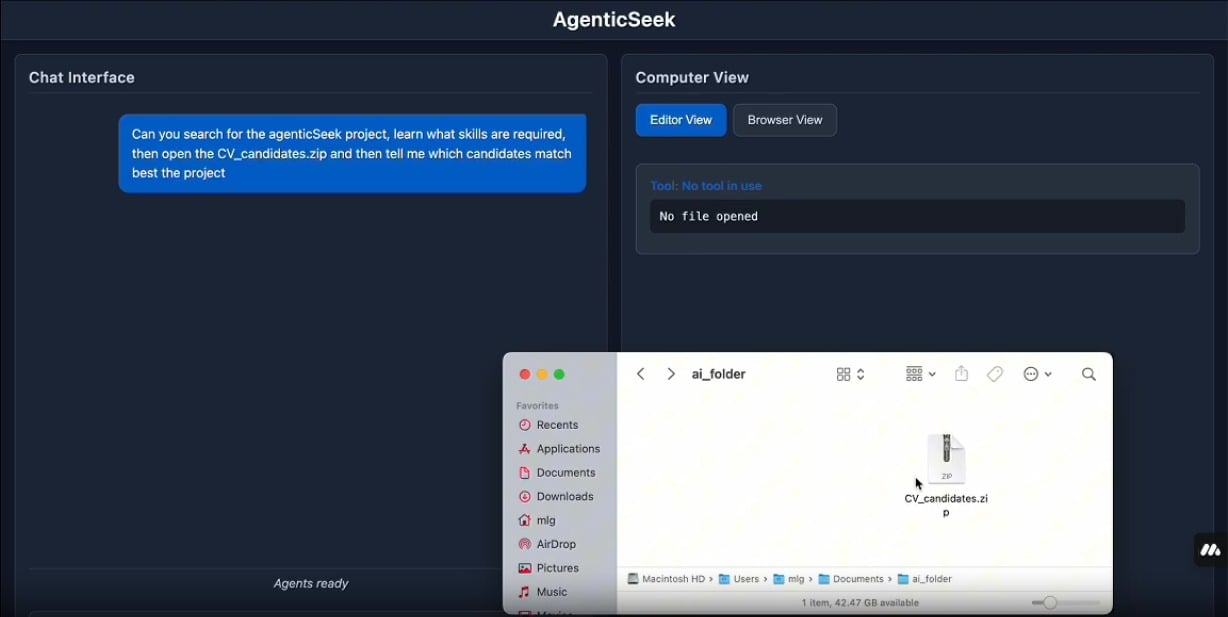
This ChatGPT alternative appeals to developers, researchers, and curious users exploring AI automation. It can assist with programming, research, file management, web interaction, and complex workflows that involve several connected steps. The process is done entirely on your machine —meaning that everything is private.
AgenticSeek supports local language models, browser automation, tool integration, memory, and configurable agent behavior. Development is driven by its creator alongside community contributors on GitHub —so, voluntary donations can help support continued improvements. Kivach users can send their own crypto tips just by typing this repo on the donation platform.
Donate and Get Donations on Kivach
Supporting these ChatGPT alternatives or your favorite GitHub projects through Kivach takes just a few clicks. Simply paste the repository's name or URL, choose the cryptocurrency you'd like to send, and confirm the transaction with your Obyte wallet or another supported wallet. There's no account to create, and repositories don't need to register before receiving contributions, so you can help almost any open-source project right away. But don’t forget to notify the owners!
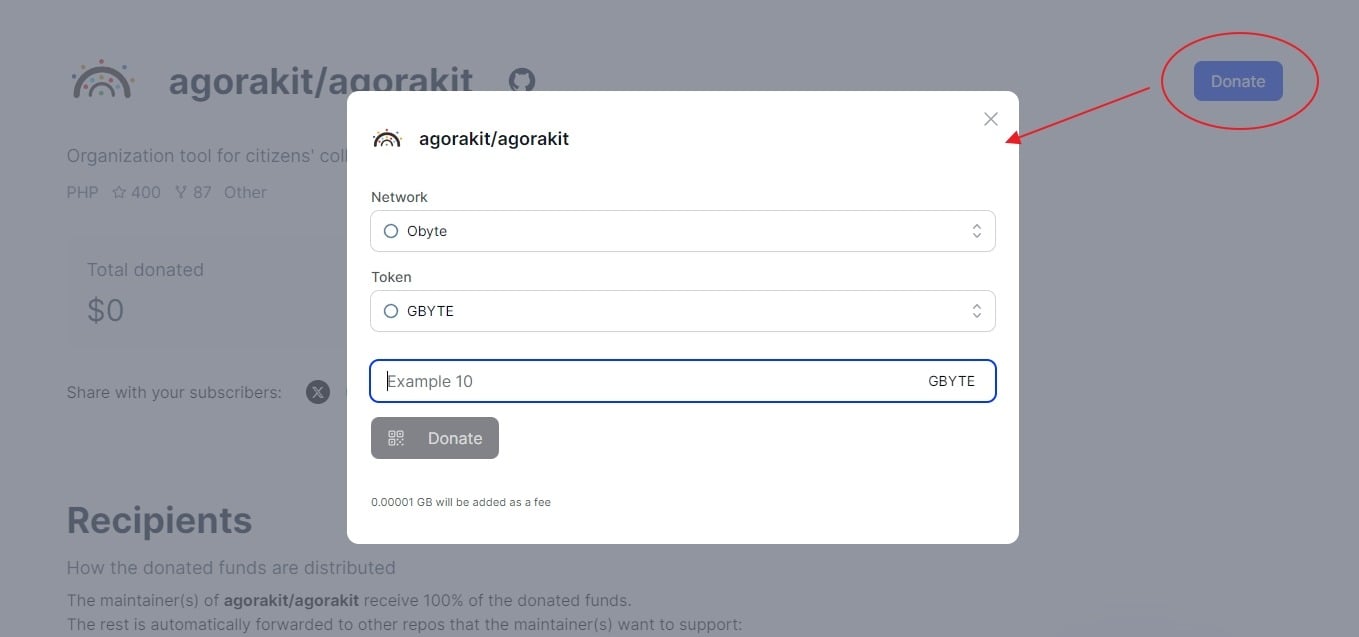
If you're maintaining a repository and someone sends you a donation, you'll need to complete a free GitHub attestation through the Obyte wallet chatbot before claiming the funds. It only takes a moment, and once everything is verified, you can withdraw the full donation or pass part of it along to the projects your software depends on through Kivach's built-in cascading donations feature.
Looking for more free and open-source tools? Take a look at the previous episodes in this series!
-
5 Open-source and Free Operating Systems to Donate via Kivach
-
5 Open-source Blogging and Writing Tools to Donate to via Kivach (Ep V)
-
5 Open-Source, Free Software You Didn’t Know You Needed to Protect Your Data
-
5 Open-Source Crypto Tools You Can Use for Free —and Support with Kivach
-
5 Open-Source Projects to Donate via Kivach, Episode VII: Games to Play for Free!
-
5 Open-Source Software for Global Teams to Donate via Kivach
-
5 Funny and Weird Software You Can Use for Free - and Donate via Kivach
-
5 Open-Source Projects for Books and Readers to Support via Kivach
-
5 Open-Source Projects for Restaurants (and Diners) to Support via Kivach
-
5+ Open-Source Projects for Focus & Productivity —To Support Via Kivach




