Loom Network is a "middleware" scalability solution for deploying dApps across multiple blockchain platforms. In its simplest definition, Loom Network is like a Platform as a Service (PaaS) on top of another blockchain. Using their own words, you can see Loom Network as “EOS on top of Ethereum”, which means they are interoperable hub across different chains. They also created their own mainnet which is called the Basechain. It is designed for advanced customers who need to establish dApps directly on a mature platform. So, how does Loom Network work? And what purpose does it serve? Let’s find out together!
History of Loom Network
Unfortunately, there’s not much background story that you can find on the internet about Loom Network. A quick Linkedin search would tell you about the core members of the team. Matthew Campbell acts as the CEO and co-founder, while Luke Zhang acts as the other co-founder. James Duffy was also listed as the other co-founder based on our information from ICODrops. And just like most other crypto startups that were started in 2018, Loom Network also started from an ICO (initial coin offering). The ICO ended on January 11th, 2018, and successfully collected $45,810,000. Even though they asked for $57 million, but still, an 80% of funding is not considered a failure at all.
Loom Network was initially started as a Platform as a Service (PaaS) with original focus on games and social apps. As we all know, Ethereum has a huge problem with scalability and especially a full-fledged online dApps that use heavy resources and designs. Loom Network tried to solve this by creating a system on top of Ethereum itself. As of today, Loom Network prides itself as the platform of choice when it comes to scaling all kinds of resource-intensive dApps, including games and highly-scalable social apps on the blockchain.
Purpose Of Loom Network

The idea of blockchain is to decentralize everything and to remove the need for “trusting” a centralized entity. However, things get complicated when the dApp (decentralized app) gets too big and takes too many resources. In a public blockchain network like Ethereum, multiple nodes and computers need to “verify” the same thing, and it requires a long time for exactly this reason. Even though many scalability solutions have been developed, but most of them still require plenty of time, before the blockchain system can finally compete with centralized servers.
The purpose of the Loom Network is to solve this scalability problem. By introducing its own “platform” on top of multiple main blockchain ecosystems, the hope is to be able to significantly speed things up for the heavy apps, while remains true to the decentralization and trustless purpose. For example, the majority of games and heavy social apps require a lot of resources, and the current technology of blockchain has not been able to “satisfy” this demand. Loom Network is trying to fix this and bring all the mainstream developers of all kinds of apps to the blockchain.
Recently, Loom Network released their mainnet called Basechain and it integrated itself with other major blockchain platforms, such as Bitcoin, Binance Chain, and even Tron. They also stated that EOS and Cosmos would be adopted. They want to stay “relevant” doesn’t matter who might win the blockchain race in the next few years. They also believe such multi-platform integration is crucial for Loom Network’s future as it tries to become the “transit hub” layer for cross-chain tokenization.
Technological Features of Loom Network

The most obvious selling point of Loom Network is their mainnet called the Basechain. It is a high-performance blockchain that does not require any gas for its transactions. Previously, Loom Network used DAppChains and Loom SDK. DAppChains were basically “small” blockchains that were created to “connect” directly with the smart contracts built on top of Ethereum. Imagine Ethereum side chains but significantly more advanced to handle large amounts of data.
The DAppChains were specialized to handle games and highly-scalable social apps. Some Loom Network supporters said that CryptoKitties would be much “easier” to handle if only it was built on Loom Network instead of the Ethereum main chain.
The other early vision of Loom Network beside DAppChains was the Loom SDK. Loom core developers created their own Software Development Kit (SDK) to help other programmers develop their own DAppChain using the SDK. When developers used the Loom SDK, they could easily opt for different types of element of the sidechain, which include its own consensus algorithm and a specific rule set that they want. Then, the same developers could run their own node software on a cloud platform that they liked.
However, nowadays Loom Network is focusing its attention on Basechain. With Basechain, developers can easily build their own dApps on a platform-ready ecosystem.
Beside the above functionalities, Loom Network is also able to create a wide range of games and social apps that were not possible without the use of blockchain tech. For example, swappable tokens, scarce items, multiple games that are “connected” to each other through the use of a decentralized network.
As for social apps, Loom Network makes it possible for non-ads monetization. With cryptocurrencies, social apps on Loom Network can monetize themselves with “karma-based” crypto tokens and make them tradeable for other cryptocurrencies and real money on crypto exchanges from day 1.
The Use Case of LOOM Token

LOOM token is used as a currency to secure the Basechain. You can easily delegate your LOOM tokens on your staking dashboard and you will be rewarded with up to 20% annually. DApp developers also need to purchase a monthly fee plan when they want to operate their dApps on Loom Network. The monthly fee is paid in the form of LOOM tokens. The fees from developers will be redistributed to the transaction validators and the stakers.
Promising Examples of Loom Network
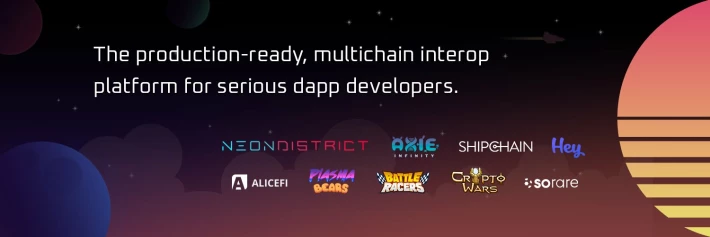
There are some “live” examples of dApps utilizing Loom Network. The first example is DelegateCall. It is basically a Q&A app that is run ultimately on blockchain, and it was created with Loom’s DAppChain. DelegateCall users can earn real crypto tokens just by being active with the answers or just by asking questions.
Another popular example is CryptoZombies. With CryptoZombies, the users can learn how to write a smart contract with Solidity (Ethereum smart contract programming language). Different from other Solidity education websites, CryptoZombies make it “fun” to learn Solidity. They also use direct examples of how to create a crypto-collectible decentralized game with Solidity. To encourage activities and consistent learning, CryptoZombies DAppChain will let you “transport” your gaming assets straight to the mainnet. They also plan to use crypto tokens as a form of incentive for the students to finish their studies.
Apart from DelegateCall and CryptoZombies, there are some decent games that are built on the Loom Network. The best example is perhaps Cryptowars. It’s a game that is inspired by a lot of typical mobile games where you can build your village and attack other players’ villages. The game is built purely with smart contracts. And all the virtual assets that you get inside the game are actually owned by you on the blockchain itself (Ethereum). It’s different from normal games where all the assets are only “tied” to your account inside the centralized server and not transferable to other games.
There are other dApps on top of Loom Network, and they are usually games (as you can see from the above image). You can see a more detailed list of Loom dApps here on dAppRadar.
Controversies and Criticism
There is not much controversy and criticism around Loom Network. Mainly because the project itself is not really “mainstream,” and its popularity is a bit behind of other altcoins. Perhaps the biggest controversy is the lack of users of Loom-based dApps. Considering Loom Network’s success is dependent on how developers “using” its platform, it has faced a “chicken and egg” situation. Most developers don’t even bother to learn about Loom as long as it’s not a popular choice to develop a dApp. Meanwhile, without these developers, Loom will never become mainstream.
Competitors
The biggest competitors to the Loom network are the other crypto projects that are built around the gaming and dApp scalability industries. They are Enjin Coin, WINk, Decentraland, and XMax. According to CryptoSlate, all of these other projects have a slightly higher market cap compared to LOOM token. Market cap is used as an indicator of how popular a crypto project is.
LOOM Token In The Crypto Market
At the time of this post writing, one LOOM token was worth $0.023962 USD. It had a $23,231,675 USD market cap, with a slightly more than $2 million daily trading volume. You can trade, buy, or sell LOOM token on some decent crypto exchanges, such as Bilaxy, Upbit, Binance, Upbit, Bithumb, CoinBene, CoinEx, Huobi, and LATOKEN.
Conclusion
Loom Network is an interesting project to solve scalability problems, especially when it comes to resource-intensive dApps, games, and DeFi. While the project has a lot of potential, but it still needs to prove itself to the crypto community and developers. At the present time, many people often overlook the potential of Loom Network. Whether it can finally become a “mainstream” dApp solution in the future, only time will tell.