
The end of the Archidamian War was in sight; the Peloponnesians were making good moves deeper into enemy territory following their victory in Boeotia, and the tides were turning ever more against Athens. Sparta now began to make good on their intentions north towards Perdiccas's Kingdom of Macedon and the Delian League allies in the area. The decisive siege and subsequent battle of Amphipolis would finally bring some semblance of peace in the Greek world, for now.
Check out my previous post on The Battle of Delium, 424 BC
BRASIDAS’S THRACIAN CAMPAIGN
Brasidas has proved himself to be a competent and capable commander, and now he intended to show his ability to subdue without withdrawing a sword. As planned, he made his way with his army to Thrace, with seventeen-hundred hoplites. Reaching Trachis, he sent an envoy to the city of Pharsalus to ask for passage through Thessaly. Waiting for a response, his advisors told him to press on through Thessaly anyway, a difficult manoeuvre for a Spartan to make at any time given Thessaly’s closer ties to Athens, let alone when marching an army through there. Brasidas finally reached Dium in Macedonia, under Mount Olympus. Arriving swiftly to meet with Perdiccas, the Macedonian king attempted to use Brasidas’s men as a tool to help against a local tribe called the Lyncestians, who had fallen out of favour with Macedon. Brasidas refused, keen on not becoming a political tool for a foreign king’s affairs abroad. Brasidas even went so far as to negotiate with the leader of the Lyncestians, Arrhabaeus.
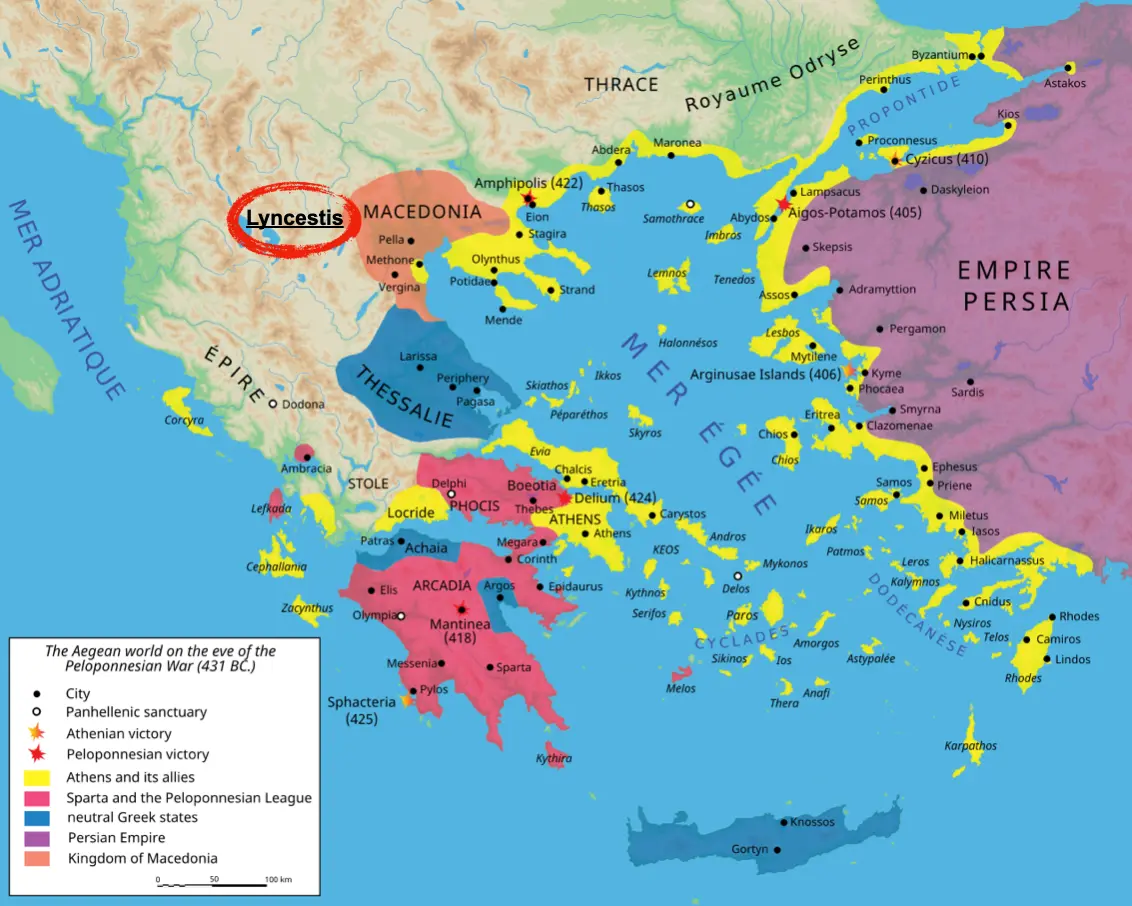
[ABOVE: The Kingdom of Macedonia (orange), with Lyncestis shown slightly to the west, during the Peloponnesian War]
Athenian pressure increased on the Peloponnese. With this, Sparta increased in concern over their slave helot population, what with the slaves outnumbering the Spartiates greatly. With this in mind, Sparta called for all helots who they considered had revolutionary and/or military intents, telling them that they could be selected to aid in the war with the promise of freedom for good service. Sparta thought that the ones who offered themselves up first would be the ones who desired freedom the most, and were thus the most likely to revolt. Thus the Spartans selected some two-thousand helots and did away with them. Their exact fates are not known, but it is likely, given Sparta’s constant treatment of the helots, that their fates were unpleasant, to say the least.
Another seven-hundred helots were sent as make-shift hoplites to join Brasidas’s forces. Brasidas was aiming to subdue the Chalkidike province near Macedonia, and they likewise were eager for his presence. Brasidas was known in Sparta for getting done what needed to be so, and he was able to impress the Chalkidians with his moderate and reasonable approach to matters, and was able to convince many cities to flock to the Spartan banner. Some cities even went out of their way to betray others to Brasidas. His goal was to give Sparta the green light to bargain at will, and alleviate the then-large pressure on the Peloponnese down south. This would translate later in the war, after the Athenian disaster in Sicily, to many Athenians and their allies gaining enthusiasm for Sparta over their own allies.
When Athens learnt of Perdiccas’ dealings with Brasidas, Athens and the Delian League immediately declared war on Macedon, promising to keep a closer eye on their allies in the region.
Perdiccas immediately took Brasidas and his force under his wing against Arrhabaeus. Reaching the city of Lyncus, Brasidas first wanted to see if he could negotiate with Arrhabaeus before engaging in battle, intent on bringing him into the Peloponnesian League. Perdiccas, however, who was paying for half the upkeep of the Spartan forces, claimed that he did not bring Brasidas with him for niceties. Brasidas would, however, make dealings with Arrhabaeus in secret anyway, causing Perdiccas to reduce the payments he would make to the Spartan forces down to a third. Brasidas was even able to convince Akanthos, near Mount Athos, to secede from the Delian League, and Stagirus too was convinced to join Sparta.
THE SIEGE OF AMPHIPOLIS, 424 BC
Not long after the Battle of Delium down south in Boeotia, Brasidas and his forces set their sights on the main city in the Chalkidian region: the Athenian colony of Amphipolis. Brasidas was keen to take the city by surprise, an attempt which would be coupled with an ongoing conspiracy within the city; several men from the nearby city of Argilus within the city walls would attempt to aid Sparta in defeating Amphipolis. Argilus was under the rule of the Delian League, who always looked down on them with suspicion, and Argilus in turn had always had their eyes on Amphipolis. Welcoming Brasidas into their town, they defected from the Delian League that very night before escorting Brasidas to the best river crossing over the River Strymon to attack Amphipolis. A small garrison guarded this bridge, but the Spartans easily overcame it. The capture of many of these men and the sudden appearance of the Spartans caught Amphipolis by surprise.

[ABOVE: The ruins of Amphipolis aside the bridge over the River Strymon, by Juseph Langlumé from E. Cousinéry's "Voyage dans le Macédoine, 1831]
Brasidas camped his army outside the city walls, while the conspirators inside struggled to betray the city over due to how outnumbered they were. Among the city’s defenders was the Athenian general Eucles, there to help defend the city. He immediately sent out for another general in the region, the famous to-be historian now general Thucydides, for aid. Thucydides was very influential in the region and had access to local gold mines, worrying Brasidas that he’d be able to better fund his men and call upon further reinforcements before Brasidas made a move on the city. Brasidas therefore offered the Amphipolitans and Athenians within the city five days to withdraw from within the walls should any wish to. This caused the supporters of Brasidas in the city to speak openly of their pro-Spartan stance, causing many others within the walls to gain the confidence to do the same. With growing anti-Amphipolitan cries from within the city, eventually terms were reached and the city was surrendered over to Sparta. Thucydides sailed quickly back to Eïon with his fleet to organise a defence, taking in those who had left Amphipolis under the terms.

[ABOVE: An 1825 recreation of the plans for the siege of Amphipolis according to Thucydides]
Brasidas’s first attempt on Eïon, an attack made by land and via the river, initially failed. Perdiccas by now arrived and met back with Brasidas in Amphipolis to consolidate the city and their new gains. The capitulation of Amphipolis sent shockwaves in Athens, since the colony was a good source of timber used for their fleet, and many ships in the region, now cut off by the increased Spartan presence, were more stranded. Given these circumstances, Athens was concerned that more Delian League allies would begin to defect, and in line with their worries, Brasidas was rousing several Athenian allies in the region to revolt against Athens, ignorant of the power the city-state still held. In response, Athens, and Brasidas in further response, called for reinforcements to the region. Brasidas was keen to construct triremes along the River Strymon ready for battle, but his army was more keen to recover the Spartans captured following the battles of Pylos and Sphacteria last year.

[ABOVE: The Persian fort at Eïon to the left by the mouth of the River Strymon to the right, as seen from Amphipolis (modern Ennea Hodoi). Photo taken in 2019]
THE EXILE OF THUCYDIDES
For his failings, Thucydides was held responsible for the loss of Amphipolis and put on trial in Athens. His primary accuser was Cleon, Athens's lead politician at the time and one of the two leading generals at the battle of Pylos. He accused Thucydides of prodosia (that is, treason), an accusation often made against any unsuccessful general. The trial of Thucydides is a confusing one, which isn't helped by the fact that the only primary source for it comes from Thucydides himself, itself a puzzle. By the end of it, however, he was sent into exile for twenty years. Where he was sent exactly is unknown, but he states that his exile allowed him to gain a perspective of the war through the Peloponnesian's eyes:
The fact that I was in exile from my own country for twenty years after my command against Amphipolis gave me the opportunity to observe affairs from both sides (exile adding the Peloponnesian perspective), and to reflect on them in relative calm.
- Thucydides, Book 5.26

[ABOVE: A modern plaster-cast bust of a Roman copy (c.100 AD) of an original 4th century BC bust of Thucydides, now held in the Zurab Tsereteli's Gallery, Moscow. The Greek original is kept in Holkham Hall in Norfolk, U.K.]
THE SIEGE OF TORONE
Following Amphipolis’s capture, Brasidas campaigned against the city of Acte, a city that lies along the canal dug into the peninsula by Xerxes during his invasion of Greece some sixty years prior. The local region was inhabited by many Greek-speaking, bilingual Thracians from the north, and a range of diverse peoples. All cities in the region aside from Sane and Dium, causing Brasidas to begin raiding their local lands. When this yielded no surrender, Brasidas campaigned against Delian-allied Torone, where Athens still maintained a garrison. Seeing his arrival, conspirators within the city assisted seven Spartan soldiers to sneak into the city via a gap in the seaward side of the city walls. The seven soldiers killed the guards and destroyed the gates.
With the gates of Torone open, Brasidas sent the first portion of his army - some one-hundred peltasts - to advance first. The conspirators allowed the javelineers to enter via three entries into the city, intending on intimidating the citizens who knew nothing of the conspiracy and the events unfolding. At a given fire signal atop the walls, Brasidas sent the rest of his force forward at a pace, war crying as they advanced to intimidate and shock the city further. Once inside the city, Brasidas made straight for the highest point in the city near the city centre, intent on making sure he had a vantage point to make sure the city was captured top to bottom, while the rest of his army spread out evenly throughout the streets. Fifty Athenian hoplites stationed in the city’s agora woke to repel the invaders, causing many to be killed and the rest to flee to safety to the nearby settlement of Lecythus, recently captured by Athens.
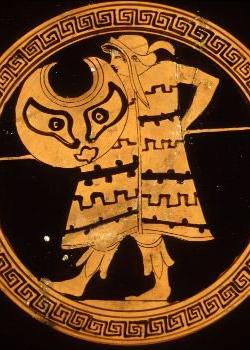
[ABOVE: A red-figure kylix cup depicting a Thracian peltast (javelineer) in his full panoply, 5th-4th century BC]
Many Toroneans had fled during the city’s capture to Lecythus. Aware of this, Brasidas offered them safe passage back home. He also sent a message to Athens asking them to abandon the region altogether, claiming it was not theirs to own. Athens refused, and were instead granted two day’s truce to recover their dead, allowing Brasidas time to fortify his position further and rebuild the damaged walls. With his position in Torone fortified, Brasidas reassured the citizens not to distrust the men who had betrayed the city to him, for they had not been bribed into action and did what they did to free the city.
THE SIEGE OF LECYTHUS
Two days after, the truce expired, and Brasidas set out for Lecythus. Despite the Athenians manning the city having few defenders and a damaged wall, the first attack was repelled. On the next day, and likely noting the success at Delium, Brasidas brought forward a machine to propel fire at the walls. In response to seeing its construction, the Athenians erected a tower at the weakest point in the wall where they thought it most likely Brasidas would attack. The goal was to use it as a vantage point to propel projectiles from. However the tower soon became overburdened with men, and the structure collapsed.
Many in the immediate vicinity were killed, and those further away thought that the wall had been breached and the Spartans were closing in, rallying the Spartans and causing a route amongst the Athenians. Brasidas’s army charged forward, captured the walls and killed any inside they found. Very few managed to escape, and Lecythus itself was demolished and the grounds became a sacred precinct.
THE TRUCE OF 423 BC
This soon was followed by the truce of 423 BC. During the truce, the city of Scione defected to Brasidas and Sparta. This city was in the Pallene region, in control of the Peloponnesian League, which was cut off and isolated after the Athenian siege of Potidaea. For their defection Brasidas, upon entering the city, sang high praise to the citizens of Scione, who he saw as revolting against Athens under isolated, difficult circumstances, showcasing themselves as loyal, unflinching Spartan allies. In turn, Scione honoured Brasidas with a golden crown, proclaiming him,
the liberator of Hellas.

[ABOVE: Brasidas's silver ossuary and gold crown, now held in the Archaeological Museum of Amphipolis]
THE DEFECTIONS OF SCIONE AND MENDE
Leaving Scione with a minor garrison, Brasidas moved his army to attack the city of Mende, and Potidaea itself. Returning to Torone, Brasidas got word via an Athenian and Sparta ambassador, who were sent to pass on the news of the truce to their various allies, that Scione had defected from Brasidas once the truce was ratified. The Athenian ambassador returned this news to Athens, who in turn voted in favour of a campaign against Scione. Sparta cried out that this would be a clear violation of the peace treaty, which Athens disputed, since they defected after the truce’s ratification. Under Cleon, the notion was passed and Athens set out for Scione. Inspired by Brasidas, the nearby city of Mende too defected from the Delian League, which Brasidas accepted. His goals now lay in defeating Athens at Scione and Potidaea.

[ABOVE: Coinage from Scione, depicting the head of Protesilaos, a Thracian-based hero from Homer's Iliad, wearing an Attic helmet (obverse) and the stern of a galley (reverse), c.480 - 470 BC]
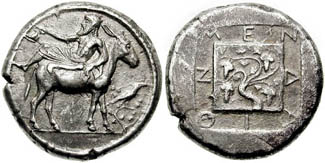
[BELOW: Silver tetradrachm from Mende depicting the God Silenus drunk on a donkey (obverse) and a four grape vine between the word "MENΔAIΩN" ("of Mendians"), c.460 - 423 BC]
PERDICCAS AND ARRHABAEUS
Anticipating a naval assault on Scione and Mende, Brasidas withdrew the women and children from the cities to nearby Olynthus. In their place, he recruited five-hundred allied hoplites and three-hundred allied peltasts, under the command of Polydamidas. While anticipating the Athenian arrival, Brasidas joined forces with Perdiccas to once again campaign against the king’s rival, Arrhabaeus. Their total force of three-thousand hoplites, one-thousand cavalry and some Thracian allies met Arrhabaeus’s Lyncestian force and lined up for battle. Both infantry lines were positioned on their own hills facing each other, with a plain separating them. The battle opened with each commander’s cavalry racing down their hills to engage in the plains. Next, the Lyncestian hoplites advanced to aid their horsemen, which Perdiccas matched, causing the two hoplite armies to engage too. After a struggle, Arrhabaeus’s line collapsed and retreated to the hills, with many being cut down in the process.
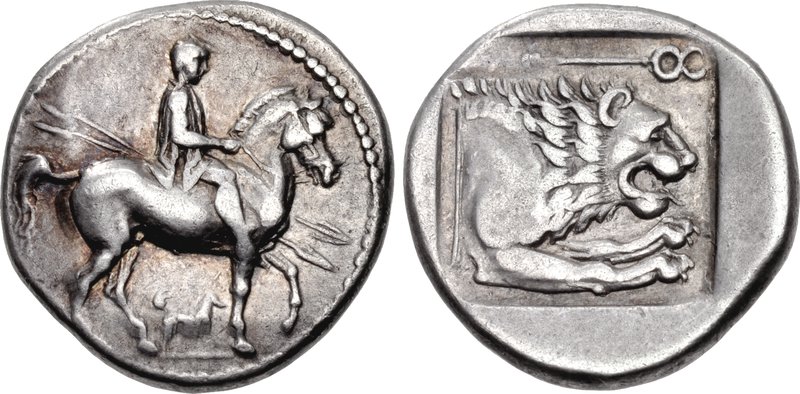
[ABOVE: Silver tetrobol coin depicting King Perdiccas II (obverse) and the Nemean Lion, killed in legend by Perdiccas' ancestor Herakles (reverse), 451 - 413 BC]
Following the battle, Perdiccas wanted to pursue Arrhabaeus and his survivors, but Brasidas was still concerned with defending Scione and Mende. However when some Illyrian mercenaries, noted for their great prowess in battle, expected by Perdiccas defected to Arrhabaeus, both generals decided to withdraw. Their withdrawal, however, was not properly planned and organised, and when night descended the army fell into panic, and many in the army withdrew to their homes, not knowing how big this army could be. By dawn, Perdiccas realised what was happening and withdrew the rest of his Macedonian forces, forcing Brasidas to do the same.

[ABOVE: The tomb of Xerxes I at Naqsh-e Rustam, Fars province of Iran, showing the "Ionians in silver hats", who were possibly Macedonian soldiers under Persian command, 5th century BC]
Leaving the region, Brasidas organised his hoplites into a hollow square marching formation, with his light infantry inside along with his picked three-hundred bodyguard and himself. Arrhabaeus’s now-inflated army eventually rallied back and found Brasidas’s force on the march. Assuming they were retreating in fear, the army charged down from the hills to attack the Spartans. Despite the powerful downhill charge, this initial attack was repelled by the hoplite’s excellent formation and discipline. This charge by Arrhabaeus’s army and its subsequent repelling by Brasidas’s repeated throughout the day, with the Spartans marching further back towards Scione and Mende with each break in the attacks. Some of Arrhabaeus’s forces stayed to harass this army, while the majority set out for Perdiccas’s fleeing soldiers, killing several in the process. Victorious, they returned to encircle Brasidas’s force and cut him off from his return journey.
Realising the predicament his army was in, Brasidas told his three-hundred personal guard to make for the most advantageous nearby hill with him, defeating the forces stationed there in the process and allowing the rest of his army to march up there unimpeded. Loosing their advantage on this hill, Arrhabaeus’s men haunted their assaults on the Spartans. That same day, Brasidas’s army made it to safety in Perdiccas’s territory.
Brasidas’s army were greatly angered by Perdiccas and his army for their retreat; on the march back home, many of them encountered the Macedonians’ ox carts and baggage train, and in anger killed the ox and looted the army’s goods. From this point on, Perdiccas would come to flip his favouring from Sparta to Athens, beginning the process for Macedon to ally itself with the Delian not the Peloponnesian League.
Returning to Torone too late, the Athenians had captured and sacked Mende. Their force, commanded by Nicias and Nicistratus, consisted of fifty ships, a thousand hoplites, six-hundred archers, a thousand Thracian mercenaries and allied peltasts. Only around a thousand men were able to stand against them. Brasidas's position to cross over to Scione had been tampered.

[ABOVE: Depiction of a 5th century BC Greek hoplite, from "Classical Warfare: The Age of the Greek Hoplite" from the Department of History, United States Military Academy, 1984]
With Mende under control, Athens turned to Scione, who had their own and the Peloponnesian forces lined up outside the city walls atop a hill. Athens attacked upfront, driving the defenders off the hill, and set about circumvilating the city - that is, building a wall around it to cut it off from people and goods. During the walls’ construction, men from Mende snuck their way past the Athenians by sea to Scione, making their way inside the city.
Hot from the debacle with Brasidas, Perdiccas made contact with the Athenian commanders, just as the Spartan commander Ischagoras was due to supply Brasidas with reinforcements. Despite diplomatic attempts between Nicias and Perdiccas to ensure the Spartans wouldn’t be able to gain reinforcements through Thessaly, Brasidas received the extra troops. The Spartans also installed the young commander Clearidas as the governor of Amphipolis.
By the end of the summer of 423 BC, the wall of circumvolution around Scione was finished, and most of the Athenian besieging army withdrew, leaving a small garrison behind. The truce of 423 BC saw no action in the winter, aside from one minor engagement that ended in a draw, and an attempt on Potidaea by Brasidas; mounting ladders against the walls, sentries quickly discovered the attempt, and Brasidas was forced to withdraw. With this, the ninth year of the war came to an end.
THE 2nd BATTLE OF AMPHIPOLIS, 422 BC
As the Treaty of 423 BC was coming to an end, Athens started the year off by kicking the Delians from the island of Delos, once the central treasury island of the Delian League. Those who left the island were offered shelter in Persia.
With the truce over, Cleon convinced Athens to grant him one more navy to head towards Thrace again. His armada consisted of thirty ships, twelve-hundred hoplites, three-hundred horsemen and several allied troops. Docking first at the still-besieged Scione, he took in several of the garrison from there into his own force before heading for Torone, where he discovered that Brasidas was not there. The city’s governor put up a defence against the Athenian assault, but to no avail, and was forced to retreat to the city centre, abandoning the walls. However, ten of Cleon’s ships had encircled the city and made for the harbour, getting to the city centre before the retreating Toronaeans, encircling them and winning the day. The governor and several others were captured, and many others killed or enslaved.

[ABOVE: Modern miniature model of a Greke trireme]
Cleon had now sailed round from Torone to the key city of Amphipolis. He made attempts on other cities in the region and asked for local Thracian mercenaries to join him. In response, Brasidas took up a highly defensive position across the river, with his two-thousand hoplites, three-hundred Greek cavalry, fifteen-hundred Thracian mercenaries and over a thousand peltasts, amongst other allied troops. Around fifteen-hundred of these men stayed with Brasidas, with the rest meeting with Amphipolis’s governor Clearidas.
Cleon was eventually forced to manoeuvre; his troops saw the professional Spartan army they opposed and compared it to their own force, reluctant as ever to join Cleon on this expedition to begin with. Still high from his victory at Pylos two years prior, Cleon moved his impatient troops forward into a “reconnaissance” mission until reinforcements arrived. Setting up atop a hill outside Amphipolis, he thought the city was practically undefended as he saw no one manning the walls or approaching out the gates. Noting Cleon’s movements, Brasidas entered the city from the opposite side.
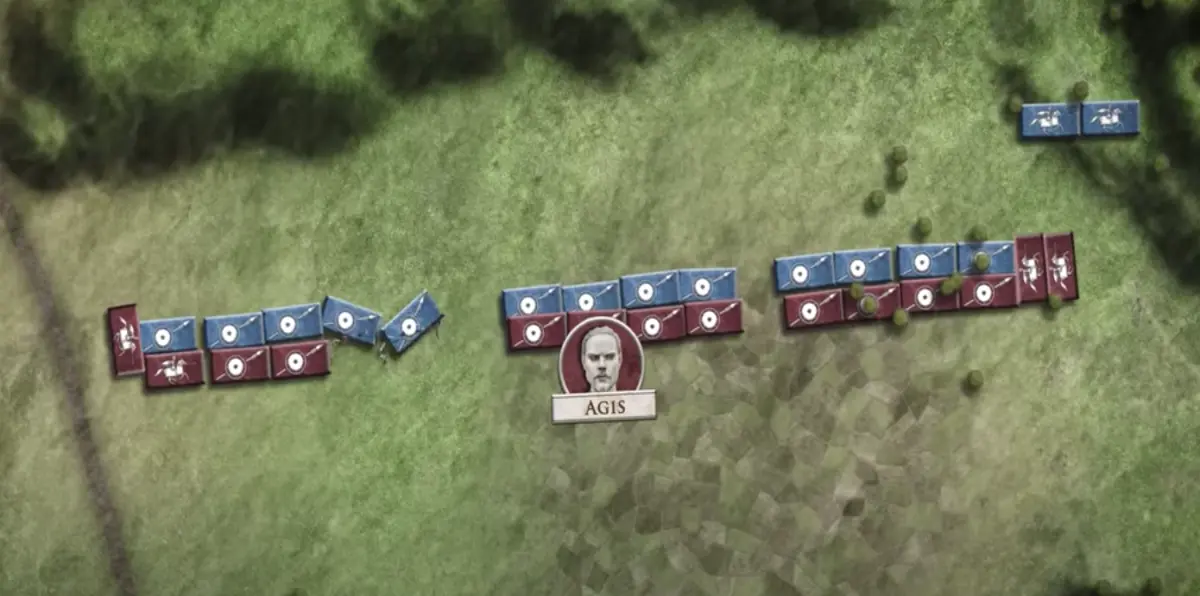
Brasidas doubted the quality of his army against Cleon’s Athenian citizen army. He thus decided to take his best 150 hoplites to make a sudden attack before Cleon’s reinforcements arrived. Rallying his army with a great speech, Clearidas was told to attack the northern city gates. Brasidas had been seen moving towards Amphipolis by the Athenians, and could be seen now inside the city atop the interior hill preparing for battle. While Cleon was making reconnaissance moves in front of Amphipolis, word reached him that the entire Peloponnesian army was approaching him before his reinforcements could arrive. Considering this, he ordered his army to pull back to the city of Eïon, leading from his army’s left wing and thus exposing the men’s unshielded side towards the enemy.
Brasidas saw his opportunity and rallied his men to attack:
These men will not stand and face us. I can see it in the jostle of their spears and heads. When troops behave like that, it usually means that they will not withstand an attack. So let me have the gates opened where I said, and let us be out and at them as quick as we can. We can be confident of victory.
The Spartan army attacked the Athenian centre. Already not in battle order and panicked by the sudden attack, Clearidas saw Brasidas’s attack and charged his men in too as per his instructions. The left wing of the Athenian army closest to Eïon broke into a full route. Bolstered, Brasidas made for the Athenian right wing. In his ensuing melee, he was mortally wounded and carried off the field by his men, all of which went unnoticed by the Athenians. Standing and fighting among the Athenian right was Cleon himself, who was struck down by javelin fire and killed.
The rest of the right wing fought valiantly, beating back three waves of the Spartan army pulling back, regrouping and attacking before their allied cavalry came in to reinforce, surrounding the Athenians completely. Thucydides states that around six-hundred Athenian soldiers fell that day, while only seven Peloponnesians fell. Reinforcements intended for Brasidas turned back once they learnt of the commander’s death.
In his Socratic “Apology”, Plato mentions that Socrates was a veteran of this battle too, but no details are given.

[ABOVE: Marble Roman portrait of Socrates from the 1st Century AD, likely a copy of a bronze original made by Lysippos, now held in the Louvre, Paris]
Brasidas lived just long enough to know that his army was victorious at Amphipolis. He soon after breathed his last. His body was eventually given a procession through Amphipolis before being given a state funeral. Games and offerings were made by the citizens to Brasidas’s name, who was honoured as the city’s saviour and a hero, and named as the new founder of the city.
THE PEACE OF NICIAS
The battles of Delium and Amphipolis turned Athens towards seeking peace; two huge defeats like these one after the other showed Athens that the tides of war were turning, and alliances within the Delian League could begin to break down. Thoughts must have turned to just after the battles of Pylos and Sphacteria when peace was offered by Sparta, and to the Peace of 423 BC.

[ABOVE: Bust of Nicias from "The World's Famous Orations, Vol. 1", pg. 105, by William Jennings Bryan, 1906]
Sparta too was concerned; they’d suffered more defeats and setbacks than Athens overall, and they’d hoped that the war would be over by now, what with the plague, Pericles’s death and the annual ravaging of their lands, and the helot population back home was restless as ever, and fear of a new revolt to match the revolt of 464 BC was rife. There was also the concern that their treaty with Argos was about to end, and a front against Sparta’s two greatest Greek rivals was not something they could handle right now. Their main concern, however, were the 292 prisoners from Sphacteria, 120 of them Spartan citizens and great warriors. Athens was always reluctant to hand such men back to Sparta, yet with the recent defeats Sparta thought their minds could be changed.
Cleon and Brasidas were Athens's and Sparta’s most renowned warmongers of the time. Following their deaths, Nicias of Athens and Pleistoanax of Sparta, son of the famous regent Pausanias who led the great battle of Plataea in 479 BC, became more influential in their respective states, growing their enthusiasms to end the war. To this day, Nicias had never lost a battle, and was keen to capitalise on the moment and give his men a rest from the bloodshed. Pleistoanax on the other hand, recently returned from exile in Mount Lykaion following a religious dispute with his rivals back home, too reckoned that peace, and the return of the Sphacterian Spartans, would be in the best interest of Sparta and Pleistoanax’s own safety. Anyway, in states of war, it's always those in charge who are made responsible.

[ABOVE: An east-facing view from Mount Lykaion's summet, showing its Sanctuary of Zeus, stoa and Hippodrome, in Arkadia, Greece. Photo taken in 2008]
Discussions carried on through the winter of 422 BC, moving into 421 BC, ten years following the start of the war. Eventually, terms between Athens and Sparta were reached: if peace was to be achieved, each side would have to return what they had gained from the war, with the exception of Nisaea for Athens and Plataea for Thebes. When all was clear, both sides, with a majority vote, agreed to the peace in the March of that year.
Each city involved in the treaty was to have seventeen of their own men annually pledge the following:
I shall abide by this agreement and this treaty with all justice and honesty.
Amongst the attendees of the treaty’s formation for Sparta were both Spartan kings, Agis II and Pleistoanax, and for Athens there was Nicias, Laches, Lamachus and the general Demosthenes, veteran and commander of the battles of Olpae, Pylos and Sphacteria. The terms were as follows:
- Any quarrels were to be solved in the courts, not on the battlefield
- Both sides were free to access any holy sanctuary they saw fit, both by land and sea. In regards to the most important oracle, the city of Delphi was to remain autonomous
- Sparta was to return Amphipolis to Athens
- The following cities were to become autonomous from Athens in all means except paying tribute: Argilus, Stagirus, Acanthus, Scolus, Olynthus and Spartolos. Should Athens convince any of these after the treaty to become allies, they would be allowed to keep this alliance
- Sparta was to return the city of Panactus to Athens, and Athens was to return Coryphasium, Cythera, Methana, Pteleum and Atalante
- Spartan prisoners held by Athens anywhere were to be returned to Sparta immediately, and vice versa
- The Delian League siege of Scione was to be lifted
- The cities of Scione, Torone and Sermyle, captured by Athens during the war, were to be returned to Sparta at Athens’s own discretion
- The Spartans and Peloponnesians captured after Sphacteria were to be returned to Sparta
- Terms were to last for fifty years.
The peace wold not last fifty years.
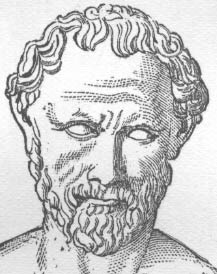
[ABOVE: Portrait of Demosthenes from "Young People's Cyclopaedia of Persons and Places", by Polyeuktos, 1881]
Pillars of the records kept for the peace were to be kept in Athens, Sparta, Corinth, Olympia and Delphi. Sparta was held to keep their side of the deal first by releasing their Athenian POW’s. They were next instructed to head to Thrace and hand Amphipolis back to the Delian League. Clearidas, still governor of the city, refused at first, going to Sparta himself to ask if the treaty could be altered, but Sparta’s hands were tied.
Sparta went so far as to make this peace deal even when a few of their Peloponnesian allies stood up against the deal. Sparta was keen to keep a strong ally like Athens in the region nearby to neutral Argos, Sparta’s historic rival. The treaty was extended to state that if anyone was to enter Athenian or Spartan territory with any hostile intent, the other was permitted to assist however they please, and should their lands be ravaged and left, they shall be declared an enemy of both city-states. Athens was also permitted to aid Sparta against a helot uprising.
For now, the war was over, at least between the regional superpowers of Athens and Sparta. Other major alliance members, such as Corinth, would continue mild hostilities, causing rustlings in the Peloponnesian League. Despite the desires fifty years for the Peace of Nicias, only eight years would pass until the two Greek giants went head to head once more.
The rest of the Peloponnesian War was to come: Large scale battles would still be fought, alliances would be altered, turncoats would show their true colours and one of the greatest military disasters in history would unfold.
NEXT POST: THE BATTLE OF MANTINEA, 418 BC: War in Peace
SOURCES
- Thucydides, "The Peloponnesian War", Book 4.78 - 5.24
- Donald Kagan, "The Peloponnesian War", chapters 3.4 - 3.5
- Plato, "The Apology", 28e
YOUTUBE LINKS
(I do NOT own these videos)
"Battle of Amphipolis 422 BC - Peloponnesian War 4K History DOCUMENTARY" by "Kings and Generals"
"Ancient Greek History - Part 5 of the Peloponnesian War - 22" by "Historyden"
"Ancient Greek History - Part 6 of the Peloponnesian War - 22" by "Historyden"
MY ANCIENT GREEK HISTORY BLOG PAGE
MY ANCIENT PERSIAN HISTORY BLOG PAGE
All feedback - positive and/or critical - is appreciated!
All images used are copyright-free
Don't forget to rate this post, share it and leave a tip if you enjoyed it
Thanks for reading :)






