
Training is essential for success.
Training is ongoing.
Training involves both ups and downs.
And training should always be a learning experience.
In this post I review some key parts of my training in 2020 and some of the lessons I learned.
Feel free to comment about the lessons you learned during 2020!
The Good
Shifting Goals
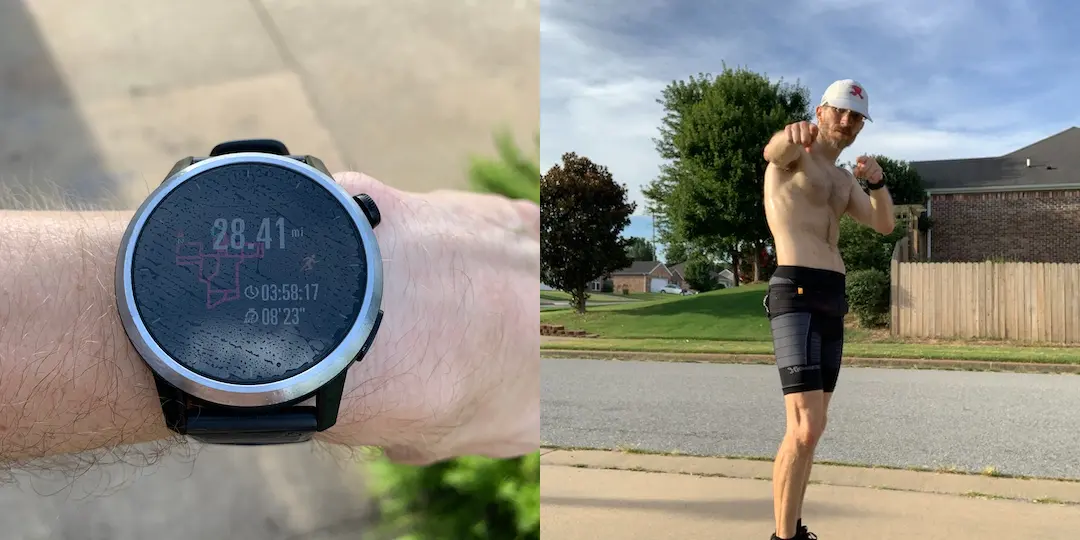
On one hand, it's important to stay focused on goals. On the other, it's important to know when to change your focus. COVID-19 was exactly that kind of moment. Initially, I just let myself have some fun. I was all trained up for my 2020 A race: Prairie Spirit 100M, and was just entering my taper, so my fitness was pretty high. At first, I just started having fun: running 50K hill workouts, doing a 41-mile birthday run, accompanying friends on their own challenges, etc. But eventually my focus solidified.
Rather than races, my focus shifted to fitness. One of my running heroes is Mike Wardian. I'm continually impressed by how often and how consistently he does long runs and quickly he seems to recover. I'm amazed at his consistency. I'm amazed by the work and the joy he exudes. I decided my goal was transformation. Rather than a being an ultrarunner a few days a year, I wanted to be an ultrarunner as a lifestyle.
Lesson: When life throws wrenches in my plans, roll with the punches. Set new goals. Goals don't always need to be external, and for me, intrinsic goals might be even more powerful!
Consistency
In my build up to Prairie Spirit 100M, I spent three straight weeks (and four total weeks) at 100+ miles per week. Pretty much every week was 70+ miles. That really shifted my perspective of what felt normal. But once COVID-19 precautions really went into effect, I found myself not going to the gym (which is a subject I'll touch on later), which left me a little more time for running-specific training.
Though I understand that there are training phases and reasons for lower and higher mileage weeks, I really wanted to build a new norm and leave the yo-yo training pattern (build up, taper race, train lazily, repeat...). I settled into 75-85 miles (121-137 km) for a typical week, and pushing into the 90s and higher on high-mileage weeks. I can't tell you how transformational this has been. Weeks in the 60s now feel so easy (and even a bit lazy). This is exactly what I was looking for, and I credit this for increasing both my endurance and speed.
Lesson: Shape my own normal. If I want to make a change, change. I am not a slave to my habits; I create my own normal. And consistency is the key to shaping what is and is not normal, and the key to making huge strides in overall running development.
Long Runs
Long runs became key to my training. Anything under 20 miles (32 km) essentially became base mileage. Typically I tried to fit in two long runs each week. To that end, "Monday Marathons" became a central feature. On Monday mornings (up until grad school started), I made a point of running at least a marathon, but sometimes up to 32 miles (51K), and following that up with a full week of running (taking Sunday's off). This really got me used to running on tired legs and really reshaped my perspective of "long". Now, two-hour runs feel just
Lesson: I am an ultrarunner. I am not (nor ever will be) a runner on par with the likes of Wardian or Sharman or other elites. I'll never even be on par with the best of the best in Arkansas. But I am an ultrarunner. Not just on race day. Not just on special days. Any day that I want to be: I am an ultrarunner.
The Bad

Strength Training
Strength training is so important. Everyone should be doing strength training. I'd been very consistent with strength training since 2012 or so, and 2020 was no exception. Emphasis on was.
The pandemic led me away from the gym. (This became a permanent departure when I tried to return in September and found that safely protocols were not being enforced at all. Not even a little.) My default was to train in my garage with the limited equipment that I had. I sometimes said I was using the "Rocky IV" method of strength training, as I used things like pickaxes and bags of rice as stand-ins for dumbbells, barbells, and such. While it was relatively easy to keep up with this in the spring, it became more difficult as he summer heat ramped up, and then as full-time graduate school began in the fall. And now in the winter, it isn't any easier.
I've lost a LOT of strength: at least ten pounds (4.5 kg) of muscle. I really worry how this is going to affect my overall durability, my ability to run hills, and injury prevention. I also think this contributed to some of the IT band issues I was facing in autumn.
Lesson: I am really bad at maintaining fitness regimens when they are at my own home. I keep trying to recommit to strength training, but when the garage is my gym, it often just doesn't happen. I need to fix this, but I don't know how.
Scheduling
I used to be extremely disciplined at getting up at 3:00 (and sometimes earlier) to work out. And during the spring and summer, I was able to maintain that habit, if for no other reason than to avoid the Arkansas summer heat and humidity. As summer entered autumn and autumn changed to winter, that has changed. It's become difficult to get up before 4:00 a.m. and even then, I usually can't make myself get out and run in the below-freezing morning darkness. This habit devolution concerns me.
Lesson: Current life circumstances permit me to scrounge up time to work out in the late morning or even afternoon. This is not actually sustainable, and it's reducing my toughness. It really would have been better to simply maintain my schedule, and this will cause me some trouble as spring nears. When you have a good habit: keep it!






