
Every day, people generate massive amounts of data without realizing it. From the websites we visit and products we research to the apps we use and content we interact with, our digital behavior creates valuable information that companies use to understand customers, improve products, and train advanced technologies.
For years, this data economy has mostly benefited large companies. Users generate the information, but they rarely have control over how it is collected, analyzed, or used. A new generation of data platforms is attempting to change that by giving individuals more transparency and a way to participate in the value their data creates.
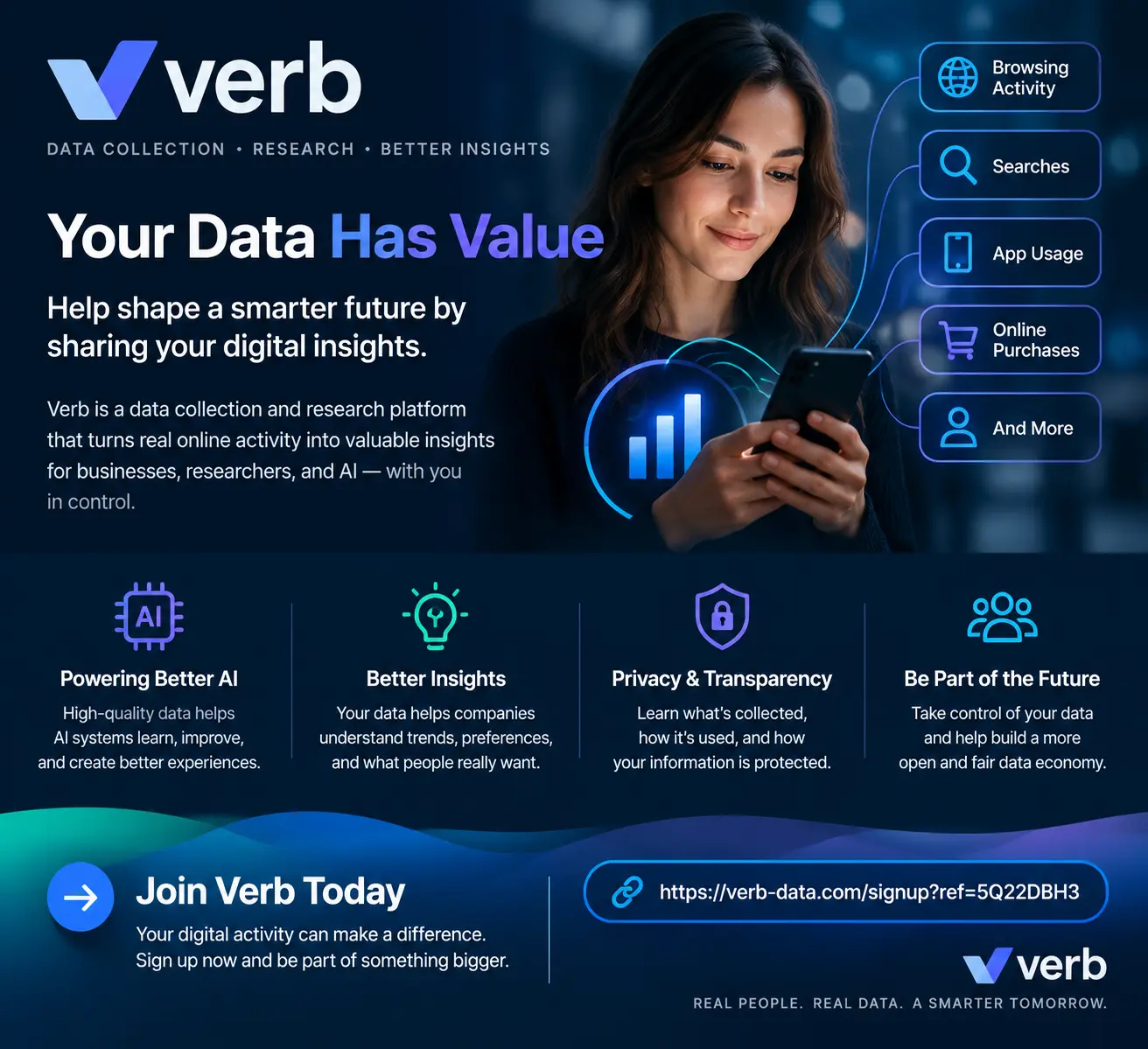
One platform exploring this idea is Verb, a data collection and research platform designed to help users contribute information while allowing businesses and researchers to better understand consumer behavior.
What Is Verb Data Collection?
Verb collects digital behavior data from participants who choose to take part in its programs. This can include information such as online activity, browsing behavior, app usage, searches, and other interactions with digital services. According to Verb’s privacy information, the platform may collect technical data, online activities, and usage information through its applications when users participate.
The purpose of collecting this information is to create insights that help companies understand trends, consumer preferences, advertising effectiveness, and digital behavior patterns.
Instead of relying only on traditional market research methods, platforms like Verb allow companies to analyze real-world digital activity and develop a clearer picture of how people interact online.
Why Data Collection Matters in the Age of AI
Artificial intelligence is increasing the demand for high-quality data.
AI systems require enormous amounts of information to recognize patterns, improve accuracy, and become more useful. Whether it is understanding consumer habits, improving recommendations, or developing new digital services, data is the foundation behind many modern AI advancements.
As AI continues to grow, the question of who controls and benefits from data becomes increasingly important.
Many people provide valuable information every day through their online activity, but they often have little visibility into how that information contributes to the digital economy.
A data-sharing model gives individuals an opportunity to be more involved in that process.
How User Data Can Create Better Insights
Raw data by itself is not always useful. The real value comes from organizing, analyzing, and turning information into meaningful insights.
Businesses can use aggregated data to better understand:
- Consumer preferences
- Shopping patterns
- Online trends
- Advertising performance
- Product improvements
- Customer experiences
Verb’s platform focuses on turning collected information into organized insights that can be used for research and analysis. Its tools include ways to build data collections, dashboards, visualizations, and APIs for accessing structured information.
The Importance of Data Privacy and Transparency
As data collection becomes more common, privacy remains one of the biggest concerns.
Responsible data platforms need to clearly explain:
- What information is collected
- How the information is used
- Who can access the information
- How personal information is protected
Verb states that participants' data is processed according to its privacy policies and that collected information may be combined into aggregated consumer segments for research purposes.
Understanding the terms of any data-sharing platform is important before participating. Users should always review privacy policies and make informed decisions about what information they choose to share.
Why the Future May Belong to Data Contributors
The digital economy is increasingly built around information.
As AI companies, researchers, and businesses look for better data sources, individuals may have more opportunities to participate directly in the data ecosystem.
The future could move toward a model where people have greater awareness, control, and potential rewards for the information they voluntarily provide.
Data is often called the “new oil,” but unlike oil, data is continuously created by people through everyday actions. The next evolution of the internet may not just be about collecting data — it may be about creating a fairer relationship between the people generating it and the organizations using it.
Want to Learn More About Verb?
If you are interested in participating and exploring how your digital activity can contribute to data research, you can sign up here:
Join Verb Data:
https://verb-data.com/signup?ref=5Q22DBH3





