A few weeks ago, OpenAI solved 722 mathematical problems. Fundamental problems that had eluded mathematicians for over a century are being solved, with OpenAI spending just three hours of computation time per problem. This would allow ordinary computers to calculate discrete logarithms and break modern public-key cryptography. It would be a disaster of epic proportions and not just for Bitcoin. Justin Drake, a researcher at the Ethereum Foundation, has reiterated that cryptocurrency holders should begin moving funds to unused addresses (where public keys have not been exposed), warning that AI-driven mathematical algorithms could crack cryptographic signatures even before quantum computers do. Vitalik Buterin has estimated a maximum timeframe of two years:
"If AI delivers the equivalent of 50 years of mathematical progress in just two years, then it is highly plausible that this progress would include significant improvements in our ability to break lattice-based cryptography".
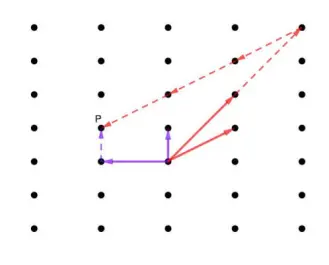
Lattice-based cryptography is an option that some crypto projects, such as the Cardano blockchain, have considered in an effort to defend against quantum attacks. This creates a dilemma: users might move funds to addresses that are vulnerable to AI attacks in the short term out of fear of a long-term quantum threat (since lattice-based cryptography is quantum-resistant).
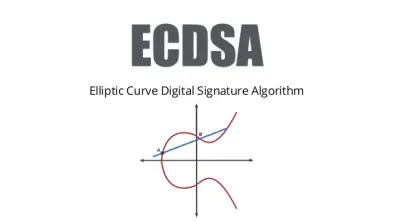
The primary concern centers on ECDSA, the signature scheme used by Bitcoin and Ethereum to verify that a transaction has been authorized by the correct private key. The issue arises because, when a wallet signs a transaction, its public key becomes visible on the blockchain. If ECDSA were compromised, an attacker could derive the private key from the public key and drain the wallet. According to Drake, wallets holding less than 50 BTC benefit from partial protection thanks to what he calls "Satoshi's shield": approximately 20,000 exposed addresses linked to Bitcoin's creator, each holding 50 BTC, would likely be the first to be drained. A recent report titled "Harvest Now, Decrypt Later" examines hackers who collect encrypted data today in order to decrypt it at a later time. It found that widely used protocols such as SSH, TLS, and OpenPGP are vulnerable, with the level of risk varying based on configuration and key management. Currently, there is no definitive evidence that this technique is being systematically exploited on a large scale. The major issue is that a quantum computer capable of cracking encryption could arrive before the technology finds a concrete commercial application.
A "just-in-time" attack is one in which a quantum computer derives a private key during the brief window between a transaction exposing its public key and the confirmation of the transaction itself.
Article always updated with all the possibilities of on-chain farming (airdrop): Some Sites To Earn Crypto Bonus (Old & New)