
The events of the Greek world up to the early fifth century BC - namely the rise of Persia, the birth of Athenian democracy and the Greco-Persian Wars - are among the most well-documented and renowned in ancient history. History itself as a topic is made in politics, war, homes and theatres, but for people of the present we only have the resources and accounts we can find, thus history as a subject is made in the books and accounts. That brings me to Herodotus, the man who essentially invented the notion of inquiring into the past, asking “how” and “why” and recording his findings for others to learn from - he is the “Father of History”.
Here are presented the results of the enquiry carried out by Herodotus of Halicarnassus. The purpose is to prevent the travel of human events from being erased by time, and to preserve the fame of the important and remarkable achievements produced by both Greeks and non-Greeks; among the matters covered is, in particular, the cause of the hostilities between Greeks and non-Greeks.
Check out my previous post on the Plague of Athens, 430 - 429 BC
EARLY LIFE
Historians sloppily date Herodotus’s birth year to about 484 BC; he was sent off to the Italian colony of Thurii from Athens in 443 BC, making him at least forty years old at the time, the age you had to be to move to a colony. His birthplace was Halicarnassus (modern Bostrum), a Greek city in Asia Minor then under Persian rule. For someone so fundamental to our understanding of the past, who himself documented so much, it’s unfortunate that this is about all that is known of his early life.
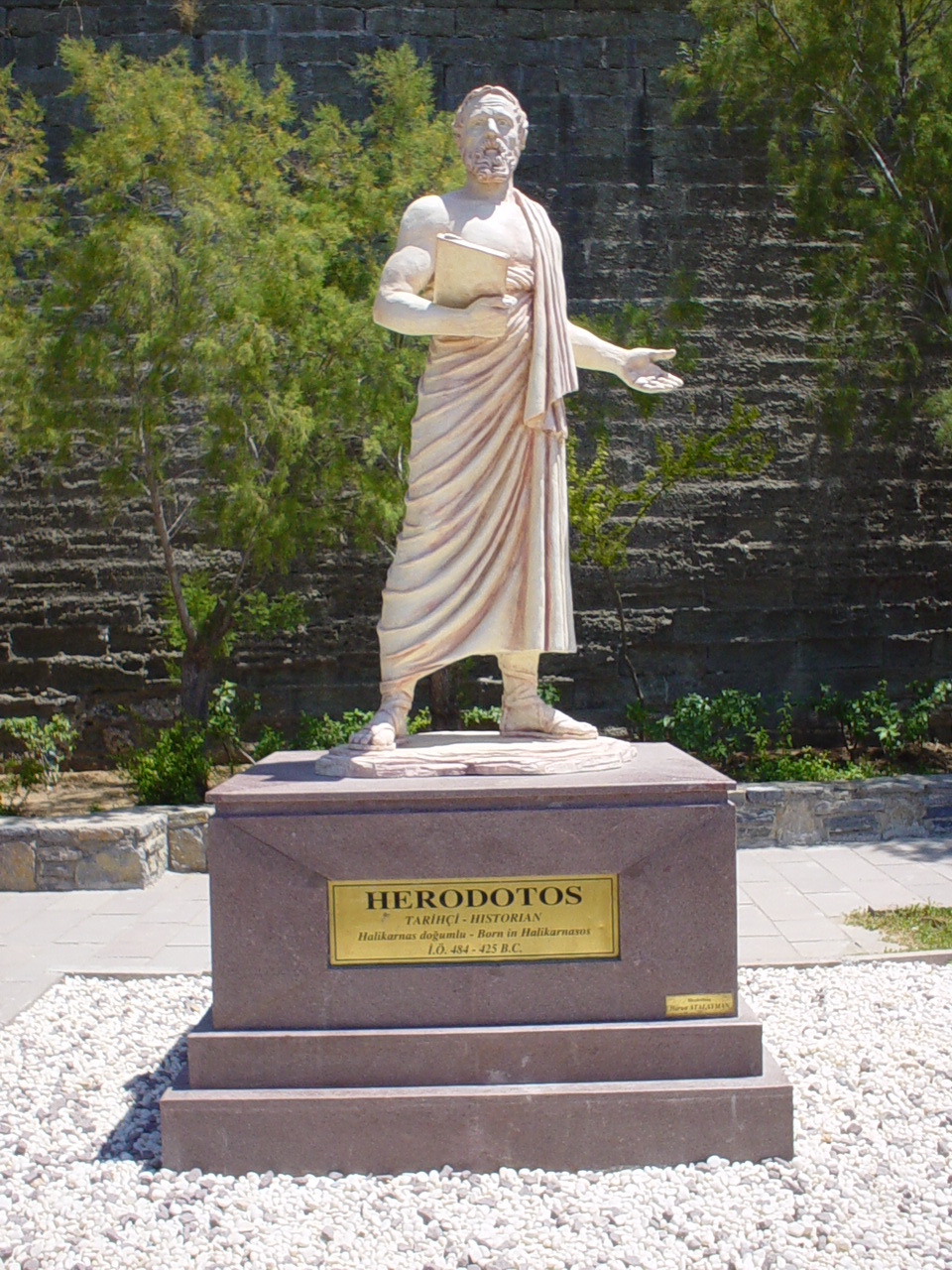
[ABOVE: Romanticised statue of Herodotus in Bodrum, ancient Halicarnassus, modern Turkey]
HIS TRAVELS
Herodotus travelled far. Leaving Halicarnassus, he visited the island of Samos, the Greek mainland, Athens, the Black Sea coast, Persia, Egypt and perhaps even further. His original aim was to create a travel guide of the Eastern Mediterranean for avid readers, but upon discovering more and more from locals in each respective location, Herodotus eventually decided to recount the history he had learnt of these places in the order of which they were conquered by the Persians, so as to write of the great battles between the Greeks and the Persians, and describe how Greek civilisation was saved by great Greek men like Miltiades, Leonidas, Themistocles, Pausanias and Xanthippus.

[ABOVE: Reconstructed map of Herodotus' understanding of the known world, published in 1897]
THE HISTORIES
“History” comes from the Greek word “ἱστορία” (latinised: “historíā”), meaning “inquiry” or “judge”. This tells us that Herodotus was keen on inquiring why things were the way they were in his time as a result of past events, and what happened in the past to make the present as such. His work goes so far back as to inquire why Eastern and Western cultures as a whole had been at odds for so long, detailing the semi-mythical abductions of women like Io, Europa, Medea and Helen of Sparta to Troy by each culture, centuries before the Greeks and Persians clashed in the fifth century BC.

[ABOVE: Fragment of a copy of Herodotus' Histories, Book 8, part of the Oxyrhynchus Papyri find, dated to the 2nd century AD]
While a great source of detail on past events, Herodotus’ writing does have a tendency to deviate off-topic, as while his Histories is a chronology of events, it is a messy one; while talking of the kingdoms and empires conquered by the Persians in chronological order (“chronological” coming from “Kronos”, the deity of time), Herodotus would first describe the histories of these places first before talking of the rise of Persia, or the Greco-Persian Wars. For instance, in Book 3, he talks about the Persian conquest of Egypt and Cambyses’ descent into madness as a result, but not before talking about the history, geography and traditions of Egypt beforehand. Book 2 in fact is entirely on the history of Egypt as Herodotus knew it to be so - an entire seventy-three pages deviate from the topic of the rise of Persia as his original intention of creating a travel guide seamlessly bleed through into his writings. Everything from descriptions of mountains, rivers and animals all the way to customs and traditions - many of which are almost certainly not true - are included.
His sources for this were simply other people he met on his travels, which took him right across the Eastern Mediterranean, the Black Sea and the Near East. On these travels, he encountered many diverse cities and peoples, a selection of which had likely experienced the past events Herodotus was enquiring about, or at least knew people who in turn could recount those events. This word-of-mouth approach to acquiring sources does make The Histories sketchy in its reliability, and while his work was my primary source for my blogs up to the end of the Persian Wars, I did indeed leave vast amounts of his writings out of my blogs, simply because much of it is undoubtedly false; in Book 3, he casually mentions that the colour of the Ethiopians’ ejaculate is black…
Getting his sources from natives not long after the conflicts of the fifth century BC took place would also have meant that the recounting of these events would have naturally been biased. This likely explains his almost certain over-exaggeration of, for instance, the size of Xerxes’ invasion force in 480 BC prior to the Battle of Thermopylae, stating his soldiers numbered over two-and-a-half-million men, to make the victories seem even more magnanimous. Modern historians agree on a smaller and more plausible number, ranging from around 100,000 to half a million.
Some of this accusation of bias has been pointed at Herodotus himself. His negativity towards the Greek city of Thebes could come from his proposition of setting up a school there being turned down by the authorities. He also goes into detail on the tyrant of Halicarnassus, the relatively minor figure of Queen Artemisia, who successfully downed several Greek ships during the Battle of Salamis and fought her way out during the Persians’ mass retreat. As a Greek living under Persian rule, his great bias, if at all ever manifested, would have come from his resentment of foreign occupation.
Some of his accounts, long thought of to be false, have later been proven to be accurate; in Book 3, he talks about ants in India covered in fur and as large in size as dogs, that dig their nests underneath the sand. In doing so, they deposit gold dust to the surface, and this was how the Indian peoples gained their gold and vast wealth. Millennia later, the French archaeologist Michel Peissel claimed he discovered a species that Herodotus may have been talking of; according to Peissel, Herodotus could have confused the Persian words for “mountain ant” and “marmot”. Indeed, the Himalayan Marmot described in The Histories does inhabit a region in which the ground is rich in flakes of gold, and the Marmots themselves do bury into the ground and deposit gold as Herodotus described. Herodotus never claimed to have actually ever seen any of the animals that he described.
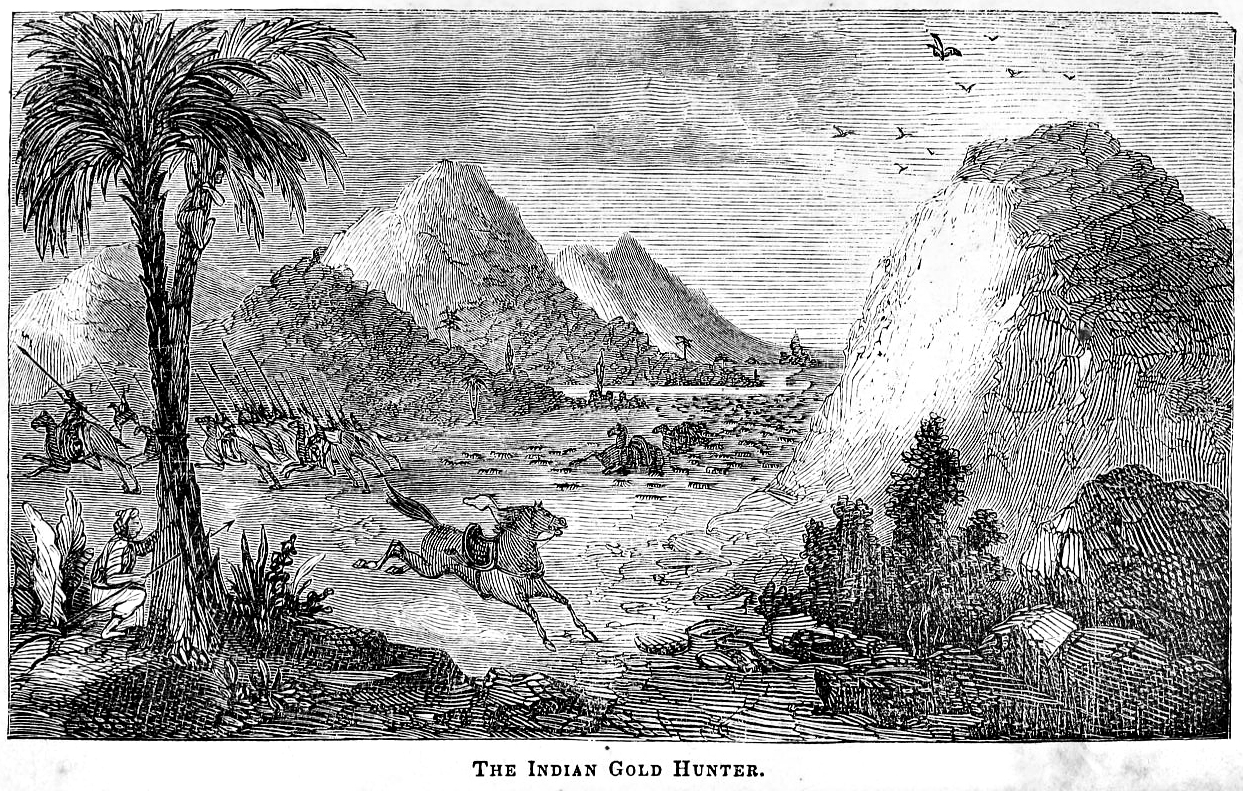
[ABOVE: "The Indian Gold Hunters", by Jacob Abbott, published in 1854]
[BELOW: A Himalayan Marmot]

CHRONOLOGY
His work is not really a singular book. Rather, it is nine named books, each focusing on one key chapter of the late sixth and early fifth century BC:
BOOK 1: CLIO
Book one primarily follows two people: Croesus of Lydia and Cyrus the Great.
One story from his history on Croesus is very certainly falsified. The meeting between Croesus and Solon almost certainly did not happen; While their lives do overlap, Croesus, at best, would have been an infant at the time he and Solon supposedly met, making their conversation about who the happiest man in the world would be likely fictitious. So why include it in a history book? It may have been included before Herodotus intended to turn his works into one of history instead of travel, and the story serves as a good life lesson to leave in anyway, and acts as a reason why he was spared by Cyrus at the end of the Persian conquest of Lydia.
As for Cyrus himself, his death years later at the hands of Queen Tomyris is only one account of how his life came to a close; while Herodotus claims that Cyrus was decapitated by Tomyris, Ctesias, another Greek historian living in a Greek city in Asia Minor under Persian rule around the same time as Herodotus, claims that Cyrus was killed by infantry, cavalry and elephants during the fight. According to Berossus, a Hellenistic-era historian, it was against the Dahae tribe instead of the Massagetae that Cyrus met his end, while Xenophon disputes them all and claims that Cyrus died peacefully in his sleep.
BOOKS 2 + 3: EUTERPE, THALIA
Book two is entirely on Egypt, namely its geography and landscape, customs and history. He is hardly ever used as a source on ancient Egyptian history aside from Cambyses II and the Persian conquest, and I did not need any of book two for my blogs.
The reign of Cambyses, the Conspiracy of the Seven and the early reign of Darius are the main focal points of book three. As the empire reaches its largest territorial extent under Darius, Herodotus does spend a few passages discussing the edge of the world; in Herodotus’ time, it was thought that the Atlantic, Austral and Erythrean Seas formed the Western, Southern and South-Eastern borders respectively, while India and the Eurasian Steppe formed the Eastern and Northern boundaries respectively. Herodotus described the people of India as being the most numerous and wealthiest peoples in the world.
BOOK 4: MELPOMENE
Book four follows Darius’s Scythian and Libyan campaigns. As per Herodotus’ style, the book of course first describes Scythia and Libya in immense details, with much emphasis put on the histories and ethnographies of the Scythians and Libyans in particular. The campaigns themselves make up a comparatively small part of book four, again showcasing Herodotus’ travel guide-style writing.
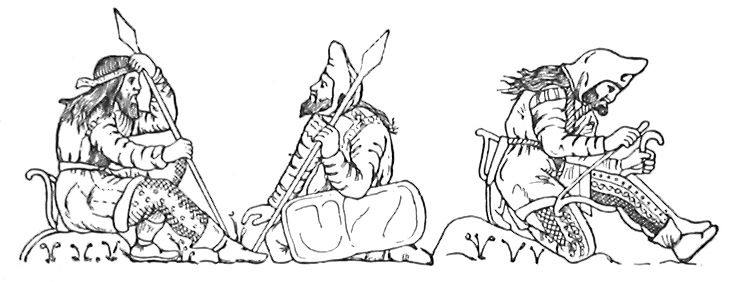
[ABOVE: Scythian warriors as depicted on an electrum cup found in the Kul'Oba burial near Kurch, now held in the Hermitage, Saint Petersburg]
BOOKS 5 - 9: TERPSICHORE, ERATO, POLYHYMNIA, URANIA + CALLIOPE
Books five through nine discuss the Greco-Persian Wars. Much detail throughout is given this time on the customs and traditions of the various Greek states; book six discusses the diarchy of Sparta and the battle of Marathon, while book seven goes into the ascension of Xerxes to the throne, the preparations of Themistocles and Leonidas before the second invasion, and the battles of Thermopylae and Artemisium, the sack of Athens, the battle of Salamis and the battle of Plataea. He also talks about the Punic-Sicilian battle of Himera, but this is mainly covered by Diodorus Siculus.
THE PELOPONNESIAN WAR
Herodotus’ main focus in his Histories once he’s explained the rise of Persia is Athens. His book portrays them very much as the upright heroes of the Greco-Persian Wars. Sparta, on the other hand, is portrayed much less favourably; aside from their obvious heroism at Thermopylae and them leading the Battle of Plataea, Herodotus speaks of the Spartans’ unusual practices, their oppression and cruelty towards the Helot slaves, the madness of King Cleomenes, their lateness to the Battle of Marathon, their building of the wall across the Isthmus of Corinth after Thermopylae and their sluggishness at the Battle of Mycale.
It should be remembered that Herodotus lived for several years in Athens, moving there during the days of Pericles and coming to admire the city’s wealth and freedoms, and he was in turn rewarded highly for his great work which painted Athens in a very favourable light. As The Histories was finished around 430 BC, it’s thus likely that The Histories could have been used, or indeed made, as a rousing piece of war propaganda during the city-states’ great struggle against Sparta in the Peloponnesian War. Thus, as potential propaganda, his Histories often comes under great scrutiny for its reliability once more.
DEATH
Nothing in The Histories can be dated to any further than 430 BC, and this is generally regarded as the (rough) publishing date for the historians’ work. As for Herodotus himself, he died shortly after, around 425 BC. either in his new colony-home of Thurii or in Macedonia after obtaining patronage there. He was around sixty years old, and had travelled the entire eastern Mediterranean, invented the modern academia of historical inquiry, and gave us the greatest and most detailed account on one of the ancient world’s most famous and important wars. However reliable he is by today’s standards, Herodotus’ impact on the world should not be taken for granted, and for all his works’ crazy and wacky added bits, he is easily my favourite historian.

[ABOVE: Excavated ruins of the ancient city of Sybaris, later the cities of Thurii and Copia, southern Italy. It is uncertain which city this archaeological layer is]
PHEIDIPPIDES
As a final note, I should also point out that the legend of Pheidippides running to Athens after the Battle of Marathon in 490 BC, shouting “Rejoice! We have victory!” and collapsing dead from exhaustion from the twenty-six-mile run is false, and was invented centuries later. The real Marathon run is in honour of the final forced march of the Greek soldiers back to Athens from Marathon exhausted right after the battle. There was a runner who was sent to and back from Sparta prior to the battle - plausibly Pheidippides - but Herodotus does not mention a final, fatal run back to Athens.

[ABOVE: Painting of Pheidippides collapsing in Athens after the run by Luc-Oliver Merson, 1869]
NEXT POST: A LEAGUE IN REVOLT, 429 - 427 BC: Early Conflicts of the Peloponnesian War
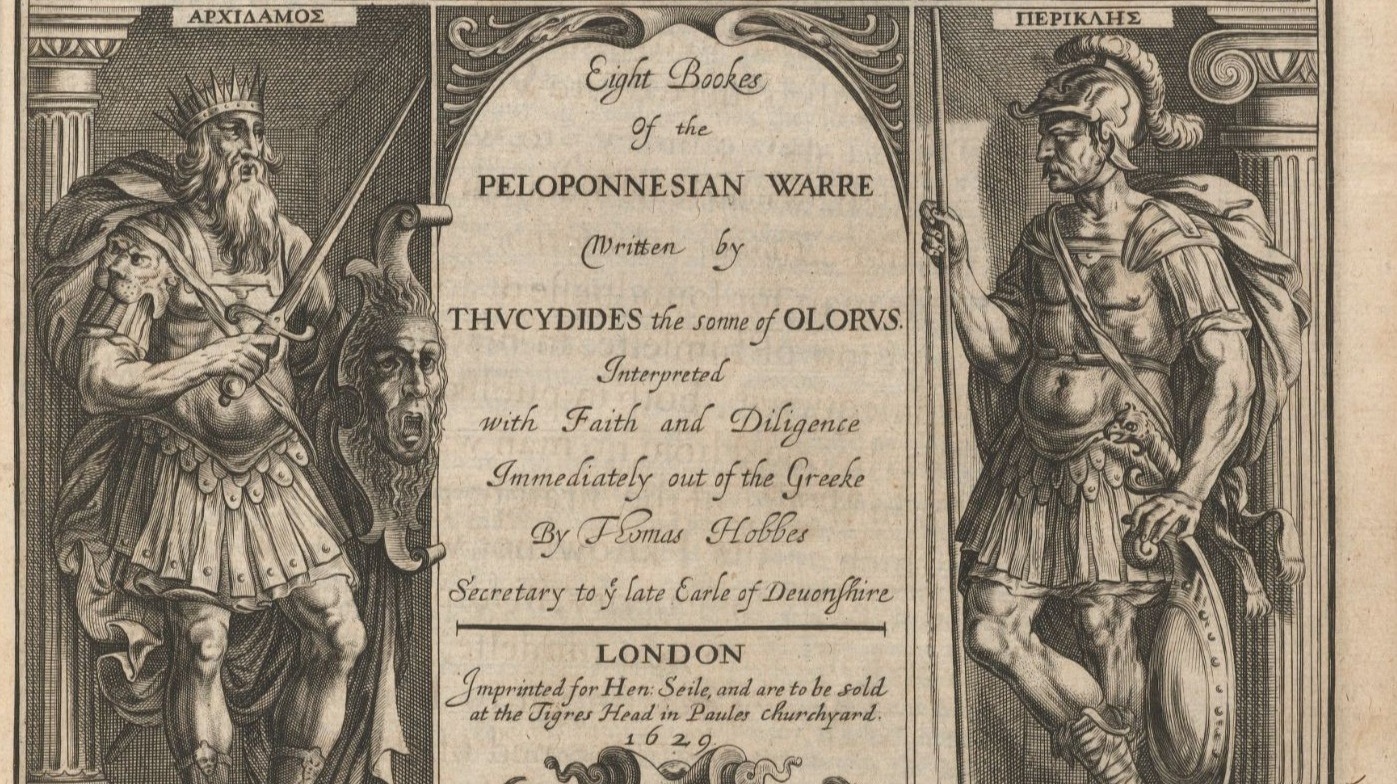
SOURCE
- Herodotus, "The Histories"
YOUTUBE LINKS
(I do NOT own these videos)
"History-Makers: Herodotus" by "Overly Sarcastic Productions"
"Ancient Historian Describes The First Steppe Nomads (450 BC) // "SCALP NAPKINS and SKULL CUPS" by "Voices of the Past"
"Herodotus On The Pyramids // The Histories 440 BC // Ancient Greek Primary Source" by "Voices of the Past"
"Herodotus On The Edge Of The World // 440 BC // Ancient Greek Primary Source" by "Voices of the Past"
MY ANCIENT GREEK HISTORY BLOG PAGE
MY ANCIENT PERSIAN HISTORY BLOG PAGE
All feedback - positive and/or critical - is appreciated!
All images used are copyright-free
Don't forget to rate this post, share it and leave a tip if you enjoyed it
Thanks for reading :)






