
As Sparta burnt the lands of Attica, plague ravaged the Athenians and with Pericles gone, the Peloponnesian War was fully underway. Three years had now passed since the declaration of war back in 432 BC, and now each side - Sparta's Peloponnesian League and Athens's Delian League - could now flex their respective muscles and use their strengths against each other. Each side faced their own struggles to come, as Sparta faced a gruelling and long siege of Plataea, and Athens faced rebellion within its own empire; the key siege of Plataea and the Mytilene Revolt would define the opening stages of this great war.
Check out my previous blog on Herodotus, the first historian
THE FALL OF POTIDAEA, 429 BC
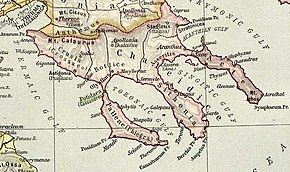
[ABOVE: A map of ancient Chalcidice, northern Greece, showing the city of Potidaea]
In the winter of 430 BC, Athenian fleets were sent to guard Naupactus against Corinth, and to Caria and Lycia to collect finances for the war and prevent the area from being used as an operations base for the Peloponnesians. Meanwhile, Potidaea was running out of their ability to withhold the siege any longer; Sparta’s raids in Attica did not prompt them to come out and attack or relieve Potidaea, and the Potidaeans had resorted to keeping fed by eating people. Eventually, Potidaea surrendered to Athens the following year, under the terms that the citizens and mercenaries abandon the city and move to Chalcidice, and take only one cloak (two for the women) and a set of cash each, and the city was resettled with Athenian citizens.
SUMMER, 429 BC
ZAKYNTHOS
In the summer of 429 BC, Sparta attacked Zakynthos, a colony of Achaea and ally of Athens, with a fleet led by Cnemus commanding a thousand hoplites. Laying waste to the territory, Cnemus and his men turned back home when the Zakynthians refused terms.
THE PELOPONNESIAN EMBASSY
In the latter part of the summer, an embassy comprising of Spartans, Corinthians, Tegeans and Argives made their way to the Persian king, Artaxerxes, hoping to sway him to provide financial support in the war. They also visited Sitalces, the king of the city of Teres in Thrace, hoping to switch his alliance from the Delian to the Peloponnesian League and help to relieve the angling siege of Potidaea, and get him to help the embassy cross the Hellespont into Asia and to the Persian king. The plan backfired, however, as Sitalces already had two Athenian ambassadors by his side, who convinced Sitalces’s son, an Athenian citizen, to hand the Peloponnesian embassy over to them, whereupon they were arrested before making it to Teres. Taken to Athens, the Athenians worried that should the Corinthian ambassador, Aristeus, escape, more harm could be done, since he was also a key agent involved in Potidaea and Thrace. With this in mind, all the ambassadors were executed.
AMPHILOCHIAN ARGOS
Further raids occurred against the city of Amphilochian Argos, near the city of Ambracia, by Ambracia and some locally recruited native forces. Led by Phormio, Athens sent an aiding fleet of thirty ships. Argos was taken by siege, and the Ambraciots and their army was enslaved, before the city was repopulated with Acarnanians, bringing Acarnania into an alliance with Athens.

[ABOVE: "Phormio" by Albrecht Dürer, c.1492-94]
THE SIEGE OF PLATAEA
The next summer of 429 BC saw a change of strategy for the Spartans; they did not invade Attica as beforehand, but instead Plataea, under the command of King Archidamus himself. While the Plataeans attempted to convince the Spartans not to attack the very land where the great victory at the battle of Plataea had been won, Archidamus attempted to convince the Plataeans to join them in “liberating Greece”. Plataea said they could not join in Sparta’s efforts without Athenian consent, and were concerned that leaving the city undefended could lead nearby neutral Thebes to attack and claim the city. Hearing of this, Athens pledged their loyalty and protection to Plataea.
Provoked now, Archidamus called upon the Gods as witnesses, before encircling the city with a wooden palisade and mounting the city walls with ramps. The ramp’s construction took seventeen days and nights. Seeing this construction, the Plataeans in turn built their own wooden wall, filled with stone and faced with animal hides, atop their city’s pre-existing stone wall, facing opposite the Spartan’s ramp. The Spartan’s eventually brought a battering ram up to the city walls, and began dismantling Plataea’s stone and wooden walls. Other rams were deployed against other sections of the walls, but these were dispatched with using lassos to turn the rams’ heads away from the wall, while others were cut using giant metal chains dropped from a great height onto the ram’s beam, snapping their heads off.
Failing in direct assault, Archidamus decided that a wall of circumvallation - surrounding the city with a wall - would be the best option, to starve out the city. With the wall complete, the Spartans turned to trying to burn the city down by collecting nearby wood, throwing it into the no-man’s land between their wall and Plataea’s walls, and setting fire to it, hoping the winds would push the fire towards Plataea. This fire, described by Thucydides as the largest man-made fire up to that point, terrified the Plataeans. Huge parts of the city were made inaccessible, but a thunderstorm eventually put the fire out. With this further failure, much of the Spartan force was sent away, with a contingent remaining to finish construction of the wall of circumvallation. Once completed, more of the Spartan-led army dispersed back to their homes. After the women, children and elderly were evacuated, only four-hundred Plataeans and eighty Athenians remained, and a handful of women to cook for them. The scene was set for the two-year Siege of Plataea.
THE BATTLE OF SPARTOLOS
Whilst the siege of Plataea raged on, Athens sent a force of two-thousand hoplites and two-hundred cavalry north towards Thrace. The campaign consisted of raiding and burning the countryside corn. Reinforcements from Spartolos were swiftly dealt with by the Athenian force, although the Athenian cavalry and light infantry were defeated. When further reinforcements arrived, the Chalcidians gave ground when the Athenian hoplites formed up for battle and attacked but pressed hard when they faltered, forcing the Athenians back towards their baggage train. The Athenians retreated back to Potidaea, recovered their dead under a truce and returned to Athens after a total of four-hundred and thirty soldiers, and all three of their main commanders, had perished, while the Chalcidians set up a war trophy and recovered their own dead.

[ABOVE: A Chalcidian League coin, showing Apollo (left) and a lyre (right), with the inscription "ΧΑΛΚΙΔΕΩΝ", "Xalkideon", meaning "of the Chalcidians"
THE BATTLE OF STRATUS
Not much later that summer, the Ambraciots and Chaonians persuaded Sparta to ready a fleet with a thousand hoplites of their own to attack Acarnania, since they were attempting to take over the region and remove it from Athens’s Delian League, joined by another thousand allied troops and light infantry. In their minds, an attack by land and sea would overwhelm the region, and the key cities of Zakynthos and Cephallenia would fall into their hands and hinder Athens’ ability to sail around the Peloponnese. Under their admiral Cnemus, Sparta agreed, and set sail for Leucas, who had in turn prepared a fleet of twenty ships, commanded by Phormio, and were waiting for the Peloponnesians at Naupactus.
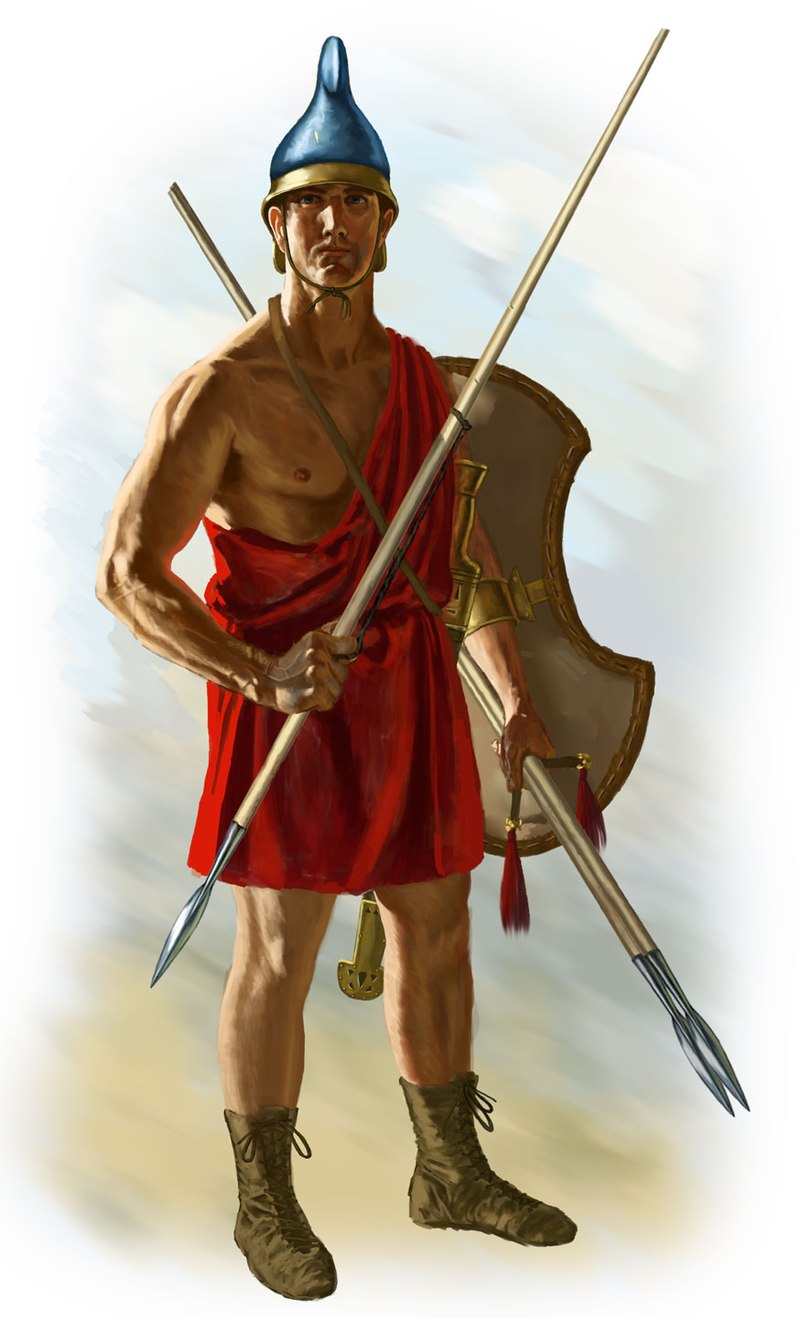
[ABOVE: Reimagining of a Greek peltasts, light skirmisher troops armed with javelins. Their shields ("pelte") gave them their names]
Without being found out by Phormio, Cnemus and his men crossed the Gulf. With his twenty Athenian vessels guarding Naupactus, Phormio begun his preparations for the campaign on land, while Cnemus, too eager to wait for his Corinthian naval allies, marched through the territory of Argos. Sacking their way through the territory, Cnemus’ forces reached the city of Stratus in Acarnania, hoping that the capture of this city would force the rest of the region to go over to their side. The Acarnanians resorted to defending their own territories instead of grouping to defend Stratus, and even a letter requesting aid to Phormio was turned down, as he was still intent on guarding Naupactus.
Ahead of a team of diplomats, the Spartan-led army lined up in three columns for battle ready to advance on Stratus should negotiations of submission fail. The central column, made primarily of northern tribes allied to the Peloponnesians like the Chaonians, did not set up camp outside Stratus. Confident in themselves, the Chaonians charged straight at the city. Prepared, the Stratians readied ambushes in the city for the Chaonians, who were quickly defeated. The rest of the Peloponnesian force, too far away, were unaware of this battle. Keeping their city, but keen not to engage the Spartans, the Stratians kept atop their city walls and resorted to pelting their enemy with slingshots and missile fire. With his army depleted and under fire, Cnemus withdrew his force from the city and negotiated for his dead to be collected.
THE BATTLE OF RHIUM
The reinforcing Corinthian fleet of forty-seven transport ships never arrived. They were, however, forced into a naval engagement with Phormio and his twenty triremes guarding Naupactus. Keen to fight in open waters, Phormio shadowed the Peloponnesian fleet along the coast, and their attempt to escape detection in turn failed, forcing a battle in the middle of the crossing of the strait.
The Corinthian fleet arranged themselves in an outward-facing circle, presenting their rams out towards the Athenians, circling their own support vessels and five fastest ships should their speed be needed. Phormio commanded his navy to form a single line and envelope the circle, and to dart close to their enemy and quickly retreat back just before making contact to force the Corinthian fleet into a tighter circles. Eventually, wind from the Gulf blew the Peloponnesian fleet into further disarray as ships collided and captains’ orders fell on confused ears.

[ABOVE: Phormio's Athenian ships (red) encircling Sparta's ships (black) as they compress the enemy navy]
At that moment, Phormio gave the command for an all-out attack, targeting the flagships first and then the rest of the Peloponnesian fleet. Without offering any resistance, the Peloponnesians fled towards Cnemus’ fleet fresh from the battle of Stratus. Pursued by Phormio’s fleet, twelve ships were captured along with most of the crew, as Phormio’s fleet returned to guard Naupactus. According to Thucydides, this was Sparta’s first attempt at a naval engagement. Confused at the outcome of the engagement as they were, the Spartans blamed their failure on the personal cowardice of their fleet, blind of the vast experience Athens had in naval warfare compared to themselves.
NICIAS
With their failure at Rhium, the Spartans sent three commissioners to advise Cnemus and his fleet: Timocrates, Lycophron and Brasidas. They were advised to ready for another more successful engagement and to not allow such a small fleet to block their access of the waters again. What was left of their fleet was ordered repaired, and Sparta’s allies were ordered to provide further ships.
Meanwhile, Phormio withdrew to Athens to report of his victory and request further aid. Granted twenty more ships, they were ordered first to go on a mission to the isle of Crete under the command of Nicias, a Cretan-born Athenian statesman who had gained prominence since the death of Pericles, who had eyes on capturing the city of Kydonia. Rough seas kept the Athenian fleet there for some time, allowing the Peloponnesians time to ready their fleet for the next battle, sailing around Achaea to meet with a supporting land army, finally coming into vision of Phormio’s fleet.

[ABOVE: "Bust of Nicias", from The World's Famous Orations", pg 105]
THE BATTLE OF NAUPACTUS
With much of the Athenian fleet occupied with Crete, the Spartans set sail round the coast of the Peloponnese to Panormus in Achaea, meeting up with reinforcements as they arrived. Meanwhile, Phormio sailed with his twenty vessels around to Athenian-friendly Molycrian Rhium (near the other city named Rhium). Seeing the Athenians anchoring, the Peloponnesians anchored their twenty-seven ships. The two fleets would remain in a face-off for up to a week, preparing for battle but never engaging.

[ABOVE: Location of the battle of Naupactus within the Gulf of Corinth]
The Spartan commanders Cnemus and Brasidas were keen to engage before Athenian reinforcements arrived, against the will of the navy. Noting their army was intimidated by their last defeat, the generals roused the army with an encouraging speech, stating that they were under equipped before and simply acting as transport vessels, but now they were prepared and equipped properly, and outnumbered the Athenian navy. Phormio too was concerned about the bravery of his men, noting how they saw the larger fleet they were to face, but he roused them too with his own speech, reminding them of their previous victories, and that Athenian navies were far superior to Spartan ones, even if the converse was true for their infantry respectively.

[ABOVE: "Brasidas During an Assault", illustrated by Walter Crane]
Cnemus and Brasidas planned to lure the Athenians into the narrows. Remaining in four columns, they set sail by dawn to the Gulf’s interior led by their stronger and faster right wing, so they could intercept Phormio on the way to Naupactus should he plan to defend the city. As expected, Phomio saw the Peloponnesian ships put to sea and worried for the unguarded Naupactus. Making his way along the coast with infantry marching alongside on land, when the Peloponnesians saw the Athenians coasting, they turned their ships to sail in file abreast towards Phormio’s fleet. Phormio’s leading eleven vessels managed to outrun the Peloponnesians’ turn into the open waters, however the other nine were caught and run into the coastline where they were disabled, and the crew massacred or captured, yet Phormio’s forces on land did manage to save some beached boats.
With eleven out of twenty ships down, the nine remaining Athenian ships were being pursued by the Peloponnesians’ front wing of twenty ships. All but one made it safely to Naupactus, positioning their ships outwards from the nearby temple of Apollo. The one Athenian ship left behind was being pursued by a Peloponnesian ship, and when it ran into a local merchant ship, it circled it and came round to ram the pursuing Peloponnesian ship, destroying it. The rest of the Peloponnesian fleet had lowered their guard since their earlier victory by stopping in the water and lowering their oars, while others ignorantly ran ashore.
Noting these ongoings, Athens's ships charged the disorganised enemy fleet, who panicked and fled to Panormus, back where they came from. Six Peloponnesian ships were captured in the pursuit, and much of their crews were killed, while Athens’ previously disabled ships were recovered. Victorious, the Athenians recovered their dead and set up a trophy on the battle site. Phormio’s other fleet from Crete arrived late to Naupactus.
WINTER, 429-28 BC
Come the winter of 429 BC, Cnemus and Brasidas, before dispersing of the fleet that withdrew into the Gulf and to Corinth, chose to act; they decided to attack the unguarded Port Piraeus. Their plan was for the rowers and sailors to carry their ship equipment from Corinth to Megara, where forty ships happened to be waiting for them. On the way, strong winds made the Peloponnesian army change its mind, sailing instead for Salamis, where Themistocles once won his key victory against the Persians. The island’s local garrison fort was raided and emptied of its ships as the Peloponnesians captured the island.
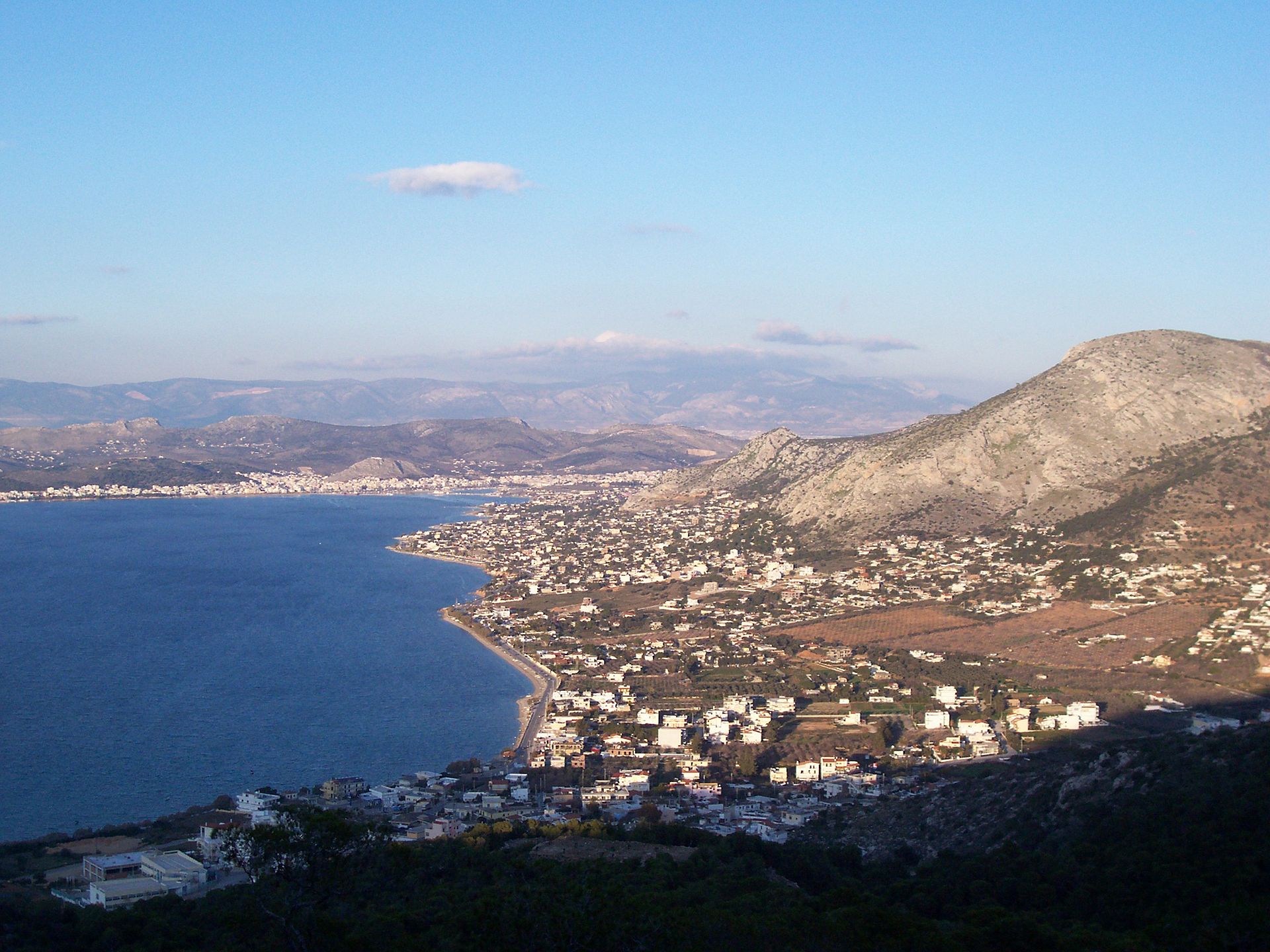
[ABOVE: The Greek island of Salamis, just south of Athens. Photo taken in 2007]
Beacons were lit to warn Athens of the invasion, causing panic in the city streets as the Athenians thought Piraeus itself was under attack. Athens’ local army came out to defend Piraeus, while the fleet set sail for Salamis. The Peloponnesians responded by sailing out to meet the Athenians. No battle ensued however as both fleets withdrew when they got word of the others’ advance.
After the Peloponnesian fleet had dispersed, Phormio’s fleet sailed round to Acarnania with their forces - just under a thousand infantry - and reinstated their allies to the throne in the area. As it was winter, no serious military campaign was undertaken. Phormio’s army eventually returned to Athens.
SITALCES OF THRACE
During this winter, war was declared on the Peloponnesian-allied Kingdom of Macedonia to the north, and their king Perdiccas II, by the Thracian King Sitalces. At the start of the war, Sitalces was promised by Perdiccas, himself under pressure by the Delian League, that so long as Sitalces would refuse to support the claim to the Macedonian throne by Perdiccas’s brother, Philip, Perdiccas would promise to ally with and reconcile the Athenians to him. Perdiccas did not keep to his side of the deal. Enraged, Sitalces began a campaign to Macedonia to depose Perdiccas and install Philip’s son Amyntas on the throne.

[ABOVE: The Odrysian Kingdom under Sitalces, who reigned from 431 to 424 BC]
Through his own successful campaigns in his previous two years of rule, Sitalces’ kingdom - known as the Odrysian Kingdom - extended through much of the Thracian region. It extended from near the Aegean coast in the south to the River Danube's mouth in the north, and from the Black Sea in the east to the source of the River Struma over in the west. All of his allies were called upon, until, according to Thucydides, his army numbered some 150,000, although this may be an exaggeration. His march through Macedonian territory was largely successful as no defeats were inflicted on his men during the march and more allies joined his force. The Macedonians could not withstand his invasion force, retreating to their few fortified cities as much as possible. First invading what was once Philip’s kingdom, the city of Eidomene, among others, was stormed, while an attack on Europus was unsuccessful. Further attacks were made in to the west side of the kingdom, on the other side of the key city of Pella, ravaging territory as they went.

[ABOVE: A Greek vase painting showing the mythical bard Orpheus singing for two Thracian warriors, c.430 BC]
Resistance by Macedonia was minimal; allied cavalry were called up to make quick, raiding attacks on Sicalces’ force, and while they were somewhat successful it wasn’t enough to stop such a large force. Fear of Sitalces’ army spread as far as southern Greece itself, and it was even rumoured that Athens would bring in their Thracian-based allies against Sitalces. However Sitalces was low on provisions, and as winter drew in to twist the knife, Sitalces was forced to abandon his campaign.

[ABOVE: A 4th century BC bronze Thraco-Phrygian helmet decorated with silver, found in Pletena, a village in modern Bulgaria]
THE MYTILENEAN REVOLT
The island of Lesbos was an ally of the Delian League up until the early stages of the Peloponnesian War. They had wished to secede even before the war broke out, but their support from Sparta they asked for against Athens was never granted. Thus, when they eventually decided to revolt from Athenian rule, they had to do so ahead of schedule, before their many city’s construction sites that would aid a war effort could be completed. However, people from the isle of Tenedos - enemies of Lesbos - and the Lesbian cities of Methymna and Mytilene told the Athenians that Lesbos was to be forced into political union with Mytilene by the Spartans’ hands, and that this was a preparation for a revolt that could lose Lesbos from the Delian League.
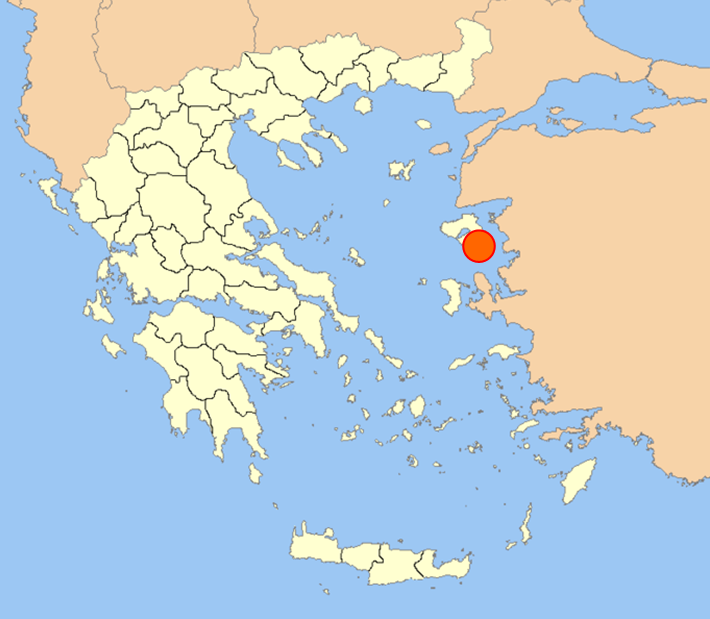
[ABOVE: The city of Mytilene located on the isle of Lesbos]
Athens was already exhausted from the war and the plague, so did not accept these allegations to be true. They sent envoys to Mytilene asking them to abandon their attempted centralisation. Athens thus sent out forty warships to Mytilene, in time for the city to be celebrating a festival that would be a good time to surprise attack. Ten Mytilenean ships happened to be outside Athens as per the terms of their alliance into the Delian League, and so these ships were detained and the crews arrested. A nearby Mytilenean merchant ship happened to catch word of the oncoming Athenian navy, and rushed quickly home to report. When the Athenian fleet arrived, its commander demanded submission, and when this was refused, Athens and Mytilene went to war.
Battle was first offered by Mytilene just outside the city harbour, to no success. Negotiating, Mytilene requested that Athens no longer blockade their port, which Athens accepted, worrying they would currently not be able to contend against a potentially united Lesbos. Mytilene then sent envoys to both Athens and Sparta; they were to convince the former that they had no revolutionary intent, while the latter requested aid. With little success in negotiations, all of Lesbos - except the city of Methymna - went to war with Athens. The envoys sent to Sparta would be told to make their request at the Olympic Games. Sparta accepted, and brought Mytilene into the Peloponnesian League.

[ABOVE: A coin minted at Methymna, c.500-480 BC]
An ensuing battle outside Mytilene resulted in an Athenian defeat, yet did not risk coming out to fight, thinking lightning would not strike twice while also waiting for Spartan reinforcements. Encouraged by their inactivity, Athens called in their allies, after which the city and its port were encircled. Meanwhile Sparta and their allies prepared to launch another attack into Attica, prepping a slipway over the Isthmus ahead of their sluggish allies for the fleet to make a simultaneous land and sea assault. Athens in response sent a hundred ships crewed with metics and civilians in all but two high-class ships as a display of strength, leading the Spartans to believe that Lesbos misled them, and when Sparta’s allies failed to show up in time they withdrew. Seeing them do so, Athens did the same.
Meanwhile, Mytilene made an unsuccessful land campaign against Methymna, before marching to other cities loyal to their side to fortify them. In response, Methymna went on the offensive against other cities but failed in their attack, loosing many soldiers. Worried, Athens sent a thousand hoplites under Paches to encircle Mytilene with garrison-forted walls, finally blockading the city by land and by sea.
ATHENS'S DIFFICULT FINANCES
Currently, Athens was expending a fortune to maintain the war; one hundred triremes guarded Attica, Salamis and Euboea together, another hundred patrolled the Peloponnese and around fifty ships maintained the siege of Potidaea. On top of that, three-thousand hoplites at Potidaea and sixteen-hundred with Phormio gave Athens the largest army and navy in the war, giving them the biggest expenditure. And now, winter approached. Mid-siege, Athens sent ships to their allies to levy an emergency war tax. One notable commander, Lysicles, was killed in 428 BC along with most of his army in Caria performing this desperate duty.
PLATAEA FIGHTS BACK
In the winter of early 427 BC, the siege of Plataea was coming to a close, as the surrounded city was starved of supplies. Desperate, the besieged citizens and allies planned an escape. One suggestion, to charge and breach the enemy walls, gained a couple hundred followers, building ladders made in the right length by observing the size and number of the bricks in the enemy walls. They waited for a rainy, windy and moonless night to make their attack, crossing the ditch by the wall.
Ladders up, the men began making their way onto the empty sections of the walls, with javelins being thrown down at any intercepting enemy. At this stage, reinforcing besiegers arrived with archers and torches, but they could not reach the men on the walls. However, slushy ice began to form in the ditch, making it unsuitable to walk across. With more snow, it became harder to cross. From the ditch, the Plataeans moved a mile down the road to Thebes, before turning towards Athens via a mountain path and reaching safety. From a much larger number, two-hundred-and-twelve men made it to Athens before the Peloponnesians could catch up.
THE END OF THE REVOLT
By the end of the winter, a Spartan named Salaethus was sent to the besieged Mytilene. He told them that they planned to invade Attica again, coinciding with the forty ships that would arrive to aid Mytilene led by Alcidas, and that he would take command. With this knowledge, they felt less inclined to side with Athens.
The following summer of 427 BC saw Alcidas and his forty ships arrive at Mytilene as Sparta resumed their Attic invasion, hoping to stall their notice of Alcidas’ fleet. Waiting to hear how their ships were doing in Lesbos, this attack ended up being one of the most devastating, until provisions ran low once more and the Spartans withdrew.
Meanwhile, Mytilene was forced to come to terms with Athens as their food ran out. Salaethus had better equipped the people of Mytilene, most of which were only lightly armed and now more resembled hoplites, to prepare to attack the Athenians. This sudden growth in their arms caused them to disobey their own authorities, and the people demanded the ruling class share out their larger storage of food with them, under threat that the city would be handed to Athens.
Coming to terms, it was agreed that Athens could dictate what now happened to Mytilene’s people, and Athens’s forces were allowed in the city, as long as no Mytilenean was harmed. Alcidas, moving at a leisurely pace, remained unnoticed until his fleet docked at Delos, and only soon after heard of Mytilene’s occupation. Against his advisors, Alcidas wished to return to and aid the Peloponnese. On the way first to Ephesus, he had several of his prisoners executed, which he was told would only gain him enemies and lose him allies in his quest to “liberate” Greece. He backed down and released the prisoners.
On Alcidas’ way back to the Peloponnese, his fleet was discovered by Paches. In a failed pursuit, Paches returned along the coast, stopping off at the city of Notium, which was half-occupied at the time and undergoing internal strife. Paches quickly besieged and took the city, killing many inhabitants. Returning to Mytilene, several more cities were subjugated along the way. Many Mytileneans from there were sent to Athens, where they were put to death.
Amidst this anger, and seeing the revolt as a whole as a premeditated one, it was voted on that every man in Mytilene itself was to be put to death, and the women and children enslaved. This was, however, turned down as a proposal, being obviously too harsh. However the first proposal had already been made, and a ship was on its way to Paches to give the order of execution and enslavement. A second embassy ship, carrying a message not to execute and enslave Mytilene’s population, made it just in time to save the city.

[ABOVE: Ancient Greek triremes]
Instead, the lead instigators were killed, the city’s walls were destroyed and their ships enveloped into Athenian hands. The island was taken and divided up into three-thousand allotments: three-hundred were dedicated to the gods and the rest were given to landlords, forcing tribute to them from Lesbos who agreed to work the lands. All settlements on Lesbos - except Methymna’s territory - was now Athenian.
MINOA
Another Athenian campaign, led by Nicias, was made against the isle of Minoa, keen to use the island’s guard posts to keep an eye on Megara. Using scaling devices from his ships, Nicias took the island’s watchtowers and crossing from the mainland via the bridge that linked the island. With the city taken, an Athenian garrison was installed.

[ABOVE: A view of Monemvasia, on the south-Aegean island of Minoa. Photo taken in 2003]
THE FALL OF PLATAEA
Meanwhile, the Peloponnesians launched another assault on Plataea. Noting how they put up no resistance, the Spartan commander went in to negotiate; a previous command to him from Sparta decreed that should Athens and Sparta come to a truce and return all lost land during the war, Plataea would be exempt should it capitulate peacefully. Plataea was thus told to surrender peacefully, and that only the guilty among them would be punished. Plataea surrendered, ending the two-year siege. Its citizens were pulled forward and asked if they had done anything to benefit Sparta, and when the answer “No” was given, two-hundred Plataeans who answered as such were put to death, as well as twenty-five Athenians, while the city’s women were sold as slaves and the city burnt to the ground.
All this was done to win over the Thebans, who Sparta considered to be an upcoming, useful ally for the rest of the war to come.
NEXT POST: ARISTOPHANES, 446 - 386 BC: The Father of Comedy

SOURCES
- Thucydides, "The Peloponnesian War", Book 2.66 - 3.68
- Donald Kagan, "The Peloponnesian War"
YOUTUBE LINKS
(I do NOT own these videos)
"How did the Peloponnesian War Happen? - Athens Faces Sparta (431-404 BC)" by "Knowledgia"
"The Peloponnesian War (extended video)" by "Epimetheus"
"Plataea 429-427 BC - Peloponnesian War DOCUMENTARY" by "Kings and Generals"
"Odrysian Kings #1 (Thracian History)" by "Kings and Things"
MY ANCIENT GREEK HISTORY BLOG PAGE
MY ANCIENT PERSIAN HISTORY BLOG PAGE
All feedback - positive and/or critical - is appreciated!
All images used are copyright-free
Don't forget to rate this post, share it and leave a tip if you enjoyed it
Thanks for reading :)






