
How Ten Simple Memes Became an Experiment in Human–AI Creative Direction
Most stories about artificial intelligence and creativity begin with speed.
Look how quickly this image was generated.
One prompt created an entire campaign.
Ten visuals in ten minutes.
That is not the story of the Rebel Memes.
The AI could generate an image in seconds. Creating an image that deserved to be published took considerably longer.
Over several intense creative sessions, I worked with AI to develop a collection of ten original visual memes for The Rebel Marketer. The series explores the contradictions, rituals and minor absurdities of digital life:
- the five-minute task that begins by asking you to create an account;
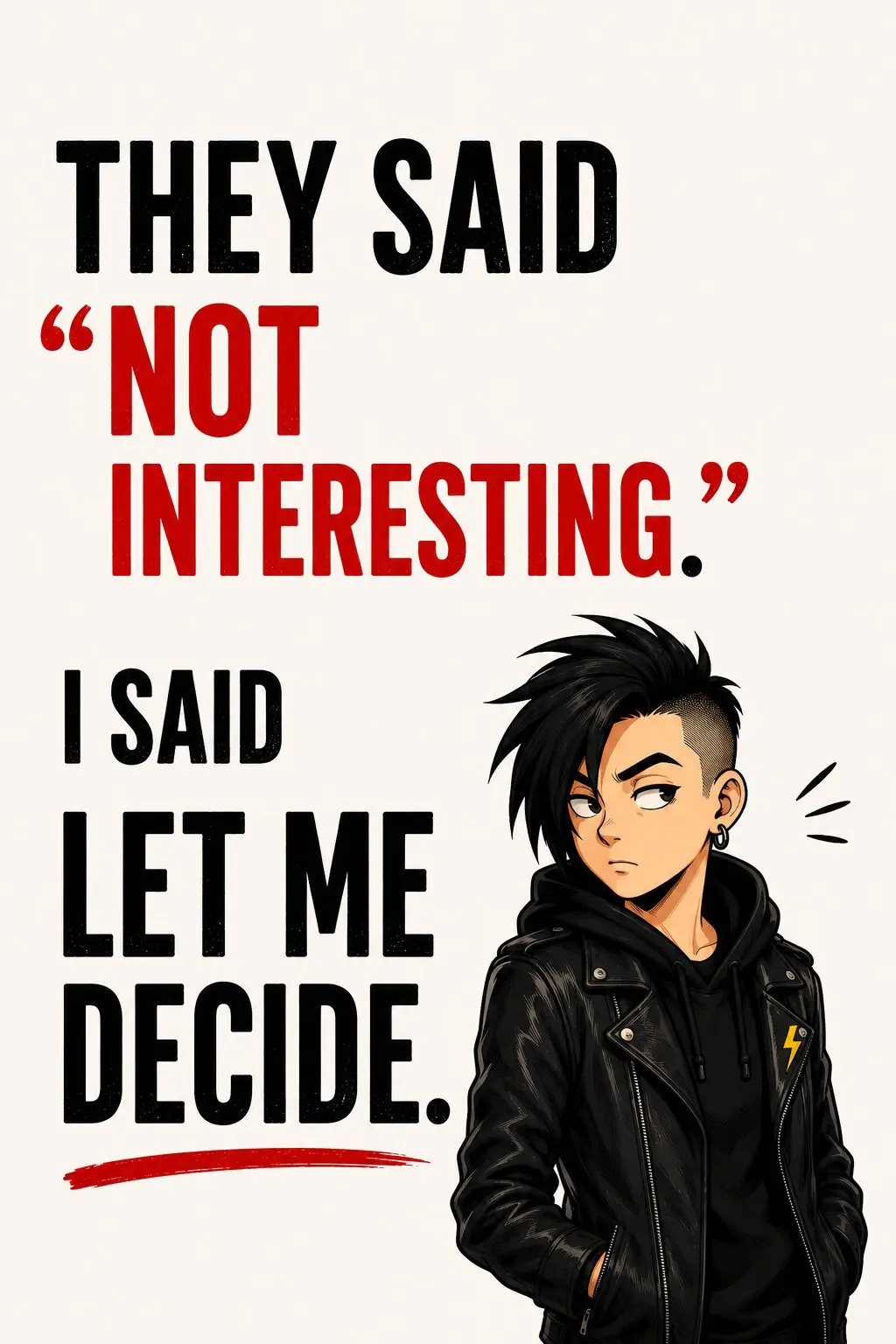
- the platform that decides what should interest you;
- the demand to “be authentic” while following an exact content template;
- the free trial you must remember to cancel;
- the “simple process” that eventually reaches Step 17;
- the password that is accepted and then immediately declared obsolete;
- the privacy banner that claims to respect you while steering you toward “Accept All”;
- the CAPTCHA asking you to prove you are human;
- the terms and conditions everyone accepts and almost nobody reads.
The finished collection looks simple.
That simplicity was expensive—not primarily in money, but in judgment.
The AI generated the images. We built the discipline that made them belong together.
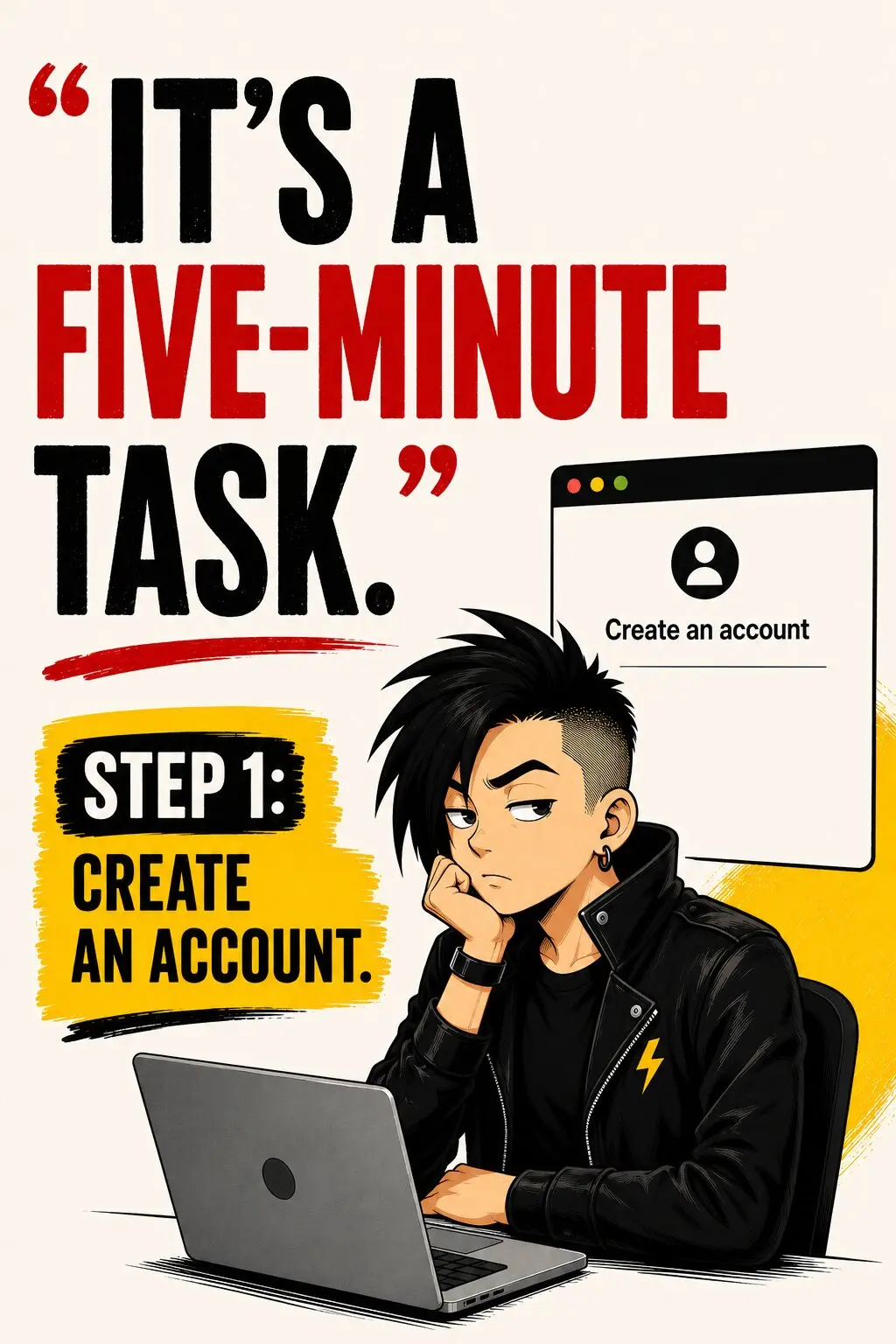
Somewhere inside that process, we discovered a method I now call conversational art direction.
The Wrong Question: Can AI Make a Good Image?
Of course it can.
Sometimes.
Modern image generators can produce impressive characters, compositions, lighting, interfaces and typographic treatments. But the ability to produce an attractive image does not make a system a reliable creative director.
AI can generate.
It does not necessarily know what deserves to survive.
That distinction became the foundation of the entire project.
The weakest AI workflow looks something like this:
- Write a prompt.
- Receive an image.
- Feel impressed.
- Publish it.
The result may appear polished, but polish is not the same as meaning.
A technically attractive visual can still fail because:
- the joke is not immediately understandable;
- the visual hierarchy is wrong;
- the character distracts from the message;
- the interface contains too much information;
- the pose repeats an earlier image;
- the punchline is visually subordinate;
- a decorative object adds noise without adding meaning;
- the image has no recognizable relationship with the rest of the collection.
We therefore stopped asking:
Can AI generate a good meme?
We began asking:
Can we construct a review process that consistently rejects everything that weakens the idea?
That was the real experiment.
When Production Becomes Abundant, Judgment Becomes Scarce
Generative AI creates abundance.
It can produce another concept, another variation, another expression, another layout and another polished-looking possibility almost indefinitely.
Abundance sounds valuable until you realize that abundance without selection is simply another form of noise.
The difficult part was rarely obtaining another image. The difficult part was deciding:
- which concepts deserved development;
- which ideas were merely clever but not memorable;
- which version had reached its natural limit;
- whether another generation would improve the image or destroy it;
- whether a visually attractive object genuinely served the joke;
- when to stop.
This suggests a broader principle that extends far beyond memes:
When production becomes cheap, discernment becomes expensive.
In previous creative systems, execution often represented the primary bottleneck. Producing an illustration, advertisement or campaign required time, specialist knowledge and technical labor.
AI radically lowers that barrier.
But it does not eliminate the need for taste, direction or editorial responsibility. It intensifies it.
When anyone can produce fifty plausible images, the competitive advantage is no longer the ability to produce image number fifty-one.
The advantage is recognizing which image should exist at all.
The Most Valuable Output Was Often “No”
Many potential Rebel Memes were rejected before any image was generated.
Some ideas were understandable but too generic. Some described an irritation without revealing a contradiction. Some repeated ground already covered. Others required too much explanation.
We gradually developed a simple test:
Is this a truth millions of people already recognize, expressed in a way they have not quite seen before?
That question became more useful than any elaborate prompt formula.
The final ten memes were not simply the first ten ideas the system produced.
They were the ten ideas that survived.
This matters because creative authorship is not only visible in what a creator publishes. It is also present in everything the creator refuses to publish.
Rejection is not the absence of creativity.
Rejection is one of its highest forms.
The Council: Turning AI Agreement into Structured Opposition
I called our review process the Council.
The Council was not a mystical authority or a collection of imaginary experts. It was a deliberate conversational mechanism designed to prevent the AI from behaving merely as an enthusiastic assistant.
Instead of asking:
Do you like this?
I asked the system to examine each visual from several distinct perspectives:
- editorial clarity;
- mobile readability;
- visual hierarchy;
- psychological truth;
- humor;
- consistency with the collection;
- unnecessary elements;
- risk of repetition;
- the potential cost of another generation.
This changed the nature of the interaction.
The AI was no longer only a generator. It became a provisional critic whose reasoning could be examined, challenged, accepted or rejected.
That last possibility is essential.
AI systems can be excessively agreeable. They may praise the latest version simply because it is the latest version. They can turn a minor improvement into a confident declaration of perfection.
The human must preserve the authority to say:
No. The previous version was better.
That happened more than once.
Why “ROBOT” Became Too Large
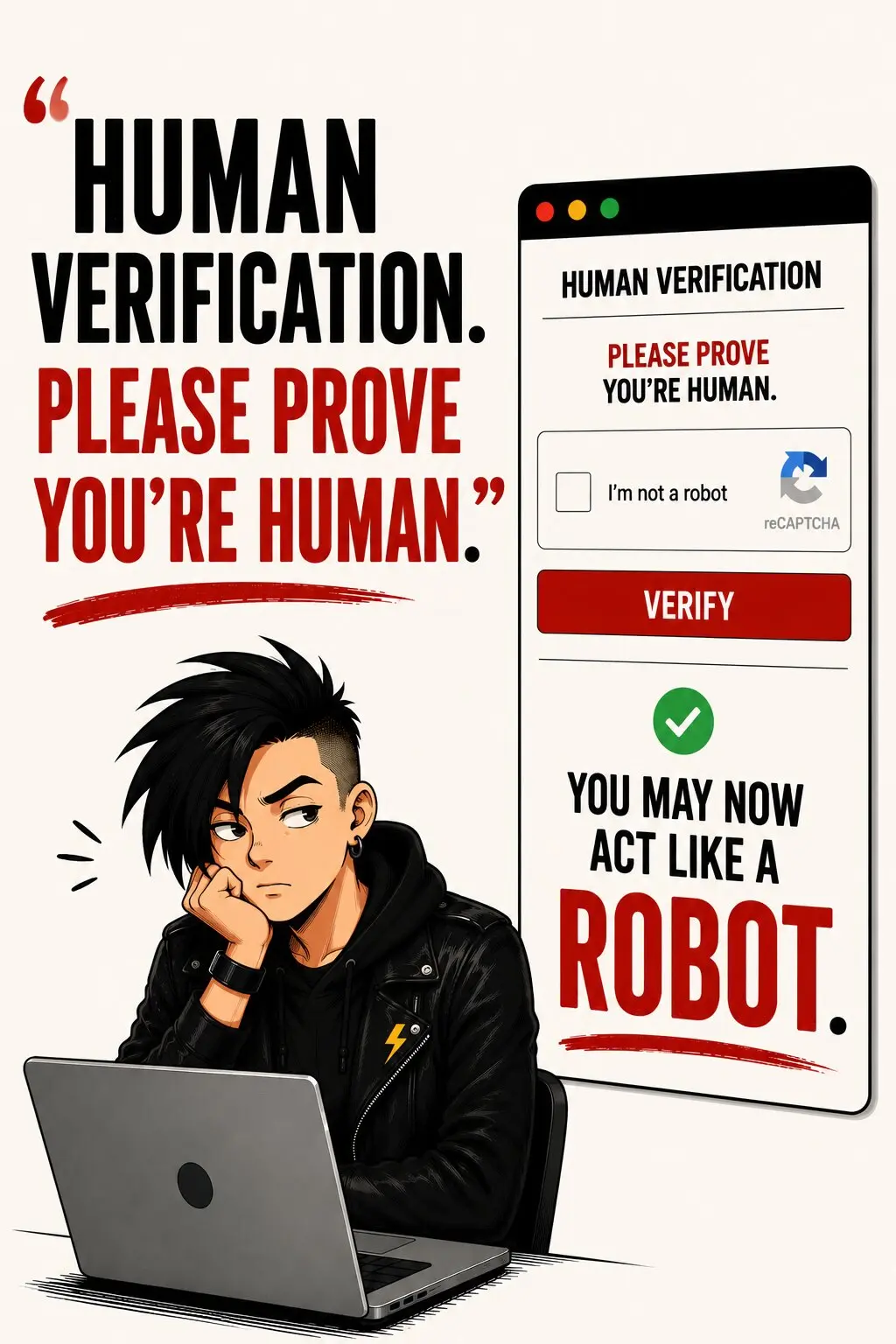
One of the memes began with a familiar digital ritual:
PLEASE PROVE YOU’RE HUMAN.
The punchline followed:
YOU MAY NOW ACT LIKE A ROBOT.
The initial visual used a detailed CAPTCHA grid. It was recognizable, but visually busy. The viewer had to examine the interface before reaching the contradiction.
We replaced it with a simpler checkbox. Recognition became immediate.
Then we enlarged the word ROBOT.
At first, the dramatic scale appeared to improve the image. But the word eventually became so dominant that it damaged the sentence.
The joke was not simply “ROBOT.”
The joke was the transition from proving one’s humanity to behaving mechanically.
We therefore reduced the word again, strengthened the preceding lines and restored a small CAPTCHA icon that added just enough authenticity.
The final image emerged through disagreement, not automatic approval.
This revealed a practical lesson:
Emphasis is not the same as exaggeration.
A punchline must dominate, but it must still remain part of the joke.
What an Unnecessary Mug Taught Us

One of the least important-looking objects produced one of the most important lessons.
A mug appeared in several generated scenes.
It looked harmless. It made the desk seem realistic. It occupied empty space. Sometimes it even carried a small decorative symbol that matched the visual style.
But after several images, the mug became suspicious.
Why was it there?
Did it clarify the joke?
Did it reveal something about the character?
Did it guide the eye?
Did it distinguish one scene from another?
Usually, the answer was no.
The mug was not a creative decision.
It was visual autocomplete.
Image generators know that desks often contain mugs, plants, notebooks, pens and other plausible objects. They reproduce the statistical appearance of a convincing scene.
But statistical plausibility is not editorial necessity.
Once we recognized this, we became much more aggressive about removing:
- mugs;
- plants;
- notebooks;
- pens;
- secondary icons;
- excess interface text;
- decorative labels;
- background details that did not contribute to the meaning.
The privacy meme improved dramatically when almost everything disappeared except:
- the headline;
- the contradiction;
- the consent box;
- the red “Accept All” button;
- the character’s reluctant gesture.
The composition became stronger because there was less to admire and more to understand.
That gave us the central visual rule of the collection:
Every visible element must set up the joke, deliver the joke or strengthen recognition.
Everything else is a candidate for deletion.
Prompt Engineering Was Only Half the Work
Popular discussions about AI creativity focus heavily on prompt engineering.
Our experience suggests that subtraction engineering may be equally important.
The most valuable instructions were often not expansive.
They were restrictive:
- Remove the mug.
- Simplify the CAPTCHA.
- Reduce the popup.
- Change only the posture.
- Keep the composition.
- Preserve the expression.
- Restore the small icon.
- Do not regenerate the parts that already work.
A prompt opens the field of possibilities.
Art direction closes it.
AI is excellent at proposing.
Creative identity emerges through refusal.
A Series Needs Controlled Variation
One strong image can survive on novelty.
A collection cannot.
Once several Rebel Memes existed, a new problem appeared: the recurring character was beginning to repeat the same body language.
Sitting at a laptop.
Head resting on one hand.
Mildly bored.
Again.
And again.
The images worked individually, but the collection risked becoming a sequence of near-duplicates.
We therefore introduced another rule:
Preserve the character. Change the psychology.
Across the series, the character became:
- skeptical;
- resigned;
- amused;
- reluctant;
- suspicious;
- overwhelmed;
- knowingly complicit.
The posture had to express the specific contradiction.
In the privacy meme, the extended finger told the story: the character understood that the banner was manipulative and clicked anyway.
In the terms-and-conditions meme, a slight smile changed the entire relationship with the viewer.
The character was no longer simply tired. He became our accomplice:
We both know I did not read them.
A tiny psychological adjustment accomplished more than a complete redesign might have done.
Consistency is not repetition.
A coherent collection preserves its grammar while changing its sentences.
The Interface Was Evidence, Not Decoration
Each Rebel Meme combined two central components:
- a large verbal statement;
- a simplified digital interface that proved the statement.
The interface mattered because the humor depended on recognition.
A privacy banner.
A password dialog.
A CAPTCHA.
A checkbox.
A terms-and-conditions window.
These elements could not be so detailed that they became unreadable on a phone. But they could not be so abstract that the situation felt invented.
We reduced each interface to its minimum recognizable form.
This produced another principle:
Realism should support recognition, not compete for attention.
An interface is useful until the viewer understands the situation.
After that point, additional detail becomes friction.
Humor Is Also a Hierarchy Problem
A joke can be well written and still fail visually.
In one early version of the Human Verification meme, the final sentence was too small. The viewer’s eye stopped at the CAPTCHA. The actual punchline looked like secondary explanatory copy.
The writing was not the problem.
The hierarchy was.
Visual humor depends on controlling the order in which the viewer receives information:
- setup;
- recognition;
- contradiction;
- punchline.
For the privacy meme, the reading sequence became:
WE VALUE YOUR PRIVACY.
Then:
CLICK “ACCEPT ALL.”
Then the eye reached the oversized red button.
For the terms meme:
I ACCEPTED THE TERMS.
Then:
WE BOTH KNOW I DIDN’T READ THEM.
Then the character clicked I ACCEPT.
The design did not merely display the joke.
It timed it.
Why the “Gold Standard” Was Not Perfection
Throughout the project, we used the expression Gold Standard.
It did not mean that an image had reached objective perfection.
It meant that the image had reached a point where:
- the message was immediate;
- the joke was intact;
- the hierarchy worked;
- the character served the idea;
- unnecessary elements had been removed;
- the visual belonged to the collection;
- another generation represented more risk than potential reward.
That final condition became crucial.
Generative systems do not make precise promises. You may request one small adjustment and receive:
- a different face;
- altered typography;
- a weaker composition;
- new clutter;
- a spelling error;
- an unexpected object;
- the disappearance of something that was already working.
Creative iteration has a cost.
The desire to improve can destroy what already succeeds.
Stopping therefore became part of the method.
AI can continue generating forever. The human must decide when the work has said enough.
The Practical Workflow
1. Begin With a Contradiction, Not an Image
We did not begin with:
Draw a person sitting at a computer.
We began with:
“We value your privacy.” Click “Accept All.”
The idea had to survive before it was illustrated.
If the joke required a paragraph of explanation, it was not ready.
2. Apply the Recognition Test
Could a stranger understand the experience immediately?
Would it feel familiar across countries, professions and platforms?
Universal digital rituals proved more durable than niche references.
3. Treat the First Image as a Sketch
The first generation was never considered a finished asset.
Its purpose was to expose possibilities, weaknesses and unexpected directions.
4. Conduct a Structured Critique
Each image was examined for:
- conceptual strength;
- clarity;
- mobile readability;
- text hierarchy;
- pose;
- interface simplicity;
- clutter;
- emotional accuracy;
- coherence with the series.
“It looks good” was never considered sufficient.
5. Change One Creative Variable at a Time
Whenever possible, we isolated the adjustment:
- remove one object;
- simplify one dialog;
- change one gesture;
- enlarge one line;
- reduce one dominant word;
- restore one credibility cue.
This made it easier to identify why a version improved or deteriorated.
6. Compare Against the Previous Version
The newest image was never assumed to be the best.
We preserved the right to go backwards.
7. Stop When Risk Exceeds Gain
A theoretical two-percent improvement was not worth losing a composition that already worked.
8. Write the Publication Copy Last
The title and description were written after the visual was finalized.
The publication copy extended the idea. It did not repair a weak image.
The meme had to stand on its own.
AI Expands. Humans Compress.
Generative AI is an expansion machine.
It expands:
- concepts;
- wording;
- poses;
- compositions;
- layouts;
- decorative possibilities;
- alternative directions.
But recognizable creative identity requires compression.
Someone must decide:
- this character;
- this palette;
- this rhythm;
- this level of detail;
- this kind of contradiction;
- this emotional register;
- this amount of text;
- this stopping point.
The machine explores the possible.
The human defines the necessary.
That may become one of the most valuable creative abilities of the AI era.
Not prompting.
Not generating.
Not even editing in the traditional sense.
Discerning.
Recognizing the version that contains the idea—and removing everything that prevents other people from seeing it.
This Was Not Human Versus AI
It is tempting to turn every conversation about AI into a competition.
Human creativity versus machine creativity.
Artist versus algorithm.
Originality versus automation.
That framing does not accurately describe this project.
The AI contributed real value:
- rapid visual exploration;
- alternative compositions;
- unexpected expressions;
- fast iteration;
- tireless responsiveness;
- the ability to transform criticism into another visual attempt.
Human judgment contributed a different form of value:
- the objective;
- the editorial standard;
- lived recognition;
- the decision to reject;
- the insistence on coherence;
- the correction of excess;
- the authority to stop.
Neither role was trivial.
But the roles were not interchangeable.
The AI did not simply obey, and the human did not merely approve.
We argued with the images.
That argument became the creative process.
What Was Actually Innovative?
I use the word innovative cautiously. The internet applies it to almost everything.
The innovation was not that AI generated memes. That is already ordinary.
What felt genuinely new was the operating model:
A sustained conversation in which generation, criticism, rejection, psychological interpretation and visual refinement happened inside one continuous loop.
We were not using AI as a vending machine.
We were constructing an editorial relationship.
The result was not a random set of ten AI images. It became a collection with:
- a recurring visual character;
- a stable cream, black and red palette;
- monumental typography;
- simplified digital interfaces;
- controlled variations in posture;
- a consistent pattern of setup and contradiction;
- a recognizable philosophy of digital humor.
That is the difference between output and authorship.
Output is what the system produces. Authorship is the chain of decisions that makes the output yours.
The Hidden Danger: AI Makes Mediocrity Look Finished
AI-generated images often arrive looking complete.
They have shadows.
They have texture.
They have visual balance.
They resemble finished posters, advertisements or editorial illustrations.
That surface completeness can discourage criticism.
A rough human sketch openly asks to be improved. A polished AI image can seduce its creator into premature acceptance.
The creator must learn to look through the polish and ask:
- Is the idea genuinely clear?
- Is the punchline visually dominant?
- Is the emotion accurate?
- Is this composition distinct within the series?
- Is every object necessary?
- Is the image saying one thing or five?
- Would I still approve it if it looked less impressive?
The better AI becomes at producing finished-looking work, the more important unfinished thinking becomes.
The Images Were One Asset. The Method Was Another.
The ten Rebel Memes now form a completed first collection.
But the most durable result may be the method that produced them.
We now know that the strongest pieces tend to contain:
- one universal digital contradiction;
- one instantly recognizable interface;
- one clear emotional response;
- one dominant punchline;
- almost no decorative noise;
- enough consistency to feel familiar;
- enough variation to remain alive.
That knowledge can be reused beyond memes.
It can inform:
- advertisements;
- editorial illustrations;
- social campaigns;
- brand characters;
- Pinterest collections;
- landing-page concepts;
- educational visuals;
- visual thought experiments.
The images were the first product.
The creative operating system was the second.
That is what it means to create value twice: once for today’s publication and once for tomorrow’s system.
Use the Machine. Keep the Judgment.
AI did not reduce the need for taste.
It exposed it.
When generation becomes cheap, selection becomes expensive.
When alternatives become infinite, commitment becomes difficult.
When every prompt can create another polished possibility, creative authority depends on the courage to reject, refine and stop.
The machine never announced that we had reached perfection.
It would have happily produced version 47.
We decided when the message was clear.
We decided when the mug had to disappear.
We decided when ROBOT was too large.
We decided when a CAPTCHA needed less realism—and when one small icon needed to return.
We decided when the character looked bored, when he looked resigned and when he finally looked like our accomplice.
The AI made the images.
We made the decisions.
And the decisions made the collection.
Explore the Complete Rebel Memes Collection
Discover all ten original Rebel Memes on Pinterest:
Explore the Rebel Memes Exclusive Collection
Which one captures your digital life most accurately?
Jacques-Louis Kreiss
Founder, The Rebel Marketer
Rebellion isn’t just a brand. It’s a strategy.





