
There are sports cars, then there are British sports cars. Subtle in difference, but just as each locale has their own version of KFC, the realm of performance automobiles are no different. Similarly, the addition or subtraction of only one or two spices could really change up how it ends up tasting. Made with can-do attitude in mind, there's a great diversity to be had with 'Made in the UK' classics, from achingly beautiful E-Types to make even the Italians drool, and onto lightweight and focused racers like the Lotus Elan.
Times change, as the oncoming tsunami of SUVs and crossovers wash away sports cars with every beating wave. There were hundreds of automakers in 20th-century Britain, and the lot of them aspire to create fine sports cars for the discerning enthusiast. Nowadays however, only the few remain, with scarring reminders of those good old days when MGBs and Austin Healeys roamed free. Nevertheless, the spirit of adventure and light-heartedness soldiers on, with some dedicated fans planning an epic comeback.
The Return Of The Classic British Sports Car?

Credits to: Mulholland Legend 480 Interesting looking, isn't it?
Among them is a company that I've never heard of before - Mulholland. By no means would I have become familiarised with them otherwise, as they're normally working behind the scenes. Ordinarily, they supply new-age technology and materiel to the world of motorsports, in much the same fashion as Cosworth or Prodrive. For those winning teams in Formula One, GT, or the World Rally Championship, some of them have in one way or another have Mulholland's DNA.
Clearly then, they have a lot of experience in helping to develop race cars. They must've imagined that perhaps given those learnings, it would be ripe to use them into getting mainstream. Why not make sports cars that ordinary people can buy? Better than that, why not bring back the essence of what makes British sports cars of yesteryear so great. This is the story of the Legend 480, an uninspiringly named piece of machinery that seemingly came out of nowhere, and no one has expected its arrival.


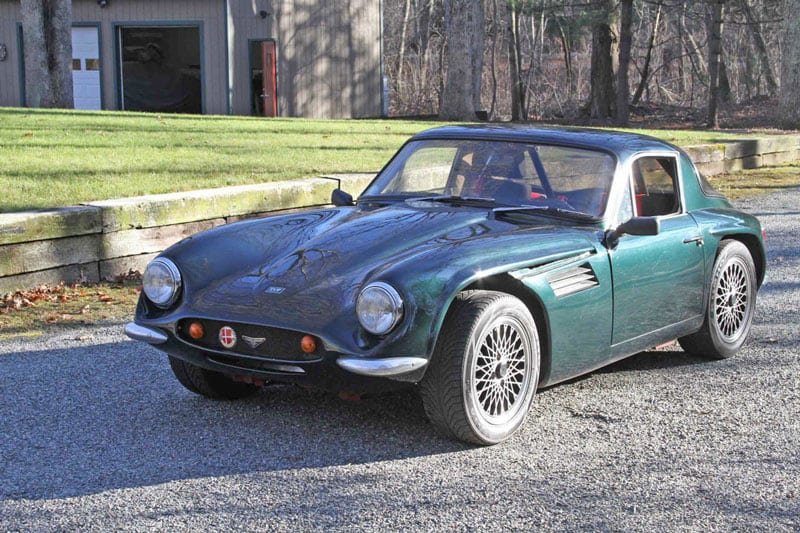

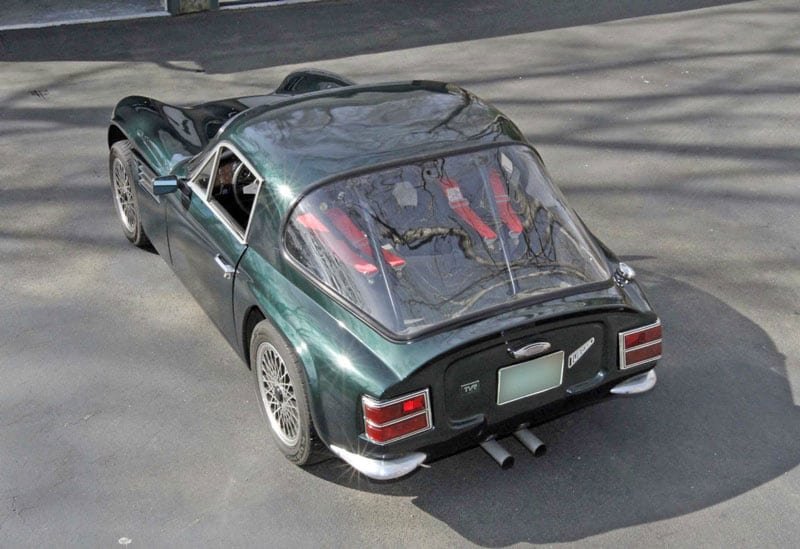
Credits to: TVR Cerbera, and TVR Tuscan | New, and old. Short, and long.
What we can tell straight away, is that it has quiet a few doses of inspiration from fellow carmaker - TVR. The founder and chief of Mulholland is a big TVR fanboy, and if you've never heard those three letters before, know that at one point in time, they were among the largest sports car maker in the world. They've since fallen on hard times, and oddly, TVR themselves have already plotted their own comeback, with a familiar idea. The whole concept of a TVR boils down to three things - lightweight construction, brutish power, and bucket loads of madness in between.
As a faithful follower of those commandments, the 480 adopts its founding ideals into the 21st-century. Using Mulholland's expertise with the arts of alchemy, the 480 will be constructed with a carbon-fibre chassis - as they have done with race cars - and then clothed with a composite body on top. This combination not only allows it to be more rigid than traditional aluminium or alloy frames, but it's also incredibly lightweight - sitting at just 1,200kg. For added context, the more extreme supercars of today weigh around 1,400kg - the difference of a Harley Davidson.
As for powering this featherweight, it will come courtesy of an old-school naturally-aspirated V8 engine from across the Pacific. As with most of the 480, details are scarce, but we do know that with its namesake, it will have 480hp. It's blood-rival, the TVR Griffith has a Cosworth-tuned, naturally aspirated 5.0-litre V8 from Ford. The 'Coyote' engine is the same block that's fitted onto the Mustang, with some tweaking to extract its more distinct TVR-ness, and 493hp to boot.
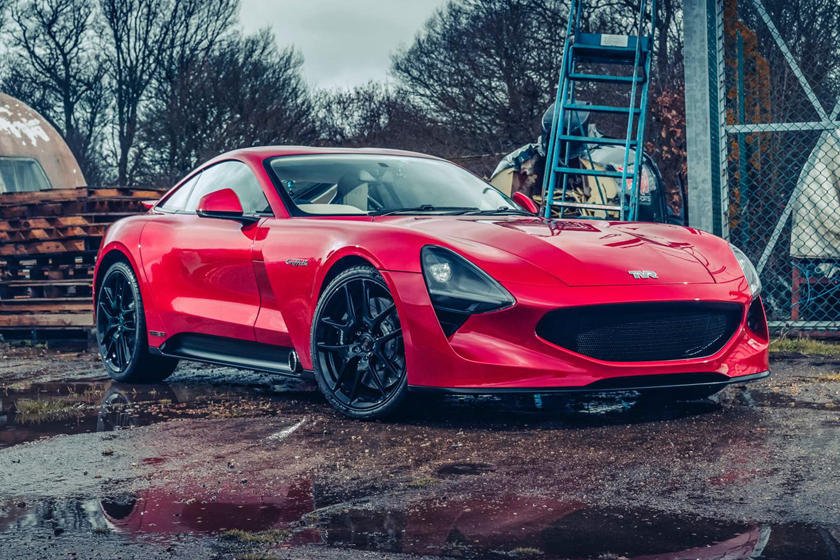
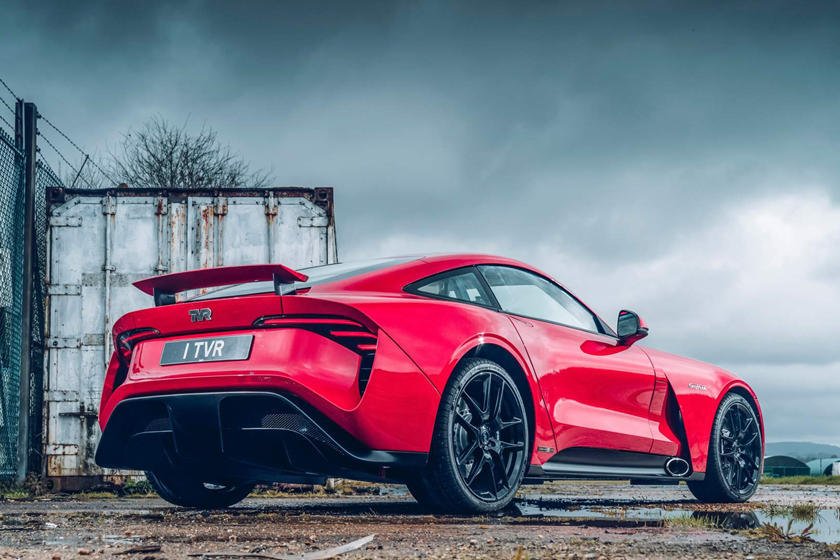
Credits to: TVR Griffith | 10 points to Gryffindor! Just look at those side-pipe exhausts...
Between the two then, we're splitting hairs now. The 480 is said to be using a 6.2-litre LS3 V8 from Ford's arch-nemesis, General Motors. The term 'LS' might be familiar, as it's been a popular crate-motor for engine swaps, being crammed into Mini Coopers and Nissan GT-Rs. This 6.2L block is even the same one used in the Camaro, and the previous-generation Corvette, so it's no slouch of a motor. However, this is apparently not a final decision, as the 480 could have a different engine entirely if they've found something better.
So, even with minimal information that's been disclosed so far, we'll know that the 480 is light on its feet, and plenty powerful enough. It'll also be a fairly simple machine to drive, eschewing the need for complex mechanics. The 480 will be able to send all of its horsepower to the rear-wheels exclusively, and through a 6-speed manual transmission in the middle. If you're looking for the sharpest, most rapid dual-clutch transmission to change gears, then this isn't the car for you. But if you're keen on a fun and engaging driving experience, read on.
A Legend Is Born.


Credits to: Mulholland Legend 480 | Thumbs up, or down?
With all that covered up, we can move to the things that we can see about the 480, and my first impressions have been fairly interesting so far. The design in particular is rather bold, to say the least. You may recall a post I did not long ago, bashing BMW for using such a large and disproportionate front-grille on their new 4-series. The 480 appears to embrace this modern-design expression of 'more is better', and 'to hell with subtlety'. They want you to know what they're driving.
The front-grille here is no less gaping than the 4-series, and no doubt a lot of people will find this jarring. This is a love it, or hate it design choice, and personally - I haven't yet loved it, though it doesn't offend me as much as I think it should. I'm willing to give it the benefit of the doubt however, and let Mulholland roll with it. This is after all, their first road-car, and I can understand them wanting to experiment and find that distinctive look that we can associate to their future endeavours.
There aren't many photos of the 480, but it does look like the front-grille sports two fellow frames. They appear to be cooling ducts, though your guess is as god as mine. The headlights are placed on top of the grille rather than flanking it - reminding me of the Nissan GT-R - sitting far on either side of the bonnet. The exterior has a very smooth silhouette from every angle, with the side profile showing a fairly short wheelbase. The rear-end is equally simple, with no accoutrements, trading that for a flat slab of bodywork. It's like a Kamm-tail, with that fastback roofline tapering off sharply into the rear-fascia, flanked with two rounded taillights.


Credits to: Nissan GT-R | Narrow headlights, slab-sided rear... Seems familiar.
The overall shape, and the details between the lines do remind me of old TVRs, as it should, given that Mulholland hired a former TVR designer to pen it. It's an imposing yet minimalist body, though with a bit of porky figure if these photos are anything to go by. We can also see some of the aerodynamics in play, primarily with how substantial the rear-diffuser is. Further highlighting its no-nonsense approach, the 480 doesn't have any active aero from what we know so far, in contrast to the Griffith's retractable rear-spoiler.
There's not a single picture of the interior, although we know that it'll accommodate two people. That then, summarises the 480 quite well, as it poses itself as a checklist of all the things that we want in sports cars, and one that enthusiasts and purists have yearned for so long. But will it even make it to completion, and would it be the runaway success that we want it to be?
From these pictures, it looks like a fairly generic sports car designed for a video game. One might say that the proportions and appearance are laughable simple, maybe as a concept car made to attract eyes at a car-show stand, or a render done for a college graphics-design project. Had I merely read the details and seen these images, I would've imagined that Mulholland is still in the early days of prototyping the 480, being nowhere near production-ready.


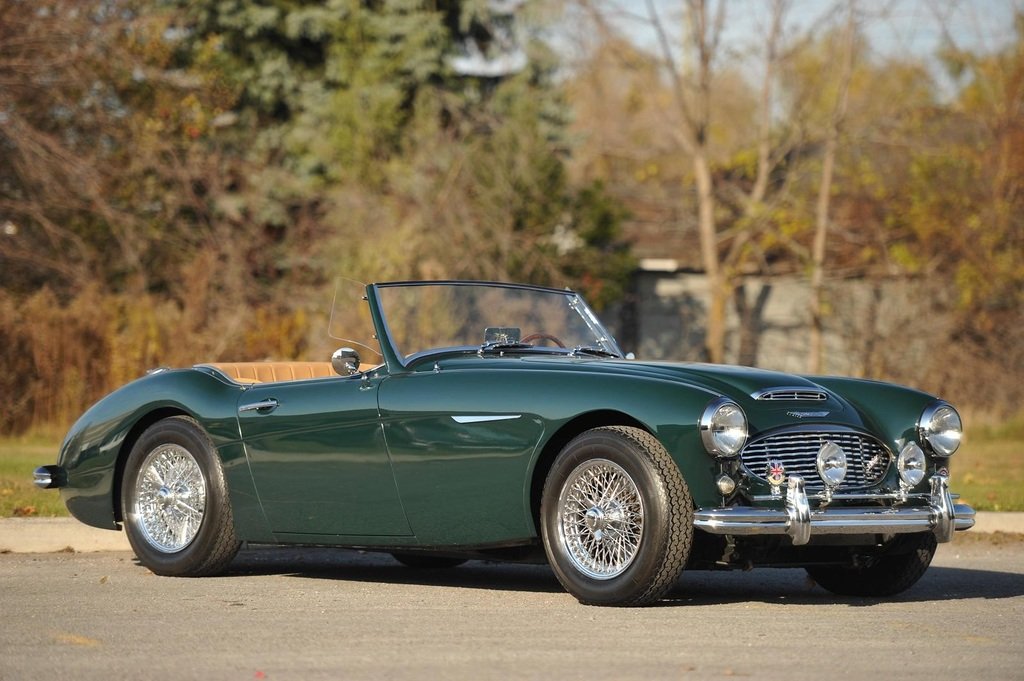
Credits to: AC Ace-Bristol, MGC GTS, Jaguar XK150, and Austin-Healey 3000 | A storied legacy to follow.
Oddly, this TVR look-alike and be-alike is closer to getting into customer's hands than the Griffith, slated for release later this year, and possibly as early as July. Quite an amazing feat if they pull this off, as the actual TVR is continually facing delay, after painful delay in setting up production. Mulholland's current state-of-the-art factories are already working in full-swing, and they're leveraging the fact that most of the components will be made in-house, while only sourcing complicated parts like the engine from elsewhere.
They're even planning another car after the 480, one with four-seats instead. It's quite a remarkable push from a company that I've only read about today. But what about competing against the Griffith, then? Vis-à-vis, they're going to be roughly of the same price, and its specifications are nearly identical. One might also wonder if you'd spend the money on a new Porsche instead, or maybe a second-hand Ferrari or Aston Martin.
On one hand you have the Legend 480, a homage to TVRs of old times; and on the other sits the Griffith, an actual TVR conceived as a continuation of its heritage. A difficult choice for me, but perhaps it'll be an easier choice for you?
Thanks for reading! For more updates on my blogs, or the more minute things in life, feel free to follow me on Twitter, LinkedIn, and Medium, and maybe give a shout there as well!






