
In my previous post I did research on Charles Hoskinson, main figure behind Cardano creation. But what exactly is Cardano? Where did the idea come from and what were the early days? How is alleged Ethereum killer different from other blockchains and are all the claims true? Let's find out.
Idea of Ethereum Killers
Some may ask what are Ethereum killers, it's a term used for non-ethereum open-source blockchains that seek to compete with Ethereum current and future possible shortcomings. This term was probably used first time in 2017 in regards to Cardano, but has ever since evolved and now the group of so called blockchains is bigger. Some of the most recognizable chains included in this group are Polkadot, Solana, Tezos, Binance Smart Chain and Avalanche.
Main problems which aforementioned seek to fight are namely high gas fees and low TPS. I wrote this article in regards to TPS. Most of the chains I mentioned use Proof of Stake algorithm, in the past calling it superior model over Ethereum Proof of Work, but since then, Ethereum managed to upgrade and change to POS.
So what is Cardano?
Citing Charles Hoskinson, Cardano was created to “provide a more balanced and sustainable ecosystem” in cryptocurrencies space. Designed and developed since 2015, after Hoskinson was removed from Ethereum development. Cardano held an ICO in 2015-2017 in which the team sold approximately 26 billion coins out of 45 billions max supply for 62.2 million USD.
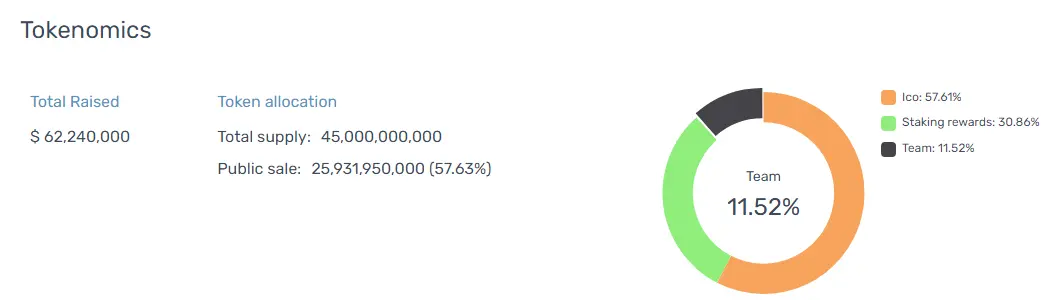
Infographics provided by cryptorank.io
Cardano distribution was held in Asia, set in four stages. It was first ICO in crypto history to set KYC guidelines, additionally there was an audit on the process of coin distribution.
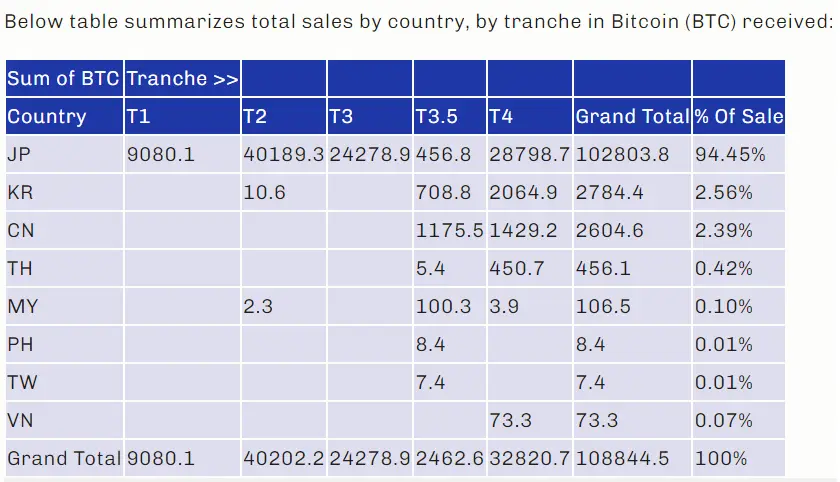
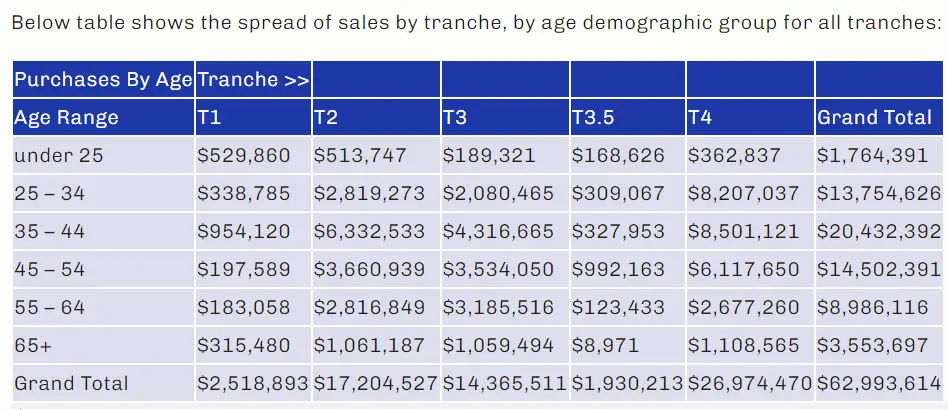
In addition to 26 billion coins sold for a price of 0.0024 USD which gives us about 166x at a current exchange rate, additional 5 billion ADA was spread among three institutions that were established to increase Cardano adoption and upgrade its technology. Those three were:
What is the tech behind it?
Cardano is a POS consensus algorithm blockchain and utilizes a UTXO model on which Bitcoin is based on. Cardano uses a modified version of it called eUTXO, citing Cardano.org, the main differences between those are:
- It generalizes the concept of ‘address’ by using the lock-and-key analogy. Instead of restricting locks to public keys and keys to signatures, addresses in the EUTXO model can contain arbitrary logic in the form of scripts. For example, when a node validates a transaction, the node determines whether or not the transaction is allowed to use a certain output as an input. The transaction will look up the script provided by the output's address and will execute the script if the transaction can use the output as an input.
- The second difference between UTXO and EUTXO is that outputs can carry (almost) arbitrary data in addition to an address and value. This makes scripts much more powerful by allowing them to carry state information.
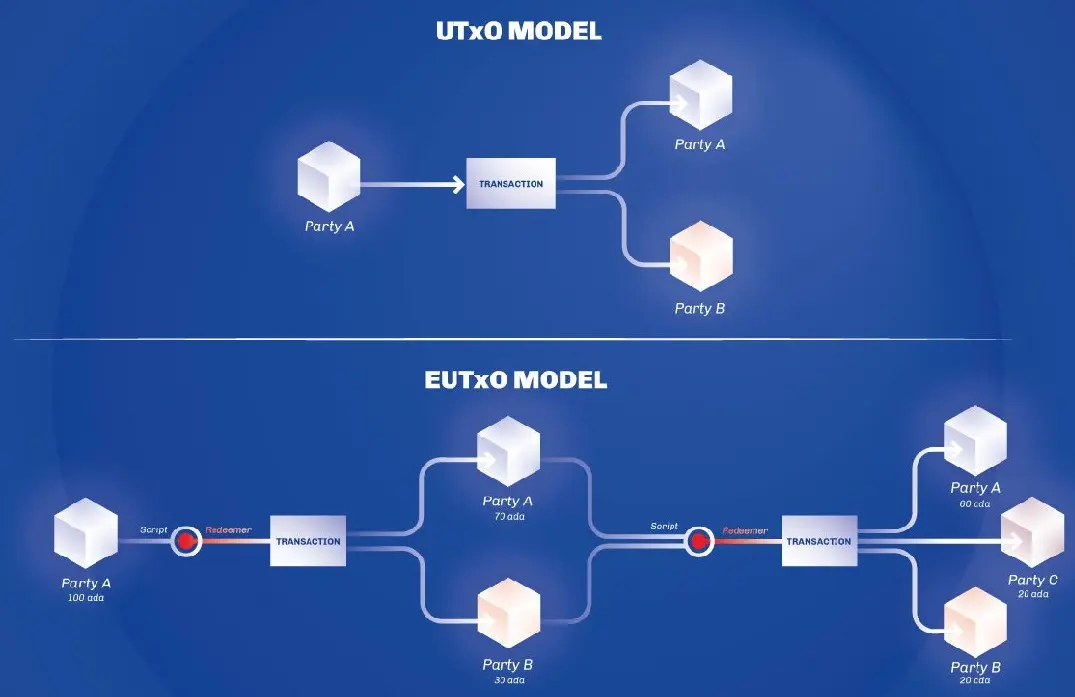
Image of comparison provided by forum.cardano.org
"The EUTXO model offers unique advantages over other accounting models. The success or failure of transaction validation depends only on the transaction itself and its inputs, and not on anything else on the blockchain. As a consequence, the validity of a transaction can be checked off-chain, before the transaction is sent to the blockchain. A transaction can still fail if some other transaction concurrently consumes an input that the transaction is expecting, but if all inputs are still present, the transaction is guaranteed to succeed."
The main driving force behind Cardano is its unique Ouroboros protocol which is first provably secure POS algorithm as well as first to be based on peer-reviewed research. Technology behind Cardano usually is peer-reviewed which causes its innovation to move slow, in contract to other blockchains "move fast and break things" approach.
In regards to its improvement, Cardano has a roadmap which can be viewed here.
Despite being called a Ethereum killer, Cardano obtained ability to utilize smart contracts only recently in September 13th, 2021, alongside Alonzo hard fork. This great news driven ADA price to its ATH of 3.09$. Cardano has many times reached the top 1 spot in terms of developer activity which is measured by amount of github repository work being done.
Current most notable improvements that are awaiting to be released and are currently are worked on are Mithril and Hydra.
Cardano has recently received an algorithmic stablecoin, on which I have wrote and article here and here.
What is the team behind Cardano?
IOG, Cardano foundation and EMURGO employ approximately 600 workers across more than 50 countries. The most notable ones are Charles Hoskinson alongside Jeremy Wood, being co-founders of IOG. Prof Aggelos Kiayias, creator of Ouroboros and countless specialists in blockchain research and development. The full list of IOG employees you can find here.
What is the future?
Across the years Cardano has proven to be a tenacious competitor. In its history there was no downtime for 1900+ days of activity and the only notable problems were delays in its upgrades. Recently Cardano has an unrecognized bug which caused its nodes to disconnect, and it was the first article I wrote for Publish0x. But as it turns out, the ecosystem still works and thrives.
Cardano has a long list of partnerships, most of them can be found here, in this great Publish0x article by WordStock I stumbled upon while doing my research. The list is from 2020 and since then, amount of collaborations have increased.
Cardano aims to improve financial possibilities of different environments around the world. It attempts to do so by example by its Atala Prism platform, designed specifically for DID(Decentralized Identifiers) and SSI(Self-sovereign Identity) solutions.
What is the Endgame for Cardano?
Cardano aims to scale up to billions of users in attempt to provide its solutions to financial system as a whole. Cardano has a long winning streak and has proven to be reliable, scalable and is led by experts in cryptography. There is no clear endgame for Cardano yet, as the blockchain is still improving and evolving.
What are the drawbacks of Cardano?
Cardano is not yet widely recognized which makes it hard for its adoption. And adoption is the key in Cryptocurrency space.
It also has a lot of strong competitors, as stated before it allegedly tries to overtake Ethereum which may have different results and prove to be an impossible task.
Cardano is still in development and it should be considered one of the pros and cons respectively. It is possible in the future one of Cardano upgrades can prove fatal to its operation. This is highly unlikely in regards to its history, but still possible.
And finally Cardano tends to be a slow mover. Cryptocurrency space is still fresh and has a lot of potential, Cardano slow pace can also be considered a advantage and a disadvantage.
My thoughts
I entered cryptocurrencies world in mid 2021s. I have analyzed countless blockchains in terms of their legitimacy and technology. I'm still only a human but in my humble opinion, Cardano is one the most legitimate projects in the space. It has its bad sides, but it also has it good sides.
None of information in this article should be considered a financial advice, it's my own analysis and facts I wanted to share with this wonderful community.






