
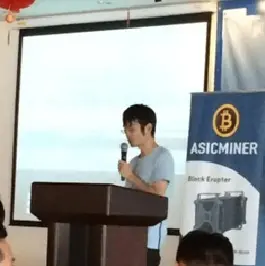
Before Bitmain, MicroBT, and the gigantic industrial mining farms that dominate Bitcoin today, there was a time when building an ASIC for SHA-256 seemed almost science fiction. During that era, a mythological character emerged: Friedcat, the pseudonym used on Bitcointalk by Jiang Xinyu, also known in the Chinese community as *烤猫*. In 2012, he founded ASICMiner, one of the first companies to design and manufacture ASICs specifically for Bitcoin mining. One of his most famous phrases was "Don't Panic".
THE BEGINNINGS
Verifiable biographical information on Friedcat is surprisingly scarce. Chinese accounts describe him as Jiang Xinyu, originally from Hunan Province, who entered the University of Science and Technology of China at a young age. Some biographies mention extraordinary academic achievements and subsequent research experience in the United States. What is certain is that Friedcat had a strong technical background and a particular passion for programming. Before ASICMiner, he was known primarily in Chinese technology and academic circles. In 2011, he came into contact with Bitcoin. And he quickly realized something that would change his life: the future of mining lay in specialized hardware.
In 2012, he published the thread on Bitcointalk: "ASICMINER: Entering the Future of ASIC Mining by Inventing It".
The goal was to directly design ASIC chips dedicated to SHA-256. In July 2012, Friedcat publicly presented the Block Erupter project, explaining that his team had begun working on ASIC design and production and that development costs in China were much lower than those typically estimated in the West.
STOCK SALE
Today, we would probably call it a token sale. In 2012, it was simply a stock sale denominated in Bitcoin. ASICMiner was funded through a sort of crowdfunding on GLBSE, one of the first platforms for trading Bitcoin assets. Approximately 163,962 shares were issued at 0.1 BTC each, within a total corporate structure of 400,000 shares.
Investors would participate in the profits from mining and selling the ASICs. ASICMiner shares traded at around 4-4.5 BTC per share, approximately 40-45 times the initial BTC price. A financial analysis at the time estimated that an investment of around $5,000 in the IPO would be worth around $2 million less than a year later, with shares trading at around 4.25 BTC.
BLOCK ERUPTER
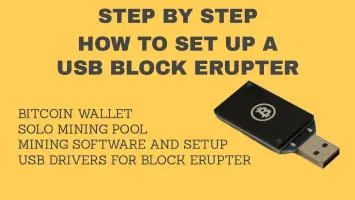
The first major product was the Block Erupter, one of the icons of the first generation of ASIC mining. The transition from GPUs to ASICs completely changed the economics of mining. An ASIC wasn't a general-purpose computer adapted for mining: it was a chip designed almost exclusively to run SHA-256. ASICMiner was among the first projects to actually bring this technology to market.
Its first chip used a 130nm manufacturing process and was released with power consumption in the order of a few joules per gigahash.
By modern standards, it was prehistoric technology, but in 2012-2013, it was revolutionary. USB Block Erupters became popular among early miners and have now become almost collector's items.
GOLDEN AGE
Between 2013 and 2014, Friedcat wasn't just selling hardware: ASICMiner directly used its own ASICs for mining and distributed the profits to shareholders. This created a huge competitive advantage. The company could:
- design its own chips;
- produce the ASICs;
- use them for mining;
- sell part of the hardware;
- distribute the profits to investors.
For a time, ASICMiner was a major player in the entire Bitcoin ecosystem. Its main thread on BitcoinTalk reached over 1,300 pages and millions of views. By the standards of the time, ASICMiner seemed like a perfect machine. But the industry was about to become much more competitive.
FIRST PROBLEMS
ASIC mining was evolving at an astonishing speed. Each new generation of chips made previous ones economically obsolete. ASICMiner struggled to keep up. According to investors' own accounts, the second generation of chips was canceled, while the third generation arrived late and performed below expectations. In mining, it's not enough to produce a working ASIC. You have to produce it before the difficulty increases and before competitors launch a more efficient generation. A delay of a few months can turn an extremely profitable product into an economically useless one. This was happening.
AMHASH: THE LAST ATTEMPT
In 2014, ASICMiner sought a new path. AMHash, a cloud mining service, was born. ASICMiner would provide the hashrate, while RockMiner, led by Rock Xie, would handle the commercial and customer side of things. The project was initially successful. AMHash1 sold over 460 TH/s, AMHash2 over 480 TH/s, and AMHash3 began to grow very rapidly. However, according to the announcement subsequently published by the AMHash team, on December 25, 2014, approximately 3,546 TH/s of hashrate disappeared. Friedcat initially cited maintenance issues with the mining farm. Later, it was reported that the machines had been stolen, according to the source, by the mining farm's partner. The problem was enormous. It wasn't just a few machines. It was a substantial part of the infrastructure that was supposed to produce the Bitcoins needed to pay investors.
FRIEDCAT DISAPPEARS
After the AMHash issue, Friedcat gradually stopped responding. His last public communication was in early 2015. Investors on the forum began to wonder what had happened. Was he dead? Had he been kidnapped? Had he escaped? Had he lost everything? Had he taken the Bitcoins and gone into hiding? Or was he still alive but unable to communicate? A March 2015 thread summarized the situation: AMHash had lost its hashrate, Friedcat had been unreachable for about 40 days, some executives had turned off their phones, and rumors were circulating that the machines had been stolen. Some users even speculated about a kidnapping. Others openly spoke of an exit scam. None of these hypotheses have been proven.
THE 80,000 BTC THEORY
One of the most famous numbers associated with the affair is the number 80,000 BTC. Some investors on forums claimed that Friedcat had access to a huge amount of Bitcoin belonging to the company and had disappeared with some of it. In June 2015, one user estimated the company funds Friedcat had at his disposal at around 80,000 BTC.
KIDNAPPING?
It's one of the most disturbing theories. The situation had several elements that, at least superficially, could have fueled it: Friedcat had access to huge amounts of Bitcoin, he had relationships with mining farms and local partners, some of the hardware had suddenly disappeared, and he simultaneously stopped communicating. Some users on the forum even speculated that he had been kidnapped and forced to transfer funds. But no credible public evidence of a kidnapping has ever emerged.
FLIGHT AND IDENTITY CHANGE?
ASICMiner had entered an extremely difficult financial situation. Mining technology was rapidly becoming obsolete, and competition, especially from Bitmain, was growing. Some investors believed that Friedcat had simply decided to abandon the project and protect what remained of his fortune. Others, however, argued that he had lost control of the situation. An interesting detail is that some users who had had direct contact with him reported seeing him simply stop responding, with no indication of a clandestine continuation of the activity.
SUICIDE? MURDER?
Over the years, a much more dramatic theory has also circulated: that Friedcat may have committed suicide. This possibility has been occasionally mentioned by members of the old community, generally linking it to the financial and personal pressure he was under. Other rumors suggest that he was murdered. However, there is no public proof that Friedcat is dead. There has been no official confirmation of his death, and no body has ever been publicly associated with the matter.
WHAT ABOUT HIS FAMILY?
According to a reconstruction published in 2026, Friedcat's wife, Wang Xian, obtained a divorce decree in October 2015 from the Hefei Intermediate People's Court. Friedcat did not appear to contest the divorce. The details of the settlement have not been made public, and his wife has not publicly provided a reconstruction of her fate.
WHAT ABOUT HIS $BTC?
Over the years, several Bitcoin addresses associated with or attributed to Friedcat have been identified. Some subsequent movements (dating back to 2017) fueled speculation about the possibility that he was still alive. Furthermore, in 2024-2025, the awakening of several giant whales from the Satoshi era rekindled interest in Friedcat's story. A whale with over 80,000 BTC moved in 2025 was even associated online with Friedcat.
CONCLUSIONS
Regardless of what ultimately happened, Friedcat played a huge role in the history of Bitcoin. ASICMiner was one of the first concrete examples of the industrialization of mining. First there were GPUs, FPGAs, and small experiments. Then came ASICs.
And Friedcat was among the first to understand that the competitive advantage would shift from simply "mining Bitcoin" to designing the best possible chip. Years later, figures like Neo's Da Hongfei said they were impressed by Friedcat's crowdfunding and his ability to transform a hardware idea into a venture funded by the Bitcoin community. One of the most prominent examples is Yang Zuoxing, who worked with ASICMiner before joining Bitmain and later founding MicroBT, the maker of WhatsMiner. In a sense, part of the modern ASIC industry was born from that ecosystem. Even today, in 2026, there is no definitive public account of Jiang Xinyu's whereabouts, whether he is alive, dead, in hiding, or has simply chosen to disappear. And perhaps this is precisely what makes Friedcat one of the most mysterious figures in Bitcoin's history.
Article always updated with all the possibilities of on-chain farming (airdrop): Some Sites To Earn Crypto Bonus (Old & New)





