According to unconfirmed rumors, OpenAI and Anthropic may have broken RSA encryption. These claims come from Scott Aaronson, a theoretical computer scientist, professor at the University of Texas at Austin, and former member of OpenAI.
However, he later clarified that:
- He has not personally verified an algorithm capable of factoring RSA numbers.
- It is not certain that the rumors actually refer to "factoring in P" (i.e., factoring in polynomial time).
- The information may have been distorted as it was passed from person to person.
- He does not wish to be responsible for spreading false rumors.
The issue with RSA is as follows:
1) A computer generates two gigantic prime numbers (p and q).
2) It multiplies them and publishes the result (the public key).
3) Anyone can know the result, but not the two original factors.
4) Recovering those factors becomes computationally extremely difficult when the numbers are sufficiently large.
5) If someone manages to derive p and q, RSA is compromised.
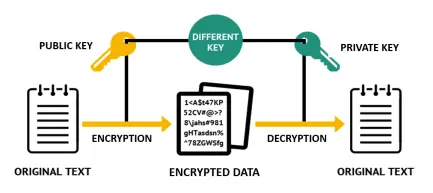
RSA is based on the difficulty of breaking down a massive number into its prime factors. While multiplying two very large prime numbers is relatively simple, recovering the original two numbers from their product alone is extremely difficult using classical computers and current algorithms. RSA-2048, for instance, uses 2048-bit numbers (617 decimal digits). "Factoring in P" would imply the existence of a factoring algorithm with polynomial-time complexity, which would cause RSA to lose its theoretical security foundation. Nevertheless, discovering a polynomial-time algorithm does not necessarily mean that RSA-2048 could be immediately compromised; an algorithm with an astronomically long execution time might still be practically unusable.
The result regarding VP ≠ VNP, achieved by Anthropic and OpenAI, is particularly noteworthy as it pertains to computational complexity theory, a field concerned with fundamental questions about the difficulty of mathematical problems. However, this does not constitute a proof that P ≠ NP, nor, conversely, that P = NP.
Similarly, work being conducted by Google on factoring is of interest; it presents a theoretical sub-exponential algorithm, yet it does not offer a practical attack against modern RSA keys. RSA underpins digital certificates, authentication systems (banks), encryption, and digital signatures, including the HTTPS protocol used by websites. If RSA encryption were to be broken, the security of HTTPS connections would be severely compromised, with consequences varying based on the version of the TLS protocol used by the website, leading to:
1) Identity theft and Man in the Middle attacks. An attacker could forge the certificate of any site (e.g., your bank or email provider) by signing it with the compromised private key. They could intercept your traffic and impersonate the legitimate site without your browser displaying any security warnings, thereby stealing passwords, banking information, and active session data.
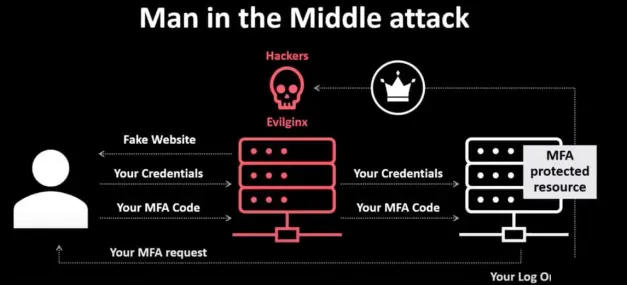
2) Decryption of traffic. If RSA is broken, an attacker can decrypt everything you send and receive in real time. Furthermore, they could decrypt traffic that was recorded years earlier—an attack known as "Harvest Now, Decrypt Later." In more modern TLS 1.3 implementations, RSA is no longer used to encrypt data, but only for authentication. Key exchange is handled via elliptic curve-based algorithms (ECDHE), which provide "Perfect Forward Secrecy." If only RSA is compromised, past traffic remains secure; however, an attacker could still intercept future connections by impersonating the site.
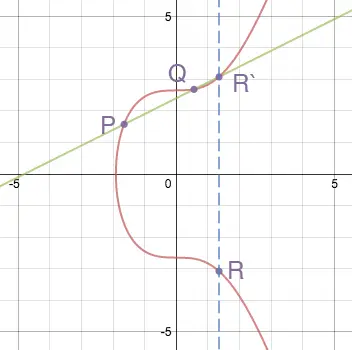
What does this mean for Bitcoin and the blockchain? Bitcoin utilizes ECDSA (Elliptic Curve Digital Signature Algorithm), which is not automatically compromised by integer factorization. Therefore, even if someone were to discover an efficient classical algorithm for factoring massive numbers, it would not automatically enable them to derive the private keys for Bitcoin or Ethereum wallets. That said, it is known that a sufficiently powerful quantum computer could employ Shor’s algorithm to attack both RSA and elliptic curve-based signatures.
Article always updated with all the possibilities of on-chain farming (airdrop): Some Sites To Earn Crypto Bonus (Old & New)