
When I read that Tally Ho is a community-owned web3 wallet, I was instantly interested because this concept of "community ownership" is something that perfectly aligns with my own ideals.
Plus, in the spirit of true decentralisation, core web3 projects should be owned and operated by the people using them (the community).
So, I decided to go into the Tally Ho! rabbit hole to learn more about it.
And in this post, I will be sharing with you everything you need to know about the project so that you don't have to do your own research from scratch.
What is Tally Ho?
Tally Ho is an open source, browser-based, and community-owned web3 wallet that enables you to store, transfer, or trade tokens and interact with decentralised applications (dApps) on Ethereum and other supported chains.
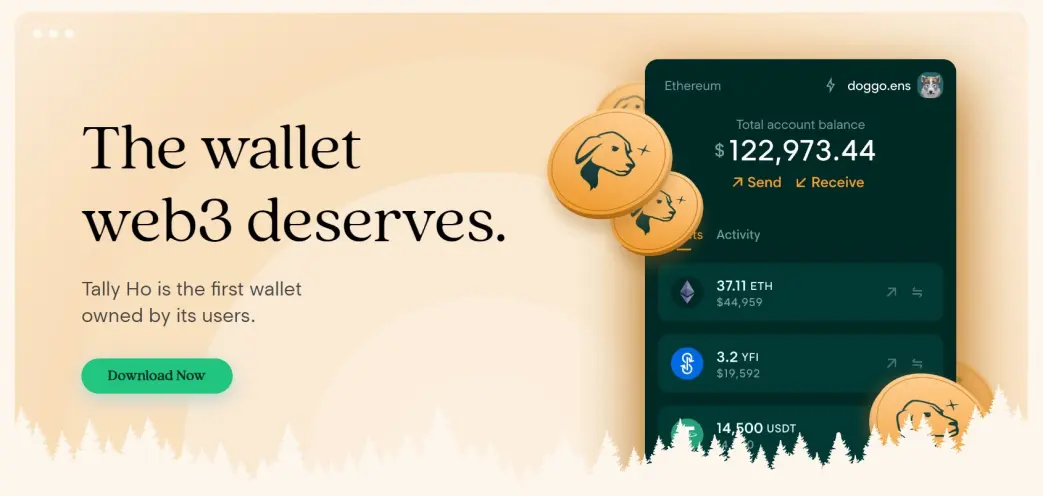
Tally Ho works like MetaMask and other web3 wallets that you may already be used to, and it aims to eventually dethrone MetaMask as the wallet of choice for web3 or DeFi users.
Furthermore, unlike other web3 wallets that are owned and controlled by centralised corporations, Tally Ho is owned and operated by its users through a DAO structure. And all revenues generated by the wallet go back to the community through the DAO.
Tally Ho was developed with the view that web3 should be built on web3 technology or principles, and not using a centralized web 2.0 approach to development.
As such the developers made sure that the wallet starts as open source and stays open source forever with the adoption of a copyleft GPLv3 license, which guarantees that the wallet’s codebase is composable with the rest of the Web3 stack and won’t be stolen by a corporation.
The wallet is currently only available as a browser extension for Chrome, Firefox, and Brave, with a mobile application planned for phase two of its development coming in the nearest future.
Tally Ho founders and team
Tally Ho was created and launched in August 2021 by the Thesis team, led by Mathew Luongo (CEO).
Other members of the Thesis core team include Carolyn Reckhow (COO), Michael Gluzman (CDO), Antonio Salazar Cardozo (CTO), Laura Wallendal (GM), Jenny Zhang (VP of Finance), and Michael Haley (VP of Product).
The best features of Tally Ho
Tally Ho is still in Beta, but there are already a few features of the wallet worth highlighting here.
In this section, I discuss the top 9 Tally Ho features that you'll find very interesting or useful.
1. Add multiple addresses
You can add as many addresses as you want to your Tally Ho wallet with a single click of a button.
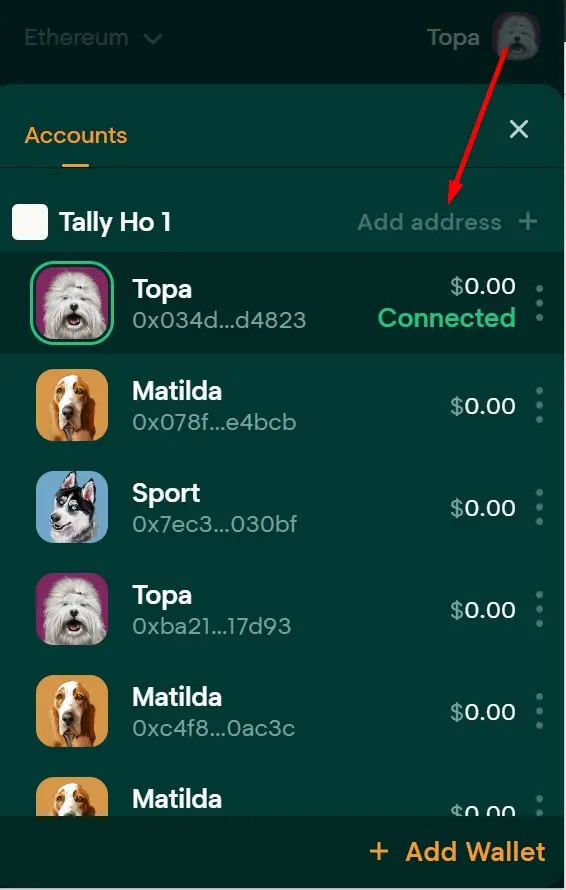
This can come in handy in many circumstances where you want to maintain your anonymity or diversify your risk across multiple wallet addresses as you interact with different dApps.
Furthermore, it can be for accounting purposes and keeping funds for different activities separate. For example, one address can be used for trading, another for staking, etc.
You can even take it a step further by using a different address for each chain that you interact with. The adding wallet address feature is a very useful one and I'm happy it came this early.
2. Renaming addresses
You can give different names to your multiple Tally Ho wallet addresses.
To name an address, click on the 3 dots in its front and click Edit name. Then enter your preferred address name and click Save name.
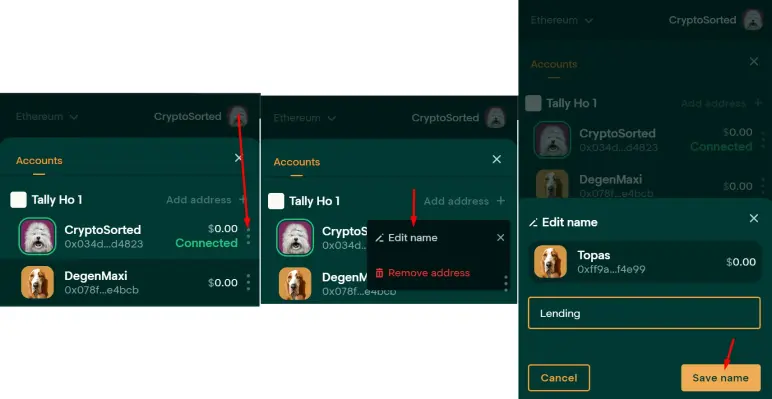
That's it.
If you no longer need an address, you can remove it by clicking the Remove address link as shown above.
PS: As the wallet indexes address locally, you may notice a decline in performance as the number of addresses added increases.
3. Add new wallets
Tally Ho also support adding new wallets, each with its own recovery phrase and support for multiple addresses.
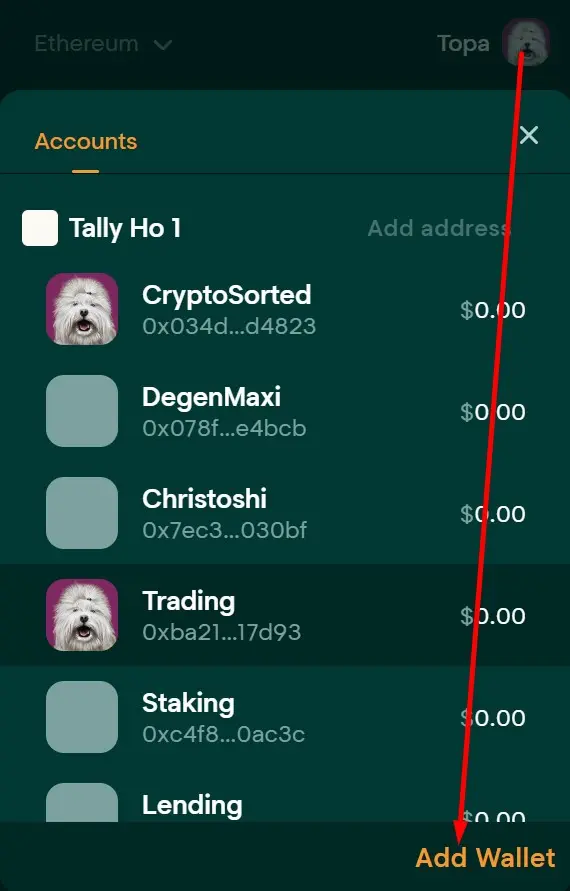
Each new wallet you add is like a new Tally Ho account and is numbered as Tally Ho 1, Tally Ho 2, ..., etc.
Combining this with the additional address feature, you can take your anonymity, risk diversification, and account management to a whole new level.
You can maintain different wallets for each chain, each with its own set of addresses for stuff like trading, staking and lending, NFTs, etc.
There're many creative ways you can use these new wallets and address features to separate and keep a proper tab of your finances for accounting, privacy and risk management purposes.
4. Swap
On March 1, 2022, Tally Ho announced the launch of its in-wallet Swap feature which enables you to convert one token to another on supported chains.
This works the same way as the MetaMask Swaps but costs 50% less in swap fees. Whereas MetaMask charges a 1% swap fee, Tally Ho charges 0.5% per swap and 100% of the fees go to the community (you) through the DAO.
You will want to use the Swap feature as often as you need it because it may qualify you to receive the Tally Ho token (DOGGO) airdrop when the DAO is launched.
Notice the "You’ll want to give this a try before the DAO launches..." in the tweet? It's a hint or it's probably nothing. What do you think?
To use the Swap feature, open your wallet and click on the Swap button.
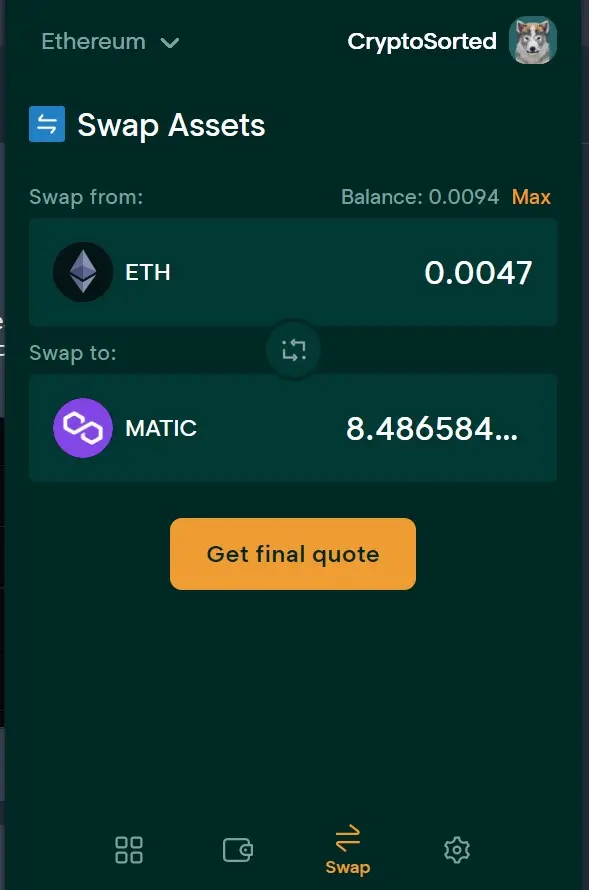
Then select the tokens you want to swap. For example, in the above screenshot, I wanted to swap ETH for MATIC.
Now, enter the amount of ETH (or whatever token) you want to spend and the wallet will show you the amount of the corresponding token you'll receive.
Once done, click the Get final quote button to proceed with the swap. On the next screen, you'll see the final rate you're going to get, the estimated gas fee, the exchange being used, etc.
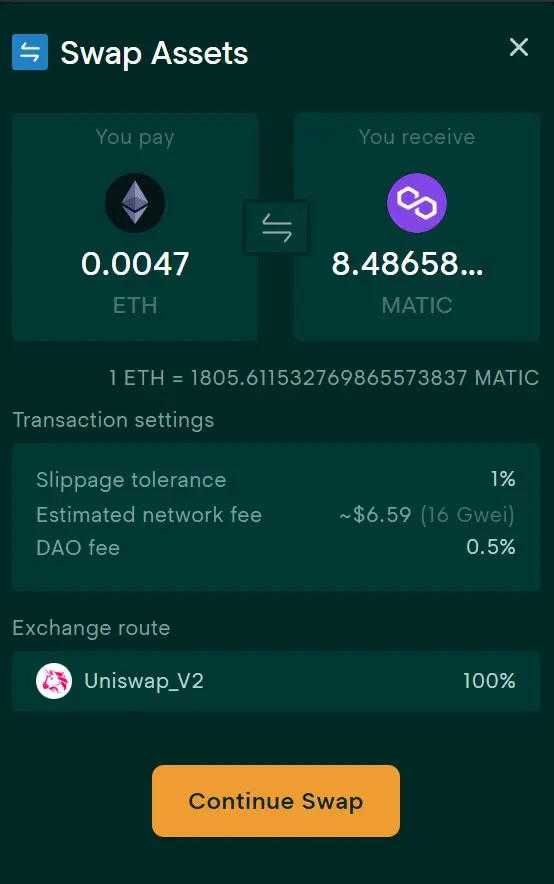
If you're ok with what you see, click the Continue Swap button to proceed.
You'll be prompted to sign the transaction with your wallet. Once done, the trade will be settled accordingly.
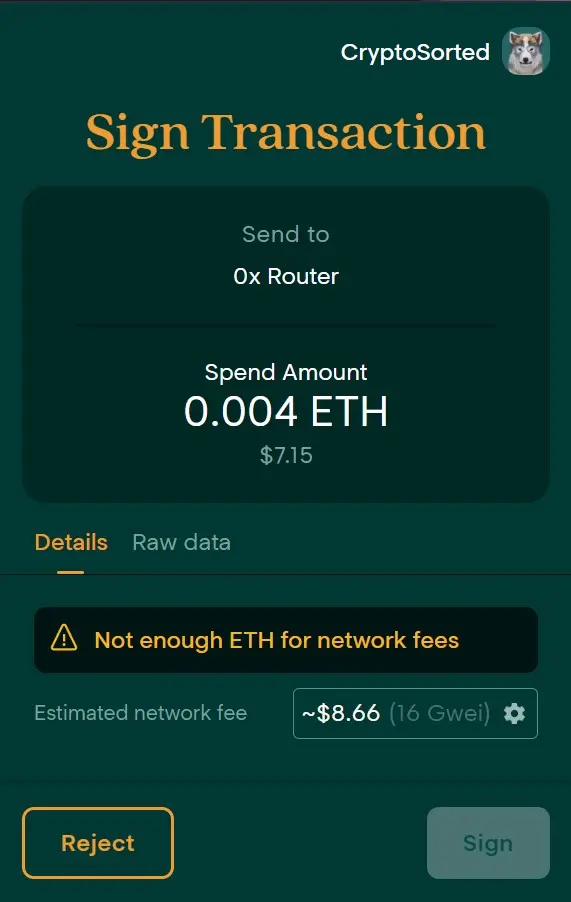
For me, the fee was too high and I don't have enough ETH to cover the gas fee right now, so I didn't sign to complete the transaction.
The Tally Ho swap feature is powered by 0x API, a professional grade and multi-chain liquidity aggregator enabling the future of DeFi applications.
PS: Only Swaps on Ethereum works perfectly fine right now. Polygon is still unseable as of today (July 23, 2022) when I tried to make a swap.
5. Ledger hardware wallet support
In late March 2022, Tally Ho announced its Ledger integration, which enables you to connect your Ledger hardware wallet to Tally Ho.
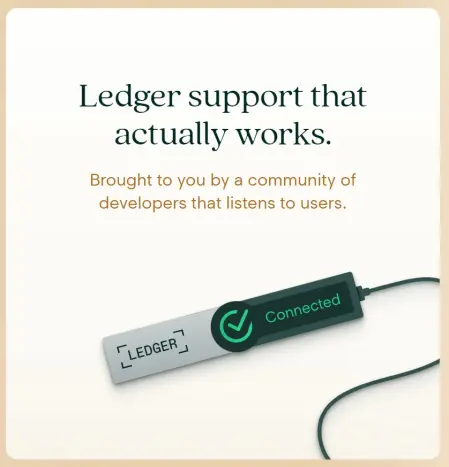
The team claims that Tally Ho's ledger integration performs better than any wallet integration they've tested. And it's smooth, intuitive, and just works out of the box.
6. Totally free and open source
Tally Ho is a free, open-source Web3 wallet built and operated by the same people who use it. The wallet's code is published as free and open source under the copyleft GPLv3 license that puts public goods before corporate profit.
Anyone can contribute to or fork the Tally Ho code for their own work. And all such forks must equally be totally free and open source for anyone to access and reuse.
7. Owned and operated by the community
Tally Ho is the first crypto or web3 wallet that's owned and operated by its users through a DAO structure. And all profits generated by the wallet through the swap and other in-wallet service fees go back to the community through the DAO.
8. Lowest swap fees
Unlike MetaMask which charges 1% in swap fees all of which go into the pocket of the founders and owners, Tally Ho charges a 0.5% swap fee and all of that revenue goes to the community.
So by using Tally Ho, you get to pay lower fees, keep more of your profits, and share in the wallet's success.
9. Simple and clean user interface (UI)
Tally Ho has a clean and intuitive design. For example, from the wallet overview screen, you can see your entire portfolio balance across all supported chains on a single screen.
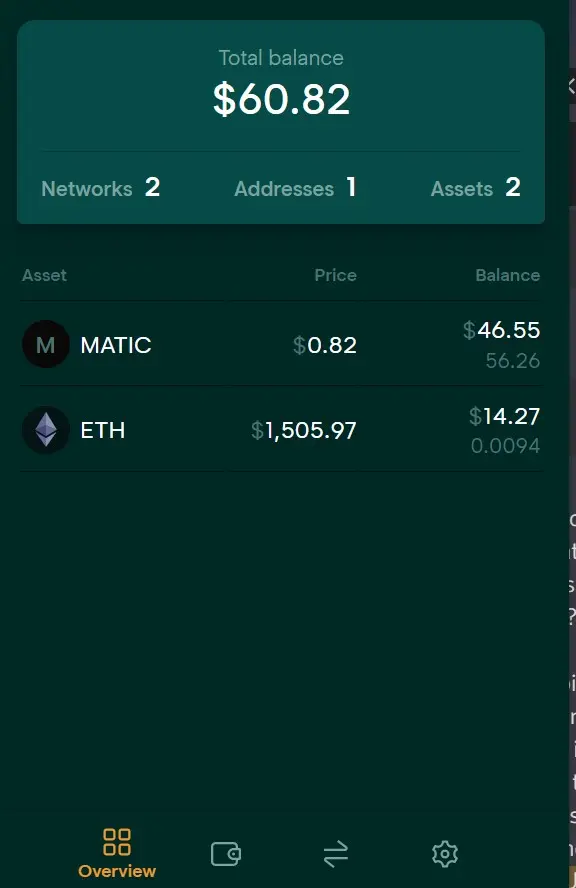
Furthermore, you can also see the number of networks, addresses, and assets in your wallet on the same screen above. Plus you never have to manually add any token to your wallet. If you receive a token that's on the tokens list, it will automatically show up in your wallet.
Even for a first-time user, it's hard to get confused navigating the wallet.
Limitations of Tally Ho
It's not all bread and butter bread with Tally Ho. The wallet currently has a number of limitations that may even turn you off from using it or using it less often.
These include:
1. Limited chains support
Tally Ho currently only supports Ethereum and Polygon.
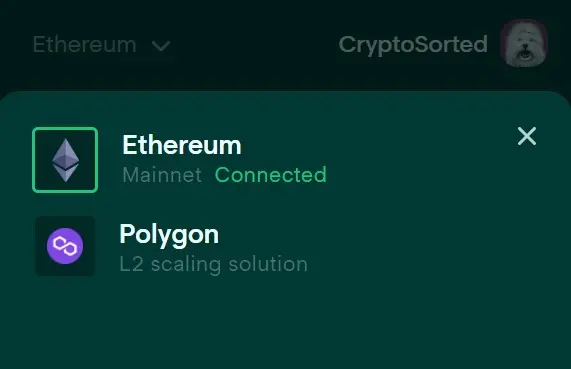
Support for other chains is in the works according to the Roadmap.
2. Limited features
Unlike MetaMask and other more established wallets, Tally Ho does not have many of the nice features you'll expect.
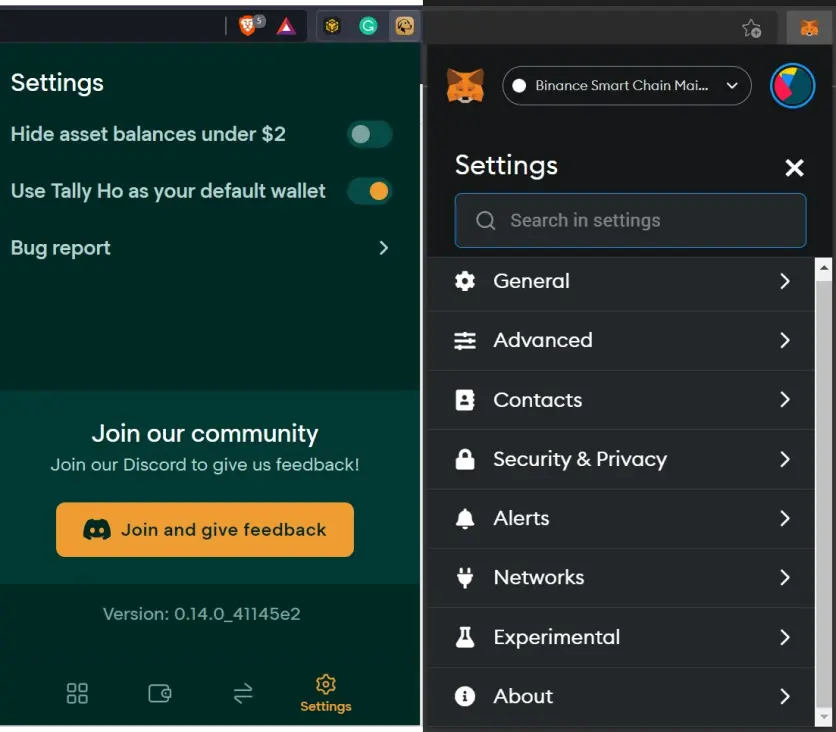
For example:
- There's no custom nonce feature which allows you to cancel or speed up a stuck transaction by paying a higher gas fee.
- There's no way to export your recovery phrase after creating the wallet. According to the team, this is for security purposes but they'll add an export feature down the road for encrypted recovery phrases, in order to prevent scams.
- You can't add a custom token using their contract address as the wallet loads tokens automatically from their tokens list. But you can submit a token listing request or submit a PR on Github directly to add any token to the list.
- You can't import an existing wallet to Tally Ho using your private keys, only with the recovery phrase. Also, the wallet doesn't give you access to your private keys (again, this is said to be a security measure).
- Does not support manually adding a new smart chain blockchain network.
-
No mobile app and does not support mobile browsers (yet). Tally is currently only a browser-based wallet.
...etc.
All these features and more are said to be in the works and will be implemented as soon as possible.
3. Slow and Buggy
Tally Ho is slow and buggy as several aspects of the wallet is still being polished. refined
For example, swapping on the newly added Polygon chain is not working, deposits and transactions may take a little longer to reflect in the wallet, the wallet crashes intermittently especially when you add several addresses, etc.
However, these are known issues and the team says they're working to resolve them accordingly.
4. Limited dApp support
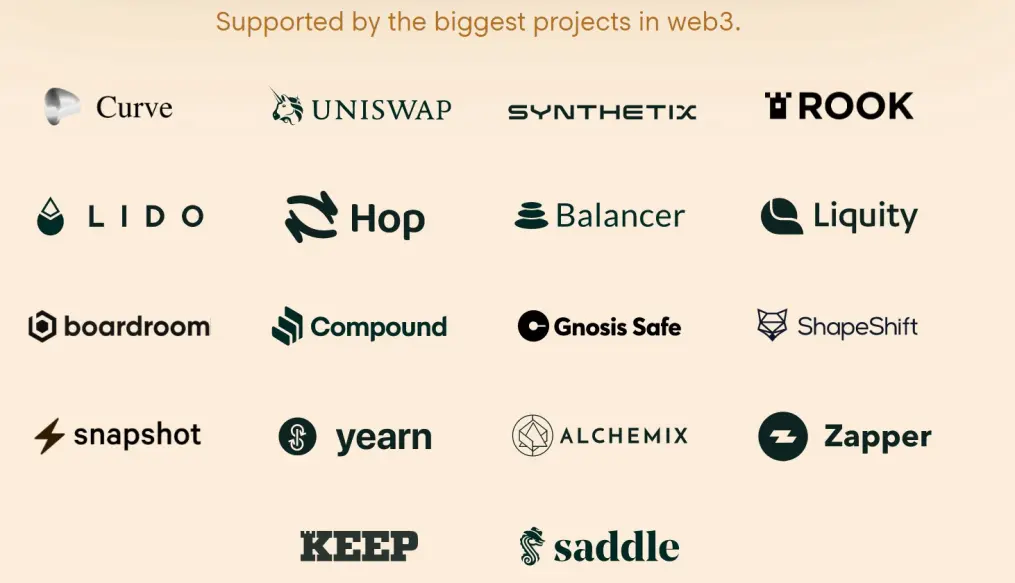
Nearly every web3 application or dApp supports MetaMask, but Tally Ho hasn't gotten there yet.
However, it has managed to integrate with most of the major Ethereum dApps such as Uniswap, Lido, Curve, Yearn Finance, and over a dozen others.
5. Futuristic
You must have heard how Tally Ho is better than MetaMask, or more accurately, how "it’s got everything you need from MetaMask, plus lots more to love"

No. It doesn't (yet).
Granted, most of the released features and the product itself are better than that of MetaMask but Tally Ho doesn't have everything you need from MetaMask yet.
A lot of things about Tally Ho at this moment are futuristic and promises. It aims to beat MetaMask but is still several light years (or months) from doing that.
By choosing Tallo Ho over MetaMask now, you're trusting that the team and developers will deliver on their promises and accomplish their mission of becoming the go-to wallet for interacting with DeFi and web3 applications.
Now that you understand the potential and temporary shortcomings of the Tally Ho wallet, if you've decided to give it a try, let's go ahead and create a wallet for you.
How to create a Tally Ho wallet
It's advised to create a new wallet instead of importing one of your existing wallets to Tally Ho. So, that's exactly what we're going to do.
Below are the 6 simple steps to creating and setting up your first Tally Ho wallet.
- Step 1: Download and install the browser extension
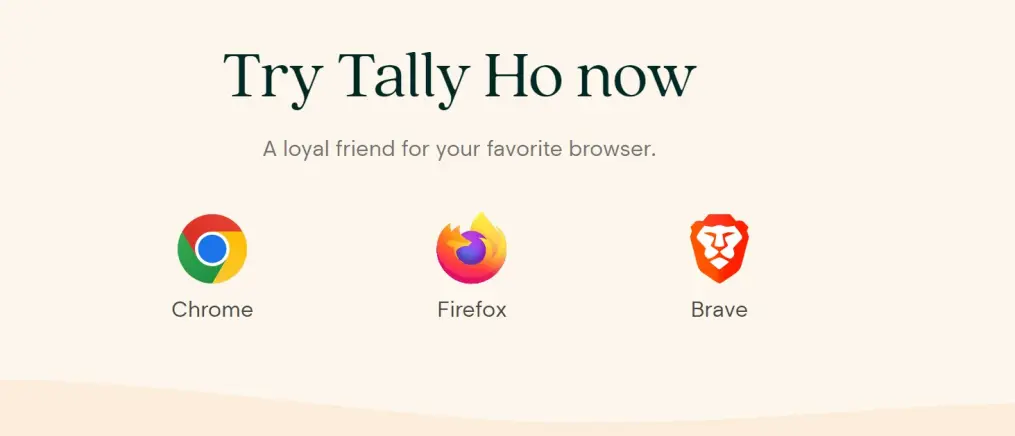
First, go to the Tally Ho website, download, and install the wallet extension for your browser.
- Step 2: Getting started
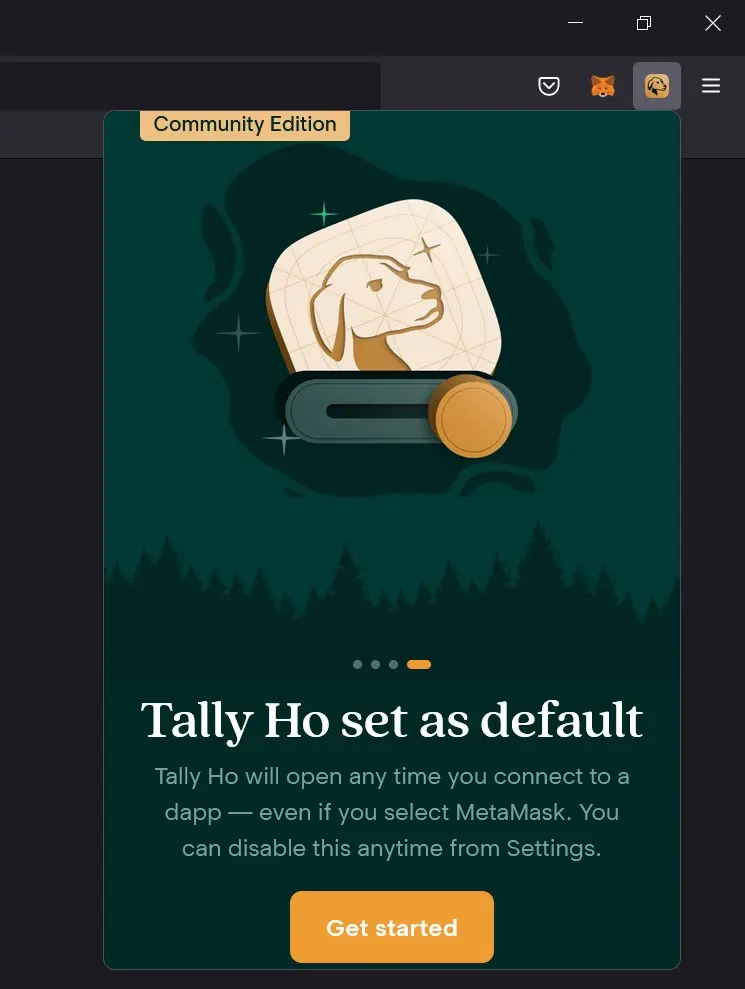
Once installed, click on the wallet icon or logo at the top-right-hand side of your browser. You'll be taken through a brief introduction to the wallet.
Keep clicking Continue all the way to the end.

On the fourth screen, click the Get started button to start creating your first Tally Ho wallet account.
- Step 3: Create a Tally Ho wallet
Once you click the Get started button, you'll see options to import an existing wallet using your recovery phrase, create a read-only address, or create a new wallet.
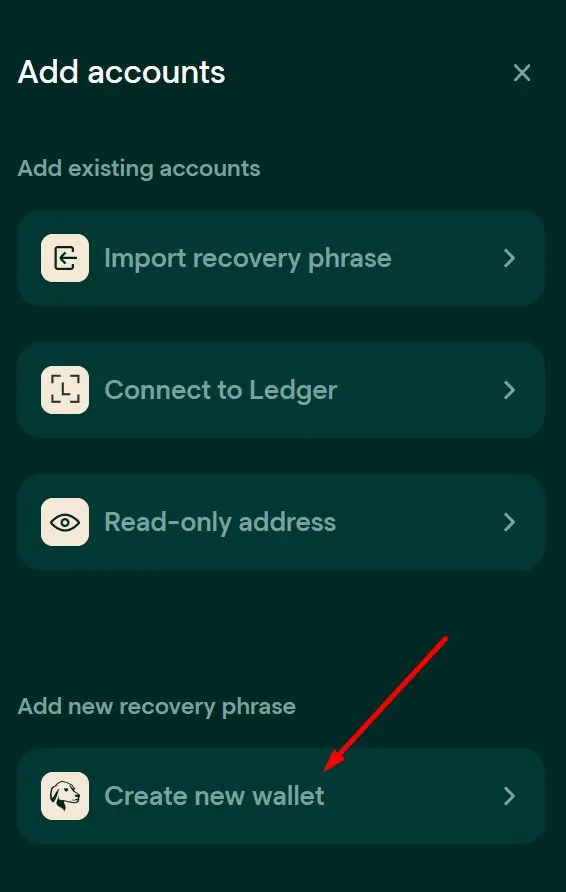
For the purpose of this guide, we will be creating a new wallet as it's always better to start afresh when testing out a new wallet for the first time. So click the Create new wallet button as shown above.
- Step 4: Set your wallet password
You'll be asked to secure your wallet with a password.
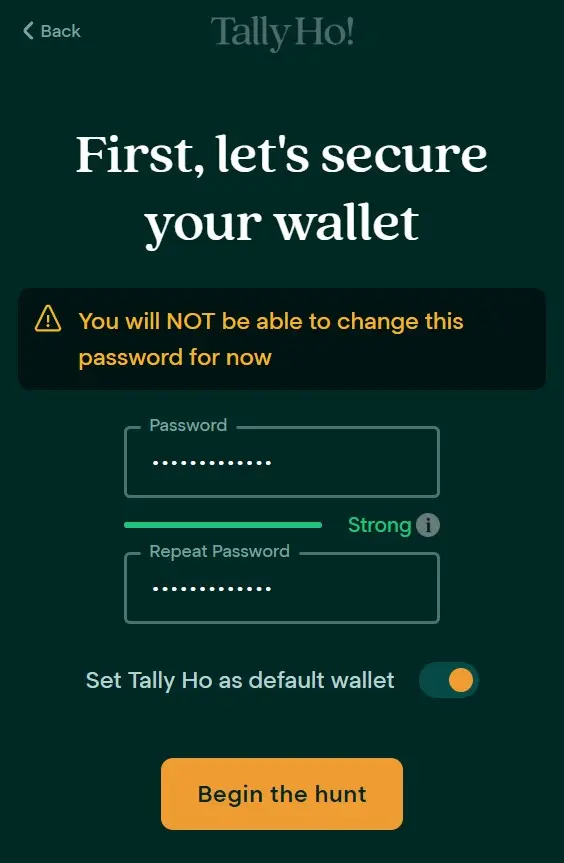
Make sure the password is something that's easy for you to remember but hard for a stranger to guess. You can also write it down somewhere safe in case you forget it.
Enter your desired password and click the Begin the hunt button to continue.
On the next screen, you'll see a warning to save and store your recovery phrase. The recovery phrase gives unlimited access to your wallet, so it's very important you keep it "classified".
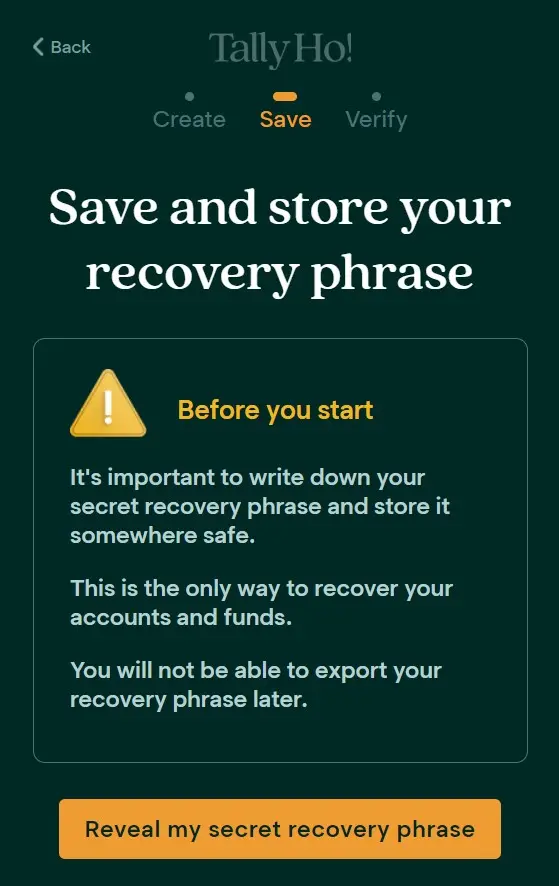
Click the Reveal my secret recovery phrase to continue.
- Step 5: Write down your recovery phrase
The next screen will reveal your wallet recovery phrase or passphrase which consists of 24 words.
Write these words down somewhere that's very safe as they can be used to access your funds anywhere even without your password or access to your computer.
NOTE: Don't be a dumb-ass like me who puts his recovery phrase on the internet for everyone to see. Never reveal your recovery phrase to anyone, not even your dog. Except you're ready to donate your crypto to whoever gains access to it.
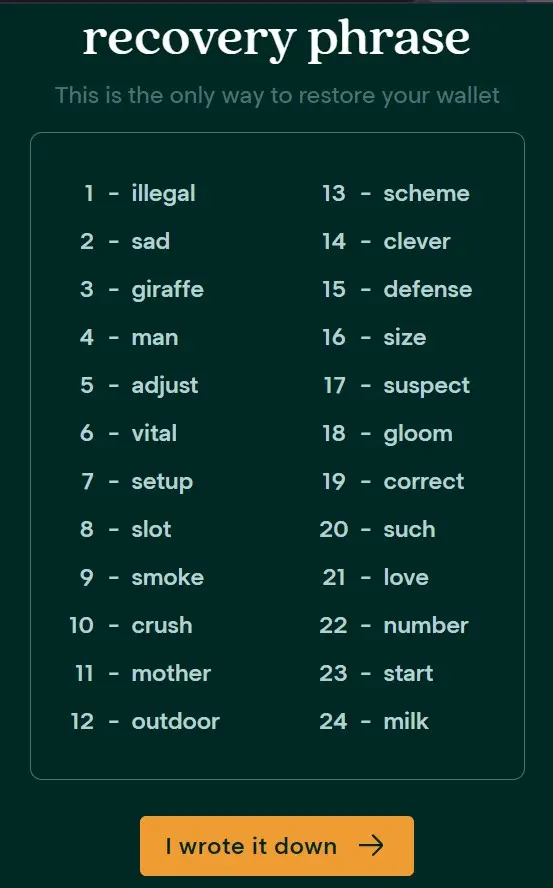
Once you have safely written down your recovery phrase, click the I wrote it down button to continue.
- Step 6: Verify your secret phrase
On the next screen, as shown below, you'll be asked to verify that you've correctly copied your recovery phrase by adding the missing words for the respective numbers.
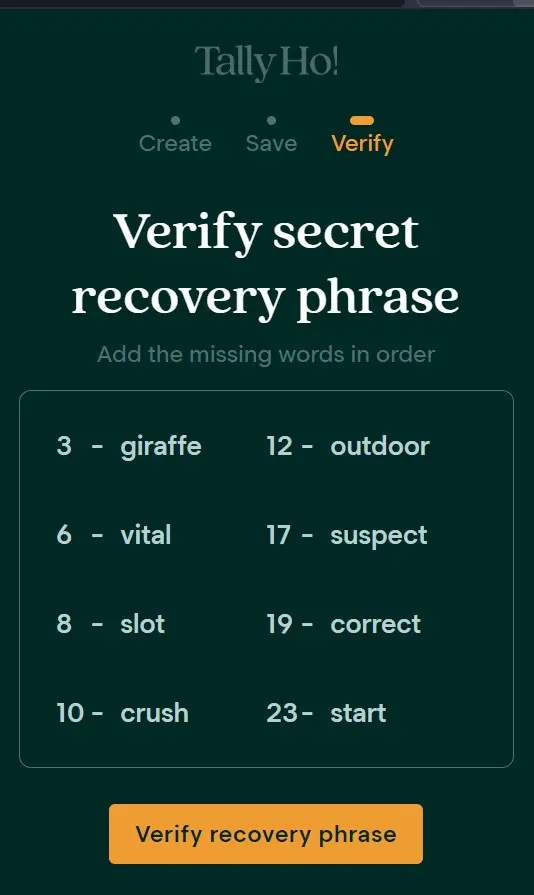
For example, on the above page, you need to enter the 3rd, 6th, 8th, 10th, ...., and 23rd words accordingly by clicking on them from the options on your screen.
Once done, click the verify my wallet button.
- Step 7: Go to your wallet
On the next screen, click on the take me to my wallet button to launch your new Tally Ho wallet.
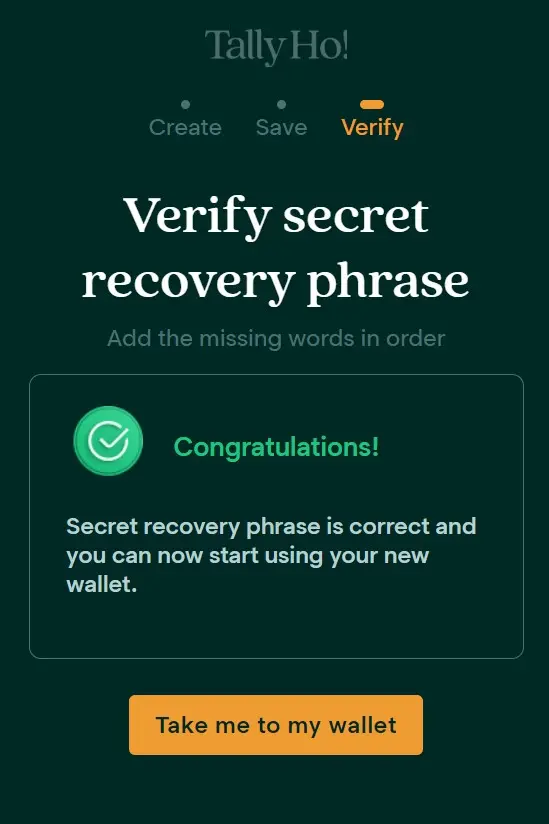
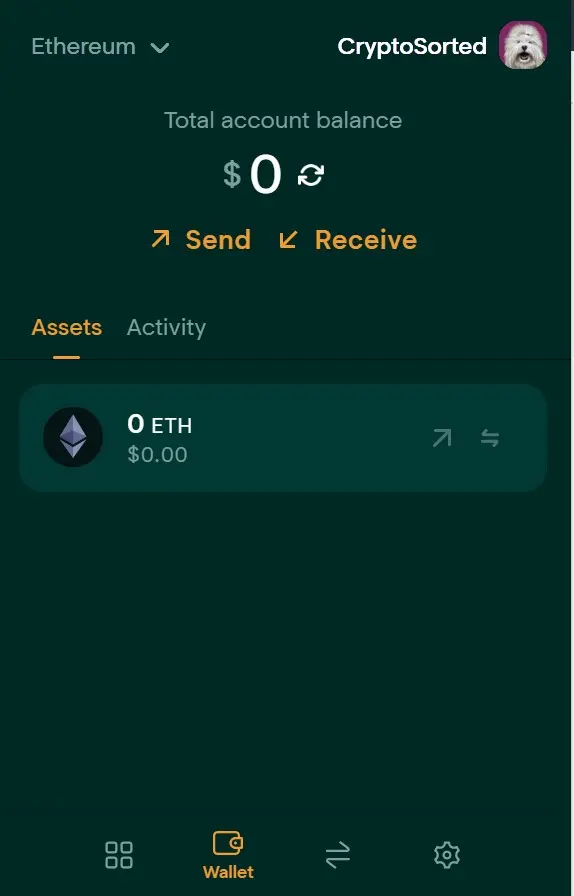
Congratulations! Your Tally Ho wallet is ready to receive your first deposit and begin exploring web3 and DeFi.
Tally Ho token (DOGGO)
Tally Ho will be launching its own native token to be called DOGGO which will be primarily used to govern the treasury, software license, and all on-chain elements of the wallet, through the Tally Ho DAO.
The token will have a maximum supply of 30, 000, 000, 000 (30 billion), more than a third of which will be airdropped to the community, including DeFi users, builders, and members of existing DAOs.
The aim is to make the launch of DOGGO as fair as possible in the spirit of decentralisation and openness and to use it to attract active DeFi users to the Tally Ho wallet.
Tally Ho vs MetaMask: In what ways is Tally Ho better?
This Tally Ho! review will not be complete without a head-to-head comparison with MetaMask in areas the wallet comes ahead of MetaMask.
After all, Tally Ho was motivated by the supposed failures of MetaMask to uphold the core principles and values of the web3 that they provide access to.
The table below shows the various key ways Tally Ho is better than MetaMask.
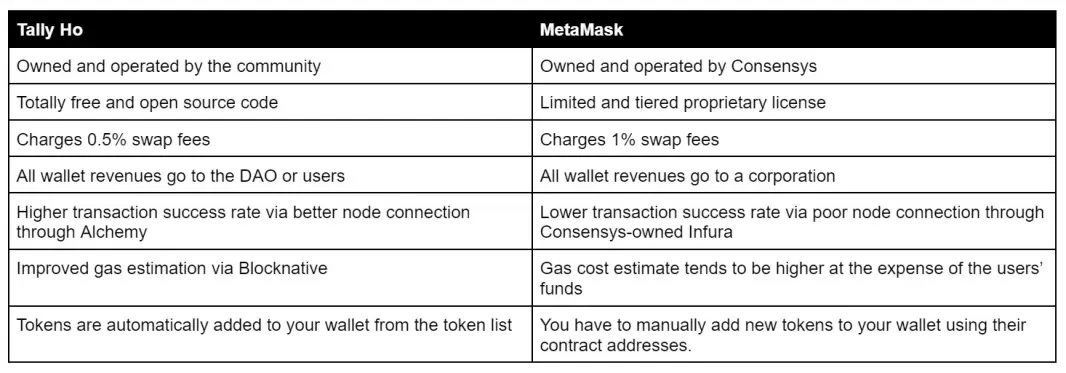
In what other ways do you think Tally Ho is fundamentally better than MetaMask? Let me know in the comments section below.
Tally Ho roadmap
There are lots of interesting and important features that are either in progress or planned in the Tally Ho roadmap to keep an eye on.
However, the ones that interest me the most are those that involve earning or building your portfolio with the wallet. These include
- Referrals: Tally Ho aims to take as many users as it can from MetaMask and other more established wallets, and a referral program is a great strategy to accomplish that. You will be able to earn crypto by referring new users to the Tally Ho wallet.
- Earn: What will make up the Earn program is still not clear yet but I assume it will include decentralised staking, lending, mining, or even the classic learn and program. One or more of these is what I expect to see in the Earn section of the wallet. But regardless of what the Earn program entails, it'll be a way for you to stack more crypto by using Tally Ho.
- Swap rewards: This sounds like you'll earn some rewards in DOGGO for using the Tally Ho Swap feature.
I am particular about the planned earning features because those are what usually draw more users in, aside from the security and stability of the wallet which is not negotiable.
How secure is the Tally Ho wallet?
I have not audited the Tally wallet codebase myself, but I feel confident that at least it's free of malicious codes as it's been open source from day one. This means anyone can verify the code and make contributions to enhance its security. So far, nobody has reported finding any malicious lines in the Tally Ho code.
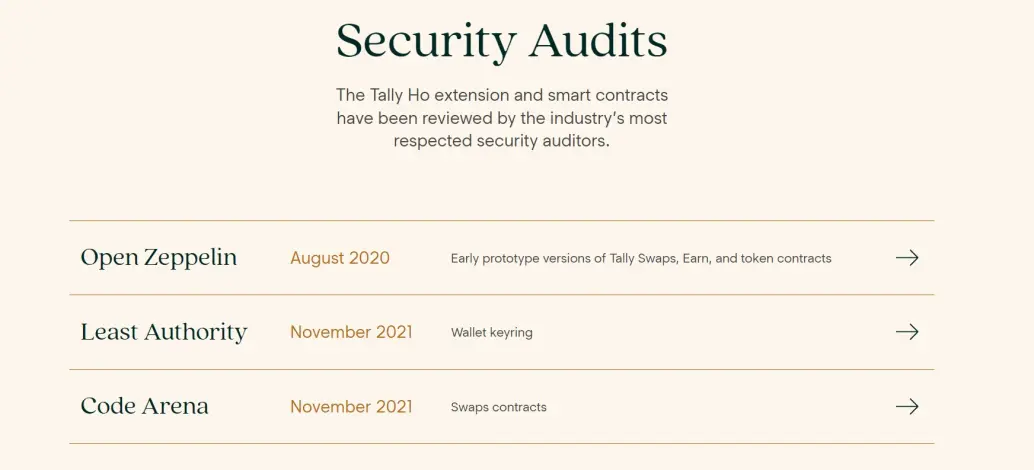
Furthermore, the Tally Ho wallet extension and various smart contracts have been audited by 3 different auditing firms for quality assurance.
In addition, the team decided to build the wallet from scratch rather than copy MetaMask's or other popular existing wallets code. This tells me that they're not lazy or looking for shortcuts and that they're competent and confident in their abilities to build the wallet from the ground up.
The actions of the team and the results they've achieved so far give me confidence in the product they're building.
That said, the wallet is still in Beta, and it will be wise to only deposit small amounts to test it out. You can gradually increase your exposure as the wallet develops and you become more confident of its security and stability.
Conclusion
If you’re passionate and committed to community ownership like me, you'll love Tally Ho.
And with web3 wallets being the primary gateway to web3, it's only natural that their ownership and control should be equally decentralised.
And that's where Tally Ho outshines them all.
By putting ownership and control back in the hands of the users, and channelling all profit to the community through the DOA, Tally Ho is essentially a public good rather than a centralised, greedy, self-serving corporation.
However, the wallet has a long way to go in achieving its mission of dethroning MetaMask and becoming your go-to wallet for interacting with DeFi and web3 dApps.
Will it succeed? Only time will tell.
What's been your experience with the Tally Ho wallet so far? Share with us in the comments section below.





