
Like nearly every civilisation in history, the Minoans and the Greek Mycenaeans communicated via the art of writing. Come the Bronze Age Collapse and the resulting Greek Dark Age, the art of writing is thought to have been lost for around three-hundred years. What followed was the blossoming of the Archaic Age, as emerging city-states formed and the Greek world stabilised and expanded via colonisation right across the Mediterranean. Atop of this, the art of writing was reborn, and pottery, inscriptions and monuments of plenty would give us a look into ancient Greek writing.
Check out my previous blog on the colonisation and culture of the Archaic Greeks
Greek inscriptions were functional. Scripts were either logographic (words) or ideographic (ideas). This unfortunately meant that the early “alphabet” of Mycenaean Greece had to contain thousands of individual symbols to represent each of these words and ideas. Syllabic scripts had signs which, as the name suggests, stood for a syllable, meaning that only hundreds of these symbols were needed. Come the Archaic Age, alphabetic scripts contained symbols for each different vocal sound possible, so naturally only a couple of dozen of these symbols were needed for ancient alphabets, like today.
PHOENICIANS AND THE ALPHABET
The alphabets origin can be roughly dated to between 1,500 and 1,200 BC. It was done by Semitic language speakers, possibly Akkadian, Aramaic, Canaanite, Phoenician and/or Ugaritic. Wherever its exact origin, this resulted in the Phoenician alphabet by c.1,200 BC. The Phoenicians, the other big colonising group of the ancient Mediterranean world alongside the Greeks, produced a written script written from left to right, much like modern Semitic scripts like Arabic and Hebrew. It only contained consonants though.
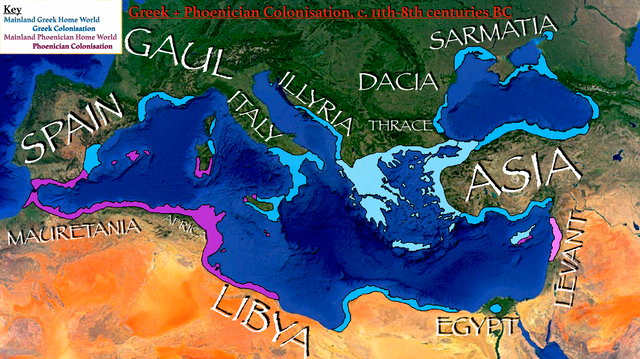
[ABOVE: Map of Greek (blue) and Phoenician (purple) colonisation across the Mediterranean and Black Seas, c.11th - 6th centuries BC]
The Phoenicians lived in the Levant from roughly 3,200 and 539 BC, up until the conquests of Persia. They were well renowned traders and voyagers being famous for founding the maritime trading empire of Carthage in north-west Africa, which would go on to become the dominant power in the western Mediterranean for centuries, even challenging the Greeks for dominance of Sicily from the 5th century BC onwards. It was the Phoenicians who directly heavily influenced the Greeks in terms of their writing, and were the first to separate their symbols in writing. They wrote from right to left.
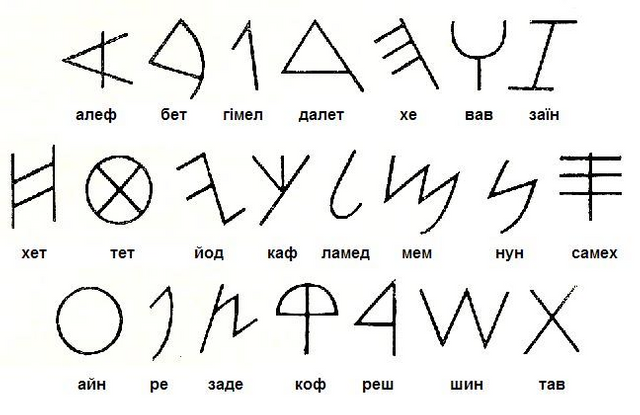
[ABOVE: The Phoenician alphabet]
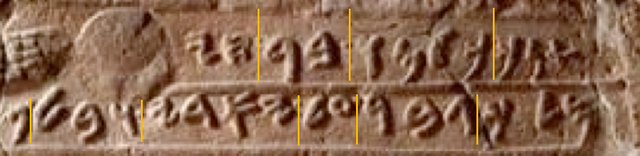
[ABOVE: Phoenician text written from right to left, omitting vowels: "nk klmw br hy", meaning "I Kilamuwa, son of Hayya"]
EARLIEST GREEK WRITING
Very early Greek writing was also done from right to left, but didn’t include the physical division of written words. Greeks were known to inscribe onto their pottery, and these inscriptions described who the pot was made by and for. Some Greek writing was also written in “Boustrophedon” which means “as the ox turns”, referring to how ox were used to plough fields back-and-forth, starting at the same end of the field they just finished ploughing in the previous row. There is also plenty of evidence which shows Greeks writing in circle patterns. Eventually, the Greeks settled on writing from left to right, influencing us today. Stoichedon inscriptions were inscriptions which were written so as to line up the letter both vertically and horizontally.
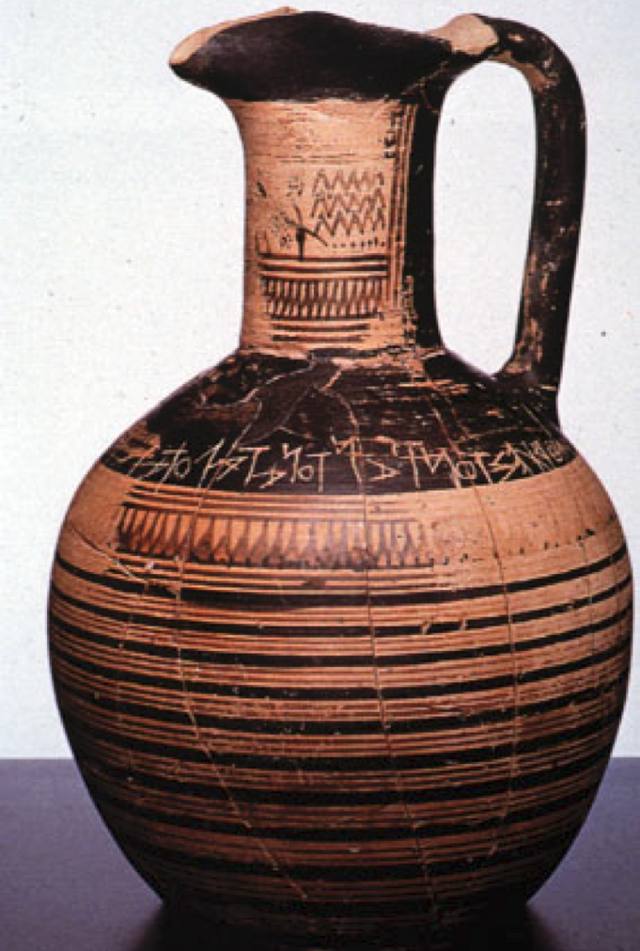
[ABOVE: Graffito from Thera, 8th century BC, with the inscription: "By [Apollo] Delphinios, Krimon had sex here with a boy, the little brother of Bathykles"]
- c.800 BC - The Greeks get their alphabet from the Phoenicians, later adding vowels and changing the writing direction
- c.700 BC - The Etruscans of northern Italy adopt their alphabet from the Greeks, but changed the meaning of some of their signs
- c.600 BC - The Romans get their alphabet straight from the Etruscans, again changing the meaning of some signs while adding their own
GREEK WRITING SURFACES
STONE
Stone inscriptions were commonly monumental, known as steles. These large, freestanding inscriptions, while not largely visible today, usually had their letters painted in red. Some cities used steles to publish information of long-term importance. At places like Athens’ Agora, they were common, but not so common in others, such as Sparta. To us today, they are very important, being the primary type of text which survives directly from the ancients. The most common topics found on stone inscriptions were deity dedications, funerary epitaphs, honours, laws, state finances and treaties.
DEITY DEDICATIONS
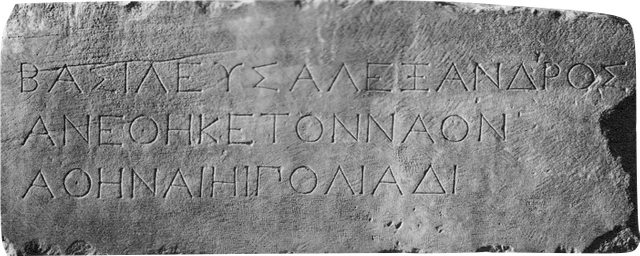
[ABOVE: "King Alexander dedicated this temple to Athena Polias.” At Priene, 4th century BC]
FUNERARY EPITAPHS
Of Phanodikos, am I (the tomb), the son of Hermokrates Prokonesos. A mixing bowl and a stand and a strainer for the Prytaneion I gave as a memorial to the Sigeians. If harm befalls, take care of me, O Sigeians. I was made by Haisopos and his brothers.
[Sigeion, SEG IV.667, 6th century BC]
HONOURS
Resolved by the Boule and the People, Adamants held the prytany, Archikles was secretary, Antikrates presided. Proposal of the Generals: to praise Kallippos the Thessalian from Gyrton, because he is judged to be a good man with regard to the city of Athens. And he shall be inscribed on a stone stele as a proxenos and benefactor of the Athenians, himself and the sons of Kallippos, and it shall be set down on the acropolis…
[Athens, IG I 92, 5th century BC]
LAWS
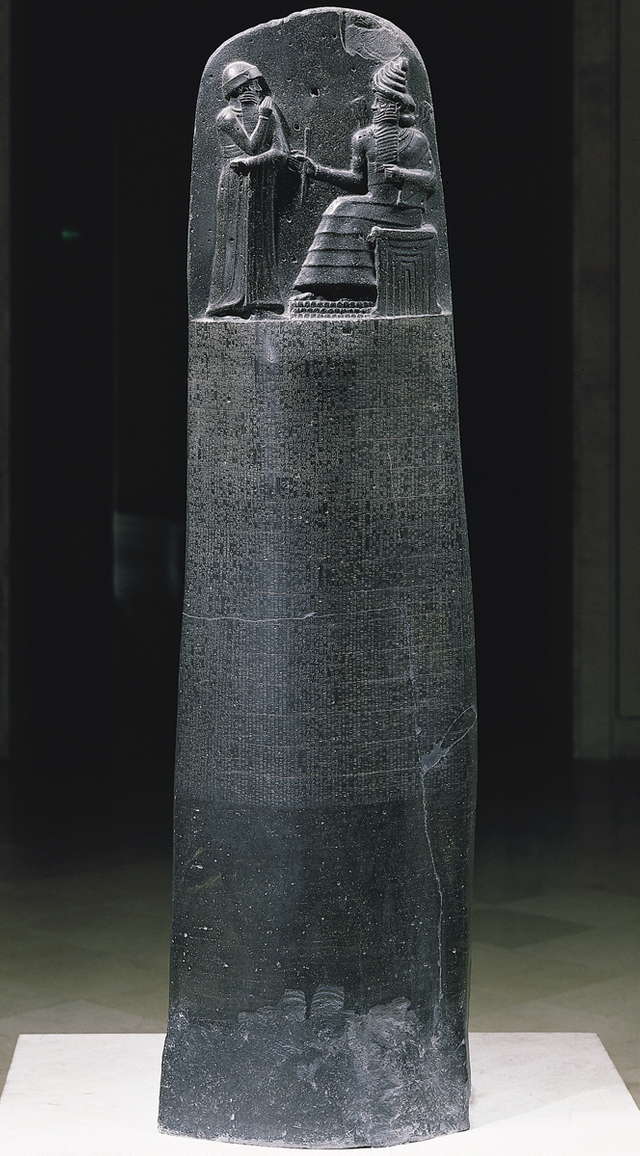
[ABOVE: The Law Codes of Hammurabi from Babylon, c.1,754 BC]
If a wife should bear a child after divorce, they are to bring it to the husband at his house in the presence of three witnesses; and if he should not receive it, the child shall be in the mother’s power either to rear or to expose; and the relatives and witnesses shall have preference in the oath as to whether the brought it. And if a female surf should bear a child with divorce, they are to bring it to the master of the man who married her in the presence of two witnesses. And if he does not receive it, the child shall be int he power of the master of the female serf; But if she should marry the same man again before the end of the year, the child shall be in the power of the master of the male serf…
[Law Codes of Hammurabi, and Gortyn, 3.44-4.6]
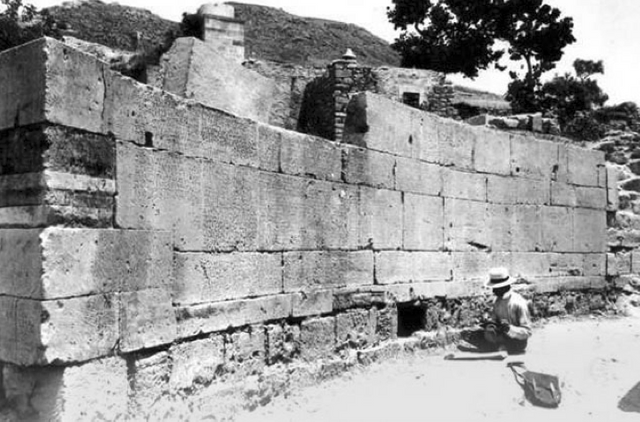
[ABOVE: The Law Codes of Gortyn, Crete, c.5th century BC]
And he [Solon] established a constitution and made other laws, and they ceased to observe the ordinance of Draco, except those relating to homicide. They wrote up the laws on the Boards and set them in the Royal Colonnade, and all swore to observe them; and the Nine Archons used to make affirmation on oath at the Stone [possibly the altar of Zeus Agoraios] that if they transgressed any one of the laws they would dedicate a gold statue of a man; owing to which they are even now still sworn in with this oath.
[Aristotle, “Athenian Constitution, 7.1, 4th century BC]
All his laws were to have force for a hundred years, and they were written on ‘axones’, or wooden tablets, which revolved with the oblong frames containing them. Slight remnants of these were still preserved in the Prytaneium when I was at Athens…
[Plutarch, “Life of Solon”, 1st - 2nd century AD]
STATE FINANCES
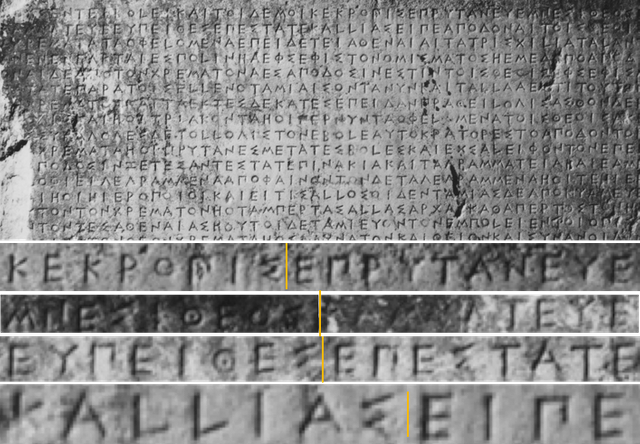
Resolved by the Boule and the People, Kekropis held the prytany, Mnesitheos was secretary, Eupeithes presided, Kallias made the motion. Repayment shall be made to the Gods of the money that is owed them, since Athena’s three thousand talents, which were voted, have been brought up to the Acropolis, in our own coinage. It shall be paid back from the monies which were allocated for repayment to the gods by vote, (namely,) both that which is now in the hands of the Hellenotamiai and also the money from the ten percent tax, when it is farmed out.
[Athens, IG I 52]
TREATIES
A treaty was made for a hundred years by the Athenians and by the Argives, Mantineans and Eleans with one another, on behalf of themselves and the allies whom they rule on each side, without deceit or damage, by land and by sea. It shall not be permitted to bear arms for hurt, either to the Argives, Eleans, and Mantineans and their allies against the Athenians and the allies whom the Athenians rule, or to the Athenians and the allies whom the Athenians rule against the Argives, Eleans, and Mantineans and their allies, by any craft or contrivance. On these terms the Athenians and Argives and Mantineans and Eleans shall be allies for a hundred years. If enemies go against the land of the Athenians, the Argives and Mantineans and Eleans shall go to Athens in support, as summoned by the Athenians, in the strongest way they can as they are able…
[Athens, IG I 83, 5th century BC]
POTTERY
Pottery could be painted on or inscribed on by the potter prior to the pot being fired as part of its design. It could also have been added at a later time to an intact piece via scratching the baked clay with a hardened point. It was also done to pieces of broken pot, known as “ostraca”, either by scratching them or, if the surface was unglazed, by writing on it with ink. The main purpose of writing and inscribing on pottery was to identify either the images, maker or owner of the pottery, as well as to honour someone.
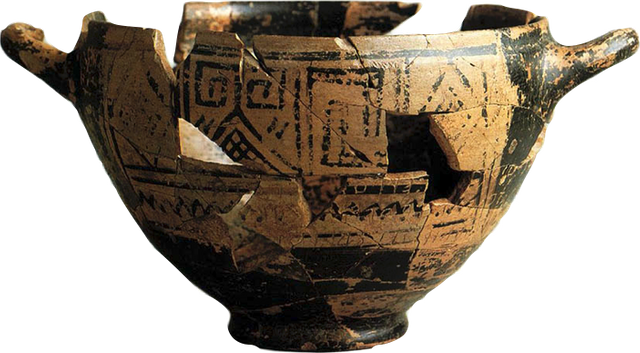
Nestor’s Cup am I, good to drink from. And whoever drinks from this cup, him straightaway the desire of beautiful-crowned Aphrodite will seize
[Nestor’s Cup, Pithekoussai, 8th century BC]
OTHER EXAMPLES
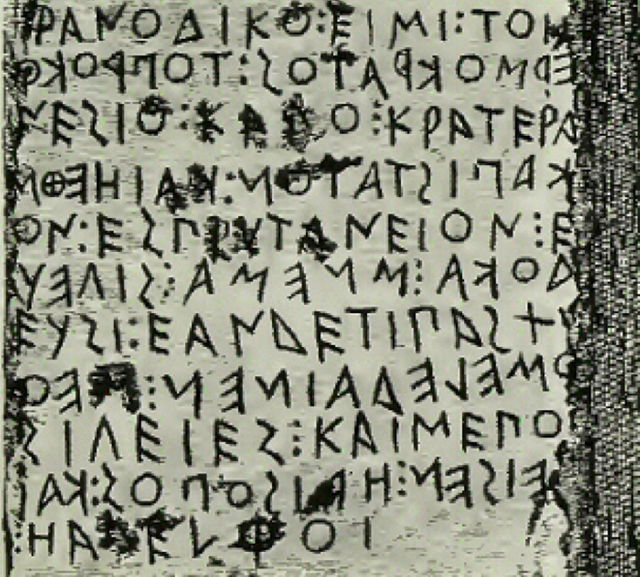
[ABOVE: Gravestone in Athens, Kerameikos (dates vary)]
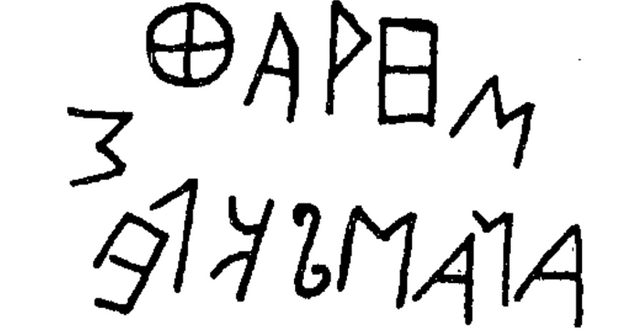
[ABOVE: Graffito from Thera, 8th century BC]
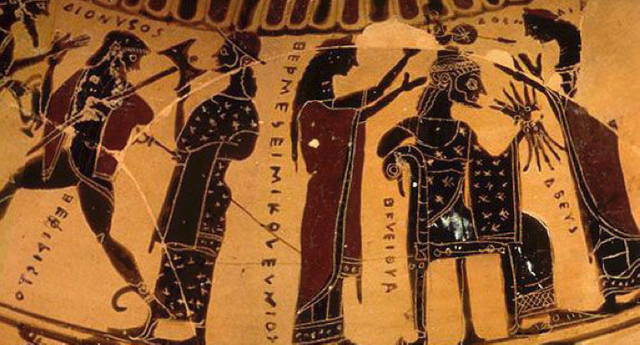
[ABOVE: Attic vase showing the birth of Athena, 6th century BC]
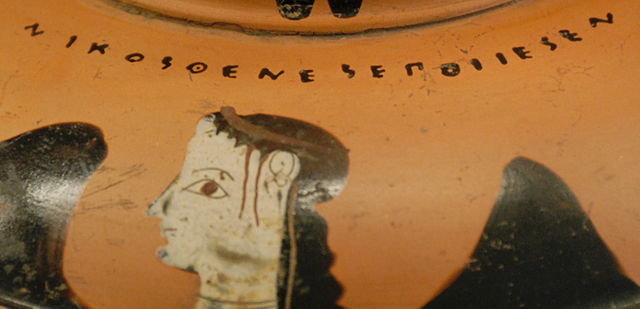
[ABOVE: Attic vase, 6th century BC: "Nikosthenes made [this]]
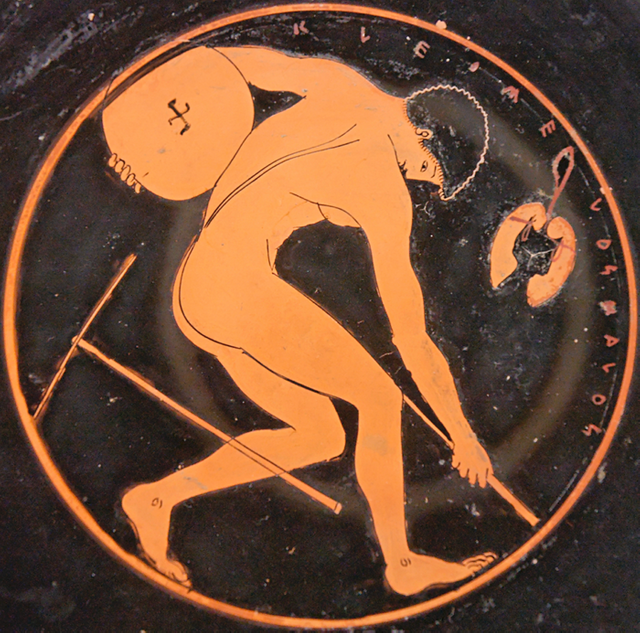
[ABOVE: Attic vase, 5th century BC: "Kleomelos is beautiful"]
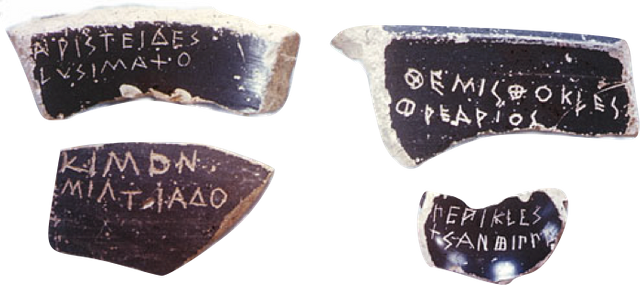
[ABOVE: Athenian ostraca selection: "Aristides", "Themistocles", "Miltiades", "Pericles", 5th century BC]
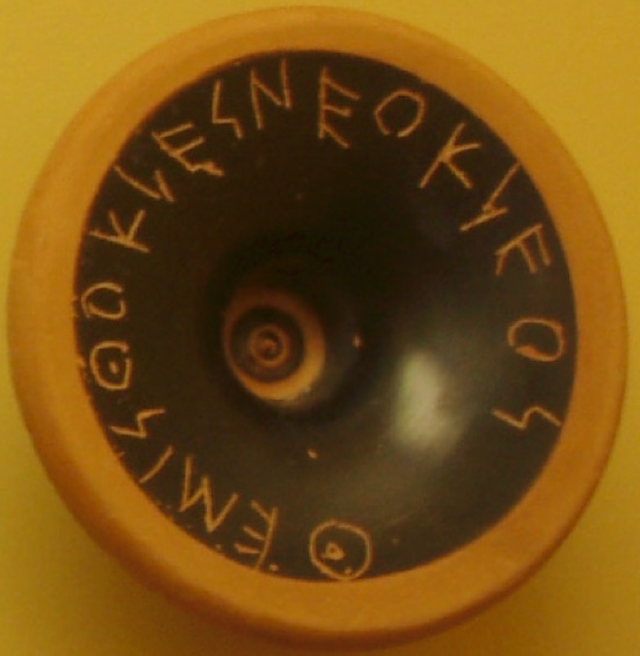
[ABOVE: Ostraca for ostracism: "Themistocles [son] of Neokles"]
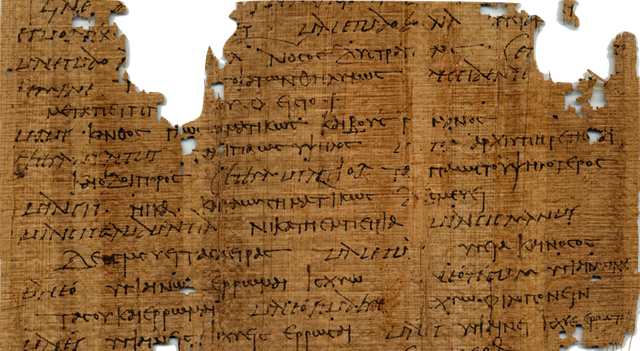
[ABOVE: Papyrus, 3rd century AD]
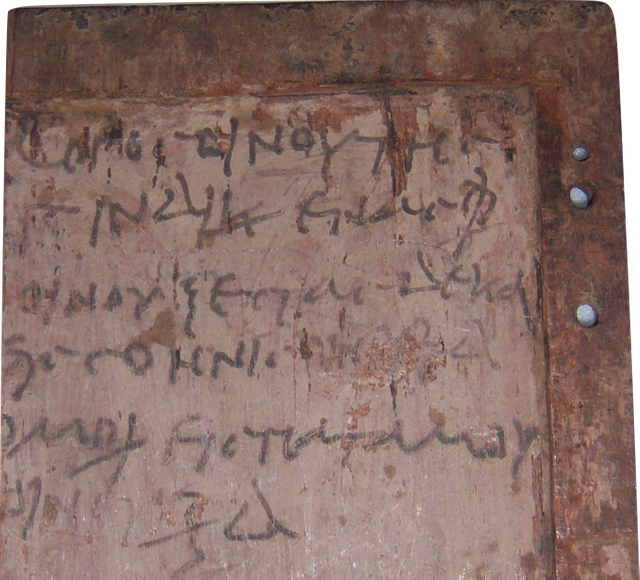
[ABOVE: Writing tablet, now in the Ure Museum, University of Reading]
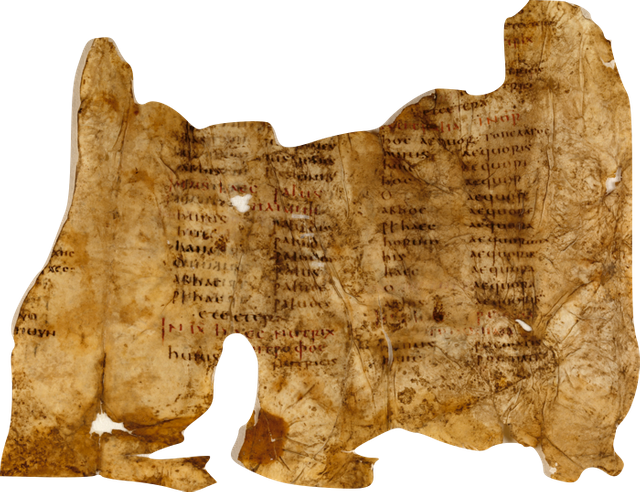
[ABOVE: Grammar writing on parchment, 5th-6th century AD]
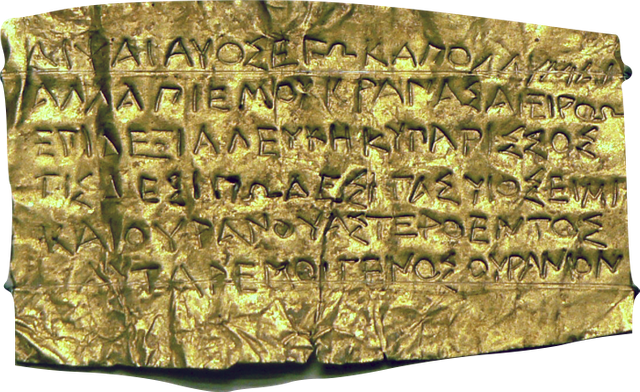
[ABOVE: Orphic gold leaf, Thessaly, 4th century BC]
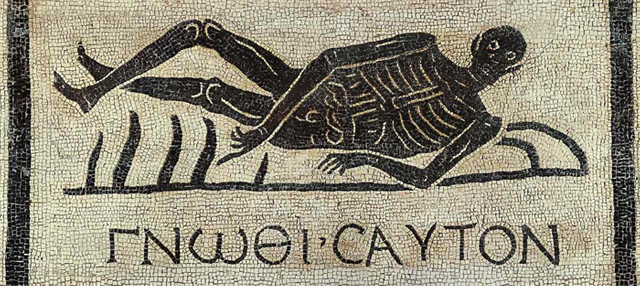
[ABOVE: Roman-period mosaic: "Know thyself"]
NEXT BLOG: HESIOD, 750-650 BC: Poetry of Archaic Greece 1
SOURCES
- Oswyn Murray's "Early Greece"
- Robin Osborne's "Greece in the Making 1200 - 479 BC"
- "Texts, Readers and Writers" (CL1TR) lectures, by Professor Emma Aston, University of Reading, by Professor Eleanor Dickey + Dr. Christa Gray
YOUTUBE LINKS
(I do NOT own these videos)
"Who were the Phoenicians? Phoenician History" by "Epimetheus"
"The Greek Hoplites -οπλίτες" by "Metatron" (video in Greek)
MY ANCIENT GREEK HISTORY BLOG PAGE
MY ANCIENT PERSIAN HISTORY BLOG PAGE
MY TWITTER
All feedback - positive and/or critical - is appreciated!
All images used are copyright-free
Don't forget to rate this post and leave a tip if you enjoyed it
Thanks for reading :)






