
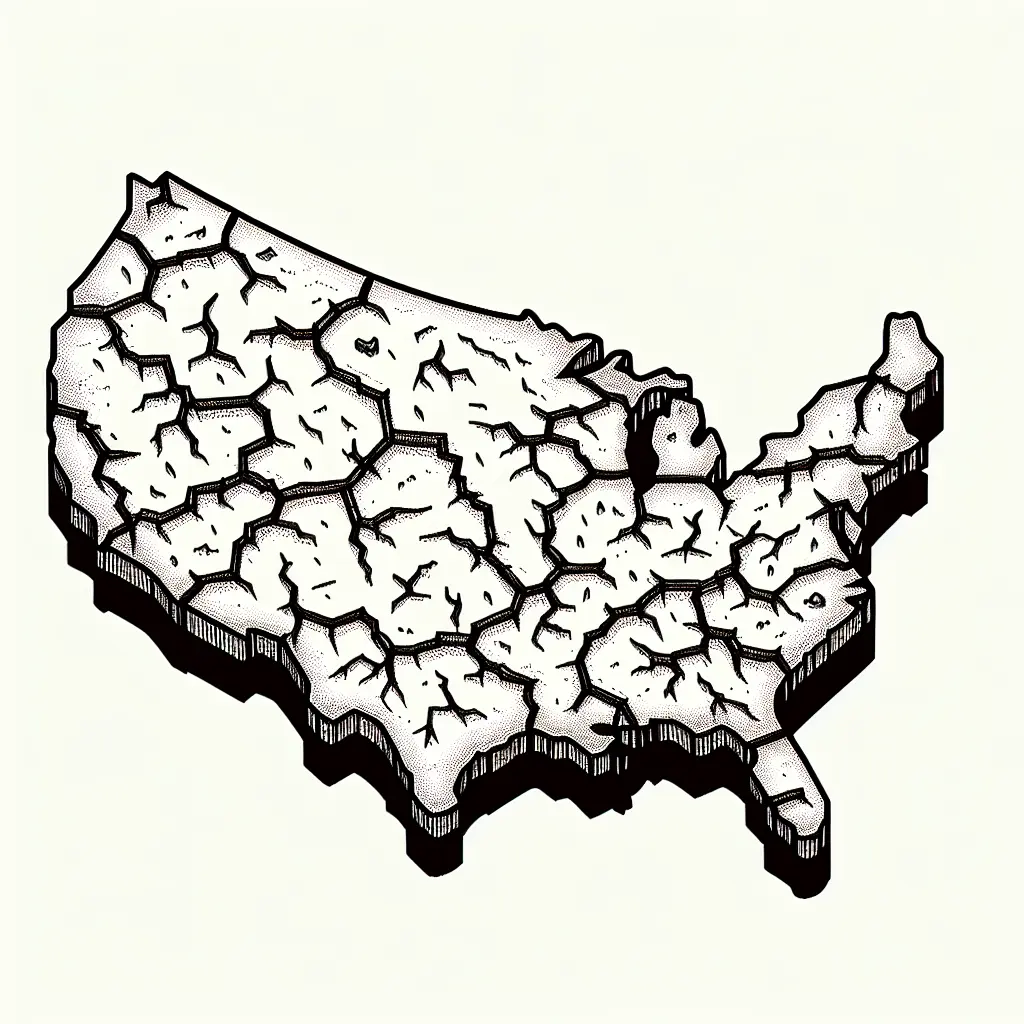
A Nation At A Crossroad
The United States of America, once celebrated as a beacon of democracy and unity, now finds itself ensnared in a profound political and cultural crisis. The trajectory of the nation increasingly resembles a fractious and polarized landscape, where ideological divides threaten the very fabric of its democratic institutions. This transformation has been fueled by intensifying political polarization, the rise of demagoguery, and the erosion of trust in public institutions. Together, these forces have reshaped the country into what could aptly be described as "The Fragile States of Unmerica."
Polarization: A Widening Chasm
Political polarization in America has reached historic levels. The ideological gap between Democrats and Republicans has grown dramatically over the past few decades, with partisan identities now deeply intertwined with social and cultural values. Surveys reveal that over 80% of Americans believe their leaders are more focused on fighting each other than solving national problems, and mutual distrust between party supporters has become pervasive.
This polarization is not limited to policy disagreements; it extends to personal animosities. Affective polarization, where individuals view members of the opposing party as threats rather than fellow citizens, has surged. For instance, 62% of Republicans and 54% of Democrats held "very unfavorable" views of the other party in 2022, a stark increase from previous decades. This tribalism has transformed politics into a zero-sum game, where compromise is seen as betrayal.
The Role of Demagoguery
Compounding polarization is the rise of demagogues, charismatic leaders who exploit societal fears and divisions for personal or political gain. Figures like the auditioning dictator, Donald Trump, exemplify this trend, using inflammatory rhetoric to deepen partisan divides and undermine democratic norms. Historically, demagogues have thrived during periods of economic or social upheaval, offering simplistic solutions to complex problems while vilifying opponents. ( 🤫 ssshhhh... It's highlighted because it deserves a double take)
The Founders of the United States were acutely aware of the dangers posed by demagoguery. They designed constitutional safeguards, such as the Electoral College and impeachment mechanisms, to prevent such figures from consolidating power. Yet these protections have eroded over time, leaving the nation vulnerable to leaders who prioritize personal ambition over public good.
Erosion of Democratic Norms
The consequences of polarization and demagoguery extend beyond rhetoric. They threaten the very foundations of democracy. Trust in institutions like Congress, the judiciary, and the media has plummeted. Legislative gridlock is now routine, with elected officials prioritizing partisan loyalty over governance. Meanwhile, political violence has become an alarming reality. Recent surveys indicate growing support for violence as a means to achieve political ends among both Republicans and Democrats, a dangerous escalation that undermines democratic principles. In other countries, America calls this type of action terrorism... buuuuut, you know.
Social media platforms have further exacerbated these trends by amplifying extreme voices and fostering echo chambers. Algorithms designed to maximize engagement often prioritize anger-inducing content, fueling radicalization and deepening societal divides.
Economic Inequality and Cultural Clashes
Economic inequality has also played a significant role in driving polarization. Decades of neoliberal policies have widened the gap between rich and poor, creating fertile ground for populist movements on both ends of the political spectrum. Cultural issues, such as immigration, reproductive rights, and racial justice, have become flashpoints in this polarized environment, with each side framing these debates as existential battles for the soul of America.
A Path Forward?
History shows that periods of intense polarization can eventually give way to greater unity through electoral realignments or societal shifts. However, achieving this will require deliberate efforts to rebuild trust in institutions, foster bipartisan dialogue, and address underlying economic and social inequalities.
Education must also play a central role in this process. As Thomas Jefferson once argued, an informed citizenry is essential for safeguarding democracy against demagoguery. By promoting civic education and critical thinking skills, Americans can better discern fact from fiction and resist divisive rhetoric.
Ultimately, reversing the trajectory toward division will require collective action across party lines. Citizens must demand accountability from their leaders while embracing tolerance and empathy in their interactions with one another. Only by confronting these challenges head-on can the United States reclaim its identity as a united democracy.
In this pivotal moment, America stands at a crossroads. Will it succumb to its divisions or rise above them to forge a more inclusive and resilient future? The answer lies not only in its institutions but in the hearts and minds of its people.





