![NEO: What do you need to know? [A Complete Guide To Help You Understanding NEO]](https://www.publish0x.com/img/64309.webp?action=resize&ar=1&enc=webp&inv=0&ori=1&st=1&up=1&w=1140&signature=ac5abb9b1ffacefe3ef89a8bdee193a9e516be4866a7547e26b5076861df9fe0)
Compared to bitcoin or Ethereum, NEO is still relatively unknown to the general public. Within the crypto community, however, NEO is a project where all eyes are on and where a lot is expected of. Why is that? In this article we explain everything you need to know about NEO.
What is NEO?
NEO is the first Chinese open-source blockchain initiative. You can see NEO as China's answer to Ethereum. It is often called the Ethereum of China. According to some, however, NEO has equal (or more) potential than Ethereum. The name NEO means new and young in Greek. NEO was formerly known as Antshares (ANS). In June 2017 Antshares changed its name to NEO.
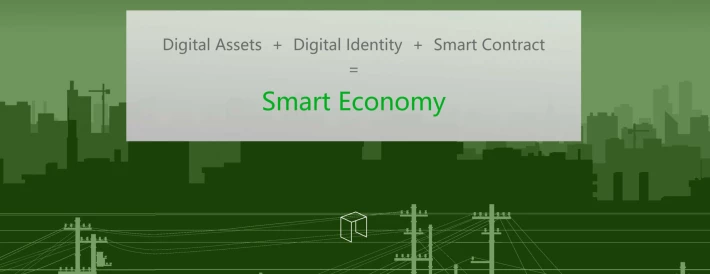
NEO is a platform on which developers can build decentralized applications on the blockchain. Just like Ethereum, NEO can be used for smart contracts. NEO's vision is to create a smart economy by facilitating the management of digital and traditional assets. NEO is made for the economy of the future, when blockchain technology is used even more. According to its founders, a smart economy consists of the following:
- Digital assets
- Digital identity
- Smart contracts
Digital assets
A digital asset is everything that is programmable and consists of electronic data. With the advent of the blockchain, it has become safer to own digital assets. The blockchain makes the possession of these assets decentralized and secure, independent of a third party. NEO wants to transform traditional assets into digital assets, by means of smart contracts. On the NEO blockchain people can register and trade assets. There are two forms of digital assets that can be used at NEO:
- Global assets - These are recognized throughout the system and can be identified by all smart contracts and users.
- Contract assets - These are only recognized in their specific contracts. They cannot be used in other contracts.
Digital identity
A digital identity is information used by computer systems to represent a third party. It can be a person, a company, but also an application or device. A digital identity makes it possible to prove a connection between digital and physical assets. Digital assets that have been validated by a digital identity are legally protected. A Chinese law from 2005 states that a digital signature is just as legally valid as a physical signature. The problem is that a way to identify yourself digitally in a way that complies with these regulations is very difficult. In 2016 OnChain entered into a partnership with Microsoft China, with the aim of finding a way to establish your digital identity. NEO is investigating the use of facial recognition, fingerprints, voice and SMS for establishing a digital identity. They use the PKI X.509 standard. The concept of digital identity is an important part of the vision of a smart economy.
Smart contracts
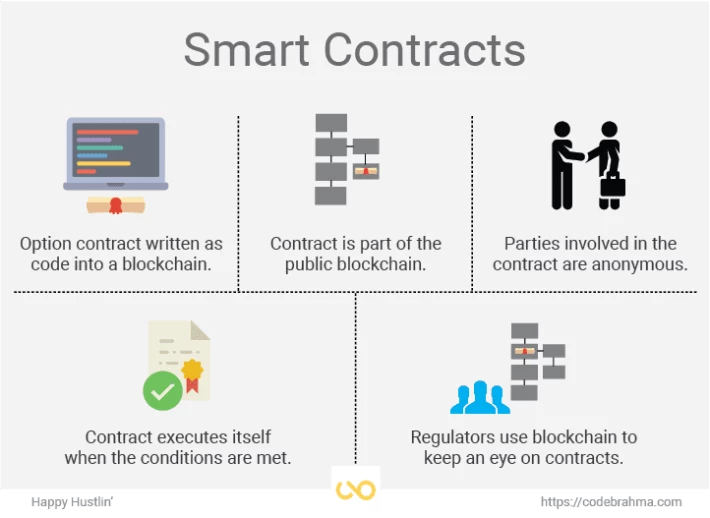
Smart contracts are contracts that execute themselves when certain conditions are met. So, if X happens, then Y happens automatically. You can see NEO as an ecosystem for smart contracts. Smart contracts on the platform are called NeoContracts.
Some practical examples of smart contracts that I have also used in my guide to Ethereum:
Example 1: an investor can set that he only wants to invest in a certain company if that company launches a new product within a certain deadline. When that company launches a new product within the deadline, the investment is made automatically.
Example 2: when a company wants to raise money, it can be set that the donors' money is retained by the smart contract until the target amount is reached. If the target amount is not reached by a set date, everyone automatically gets their money back. If the target amount is reached before a set date, then the company receives its raised money. A fundraising platform (which charges a fee for its services) is then no longer necessary.
Example 3: your colleagues make a bet on which country will win the World Cup soccer. Everyone bets 20 euros, and the winner gets the entire pot. You can put this pool in an Ethereum smart contract, in which the winner automatically receives the entire pot at the end of the match. This way you don't have to trust one person with all money.
Example 4: you can put your will in the blockchain. When you die and a death certificate is issued (and uploaded into the blockchain), the inheritance is automatically distributed according to the will. A notary is then no longer needed.
NEO and Gas
If you buy NEO on an online exchange, you buy the NEO coin. This can be seen as a share in the NEO ecosystem. Transactions on the network are paid for in Gas. In other words: people pay in Gas to execute smart contracts on the NEO network. How much Gas has to be paid depends on how much computing power is needed to execute the contract. The more complex the smart contract, the more expensive it is to have it executed. NEO is not meant to be used for transactions. 1 The NEO cannot be divided into smaller quantities either. That is why there is Gas. Gas is the fuel that runs the NEO network (just like Ether for Ethereum). People who have NEO receive a monthly dividend in the form of Gas. This is to reward the people who keep NEO in their wallet. The more NEO you have, the more Gas you get monthly. If you want to calculate how much Gas you get for a certain amount of NEO, you can do this on NeoToGas.
Programming languages
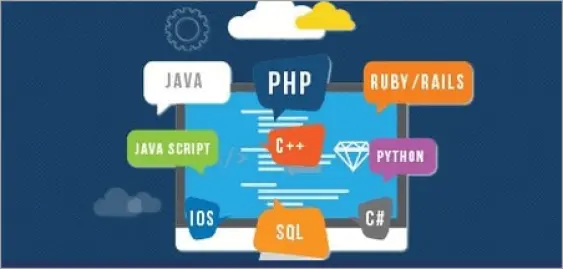
Programmers can build decentralized applications on the platform in common programming languages such as Java, .NET and C#. At Ethereum, this is only possible in the Solidity programming language they have developed. This way, programmers at NEO do not have to learn a new language before they can get started. Learning a new programming language is for some a barrier to getting started with Ethereum. The fact that programmers can start working with NEO immediately is therefore a great advantage.
Protocol
NEO uses a Delegated Byzantine Fault Tolerance (dBFT) algorithm. In this system, NEO holders can designate certain nodes, which have a special status in the network. These nodes are called consensus nodes. Consensus nodes approve transactions. They receive Gas for the transactions they validate. Consensus nodes can also set the price for transactions on the network. Transactions are bundled in blocks. When a consensus node releases a new block, the rest of the nodes vote whether it is correct or not. As long as 66% of the consensus nodes agree with the new block, it will be accepted and added to the blockchain. If less than 66% agree to the new block, the process is repeated with another block. Consensus nodes must have a minimum amount of NEO and meet certain performance requirements. Currently, the NEO team still holds the majority of the consensus nodes, and they decide who gets new consensus nodes.
Thanks to the dBFT system, NEO can currently handle approximately 1000 transactions per second. With the current technology, this can be scaled up to a maximum of 10,000 transactions per second. This high number of transactions per second is a plus, but it goes against the decentralized aspect of cryptocurrencies. With its system of consensus nodes, NEO is more centralized than many other crypto-currencies.
ICOs
Like Ethereum, there may be ICOs (initial coin offerings) that use the NEO platform. Where Ethereum introduced the ERC-20 standard, NEO has the NEP-5 standard for tokens running on the platform. An overview of NEP-5 tokens can be found here. Two well-known ICO's that have recently been released on the platform are Red Pulse and DeepBrain Chain. Both coins are now in the top 500.
Relationship with the Chinese government
China decided in 2017 not to allow any more ICOs in the country. Many people saw this as bad news for NEO, as many see it as a platform to release ICOs in China. However, NEO has a good relationship with the Chinese government. The Chinese government has not taken any action against NEO either, while it has been critical about bitcoin and Ethereum. This is usually a good sign in China. However, Chinese regulations can have major effects on the crypto market. NEO is on the one hand vulnerable to this, and on the other hand well positioned to work with the Chinese government. The cooperation with the Chinese government is very important for the adoption of the platform. This is where the real value of NEO lies: they can design the platform in such a way that it meets the legal requirements set by the government.
Supply
NEO has an offer of up to 100 million coins. These coins are not mined, but are all already generated. 50 million coins were sold to the people who supported the platform in the beginning. The other 50 million coins are managed by NEO itself. This is to reward the team and to stimulate the use of the platform, by giving away coins as motivation to developers.
Gas also has a maximum offer of 100 million coins. Gas is produced when a new block is released. This happens every 15-20 seconds. 8 Gas per block is generated. In the future this will be reduced by 1 Gas, for every 2 million blocks that are generated. Approximately 2 million blocks are generated annually. After only 1 Gas per block is generated, the Gas production will remain at this number. Sometime around the year 2039 Gas will reach its maximum supply of 100 million coins and the production will stop. In this way, 16% of the Gas is produced in the first year, 52% in the first 4 years and 80% of the Gas in the first 12 years.
How is NEO different from Ethereum?
NEO is often compared to Ethereum. Both provide developers with a platform to run decentralized applications. Both can have ICOs released on their platform. And both the Ethereum Virtual Machine and the NEO Virtual Machine (NeoVM), are Turing complete. This means that the system can calculate everything as long as there is unlimited memory available.
However, the differences between NEO and Ethereum are as follows:
- The vision is different. Ethereum wants to become a blockchain-based supercomputer. The focus of NEO is on building a smart economy.
- NEO supports well-known programming languages such as Java, .NET and C#. Ethereum only supports the Solidity programming language they have developed.
- Gas is the fuel that runs the NEO network. Actually just like Ether with the Ethereum network. The difference is that Gas is its own token. This gives Ethereum 1 token and NEO 2 different tokens.
- The NEO can handle 1,000 transactions per second (and scale up to 10,000 in theory), while Ethereum can currently handle about 15 transactions per second. However, both teams behind both projects are working to increase the number of transactions per second.
- NEO also focuses on functionality related to digital identity. Ethereum does not do this.
- Ethereum is too low, unlike NEO. Ethereum uses a proof of work algorithm (in the future proof of stake), while NEO uses a dBFT algorithm.
- The delegated byzantine fault tolerance protocol of NEO is more centralized than Ethereum. It is much more difficult to become a consensus node in the NEO network.
- NEO (unlike Ethereum) cannot be divided into pieces. So you can't have 0.16 NEO.
- Ethereum can be forked (this is how Ethereum Classic came into being). NEO cannot be forked.
- NEO is in theory quantum computer resistant. Ethereum isn't.
Who invented NEO?
NEO was founded in 2014 under the name Antshares by Da Hongfei and Erik Zhang. In 2015, the project was released as open-source software at Github. In 2016, Antshares was named by KPMG as one of the 50 leading Fintech companies in China. In 2016, Hongfei and Zhang also founded the company OnChain, in response to the growing interest in Antshares and the need for blockchain solutions that meet the demands of both companies and regulators. In June 2017, Antshares changed its name to NEO.
OnChain
The founders of NEO also founded another company called OnChain. More than 40 people work at OnChain. OnChain and NEO are not the same company, but their interests are the same and they work together to achieve that. They both have their headquarters in Shanghai. OnChain's system is called DNA (decentralized network architecture). OnChain wants to work with governments and companies to implement private blockchains. OnChain's technology ensures that these private blockchains can be linked to the public NEO blockchain. Companies then have the advantages of both private and public blockchains. So you can see NEO as the public blockchain, and OnChain's DNA system as a private blockchain for companies. When these are linked to each other, the best of both worlds is created. This potentially creates a linked network of blockchains, with OnChain at the centre. If OnChain succeeds in integrating with companies and the Chinese government, this will mean considerable growth for NEO. In this way OnChain is a vital part of the potential of NEO.
What's the price of NEO?
- On January 1, 2017, the price was 0.14 cents.
- On June 1, 2017, the price was 1 dollar for the first time.
- On 19 June 2017, the price was 10 dollars for the first time.
- On December 16, 2017, the price was 50 dollars for the first time.
- On January 5, 2018, the price was 100 dollars for the first time.
- On January 14, 2018, the price was 150 dollars for the first time.
- Since then, the price almost always went down with a current value of $10.72 for 1 NEO. (Data from CoinMarketCap)
conclusion
NEO is an interesting crypto, and resembles Ethereum in many aspects. However, NEO has a specific vision: making a smart economy possible. NEO in itself is a very good project, with some advantages over Ethereum. But when NEO is combined with OnChain, the potential arises to position itself as THE global platform of the smart economy. In this way, the potential of the project is equal (or even greater) than Ethereum. The architecture ensures that developers can work faster with NEO than with other projects that have a larger learning curve. Developers do not need to learn a new programming language, so they can start right away. No wonder that there is also a worldwide active community of developers.
Asian markets, such as China, South Korea and Japan, are very important in the crypto world. NEO is very cautious in its dealings with the Chinese government. This is clever, since the government has introduced regulations that make it difficult for ICOs in China. At the same time, the positive relationship between NEO and the Chinese government gives hope for the future. It is a careful tightrope walk for NEO, which has to balance its goals on the one hand and on the other hand comply with the Chinese regulations. The cooperation with the Chinese government is very important for the adoption of the platform. This is where the real value of NEO lies: they can design the platform in such a way that it meets the legal requirements set by the government.
If more decentralized applications use the platform, the prices of both NEO and Gas will increase. If the ICOs that arrive at the network can offer added value and do not disappear again after a few months, this is an additional reason for long-term success. On the other hand, if the majority of ICOs go bankrupt within a few years, this can have negative consequences. In any case, NEO is well positioned to make the project a great success.





