
CHAI is an ERC-20 which wraps DAI + Maker's Dai Savings Rate (DSR). DSR is a newly added feature that came with Multi-Collateral Dai (MCD) and constitutes a mechanism for the Maker DAO to have some control on the demand side of the supply and demand equation by offering an incentive in the form of an interest rate for locking some of Dai's total supply (prior to that with Single-Collateral Dai it only had the ability to affect the supply via the charged stability fee). The Dai that pays the DSR contract is taken from the stability fee pool itself (should that run dry, the Maker contract triggers the dilution of MKR tokens to cover the debt). Thus, the DSR cannot be greater than the stability fee, which is itself subject to periodic change by the MKR token holders. The DSR is basically another economic lever helping to balance the system and maintain the Dai peg.
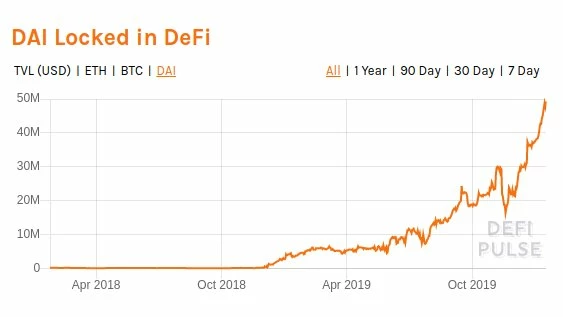
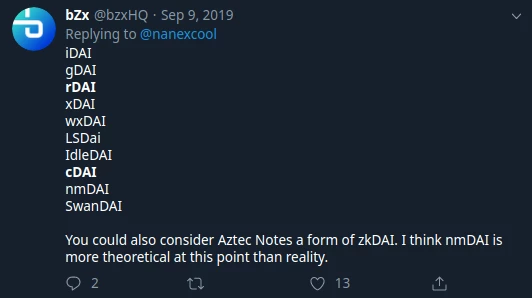
The role of Dai is integral to the DeFi ecosystem and the total amount of Dai locked in various DeFi contracts/applications has been steadily growing in the past couple of months (with the upgrade to MCD, introduction of DSR and proliferation of Dai tokens, e.g. cDai, rDai, xDai, CHAI, etc.)
There's no minimum deposit required in DSR and Dai is in either "in" or "out" of DSR mode. The stable value of Dai, plus the annual interest rate of DSR (at 6% at the time of writing this) makes it an actual, stable store of value (where Bitcoin clearly isn't that). Dai in locked DSR mode however cannot be spent or transferred and this is where CHAI comes in. Upon depositing Dai into the CHAI contract, it in turn deposits that Dai into the DSR one and issues back CHAI tokens which can then be transferred and traded and then redeemed at any point for the underlying Dai plus the interest accrued (and as an added bonus, it also supports gas-less token transfers). Essentially, CHAI allows you to make payments with Dai while still growing your savings and earning interest on it.
CHAI was created by Martin Lundfall, Lucas Vogelsang and Lev Livnev and was deployed on December the 1st 2019. To wrap your Dai into CHAI, just go to the interface at chai.money and connect it with your wallet via MetaMask. Then enter the amount you'd like to convert and click convert, then confirm the transaction via MetaMask.
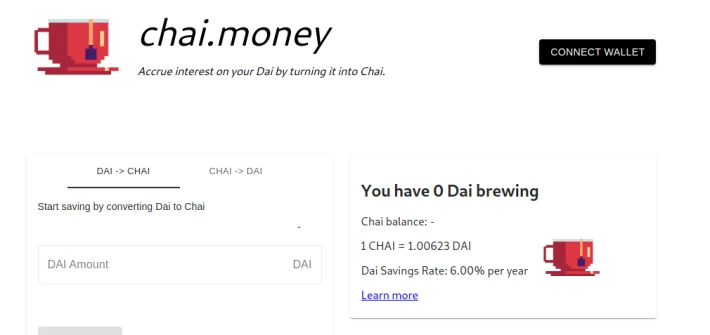
Then whenever you'd like to stop "brewing" your Dai and cash out, flipping it back to Dai, go over to the CHAI > DAI tab and proceed redeeming your tokens for the Dai plus interest.
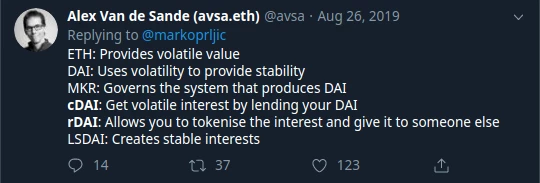
CHAI though is not the only form of wrapped Dai. And not all are to do with financial applications specifically - zkDai is a zero-knowledge Dai note using the AZTEC protocol, while xDai is a much faster, cheaper and more efficient form of Dai for various applications which runs on its own separate plasma sidechain, among others. While cDai is Dai issued by the Compound lending platform which accrues varying interest upon lending it, based on current supply and demand and is paid on per block basis. And rDai allows you to tokenize that interest and give it to somebody else.
All this is an example/case in point of how DeFi and open finance is supposed to work - as composable/modular components which can be assembled together in all kinds of possible financial instruments and products, while keeping it all cheap, affordable and open (i.e., this is what "democratization of finance" means). And while there's still quite a bit of risk involved, both within and without (as the numerarie on which the system depends is itself the US dollar which is external to the system), the system itself is flexible enough to quickly respond to changing circumstances and cements emergency mechanisms to fall back on.
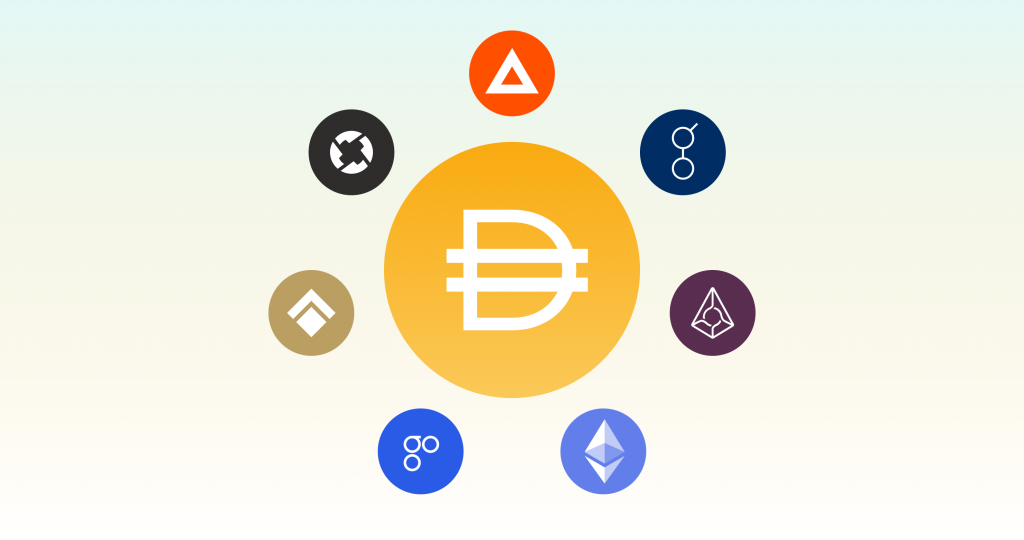
Also, Dai itself could be pegged to any other asset following the same principle(s) and with the introduction of MCD, a range of other assets aside from ETH are accepted as collateral (such that are reliable and have established risk profiles) - among which BAT, Augur's REP, Digix's tokenized gold (DGD), 0x's ZRX (a governance token), etc.
Overall, DeFi is itself a bit more sophisticated (and geared towards more sophisticated investors, traders and nerds of particular flavor) than just putting money against a ticker and passively hodling in religious belief that any of the unrealistic prophecies may come true (like, Bitcoin becoming a world reserve currency or some such ridiculous and ungrounded claim) or, as somebody in 4chan put it, "trading in between jerking off" catching the latest pump and dump frenzy or following the Keynesian beauty circus bandwagon of how stupid money and fake volume is going to react to the latest fake news and exaggerated announcements and so on along these lines. Making money and profits from now on is going to require more personal involvement, active participation and engagement and making the efforts to actually understand and get a sense of what is really going on.
Either way, interest rates and opportunities in DeFi are right now pretty juicy, but that may not always be the case, the more people jump in on it. But then, there's also DeFi developed on Tezos and Cardano. Ethereum's DeFi is one that kind of preserves the somewhat clumsy, cute, democratic, grassroots character of Ethereum itself and while not ideal or perfect (i.e., finance requires razor sharp functional programming with formal methods/verifications and second-splitting speeds - modern finance is, it could be said, highly weaponized and going after ever so refined efficiency, while Ethereum's DeFi is more of a movement and has the open source character of a commons), it has a large and enthusiastic community surrounding it and a sprawling ecosystem driven by experimentation and interest. Tezos on the other hand is more professionally oriented and itself constitutes a sort of DAO operating on a formalized governance model (one that is meta-referential and subject to change of rules) which makes it highly reliable, goal-oriented and un-forkable, which is particularly attractive to some financial institutions and hedge funds.
Anyway, not to get too carried away...






