
Best Gasless Crypto Trading Bots in 2026: Trade Across Chains Without Managing Gas Fees
One of the biggest challenges in cryptocurrency trading is managing gas fees.
When trading across different blockchain networks, users often need to hold specific native tokens to pay for transaction costs. This can make the trading process more complicated, especially for people who regularly move between networks.
For example, a trader using Ethereum, Solana, and Base may need to manage different assets just to execute transactions.
Gas-sponsored trading tools aim to reduce this friction by covering eligible network execution costs, allowing users to focus more on trading rather than constantly preparing gas tokens.
In this guide, we’ll explore what gasless crypto trading means, what to look for in a Telegram trading bot, and how platforms such as Cove, Maestro, Banana Gun, GMGN, and BONKbot fit into the wider trading ecosystem.
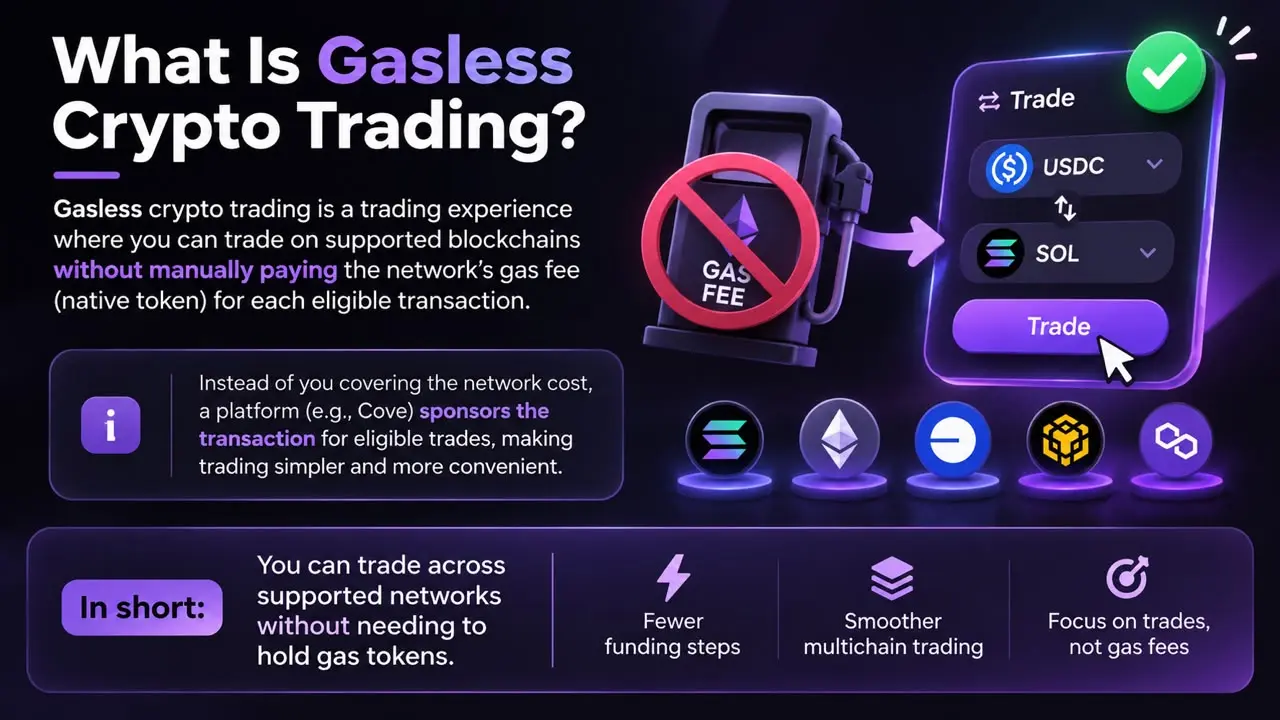
What Is Gasless Crypto Trading?
Gasless crypto trading refers to a trading experience where users do not have to manually provide the network’s native gas token for every eligible transaction.
Normally, blockchain transactions require network fees. These fees are paid using the network’s native asset.
Gas-sponsored systems change this experience by allowing a platform or another supported mechanism to cover eligible execution costs.
This can make trading more convenient, particularly for users who operate across multiple networks.
However, gasless does not automatically mean completely free. Trading fees, token taxes, transfer costs, price impact, and other charges may still apply.
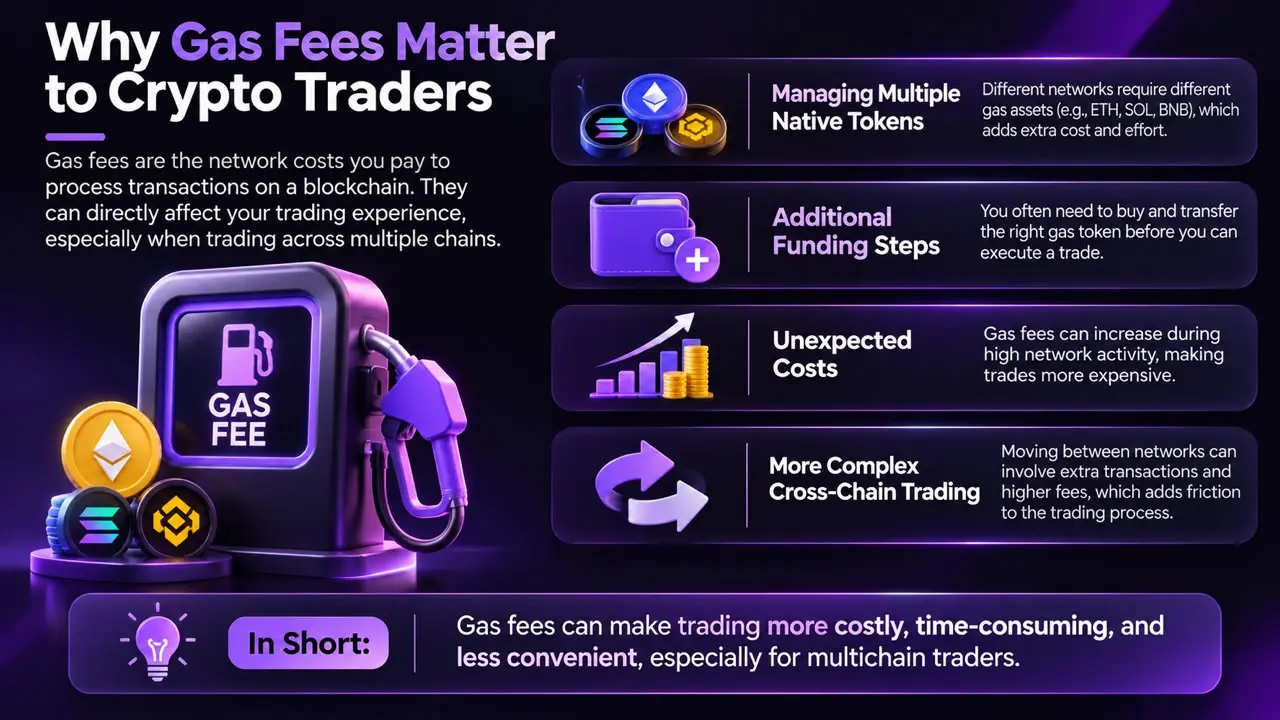
Why Gas Fees Matter to Crypto Traders
Gas fees can create several challenges.
1. Managing multiple native tokens
Different networks use different native assets for transaction fees. Traders may need to maintain several balances to interact with different blockchains.
2. Additional funding steps
Before executing a trade, users may have to acquire and transfer the correct gas token to the appropriate wallet.
3. Unexpected transaction costs
Network fees can change depending on network activity and transaction requirements.
4. More complicated cross-chain trading
Moving between networks can involve additional transactions and costs, making the overall experience less straightforward.
This is why gas sponsorship and gas abstraction have become important features in modern trading tools.
Telegram Trading Bots Worth Considering in 2026
1. Cove — Best for Gas-Sponsored Multichain Trading
Cove is a Telegram-native multichain trading terminal that simplifies trading across supported blockchain networks.
One of its main advantages is its unified USDC trading balance. Users can access eligible cross-chain trading routes without having to manually prepare a separate native gas balance for every ordinary supported trade.
Cove also sponsors ordinary supported network execution within its current limits.
This means users can focus on selecting tokens, reviewing quotes, and managing positions rather than constantly handling gas tokens.
Key features include:
* Unified USDC trading balance.
* Multichain trading across supported networks.
* Gas sponsorship for eligible execution.
* Multiple wallet management.
* Trading profiles.
* Limit orders.
* Take-profit and stop-loss controls.
* DCA strategies.
* Token discovery and wallet tracking.
Important: Gas sponsorship has limits. If network costs exceed the sponsorship cap, a trade may require additional funds or confirmation. Cove also has a Gas Surplus Budget setting that allows users to preauthorize a selected amount from available Solana USDC for eligible surplus costs.
Trading fees and other applicable costs still remain.
Cove is worth considering for traders who want a more convenient multichain trading experience without constantly managing separate gas balances.
Website: https://www.cove.trade/
Telegram: https://t.me/cove_trading_bot?start=ref_quadrazid
2. Maestro — Best for Trading Automation
Maestro is a Telegram trading bot known for its automated trading tools.
It focuses on helping traders execute and manage trades through Telegram.
Its appeal is primarily around trading automation and execution features rather than being positioned solely as a gas-sponsored trading solution.
Users should check its current network support, transaction costs, and execution requirements before choosing it for a gasless trading workflow.
3. Banana Gun — Best for Fast Token Execution
Banana Gun is known for its token-sniping and trading functionality.
It is designed for traders who want to interact with supported token markets directly through Telegram.
Its execution-focused approach makes it relevant to traders interested in newly launched tokens and time-sensitive opportunities.
However, users should distinguish between execution speed, trading fees, and gas sponsorship. These are separate aspects of a trading experience.
4. GMGN — Best for Wallet Tracking and Token Research
GMGN combines token discovery, wallet tracking, and trading-related functionality.
It is particularly relevant to traders who want to research market activity and monitor wallets before making trading decisions.
Its research-oriented features make it different from platforms whose main focus is gas-sponsored multichain execution.
5. BONKbot — Best for Solana Trading
BONKbot is a Telegram trading bot focused on the Solana ecosystem.
It provides a convenient way to trade supported Solana tokens through Telegram.
For users who mainly trade on Solana, its specialized approach may be sufficient. Traders should still consider transaction costs and the specific execution requirements of the platform.
What to Look for in a Gasless Trading Bot
Not every platform that advertises gasless trading provides the same experience.
Here are five things worth checking.
1. Actual gas sponsorship
Find out whether the platform covers network execution costs or simply makes the funding process easier.
2. Network coverage
Check which networks support sponsored execution. A platform listing several chains does not mean every transaction on every chain is gas-sponsored.
3. Additional fees
Gas sponsorship does not eliminate trading fees, token taxes, transfer fees, price impact, or other applicable costs.
4. Unified trading balance
A unified balance can reduce the need to maintain multiple native gas-token balances for supported trading routes.
5. Transparency and transaction controls
Understand when the platform may request additional funds or confirmation for network costs.
Gasless Trading vs Traditional Trading
Traditional trading Gas-sponsored trading
Users generally need native gas tokens Eligible network costs may be sponsored
Different networks require different gas assets Some platforms simplify gas management
Additional funding may be needed Fewer manual gas-funding steps
Users manage network fees directly Sponsorship operates within platform limits
The exact experience depends on the platform and the transaction being performed.
Final Thoughts
Gas management remains one of the practical challenges of multichain cryptocurrency trading.
Gas-sponsored trading tools help reduce that friction by covering eligible network execution costs and simplifying the process of interacting with supported blockchains.
Among the platforms discussed, Cove stands out for combining gas sponsorship with a unified USDC trading balance, multichain access, multiple-wallet management, and automated order controls.
For traders looking to simplify their multichain workflow, Cove is worth exploring.
Explore Cove:
Website: https://www.cove.trade/






