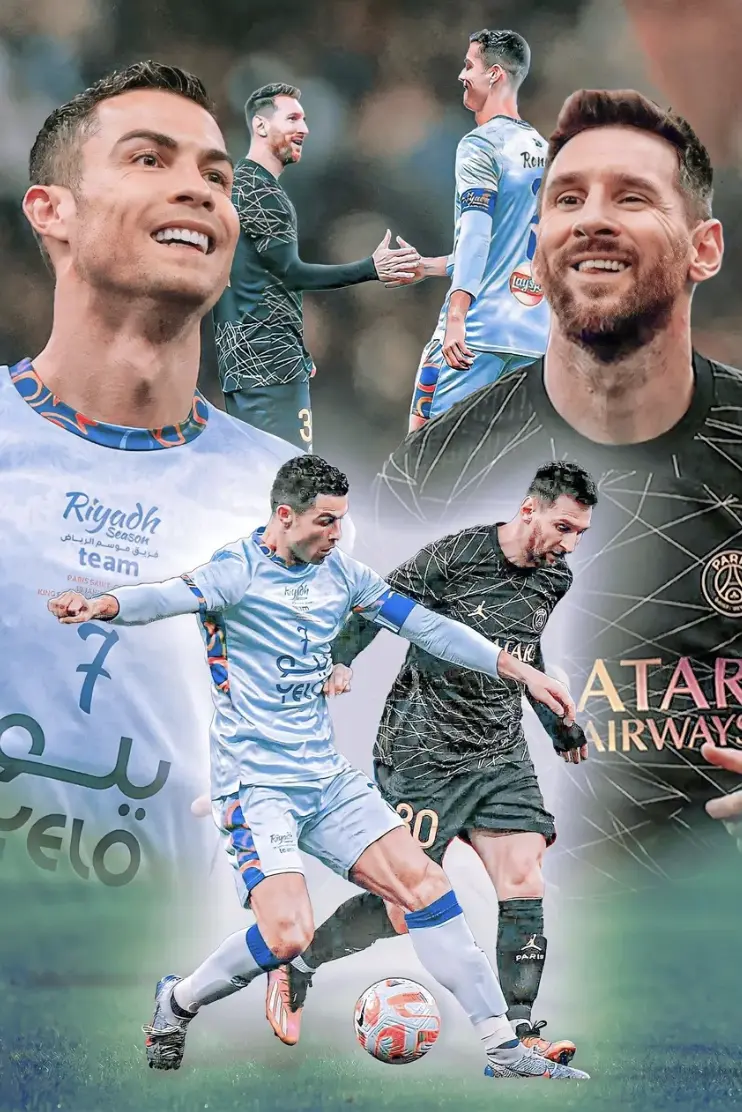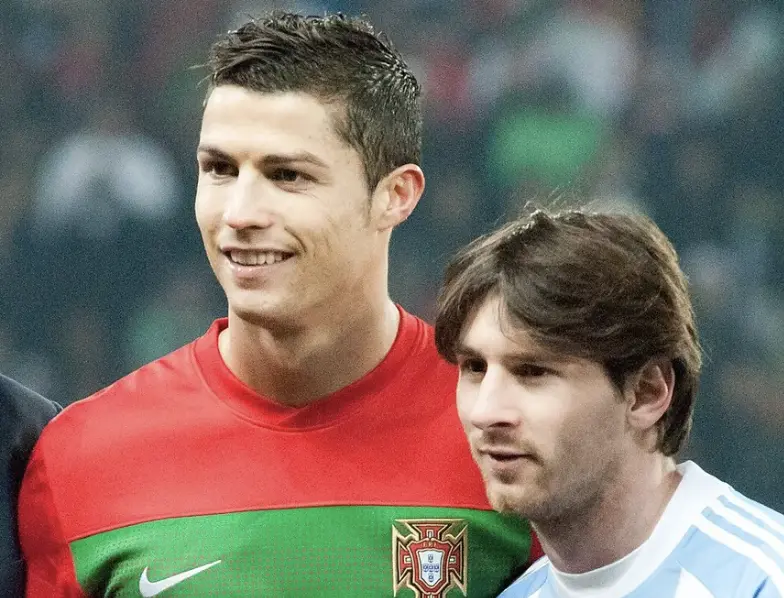
Lionel Messi: From Rosario to football immortality
Lionel Messi was born on June 24, 1987, in Rosario, Argentina. From a very young age, he showed exceptional football talent but suffered from a growth hormone deficiency that required expensive treatment. At the age of 13, he moved to Spain and joined FC Barcelona, where he entered the famous La Masia academy. He made his first-team debut in 2004, at just 17 years old. Barcelona would become the club where most of his legend was built.
With Barça, Messi gradually became the central figure of one of the most spectacular teams in football history. He won 10 La Liga titles, 7 Copa del Rey trophies and 4 UEFA Champions League titles, while becoming the club's all-time leading scorer with 672 goals. He also holds the record for the most goals scored in La Liga, with 474 goals, and the record for most goals in a single Spanish league season, with 50 goals in 2011–2012.
His year 2012 remains extraordinary. Messi scored 91 goals for club and country during the calendar year, an incredible record that perfectly illustrates his dominance as a goalscorer. He also holds the record for the most Pichichi Trophy wins, awarded to La Liga's top scorer, with eight.
After leaving Barcelona in 2021, Messi joined Paris Saint-Germain, where he won two French league titles. He then moved to the United States to play for Inter Miami. There, he won the Leagues Cup and helped the club achieve one of the most important successes in its history.
However, another major part of Messi's story is his international career with Argentina. For many years, he was criticized because he had not won a major international trophy. That changed in 2021 when Argentina won the Copa América. In 2022, Messi finally achieved the ultimate prize by winning the FIFA World Cup in Qatar. He was named the tournament's best player after a remarkable campaign. He also won another Copa América in 2024.
Messi's international career has made him Argentina's all-time leading scorer and one of the most important players in the country's football history.
Cristiano Ronaldo: A career built on talent, ambition and hard work
Cristiano Ronaldo was born on February 5, 1985, in Funchal, Portugal. He began his professional career with Sporting CP before being discovered by Manchester United. He joined the English club in 2003 at the age of 18. Under Sir Alex Ferguson, Ronaldo gradually transformed from a spectacular young winger into one of the most prolific goalscorers in football history.
At Manchester United, he won three Premier League titles and one Champions League, among other trophies. In 2008, he won his first Ballon d'Or.
In 2009, Ronaldo joined Real Madrid for a world-record transfer fee at the time. It was in Spain that he experienced the most prolific period of his career.
With Real Madrid, Ronaldo scored 450 goals in 438 official matches, becoming the club's all-time leading scorer. He won four Champions League titles, two La Liga titles and several FIFA Club World Cups. He also scored more than 50 goals in five different seasons with Real Madrid.
In 2018, Ronaldo moved to Juventus. He won two Serie A titles before returning to Manchester United in 2021. He later joined Al-Nassr in Saudi Arabia, where he continued to score goals at an extraordinary rate despite being well into his thirties.
Ronaldo's international career with Portugal is equally remarkable. His greatest achievements with the national team include winning UEFA Euro 2016 and the UEFA Nations League in 2019.
He has also established numerous international records. He is the all-time leading scorer in men's international football and the all-time leading scorer in the UEFA Champions League. His extraordinary longevity has allowed him to remain among the world's most prolific players for more than two decades.
Messi vs. Ronaldo: Two extraordinary careers, two different styles
The comparison between Messi and Ronaldo is fascinating because they have never been exactly the same type of player.
Messi is both a creator and a goalscorer. He can drop deep, eliminate several opponents, create chances for his teammates and then finish the move himself. His dribbling, vision, passing and ability to control the rhythm of a match are among the defining characteristics of his game.
Ronaldo gradually evolved into a devastating goalscorer. He became particularly dangerous inside the penalty area, with extraordinary heading ability, powerful finishing and an ability to score with both feet. His physical preparation and longevity have also been remarkable.
In terms of Ballon d'Or awards, Messi currently leads Ronaldo 8 to 5.
Messi won his Ballons d'Or in 2009, 2010, 2011, 2012, 2015, 2019, 2021 and 2023.
Ronaldo won his five in 2008, 2013, 2014, 2016 and 2017.
However, when it comes to goals and certain longevity records, Ronaldo has a significant statistical advantage. His Champions League record is particularly impressive, and his international goal tally is higher than Messi's.
Messi, meanwhile, has extraordinary records in Spanish football, including 474 La Liga goals and 192 assists, as well as his 672 goals for Barcelona.
Were all eight of Messi's Ballon d'Or awards really deserved?
This is probably the most interesting part of the comparison, because the answer depends greatly on the criteria used.
Messi's Ballon d'Or victories in 2009, 2010, 2011 and 2012 came during a period in which he dominated world football on an individual level. His 91 goals in 2012, in particular, provide an extraordinary statistical argument for his success that year.
In 2015, Messi again had an exceptional season with Barcelona. The club won the treble of La Liga, the Copa del Rey and the Champions League, while Messi played a major role throughout the campaign.
The debate becomes more significant when we look at 2019 and especially 2021.
In 2021, Messi won the Ballon d'Or ahead of Robert Lewandowski and Mohamed Salah. The result generated considerable controversy, particularly because Lewandowski had produced outstanding statistics and performances for Bayern Munich.
Then came 2023. The circumstances were very different. Messi had just won the 2022 FIFA World Cup with Argentina, playing a decisive role throughout the tournament and winning the World Cup's Golden Ball as the best player of the competition.
So, does Messi really deserve all eight Ballons d'Or?
The answer depends on how the award is evaluated.
If the main criterion is individual talent and individual performance, Messi has an extremely strong case for the majority of his awards.
If the emphasis is placed more heavily on team trophies, domestic competitions, Champions League performances or the achievements of rival players during the same period, some editions are much more debatable.
The 2021 Ballon d'Or is probably one of the clearest examples of this debate because Robert Lewandowski's performances generated strong arguments in his favour.
However, saying that Messi's eight Ballons d'Or were simply "stolen" would ignore the extraordinary level of his performances over more than a decade.
The same applies to Ronaldo. Having five Ballons d'Or instead of eight does not mean that his career was inferior. Ronaldo has extraordinary statistical achievements of his own, particularly in the Champions League and international football.
Ultimately, the number of Ballons d'Or alone cannot objectively determine which of the two had the greater career.
Messi has 8 Ballons d'Or and a World Cup, while Ronaldo has 5 Ballons d'Or, a European Championship, a Nations League title and an extraordinary number of goals.
Perhaps that is what makes their rivalry so fascinating. For more than fifteen years, Lionel Messi and Cristiano Ronaldo have dominated football at a level rarely seen before. Even after so many trophies, records and individual awards, the debate over which player was the greatest of their generation continues.