
Almost exactly two months ago, I wrote about how gold was starting to behave more like a speculative asset, with sharp price drops and little regard for traditional market fundamentals. Since then, this trend has only become stronger.
In January 2026, gold reached its all-time high under the LBMA benchmark at $5,405 per ounce, while spot prices peaked at around $5,600. However, since March 2026, the metal has been on a downward trend, despite a few temporary rebounds. As of mid-November, gold is trading at around $3,750-$3,790 per ounce, its lowest level in roughly 14 months. Over the past six months, gold has lost around 17%, while the drop from its January peak is close to 30%.
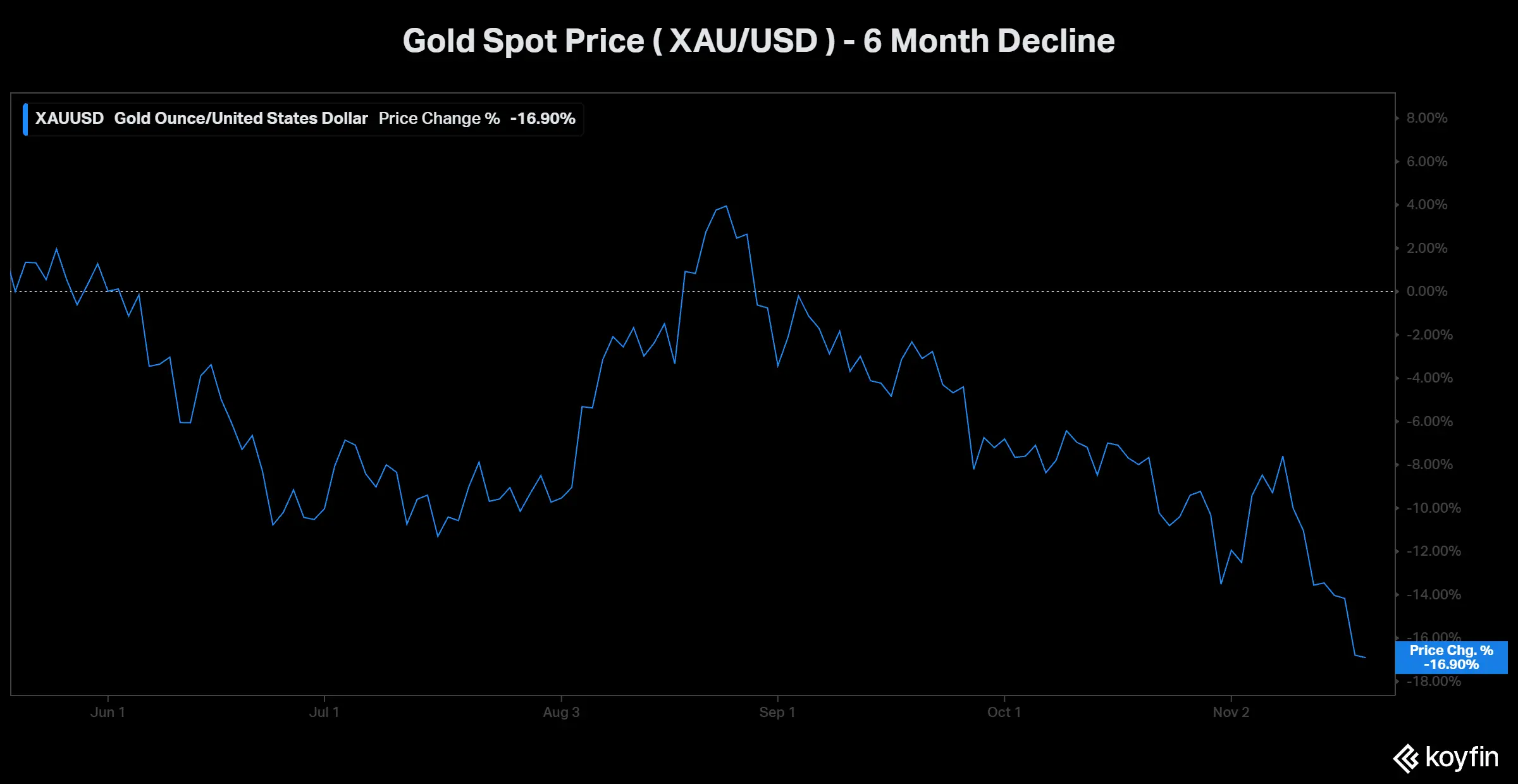
Although I already wrote about the reasons behind this decline in my previous article, this time I want to focus on two less obvious market factors, as well as the conditions that could help gold start rising again.
The main reason behind gold's decline is inflation, which simply refuses to go away. The conflict in the Middle East has pushed oil and gas prices higher, keeping overall prices up. Because of this, the Federal Reserve has to keep interest rates high, while the market expects another rate hike in December.
Another problem for gold is that it does not generate regular income or pay dividends, unlike bank deposits or some stocks. When US government bonds started offering more than 5% annually and the dollar reached its highest level in 19 months, holding gold became less attractive for major investors. They started selling gold and moving their money into US government bonds, which offer regular returns.
There is also a slightly less obvious factor: how large investors manage their money during market downturns.
For large investment funds, gold, much like Bitcoin, is an asset that can be sold quickly to get large amounts of cash. This becomes especially important when markets are under pressure and funds need money to cover their losses or reduce risks.
So when stock markets start falling, major investors urgently need cash. The easiest way to get it is by selling assets that are easy to sell and have already brought in good profits. Since gold gained more than 67% in 2025, funds have plenty of reasons to take some of those profits. As a result, during periods of panic, gold can fall along with the rest of the market, even though it is usually considered a safe asset.
Interestingly, physical gold is still in high demand despite falling market prices. In 2026, central banks continued adding to their reserves, while global gold ETFs increased their holdings by 19 tonnes in October, reaching a record total of 4,275 tonnes.
Now, as I mentioned above, let's look at what could help gold start rising again.
Lower oil and gas prices. This would help slow inflation, reduce business costs, and bring some stability back to prices.
Lower interest rates. Once inflation starts to fall, the US Federal Reserve may begin cutting rates. Government bond yields would then become less attractive, and more money could flow back into gold.
Until then, gold and silver prices will largely depend on bond yields, the strength of the dollar, and whether investment funds need quick access to cash, rather than simply reacting to geopolitical news.
In short, the conflict in the Middle East is now creating two opposing effects for gold. On the one hand, it increases demand for safe assets. On the other, it pushes inflation higher, forcing the Federal Reserve to keep interest rates high. For now, the second effect is stronger, putting pressure on gold prices despite the ongoing geopolitical tensions.






