
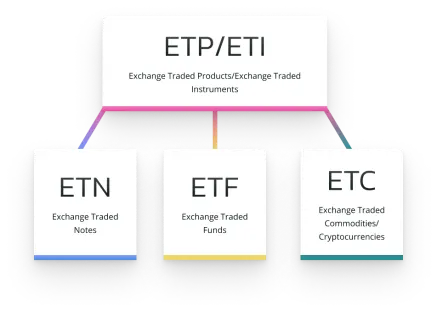
In this article I will try to explain the differences between different financial products (ETF, ETC and ETN) that may appear similar but are very different in terms of risks. In general these 3 products go under the name of ETP (Exchange Traded Product): that is, any financial product traded on the stock exchange, which replicates the price of an underlying asset. In this case we are talking about risks mainly on custody, not on price volatility because for the same asset each one tracks its price.
ETF (EXCHANGE TRADED FUNDS)
ETF are funds traded on the stock exchange that replicate the performance of an index, basket of stocks, real estate or an underlying asset such as bonds or cryptocurrencies. In the case of cryptocurrencies, an ETF can track the price of BTC spot, allowing investors to expose themselves to the asset without owning it directly. For example, an ETF on Bitcoin spot follows the real price of BTC, without leverage or derivatives. In the stock market, an ETF can replicate the S&P 500 index, while for commodities it can follow the price of physical gold. ETF own the underlying asset, which means that if the issuer goes bankrupt, the assets are guaranteed (for example, each spot BTC ETF also means owning 1 real BTC). The same goes for gold or oil: the physical assets are held.

ETC (EXCHANGE TRADED COMMODITIES)
ETC are financial instruments similar to ETF, but specific to raw materials can be physically guaranteed or issued through derivative contracts. For example, an ETC on Bitcoin can be guaranteed by a Bitcoin future (derivative). In the world of commodities, an ETC on gold or oil can be guaranteed by physical gold or by oil futures contracts (if futures, in this case you do not actually own the oil).

ETN (EXCHANGE TRADED NOTES)
ETN are unsecured debt instruments that track the price of an asset, such as an index or a commodity, but without physically owning the underlying asset. A derivative Bitcoin ETN, for example, does not hold Bitcoin, but is issued by a bank and tracks the price of BTC through derivative contracts. For commodities, an ETN might track the price of natural gas, gold, or copper through bonds that track those markets, while in stocks it might track complex indices or more exotic investment strategies. Through this product all the assets are not physically owned so you are exposed to risks because they are bonds (therefore debt securities).
Keep in mind that when you buy one of these products, you're only exposed to the price (investment). If you hold spot BTC, you're the true owner of your funds without any "external" control and with the ability to make payments and move funds without authorization. These products are fine if you only care about price; if you care about technology, consider holding spot BTC in your personal wallet.
Are you interested in ways to earn crypto bonus? Check it out here: Some Sites To Earn Crypto Bonus (Old & New)






