
Who is in the blockchain world knows the famous trilemma concerning: decentralization, security, scalability. Decentralization means a non-centralized network, with many nodes. In order for it to be decentralized, the hardware to validate transactions must be within the reach of as many people as possible. For example, to become a Solana validator you need hardware worth 100k, not affordable for everyone. To become an Ethereum validator you need 32 ETH. Decentralization is also related to security: a more decentralized network is also more secure. Finally, scalability indicates the speed of confirmation of transactions and their cost. A highly scalable network is cheap and fast and vice versa. It is defined as a trilemma because improving 1 or 2 of these 3 parameters worsens the other or the other 2. In short, there is no perfect blockchain, you just need to find the right compromise.
Another well-known trilemma in the blockchain field is that of bridges which are one of the biggest weaknesses in the blockchain world because being multichain they have many points of attack. A bridge hacked and robbed of its native assets posted as collateral leads to the de-peg of the bridged version due to lack of liquidity. You notice what happens when a bridge is exploited (picture below). madUSDC is the wrapped USDC token of the Nomad bridge and must be worth 1$ (user deposits 1000 USDC and gets 1000 madUSDC), however the real USDC has been stolen so today it is worth 0.15$. The ratio with gUSDC (other wrapped USDC) should be 1:1, however with 1 gUSDC you get 6.37 madUSDC.
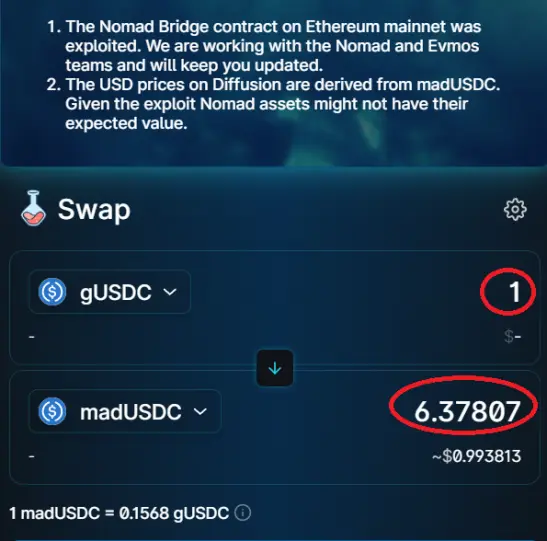
You might think about arbitraging if madUSDC goes back to the peg but I advise you NOT to do it at all. Other versions of USDC are being used by now. This report is just an example.
BRIDGE TRILEMMA
The bridge trilemma has 3 parameters to consider:
-Instant Guaranteed Finality (as soon as the transaction is confirmed, the funds should arrive instantly in the destination chain)
-Native Assets (i.e. the need to transport native assets in the destination chain)
-Unified Liquidity (single liquidity pool for all chains therefore shared access)
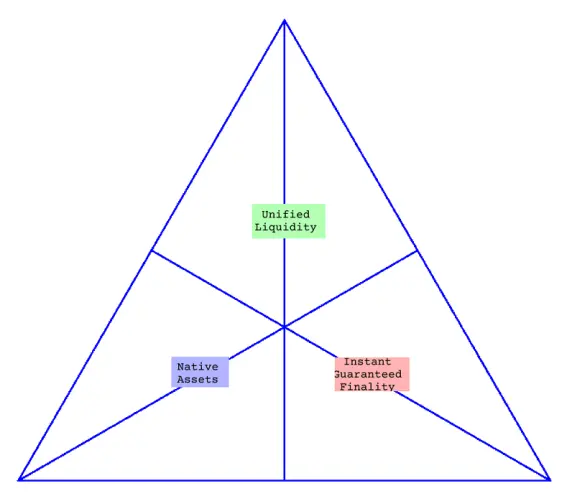
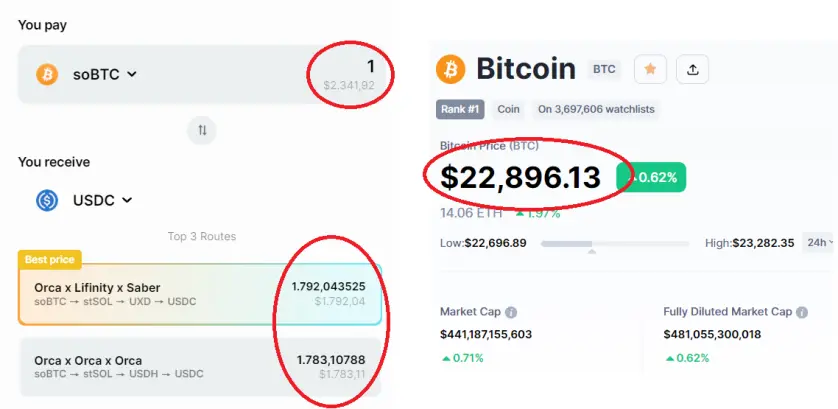
Also in this case, it is possible to prefer 1 or 2 of these 3 parameters. A synthetic asset finalized through a lock & mint and burn & redeem mechanism achieves Instant Guaranteed Finality as the assets are minted on the destination chain with no possibility of reversion due to lack of liquidity. However, users receive a synthetic asset and then have to trade it back for the resource they actually need. For example I deposit native Bitcoin, I get a synthetic version that tracks its price (wBTC). You need to pay attention to the difference between wBTC (which is a bridged version) and wETH which is an erc20 (it simply tracks the price of ETH and trades 1:1 on an AMM). Obviously if the bridge is hacked with stolen native assets there would be liquidity issues and loss of the peg. With the bridged versions there may be problems even if the on-chain liquidity is emptied. You can see that soBTC has lost its peg on the Solana chain and is currently worth around $2341. This happened during the bankruptcy of FTX (the underlying was held by FTX which issued soBTC and soETH. No one knows where the real BTC and ETH are which were 1:1 collateral).
In traditional bridges, something called as fragmented liquidity is used where you have separate pools for the different tokens (e.g. if I need to transfer USDC from Ethereum to Solana, I need to have 2 USDC pools on the two chains). In a fragmented pool, each chain maintains a separate liquidity pool precisely where if one of the two runs out I would get delays or the failure of the transaction. Using unified liquidity will allow all chains to deposit and withdraw from a single liquidity pool. All chains share a single pool: "USDC pool" will serve all chains for example.
Unified liquidity has the problem that if multiple simultaneous transactions are withdrawn from the same liquidity pool, it is imperative that the pool does not become depleted before all transactions are completed.
IDEAL BRIDGE
The ideal bridge should allow one token on the ETH chain to be exchanged for another token on the Fantom chain (example), using native assets and a single multi-chain liquidity pool. All with a single transaction.
Once the trilemma is resolved, we no longer need synthetic asset lock and mint or fragmented liquidity. Instead, it is possible to have unified pools of native assets tied to all chains simultaneously, creating orders with greater efficiency (without the transaction failing due to lack of liquidity). LPs will be able to participate in a one-sided asset pool with no impermanent loss and collect fees from all incoming transfers, regardless of their chain of origin and with no wrapped/synthetic assets.
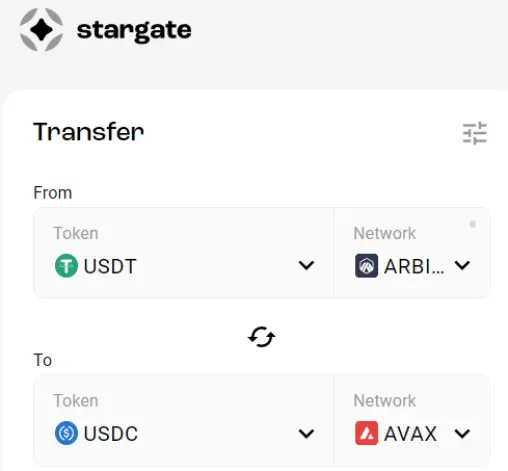
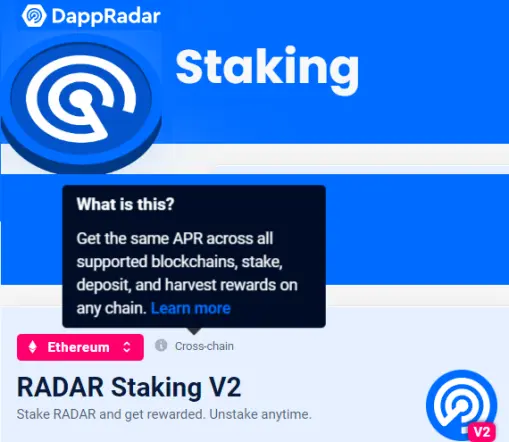
Stargate built on LayerZero apparently solved this problem by wrapping a Delta (Δ) algorithm that happens in a single transaction from the source chain to perform actions like swap -> bridge -> swap. You can find these examples on Stargate, LiquidSwap, DappRadar (Radar staking), Aptosbridge, Aptoswap or Aux Exchange.
Are you interested in ways to earn crypto bonus? Check it out here: Some Sites To Earn Crypto Bonus (Old & New)






