
We have reached the fourth lesson of the mini-course on economics. In the previous 3 articles, I have talked about GDP, Commodity, Real Estate and Bond (1st), Cycles, Expansion and Recession (2nd) and Correlations, Variables and Indicators (3rd). You surely know that the best asset against inflation is Bitcoin. Indeed, BTC is an asset with decreasing inflation (every 4 years the rewards for miners are halved up to 21 million BTC in 2140). The dollar is losing purchasing power, while BTC is continuously increasing in its 4-year macro-cycles. After all, you can think of Bitcoin Pizza Day where 2 pizza were bought for 10,000 BTC (about $41), today 10,000 BTC is equivalent to 270 million dollars. Let's not waste any more time and let's get started.

INFLATION
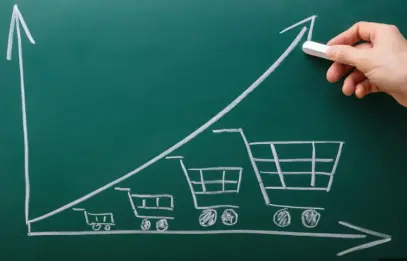
It is an inherent indicator of the variation of the price level in a country and can be moderate, galloping and hyperinflation. Expected and unexpected. It depends on demand and costs. Prices rise if the production system is able to satisfy the demand, the increase in production costs is passed on to the buyers. The calculation method is based on the CPI (Consumer Price Index), i.e. on the price trend of consumer goods (clothes, drinks, food, games, etc). Clearly each asset will have a different "weight" on the influence of this index. The term "non-core" refers to the value of all goods and services, while "coreCPI" excludes the cost of energy and food (because it tends to exclude the more speculative sector). As prices rise, bonds have less purchasing power so yields are lower, likewise companies reduce sales so their shares go down. If there is deflation, the purchasing power of the currency increases, rates are reduced and the bond increases in value (companies have higher profits so their stocks generally perform better). The increase in the unemployment rate reduces income, capital on the market therefore reduces spending and demand leading to inflation falling. Real estate rises in price as inflation rises, due to rising raw material costs. However, inflation is fought by increasing interest rates which reduces loans and the demand for new mortgages, therefore decreasing liquidity also decreases the demand for real estate and its prices.
Another data to be mentioned for the calculation is the PCE (Price Consumption Expenditure) which represents an index that traces the price of a basket of consumer goods ("durable" such as cars/household appliances, "non-durable" such as clothing/gasoline and services public/health/transport/catering) depending on the interests of consumers. Finally, the PPI (Produce Price Index) represents the price of production (variation in prices for goods and services produced). In Europe the comparison is made with the HICP which compares the prices of consumer goods between the various EU countries, also taking into account the spending weight of each individual country (the relevance is variable).
DEFLATION
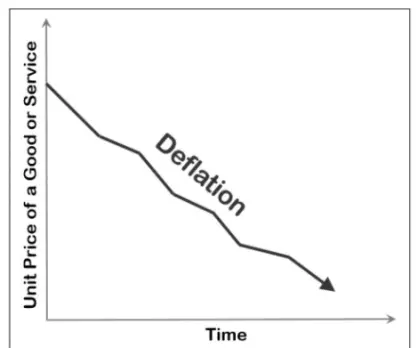
This refers to the general decline in the prices of goods and services and therefore to an increase in the purchasing power of the currency over time. In this case there is a contraction of the money supply with the benefit of consumers. This leads to a decrease in the prices of goods. Borrowers and investors suffer from this situation, as the former will have to repay a loan at a higher price (the borrowed currency has become stronger), while investors see their investments decrease in value. It reduces investment and access to credit, leading consumers to always try to buy goods at lower prices (demand does not satisfy supply, therefore goods are further discounted, until production and employment collapse).
STAGFLATION
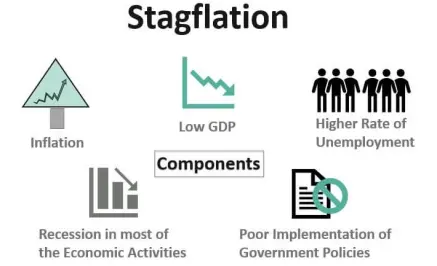
This refers to a decrease in production and an increase in unemployment with rising inflation with demand exceeding supply (this goes against the trend because an increase in unemployment leads to a reduction in spending power and if production goes down there should be a price equilibrium, definitely not an increase). It can be caused by external factors such as duties and sanctions with increases in unemployment (reduction in spending power) and at the same time prices, therefore inflation (reduction in purchasing power).
In the last 2 articles we will see the moves of the Federal Reserve and some hints on the Stock Market. I am 100% pro-crypto, however if you want to operate in the crypto markets you must have a minimum of notions on the traditional financial market because there are correlations (positive/negative).
__________________________________________________________________________________
MISSED THE ARKHAM AIRDROP? TIP OF THE MONTH
Arkham airdrop was from a few thousand dollars to hundreds of thousands of dollars. It was enough to register an email and then the address. Basically, these are intra-chain analysis and intelligence sites (tracking of on-chain movements). Two other similar sites have opened whitelists where you just need to enter your email. Someone is hinting that they could perform an airdrop like Arkham so I suggest you sign up by entering your email:
Velodata (Whitelist, Only Mail)
Bonus:
Tabi (Social Quests: Twitter, Discord, Reddit). For more info: Will Tabi Be The New Blur & Arkham? Participate In Quests!
Are you interested in ways to earn crypto bonus? Check it out here: Some Sites To Earn Crypto Bonus (Old & New)






