
Imagine having a spot position in a crypto (for example BTC or ETH), you are essentially long (i.e. you will earn over the years if the value of the asset grows over time). You can optimize your earnings through hedging strategies (which serves to defend your positions in bearish phases). Hedging is useful when the trend is reverse to your position or during sideways market phases.
SHORT ON FUTURES/PERPETUAL
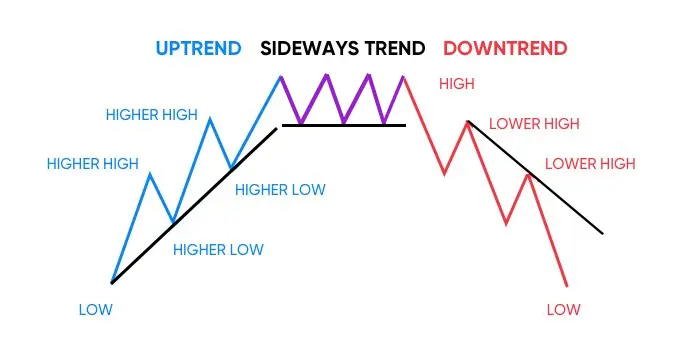
In this case I will open a short (to cover my long position) in case of bearish signals on the weekly: double top (double maximum), head and shoulters, reversal of structure with breakdown, lower low (lower low than the previous one), higher low (maximum lower than the previous one), top W construct broken downwards, bearish crossing of the moving averages i.e. death cross (short-term moving average that crosses a long-term one downwards), negative divergence (between price and RSI or MACD) , bearish engulfing (bearish candlestick that completely incorporates the body of the previous one), breaking of the lower Bollinger band (with increase in volumes), Stochastic oscillator (identifying overbought), etc. The hedging position will be a small percentage of my spot position (investment). Obviously, if the trend is actually bearish, I will profit from the short, maintaining my long-term position. However, if the trend goes upwards, I will obtain a loss (even if the long position covers me but obviously I will earn a lower % which is eroded by the short). When choosing collateral, you can choose between a volatile asset or a stablecoin:
1) If you choose BTC as collateral (to cover BTC spot), you strengthen the movement in one direction or the other (if you are short and BTC also drops in price; this obviously applies in general even if you don't hedge: if you are long BTC you will earn on the rise and also with the collateral). However, if the trade goes against the expected direction, you will suffer a loss of value in both the collateral and the market position
2) With a stablecoin, margin management is simpler because it has no volatility in the price but is less optimized (they do not offer further profit on the collateral itself)
AIRDROP FARMING PERPETUAL/FUTURE: DELTA NEUTRAL
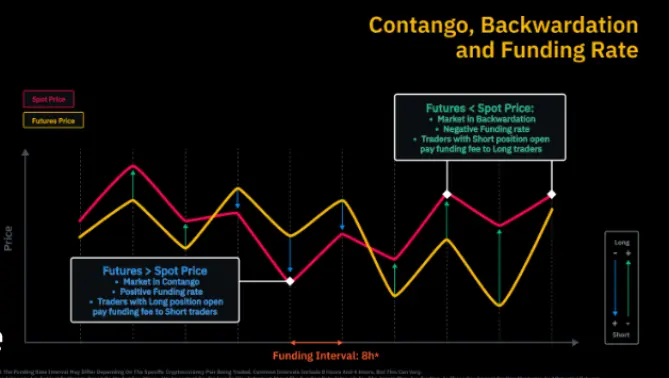
Basically what we are going to do on the Perpetual/Future platforms is simulate volumes because airdrop depends on this. However, if you open long or short at random, in addition to the fees, you could lose capital. One way to not be exposed to the market is to open a long on one platform and a short on another platform. For example, I could open a long with 10x leverage on BTC (on Hyperliquid) and at the same time a short with 10x leverage on BTC (on LogX). My position will make a profit on one side and a loss on the other (same percentage). I will earn some funding rate (usually for the short position) which will partially compensate me for the fees spent. Thanks to this strategy, you will be able to farm airdrops on both platforms or in any case on all perps exchanges, without losing capital. Use these if you want to farm their airdrops: Best Tokenless Decentralized Exchanges
OPTIONS: COVERED CALL ON BTC SPOT POSITION
Options are derivative contracts that can be purchased at a premium. There are call options (allows you to earn on the rise, if the price falls you get no losses, apart from the premium paid) and put options (allows you to earn on the fall). Options have a strike price (expiry), let's assume purchases of calls or puts:
-Call in profit, if the price is > the strike price at expiry (if it is lower it doesn't get me anything but I lose the premium)
-Put in profit, if the asset price is < the strike price at expiry (if it is higher it takes me nowhere but I lose the premium)
For the short:
-Call in profit, if I sell the option at the strike price I earn from the premium but if the price rises above the strike price I get lost profits
-Put in profit, if I sell the option at the strike price I earn from the premium but if the price falls below the strike price I get lost profits
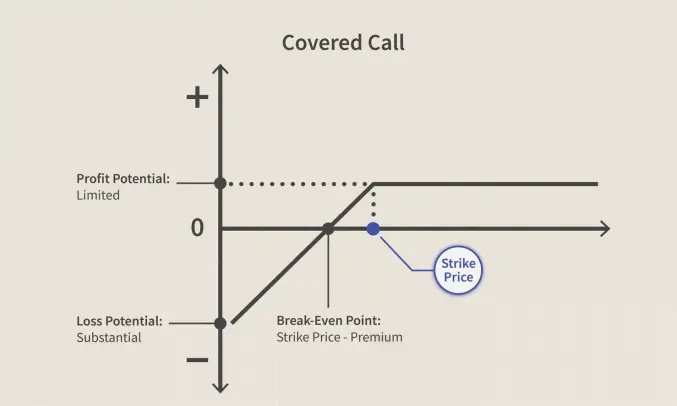
Hedging is a sale of a call position: profit on laterality (thanks to the premium) but strong reduction in profit in the event of an uptrend of the asset (closing of the position at the strike price). If the price of BTC increases significantly above the strike price, the profit is limited to the strike price plus the premium received (if BTC is worth 60k and I have a strike price of 65k but at expiry the price is 68k, I will get the profit of the premium but my sale will be at 65k and not 68k so I have a lower profit). If the price is well below the strike price, I lose on the spot position but the premium reduces my loss (for example today's price is 60k and the strike price is 65k but the expiry price is 55k, I have a 5k loss on the spot but I earn the premium of the option). Good strategy on market retracements and partly in bear markets.
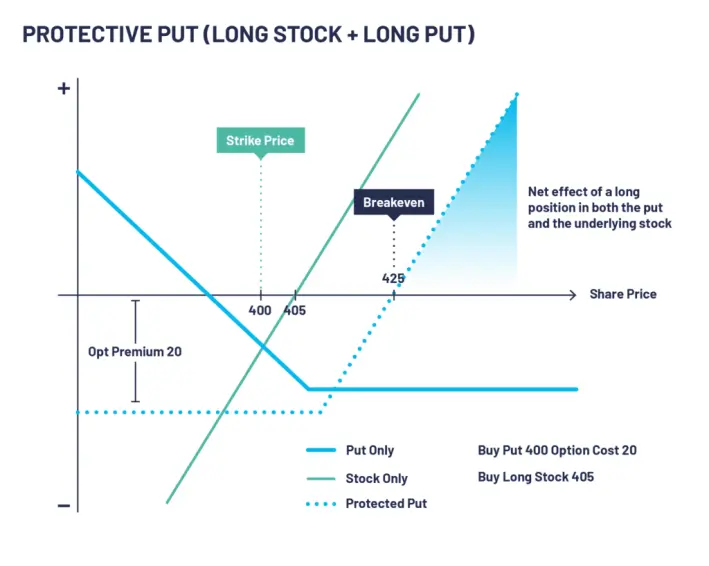
OPTIONS: PROTECTIVE PUT ON BTC SPOT POSITION
Purchase (long) put option covers a BTC spot position in a strong downtrend (with partial reduction of profit in case of strong uptrend), loss on laterality (I lose the cost of the premium). If the price of BTC increases, the investor benefits entirely from the increase, minus the cost of the option premium.
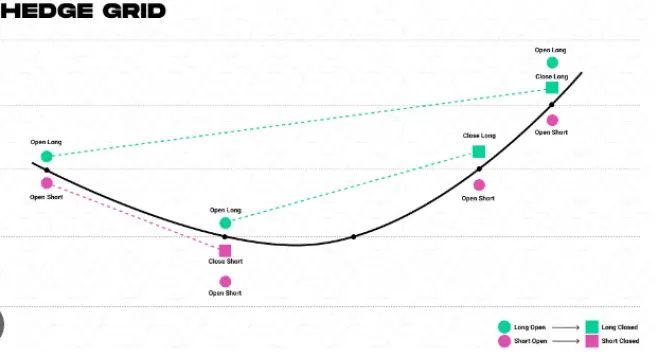
GRID BOT SHORT (COVERAGE) AND NEUTRAL (FOR SIDEWAYS MARKETS)
Grid bots are automated trading tools that execute buy and sell orders within a given price range. There are three main types of grid bots: long, neutral and short.
1) Long: the user defines a price range (e.g. from $60,000 to $70,000 for BTC) and sets a series of price levels within this range.
The bot places buy orders at each lower price level and sell orders at each higher price level. The idea is to buy low and sell high to profit from the asset's price bounces upwards. For example, if the price drops to $60,000, buy BTC. If the price goes back up to $61,000, sell BTC bought at $60,000. Repeats the process for each price level.
2) Neutral: The user defines a price range and sets a price range like in the long grid bot. The bot opens long positions below and short above. It does well in sideways market positions.
3) Short: The user defines a price range and sets price levels like in other grid bots. The idea is to sell high and buy back low to profit from the asset's price bounces downwards. With the range 60,000-70,000$, if the price goes up to $70,000, sell BTC. If the price drops to $69,000, buy back BTC sold at $70,000. Repeats the process for each price level. It is ideal for hedging.
Are you interested in ways to earn crypto bonus? Check it out here: Some Sites To Earn Crypto Bonus (Old & New)






