
A few days ago, I published an article here about Downdetector, a service developed by Ookla that lets you check the availability of online services that have become essential to our daily lives. It works by collecting and filtering user reports, making it highly reliable for detecting outages on major platforms such as banks, cryptocurrency exchanges, social networks, streaming services, and many other popular websites.
But what if we wanted to monitor the availability of our own services? Homelabs, VPS instances, NerdMiners, self-hosted applications, or personal websites obviously won't appear on Downdetector. With this challenge in mind, I decided to build a small device based on the ESP32 microcontroller capable of performing both TCP and HTTP connectivity tests while also hosting a lightweight web dashboard that displays the current status and history of those checks.
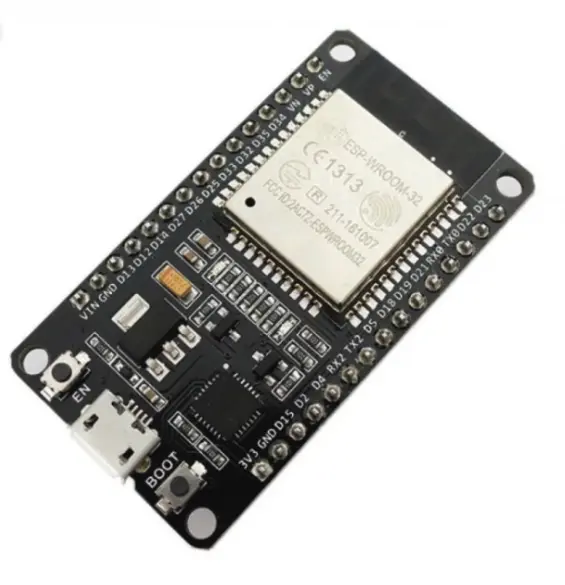
The goal isn't to replace mature monitoring solutions like Uptime Kuma. Instead, the idea is to recreate some of the fundamental concepts behind network monitoring and communication protocols using inexpensive and accessible hardware. As a bonus, the final device is a fun and practical project for anyone interested in self-hosting, Web3, or homelabs.
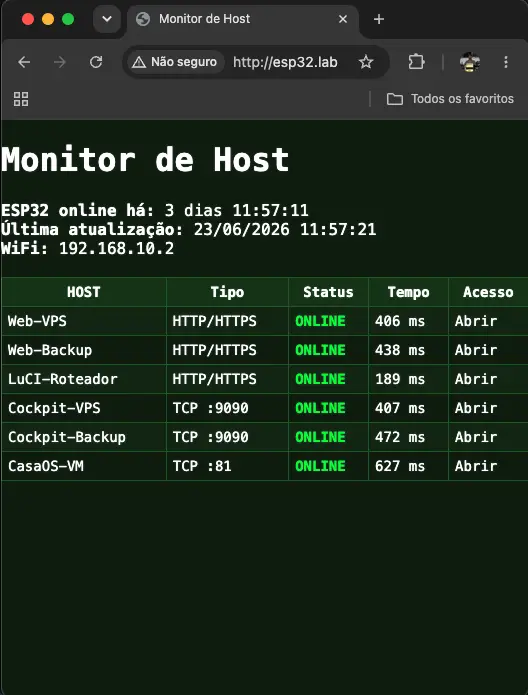
Below, you can see the dashboard monitoring the availability of my own services, including my VPS, router, local virtual machines, and other devices on my network.
I also made the complete firmware source code available on my GitHub.






