Have you ever tried to access a website, an online service, or even a game, but couldn't? You restart your smartphone, your computer, your router, switch to 4G, and still nothing works... only to find out on social media that the problem was on the server side all along, not with your connection.
A lot of what we use on the internet depends on servers running 24 hours a day, 7 days a week, as well as a solid physical infrastructure to keep everything online (yes, the world is still connected by cables!). Even with all the technology designed to provide high availability, especially for essential services, things don't always work perfectly, and it's pretty common for services we use every day to experience outages.
There's an easy way to check whether the problem is on your side or the service itself: outage trackers. I always use Downdetector (owned by Ookla, the same company behind Speedtest, one of the most popular internet speed testing tools). You can access it from your browser or through the app available on the main app stores. Just type the name of the service and your location, and it shows reports from other users along with an overview of the service status based on those reports.
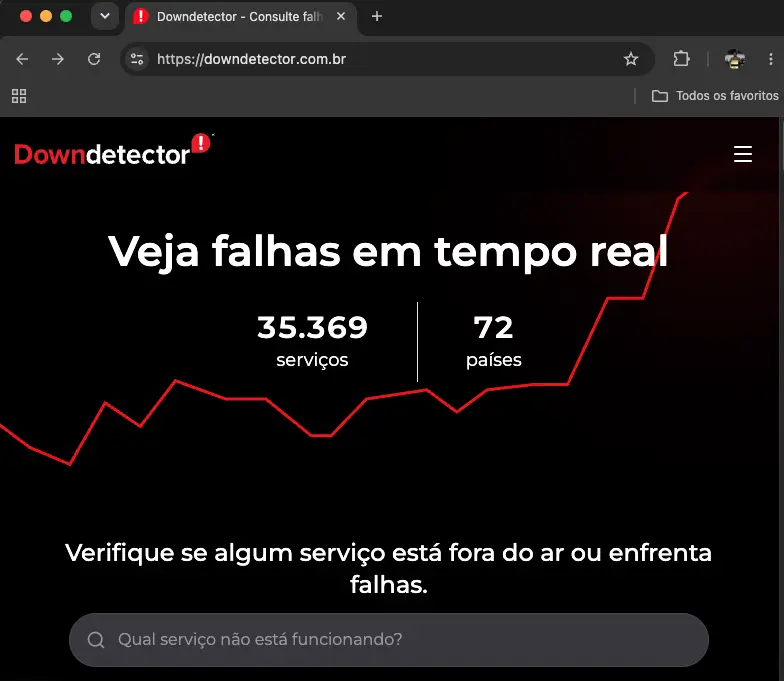
It works for banking apps, social networks, AI tools, WhatsApp, streaming platforms, and many other websites and services that are already part of our daily lives. It even shows a map highlighting the regions affected by the outage.
Knowing that the problem is outside your control is always a relief. It can save you hours of troubleshooting and unnecessary calls to customer support. But if Downdetector itself goes offline... well, then it's time to check social media and see if everyone else is talking about it too!