I received an interesting question on my post about resurrecting an old zombie computer which was as follows:
Nice job for acting literally as an archaeologists but please tell me what was the use of wasting 4 hours on an old pc which could be consumed in a more profitable way ? Do you plan to resell it? Do you plan to mine some coins with that? Do you plan to use it for earning crypto from PTC/faucet sites safely without using your main PC ? Running a server ? Or just for the fun of it ?
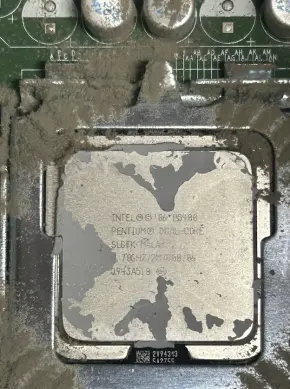
While to some it might come across a bit snarky or sharp, the question isn't odd or unique. In fact, it's almost a verbatim question I get from a number of folks I know who do work in IT. The sentiment basically circles around the idea that we have so many options for the latest technology, why bother with old crap at all? For those who know why, the answers are obvious, but for those who have either been raised entirely in consumerism or think new is the only viable option with which to operate, using old may seem entirely foreign.
So here's my response to all that:
1. Learning should never stop, and the best way to learn and continue to add to your skill is to actually be challenged with problem solving. I personally love building computers, even old ones. And the old ones are particularly challenging because their obsolescence. You don't get the luxury of turning it on and everything works. You actually have to troubleshoot, identify the problem or problems and then come up with solutions to fix it. That oftentimes involves going beyond the most obvious fix of replacing and instead finding workarounds or substitute solutions.
2. "Old" doesn't mean useless. A good amount of what I find and work on is functional, just not for the latest tech demands. I don't expect and would be shocked to find a thrift treasure that can play Ark Raiders or similar just pluging into the the wall (that said I did get a Z-9 case in practically new condition for free last September). Most units that end up in thrift tend to be office-grade, which are perfectly fine for normal computer use such as office productivity (writing, printing, spreadsheets, internet browsing), even if old. The challenge to getting them to work is more often just swapping the OS so they meet all the basic needs easily, and that's where Linux comes in. What doesn't work anymore for Windows 11 can operate great with a Linux system for years to come.
3. Windows' demands are a prime example of marketed obsolescence. And participating in that makes a person a willing cow for the slaughter in terms of just handing over your wallet. With all the AI nonsense and company control Microsoft has over their OS now, you're practically forced to be on a replacement cycle and handing over your subscription money annually or even monthly to function with anything. They even wiped out their licensing, even if you did buy it, and force users to subscription-based software tools to get more money out of existing users of their PCs. When you can get all the same function from Linux for free, why would you continue to keep handing over your wallet blindly to Microsoft?
4. Granted, some stuff is just old, period. It runs too slow, boots too slow and can't even do the basic stuff well on a practical level. Those kinds of laptops and PCs are, literally, useless in every term. But they are still fun to tinker with and marvel how to hell did we ever think that was "modern?" I have an old Presidio 1250 laptop that still works. It uses Windows 2000, it's physically 1.5 inches thick when closed, weighs more than 4 or 5 modern laptops when you lift it, and the screen backlit illumination needs are dark room to see anything now. It's got something like DDR1 RAM and maybe 250 MB of storage on it. The Presidio is utterly junk. But I remember when we first got it and thought it was the gateway to the future. Now, a preschooler wouldn't even use it. This age and time in physical form. I keep it as a personal museum piece because of the memories.
5. The money factor speaks loudly too. There is a very lively demand for old tech. The reasons are plenty: restoring, archiving, research, hobbies and more. Whatever the case, people like to fiddle with old stuff and there's a market for it. So, when I find viable stuff and connect it to a buyer online, it can be profitable as well. Reason enough in many cases to get things working or test them and then show proof to a buyer who's willing to pay for the item.
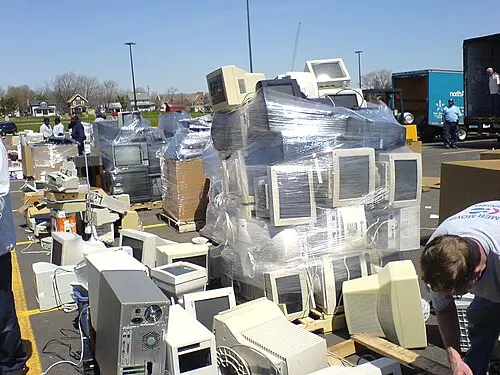
image: George Hotelling from Canton, MI, United States - E-waste recycling in Ann Arbor
I could think of more, but those five reasons are plenty of argument to keep doing what I do, even if it doesn't immediately make sense to folks. I could get into the ethics of reusing material instead of just immediately sending it to a trash landfill, but why bother? It only matters at the end of the day to me.