
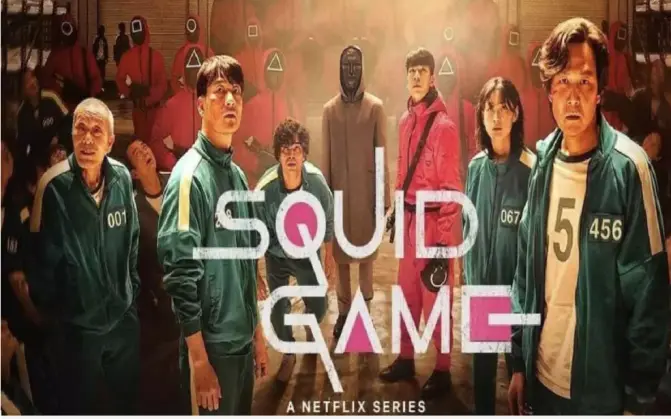
I may be late to the bandwagon, but if you are busy, have kids like me, or have a real life (what's that again? reference: kids) - you may yet have seen Squid Games.
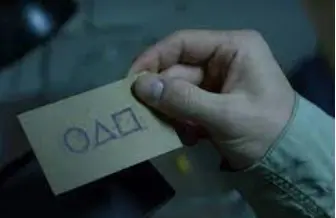
Squid Games is a Netflix Original Series entirely in Korean and shot in South Korea. It follows the sad life of Seong Gi-hun - a deadbeat divorced dad, alcoholic, gambling addict, and chauffer as his life, which was crap for a few years, falls further apart. In a "chance" meeting in a Seoul metro station, Seong Gi-hun is offered a chance to play a child's game and earn cash. But, should he lose - he would owe ₩100,000 (₩ = Korean won) or pay off the debt by accepting a hard smack to the face. After many rounds, his face is sore but his pockets are full. He also receives a card and an offer to play in similar games for greater rewards. After finding out his daughter was being taken out of the country and only his financial independence would change that, he calls the number on the card (seen below).
From then on, it's game on! (see what I did there?)
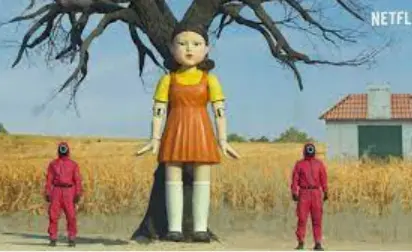
Seong Gi-hun and 455 other contestants are effectively drugged and kidnapped, taken to a remote and unknown location. Seong Gi-hun meets his childhood friend Cho Sang-woo, who is an entirely different but equally dire financial situation. They enter the arena for the first game, Green Light, Red Light. This artificial play area also has a tremendous and creepy oversized robot of a girl with eyes that track movement. You break the Green Light rule of movement, and a sniper rifle automatically shoots you. Instantly, about half the players are killed in the first game and the participants know that this is real.
The players in green confront the guards and authorities wearing red jumpsuits with different shapes on their masks denoting the different ranks they hold. Their leader is a Front Man who distinctly wears black garb and mask. He seems to run the place. This is also when the participants hold a vote and by majority, elect to end the games.
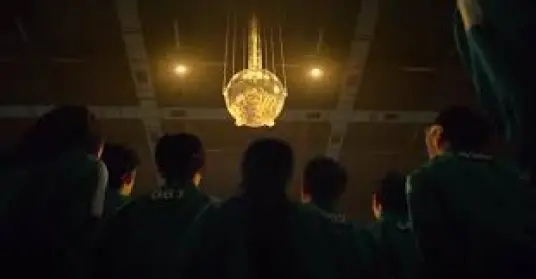
It does not end there, and nearly 200 elect to return to the squid games and risk their lives for what will be billions of ₩, as each death added ₩100 million to the potential grand prize... which ultimately would be ₩456 billion. To add some levity to their child's play, the money is placed in a lit piggy bank suspended from the ceiling.
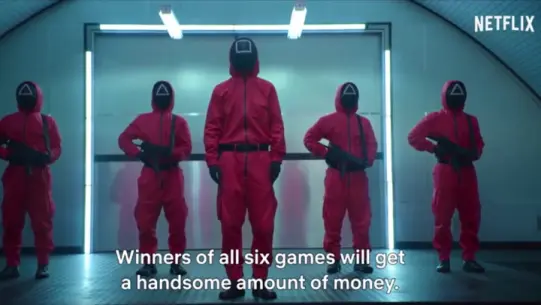
The participants play a series of children's games to the death. Only Seong Gi-hun and an old man he befriends reminisce about the games as they enter the arenas. It is always a surprise death that seems to jerk Seong Gi-hun back to reality. He ends up being one of the only "good guys" in the place. There are a few games in the middle that don't seem like real children's games, like being able to detect the difference between tempered glass and normal glass, thereby falling to your death... but the rest were legitimate; tug of war, marbles, the dalgona candy, etc.
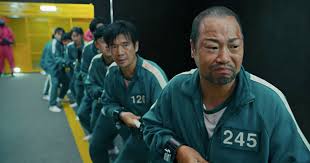
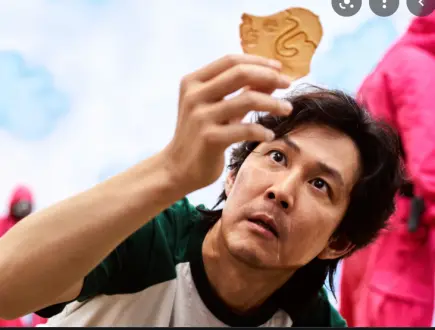
Not to fill you with spoilers, but ultimately it comes down to Seong Gi-hun and his friend Sang-woo in an epic game of Squid Game... and Seong Gi-hun walks out alive and a billionaire.
I found the series fun to watch. It is dark, disturbing at times, and has a twist or two that you don't expect which keeps you on your toes. Many people have commented that it is a strong commentary on the current economic state of South Korea and the deepening divide between the classes... and I can totally see it. But, it's been over a decade since I spent any time in South Korea, so I elected to just enjoy the series. I think it would have been better served as a mini series than a proper television show (there are talks of a sequel).
It's worth the watch, though it may not play up to the hype. The main actors did a wonderful job in playing their characters as appropriate; crazy, desperate, obnoxiously wealthy, conniving, naive, ambivalent, and more. The acting was actually awesome. Though a character or two will drive you bonkers after a bit and you will wish that they die next (don't worry, they do eventually).
Also, what was up with the red hair in the last episode? It's does not become him. The director's explanation of it symbolizing Seong Gi-hun's hidden anger is a bit lame for my tastes. But - all that being said...





