
What is governance in DAO? How does governance work in Yearn Finance?
Let’s explore.
Table of Content
Governance
Governance Token
Good and Bad
On-Chain and Off-Chain
Yearn Finance Governance
In Conclusion
Governance
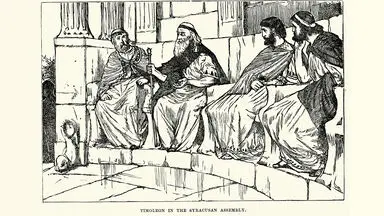
Image credit: https://examples.yourdictionary.com/ancient-greek-government-4-main-types-explained
The idea of governance can be dated back to the ancient Greek government. Although the ancient Greek textbook categorized four comment types of government: Tyranny, Oligarchy, Monarchy, and Democracy, people prefer democracy more in the modern-day because it gives everyone a fair share to live under the ruling in theory.
Tyranny, Oligarchy, and Monarchy control resources and are more concentrated within a small group of people. Similar to centralization, they are ruling through controlling. It doesn’t mean democracy does not control anything. Democracy gives people a choice and an opportunity to express their views about the future.
Of course, it does not mean democracy is perfect, as many people dispute that democracy is bad because people can be easily swayed by a good public speaker or popular leader.
Governance Token
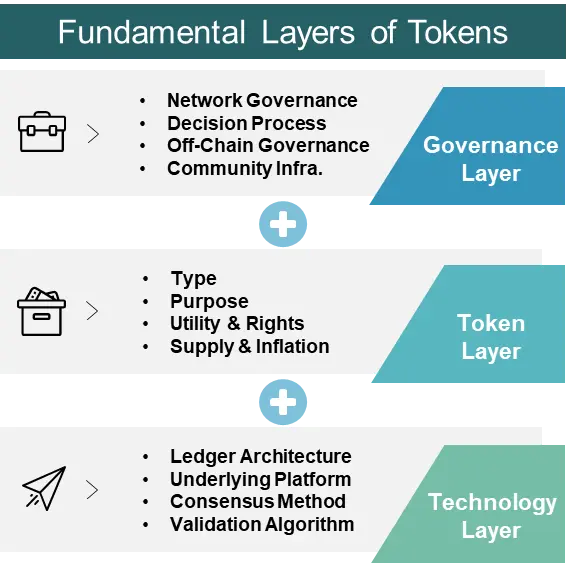
Image credit: https://academy.shrimpy.io/lesson/what-are-governance-tokens
Since crypto communities or DAOs are more toward democracy, they provide every member with the right to vote and to help navigate the directions of the future.
Governance token becomes a way to accomplish such a mechanism, either through controlling the system they created, soliciting more talented contributors, financing future projects, or accumulating investments. You can check out more from my article here.
Good and Bad
If the governance token is a vote without being able to convert it into monetary value, it works to push decentralization, collaboration, and inclusive and efficient community development.
If the governance token is a trading utility token, it works toward selfishness, lacks accountability, incubates whales, and becomes a more centralized community.
However, it does not necessarily become good or bad just because of the token governance usages. It also depends on actions on core teams to carry out.
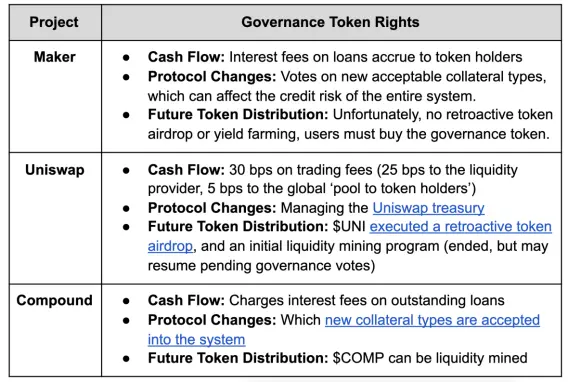
Image credit: https://www.coinbase.com/learn/market-updates/around-the-block-issue-13
Many projects or communities use hybrid approaches to have their governance token as voting rights while incentivizing members with monetary compensations.
However, such an approach can incubate a plutocracy community in which tokens are held by a small group of people, and manipulating the supply and demand of tokens will result in unfairness and rug-pulling events.
Such events are very common in the crypto space. It does not represent the entire picture of the crypto space, but they denounced the credible few projects by scamming many innocent investors or crypto enthusiasts.
On-Chain and Off-Chain
It doesn’t seem necessary for the community to use on-chain governance just because it makes it more accountable through the blockchain mechanism. Off-chain governance is an informal way to carry out decision-making processes if members believe that it is more effective than on-chain governance.
Bitcoin and Ethereum are off-chain governance processes to update their protocol. It doesn’t mean they operate centralized. If such a way makes their decision more effective, then it is a way they do their business.
Yearn Finance Governance
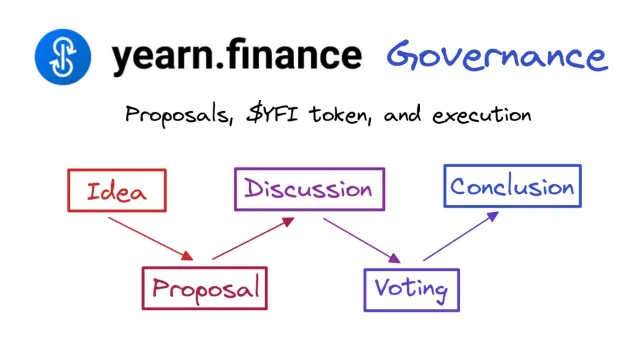
Image credit: https://medium.com/iearn/yearn-governance-explained-proposals-yfi-token-and-execution-113ec86c3a3f
Yearn Finance governance is a hybrid of the on-chain and off-chain governance processes. Off-chain proposal and discussion processes with on-chain voting processes.
You can learn more about their governance here.
In Conclusion
Governance is a way to make the community toward democracy. Different communities will have their own way of carrying out the processes. Although there are many scams existing in the crypto space, keep educating yourself to avoid such scams and join governance processes to make a future.

Tired of News? Join Medium and read more interesting articles here! Or If you want to learn more about Medium. Or more here.
Photo by Edwin Andrade on Unsplash
Note: the post was shared on multiple platforms here.

You can refer my previous article lists here and here
------------------------
2022 Prediction
2022 Prediction #1: L1 Scalability
2022 Prediction #2: L2 Bridges
2022 Prediction #3: Zero-Knowledge Proofs or ZKPs
2022 Prediction #4: Regulated Defi On-Chain KYC
2022 Prediction #5: Institutional Crypto Adoption
2022 Prediction #6: Defi Insurance
2022 Prediction #7: NFTs-Based Communities - DAO 1.5
2022 Prediction #8: Metaverse and NFTs
2022 Prediction #9: Web2 Companies’ FOMO
2022 Prediction #10: Time for DAO 2.0
------------------------
DAO The Way
DAO The Way Part 1
DAO The Way Part 2
DAO The Way Part 3
DAO The Way Part 4
DAO The Way Part 5
DAO The Way Part 6
DAO The Way Part 7
DAO The Way Part 8
DAO The Way Part 9
DAO The Way Part 10
DAO The Way Part 11
DAO The Way Part 12
------------------------
Learn How To Defi
Learn How To Defi Part 1
Learn How To Defi Part 2
Learn How To Defi Part 3
Learn How To Defi Part 4
Learn How To Defi Part 5
------------------------
Crypto Comics
Crypto Comics
Crypto Comics - PoW
Crypto Comics - Who is Satoshi
Crypto Comics - What is Token
Crypto Comics - What is DeFi
Crypto Comics - What is Wallet
Crypto Comics - What is HODL
Crypto Comics - What is Coinbase
Crypto Comics - What is PoS
Crypto Comics - What is DAO
Crypto Comics - What is A Block
Crypto Comics - What is NFT
Crypto Comics - What is Fork
Crypto Comics - What is Web3
Crypto Comics - What is DeFi-2
Crypto Comics - What is Yearn Finance
Crypto Comics - What is Degen
Crypto Comics - What is Aping
Crypto Comics - What is Cold Wallet
Crypto Comics - What is Hot Wallet
Crypto Comics - What is Airdrop
Crypto Comics - What is DYOR
Crypto Comics - What is 65537
Crypto Comics - What is RC4
Crypto Comics - What is WAGMI
Crypto Comics - What is Bagholder
Crypto Comics - What is Decentralization
Crypto Comics - What is Wallet Address
Crypto Comics - What is Plagiarism in Web3
Crypto Comics - What is Bart Pattern
Crypto Comics - What is Encryption
Crypto Comics - What is Consensus
Crypto Comics - What is Protocol
Crypto Comics - What is Stablecoin
Crypto Comics - What is ApeCoin
Crypto Comics - What is FOMO
Crypto Comics - What is Tokenomics
Crypto Comics - What is APR
Crypto Comics - What is to The Moon
------------------------
Learn Web3 in 100 Days
Learn Web3 in 100 Days - #1 What is the Internet and How Relevant to Web3
Learn Web3 in 100 Days - Day 2: What are the Browsers and Servers
Learn Web3 in 100 Days - Day 3: What are HTTP Status Code
Learn Web3 in 100 Days - Day 4: HTML and CSS and JS
Learn Web3 in 100 Days - Day 5: What is programming
Learn Web3 in 100 Days - Day 6: Markup, Elements, Tags, and Hyperlinks
Learn Web3 in 100 Days - Day 7: Style Your Web
Learn Web3 in 100 Days - Day 8: JS
Learn Web3 in 100 Days - Day 9: SQL
Learn Web3 in 100 Days - Day 10: Front-End
Learn Web3 in 100 Days - Day 11: Front-End Framework
Learn Web3 in 100 Days - Day 12: More HTML
------------------------
Modern Economic Nonsense
Modern Economic Nonsense - Inflation and Incentives
Modern Economical Nonsense - The Astrologist's Way
Modern Economical Nonsense - The VUCA World
Modern Economical Nonsense - Zug Tax and How to Run your Own Monopoly
Modern Economical Nonsense - Participatory Economy
Modern Economical Nonsense - Economic Models
Modern Economical Nonsense - Tokenomic Models
Modern Economical Nonsense - Design A Reputation-Based System
------------------------
Yearn Finance Comic
Yearn Finance Comic - Part 1
Yearn Finance Comic - Part 2
Yearn Finance Comic - Part 3
-------------------------------------------------------------------------------------
Disclosure: The article was written by a delusional author who is possibly a nut job without any questions whatsoever about expertise in the subject matters. You should not believe any words this author wrote or you may experience similar symptoms or even possibly become a nut job.






