
"I started learning Python because everyone told me it was 'beginner-friendly.'
I still remember my excitement when I wrote my first 'Hello, World!' — it felt like magic. 6 months later, I realized I had learned almost nothing about how programming actually works. I could write scripts, but when my friend asked me how memory works, I just stared blankly.
Python didn't teach me programming. It taught me how to use Python.
And that's a huge difference."
My 4 Main Problems with Python (as a First Language)
1. It Hides How Computers Actually Work
In Python, you don't think about memory. You don't think about types. You don't think about compilation.
That's great for getting things done. It's terrible for learning fundamentals.
When I moved to C, I realized I didn't understand:
- How variables are stored
- What pointers are
- Why some code is fast and some is slow
Python made me lazy. It shielded me from the real machine.
I remember spending hours trying to figure out why my Python script was so slow, only to realize I had no idea what was happening under the hood.

2. Dynamic Typing = Dynamic Problems
In Python, you can write this:
x = 5
x = "hello"
x = [1, 2, 3]
It works. But it shouldn't.
When I started working on real projects, I spent hours debugging errors that a static type system (like in C or Java) would have caught in 2 seconds.
Beginners think flexibility is good. It's not. It's chaos disguised as convenience.
I once renamed a variable and spent 2 hours fixing errors that Python didn't catch. That's when I realized dynamic typing isn't always a blessing.
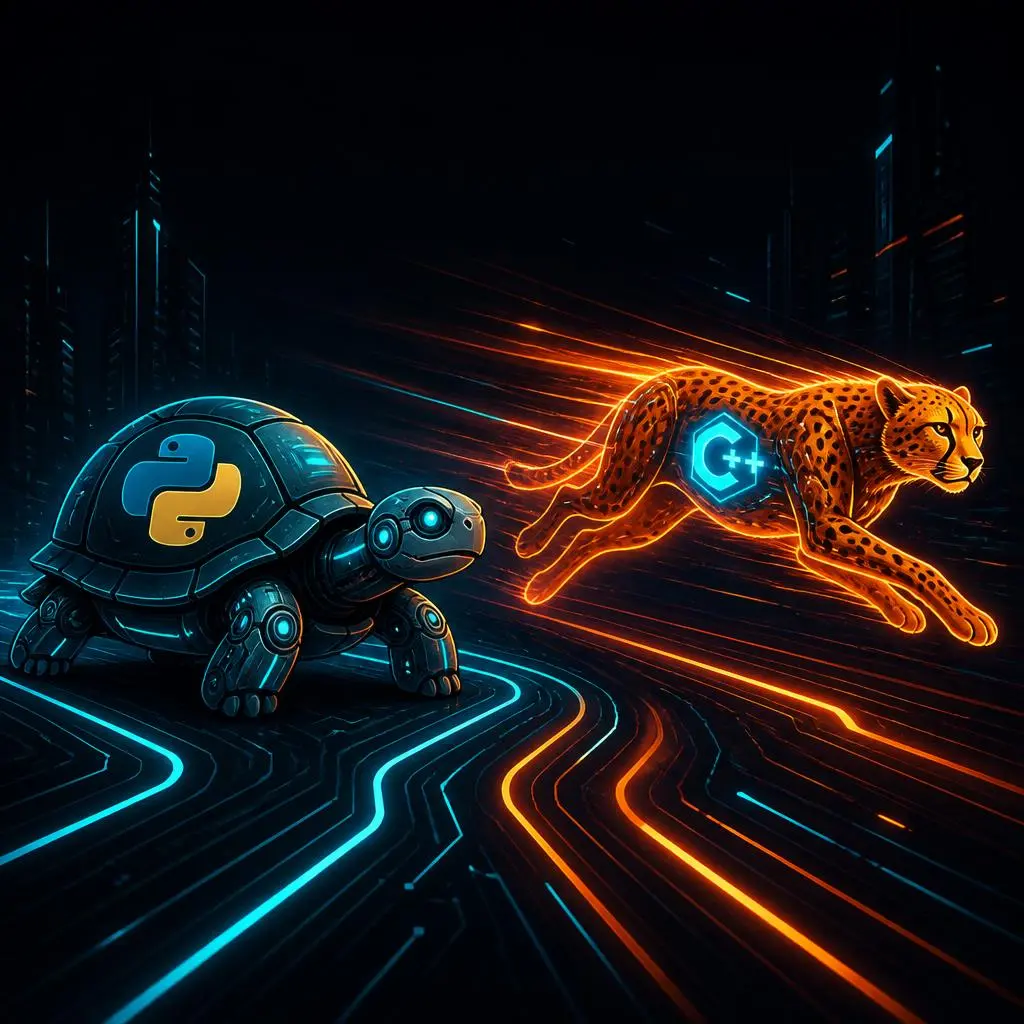
3. Python is Slow (and You Get Used to It)
Python is 10–100x slower than C or C++.
When you learn on Python, you never feel the need to write efficient code. You just wait a little longer for the result.
Then you move to a real-world project — and realize your code takes 3 minutes when it should take 3 seconds.
Python teaches you to tolerate slow code. That's a terrible habit.
4. It Doesn't Prepare You for Real Jobs
Look at job postings for Google, Apple, or any serious tech company.
They don't ask for Python expertise. They ask for problem-solving, data structures, algorithms, and system design.
Python won't teach you any of that. It will teach you to call functions and install libraries.
So, What Should You Learn Instead?
If you're a beginner, start with C (or even C++).
- You'll learn how memory actually works.
- You'll understand pointers, types, and compilation.
- You'll appreciate higher-level languages after you know the basics.
Is C harder? Yes. Will you hate it at first? Probably.
But after 6 months of C, you'll be a better programmer than someone with 2 years of Python.
"Python is a great tool — for data science, automation, and prototyping.
But it's a TERRIBLE first language.
If you start with Python, you'll become a Python user, not a programmer.
And that's the hardest thing to unlearn."
What Do You Think?
I know this is going to trigger some people. And that's okay.
Tell me in the comments:
- Did you start with Python? Do you regret it?
- Or do you think I'm completely wrong?
#python, #programming, #coding, #softwareengineering, #beginnercoder, #programminglanguages, #learncoding





