
"Imagine you‘re a programmer in the 1990s. You sit down at your desk, turn on your bulky CRT monitor, and hear the sweet sound of a dial-up modem connecting to the internet.
There‘s no Stack Overflow. No GitHub. No ChatGPT. If you‘re stuck, you have a few options: read a physical book, ask a colleague, or just stare at the screen until you figure it out.
Welcome to programming in the 90s."
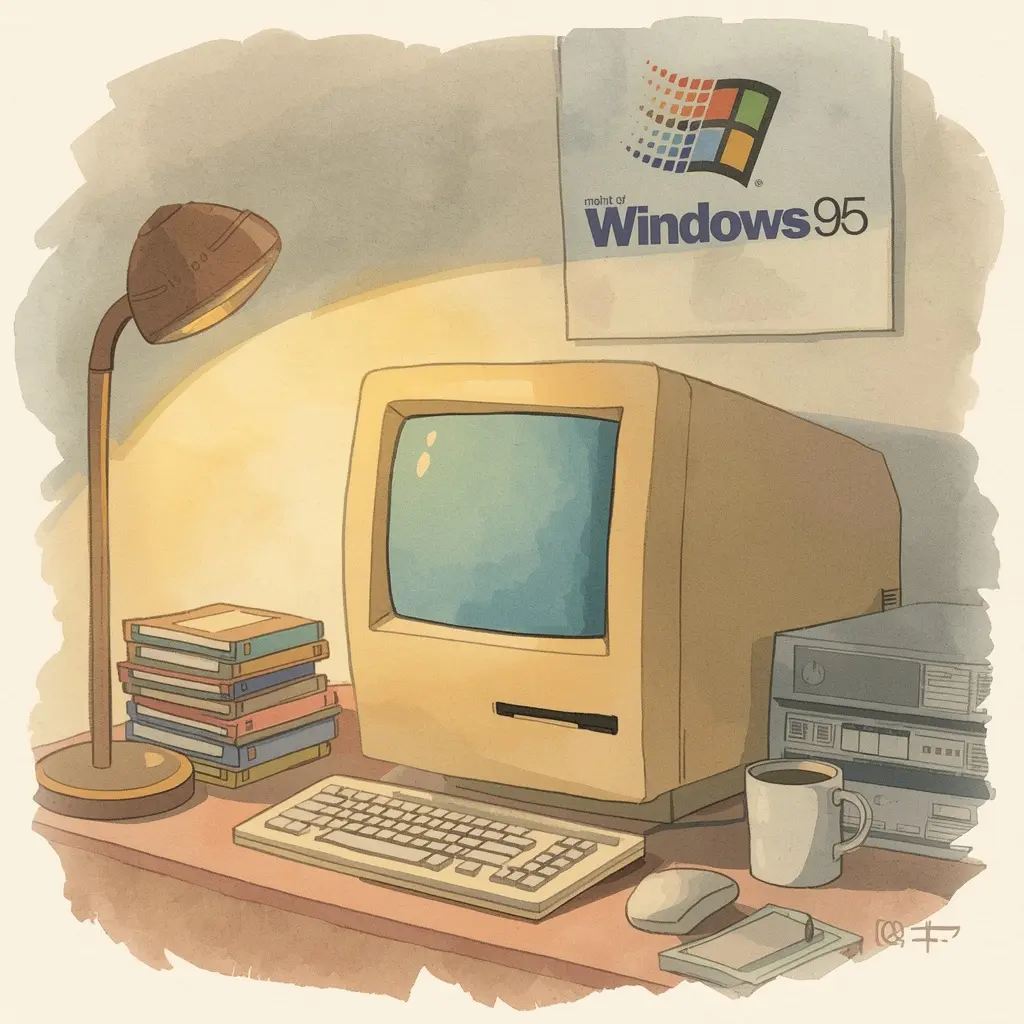
1. The Hardware
Computers were slow, heavy, and expensive. A typical machine had 8–16 MB of RAM, a 100 MHz processor, and a hard drive measured in megabytes.
Floppy disks were the USB sticks of the era. If you wanted to install a program, you needed 10–20 floppy disks — and you had to hope none of them were corrupted.
2. The Internet
The internet existed, but it was slow and expensive. You connected via dial-up, which meant you couldn‘t use the phone at the same time.
Downloading a 1 MB file could take 5–10 minutes. And if someone picked up the phone, the connection would drop.
3. No Stack Overflow — Just Books and Luck
If you had a bug, you couldn‘t Google it. You had to:
- Look it up in a physical manual
- Ask a senior developer (if you had one)
- Experiment until it worked
It was slower, but you actually learned how things worked.

4. Programming Languages
C and C++ were the kings. Java was just starting to gain popularity. Visual Basic was used for desktop apps. Pascal and Fortran were still taught in universities.
There was no Python hype. No JavaScript frameworks. Just raw, unapologetic code.
5. The Aesthetic
Everything was gray. The monitors were gray. The cases were beige. The interfaces were mostly text-based or had simple buttons and menus.
CD-ROMs were shiny and came in big plastic cases. Floppy disks were floppy — and you had to be careful not to bend them.
6. The Culture
Programming was a niche profession. Not everyone wanted to be a coder. It was seen as geeky, technical, and slightly magical.
There were no coding bootcamps, no 'learn to code in 3 months' ads. You either studied computer science or taught yourself.
7. The Best Part
There was a sense of discovery. You weren‘t just using tools — you were building them. You were figuring things out as you went.
Every program felt like an achievement. Every bug fixed was a victory.
"If you wanted to share code, you‘d save it on a floppy disk, walk to a friend‘s house, and give it to them. No cloud, no Git, just pure human-to-human transfer."
What About You?
"Would you want to be a programmer in the 90s? Or are you happy with the tools we have now?
Let me know in the comments — I‘d love to hear your thoughts."
"If this article made you smile or think, leave a tip or a like — it keeps me writing honest content."
#1990s, #programming, #nostalgia, #coding, #technology, #studentlife, #historyoftech





