
"When I first started learning to code, I heard the word 'variable' and thought: 'That sounds like something complicated.'
Then I realized it's just a box with a name. A box where you can store something — a number, a word, or a whole bunch of data.
That‘s it. A labeled box."

What Is a Variable?
A variable is just a container. You give it a name, and you put a value inside.
Think of it like a labeled jar. You can put sugar in a jar labeled 'sugar,' and flour in a jar labeled 'flour.'
In programming, it's the same (C):
int age = 25;
Here, age is the variable name, and 25 is the value stored inside.
Why Do We Need Variables?
Because we need to remember things.
When you write a program, you need to store data: a user's name, the result of a calculation, or a list of items.
Without variables, you'd have to remember everything yourself — and computers don't work that way.
Variables Have Types
In most programming languages (like C), you have to tell the computer what type of data you're storing.
- int — for whole numbers (like 5, 100, -3)
- float — for decimal numbers (like 3.14, 2.5)
- char — for single characters (like 'A', 'b')
- string — for words or sentences (like 'Hello')
Think of it like labeling jars with the type of content: 'sugar' or 'flour.'

How to Use a Variable
In C, you first need to declare a variable, then you can assign a value:
int age; // declare
age = 25; // assign a value
Or you can do both at the same time:
int age = 25; // declare and assign
Variables Can Change
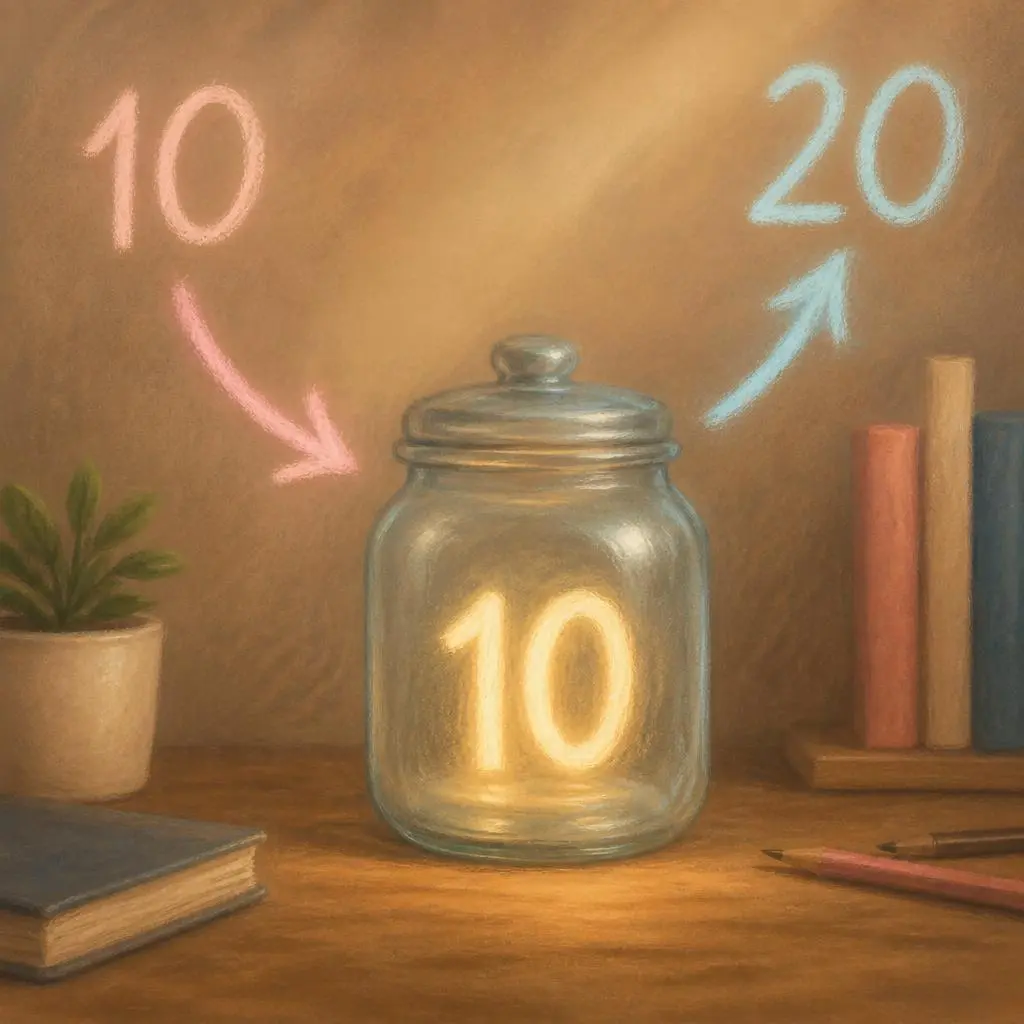
The word 'variable' means it can change. You can put a new value in the same box:
int score = 10;
score = 20; // now it‘s 20
It‘s like moving the sugar jar to a different shelf — the label stays the same, but the content changes.
Naming Variables — The Right Way
You can name variables almost anything, but there are rules:
- Start with a letter (or underscore)
- No spaces
- Use meaningful names
❌ Bad: int a = 10; (What is ‘a’?)
✅ Good: int age = 10; (Oh, it’s age!)
Readable code makes you a better developer.
What I Wish Someone Had Told Me About Variables
When I started, I thought variables were just 'math stuff.'
Then I realized they're everywhere — in games, apps, websites, everything.
Every time you save a user's name, store a score, or remember a setting — you're using variables.
They're simple, but they're the building blocks of everything.
What About You?
"Did variables confuse you at first? Or do you find them easy now?
Let me know in the comments — I'd love to hear your experience."
"If this article helped you, leave a tip or a like — it keeps me writing simple explanations for you."
#variables, #programming, #softwareengineering, #studentlife, #coding, #beginners, #cprogramming





