
I have previously posted about various topics to this platform, including about current events, but I feel that my best-received posts are ones that are original and feature my own perspective. Although this analysis of mine was nested within one of my previous posts, I would like to revisit it today because it's something that I feel many articles out there have not addressed. Although this analysis of mine was nested within one of my previous posts, I would like to revisit it today for Flashback Friday #FBF
Assets with no intrinsic value
The Consumer and Investment Management division at Goldman Sachs stated that, "We believe that a security whose appreciation is primarily dependent on whether someone else is willing to pay a higher price for it is not a suitable investment for our clients,". I included this as Reason #5.5 in my post "Deep Dive - 5 reasons why Goldman Sachs doesn't understand Bitcoin" because it's one of the most frequently heard criticisms against the crypto industry. I'm a bit tired of this, so I'll respond with two rebuttals.
Firstly, the expectation that someone will pay a higher price than the previous purchase price is a common reason why many individuals buy antiques, art, or even sports memorabilia. These are all asset classes that the insurance industry caters to, and they all also have industry-accepted methods of value appraisal.
For instance, some people would laugh that an image of an athlete on a piece of cardboard would be highly sought after. But it's well known that many collectors are willing to pay a lot of money for some of these items.
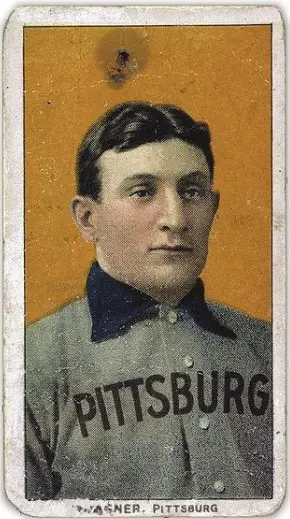
Source: Wikipedia - Published by the American Tobacco Company. Photograph by the National Baseball Hall of Fame and Museum. - Cropped from http://events.mnhs.org/Media/Images/Events/2281/1800_Honusbbcard_300.jpg
A 1909 Honus Wagner rookie card in good condition can fetch $300,000 in the open market. In particular, one that is in near-mint condition, known as the "Gretzky Wagner", has been chronicled frequently because it has soared in value over the past 30 years:
- Purchased in 1991 for $451,000
- Purchased in 1995 for $500,000
- Purchased in 1996 for $640,000
- Purchased in 2000 for $1.265 million
- Purchased in 2007 for $2.350 million
- Purchased in 2008 for $2.800 million
In fact, it is valued to be worth more than $3 million today. Not bad for an investment that depends on waiting for someone else to pay a higher price to acquire it!
Secondly, I'll refer to a quote from Robert Herjavec, of Shark Tank fame.
There's a great movie called The Tulip Wars, and these guys are selling tulip bulbs, and the kid says "Why is it worth, this....", and the guy says to him, "Well because someone is willing to pay for it,".
So why is cryptocurrency worth what it is, is it's because someone's willing to pay for it, - Robert Herjavec on BNN Bloomberg in 2017 (2:13 mark of clip)
The bottom line is that there will be markets where something that is scarce and in demand will rise in value because someone is willing to pay for it. Another way to look at it is one person's garbage is another person's treasure!
Thanks for reading, and stay safe!
Cover art: Wikipedia - Published by the American Tobacco Company. Photograph by the National Baseball Hall of Fame and Museum. - Cropped from http://events.mnhs.org/Media/Images/Events/2281/1800_Honusbbcard_300.jpg







