
Hello fellow Street Warriors! I hope your engines are purring smoothly and you're navigating the traffic with honor today.
This afternoon, I spent some time off the asphalt to help a close colleague onboard their local restaurant into the Grab platform. As I watched the onboarding process at the roadside booth, I saw a mountain of data changing hands. To get the restaurant live, we had to submit a long list of credentials: the restaurant's name, menu photos, pricing, precise geo-location coordinates, the owner’s physical KTP (National ID), NPWP (Tax ID), and verified bank account numbers.
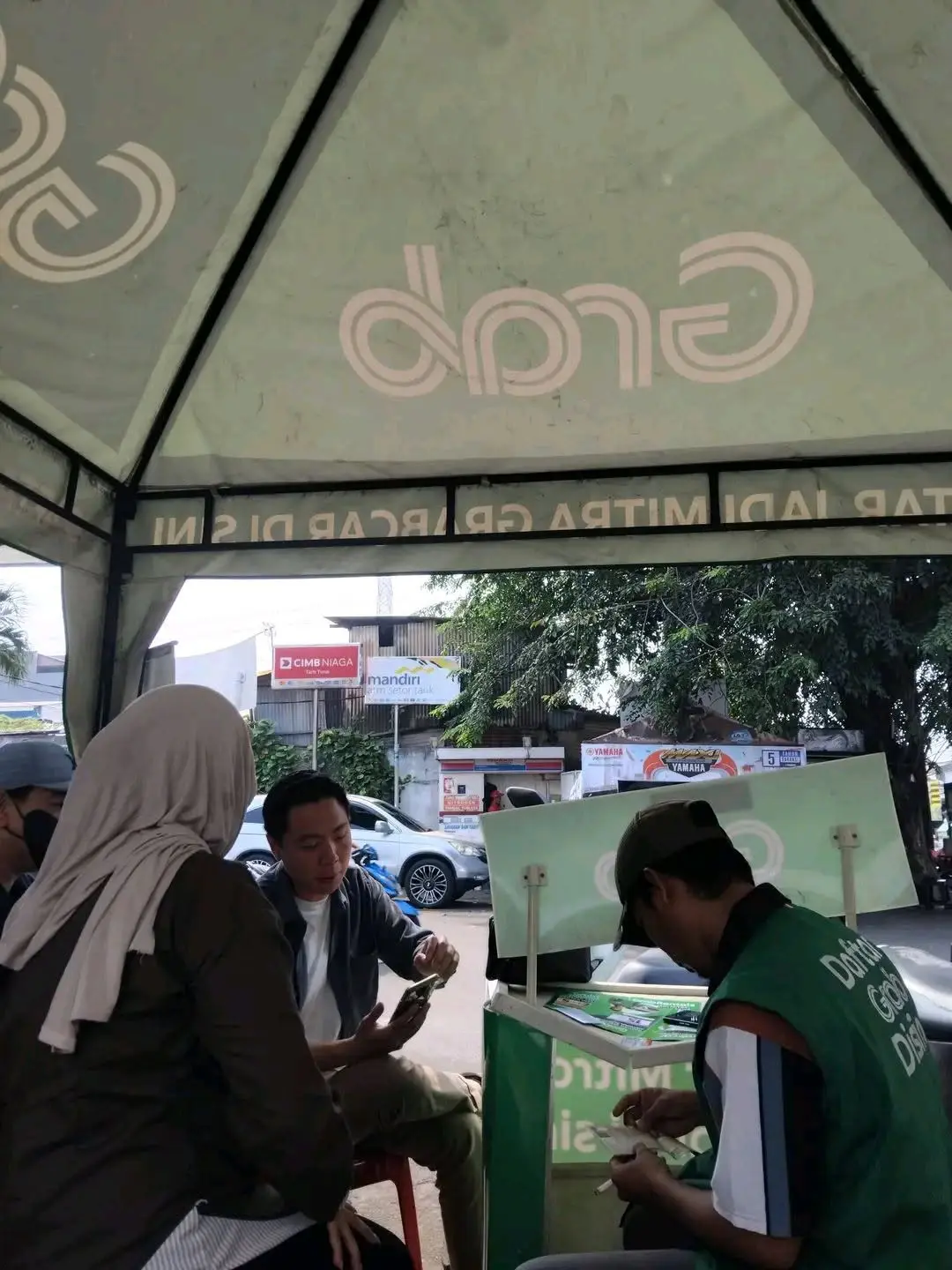
Caption: "Helping a colleague onboard their restaurant at a Grab booth. A real-world example of handing over sensitive business and personal data to centralized databases."
Every piece of data serves a critical purpose in Web2. The clear menu and prices help customers choose food according to their budget. The exact address allows the algorithm to calculate delivery fees based on distance and helps us, the drivers, find the pickup spot accurately. The KTP and bank accounts ensure smooth financial withdrawals without getting blocked by traditional banking administration.
But as a Web3 student, looking at this process through my BitDegree lenses made me think deeply about Decentralized Identity (DID) and Self-Sovereign Identity (SSI). We willingly hand over our most sensitive data to giant corporate servers just to participate in the digital economy. What happens if those centralized servers get hacked? Our private data ends up leaked on the dark web.
Let's break down how Web3 allows us to participate in digital commerce while keeping absolute ownership of our identities!
1. Understanding Decentralized Identity (DID)
In our current Web2 setup, your digital identity is like a centralized taxi pool. Google, banks, or ride-hailing corporate tech giants manage and store your credentials on their private corporate servers.
Decentralized Identity (DID) flips the script. Instead of relying on a central authority to hold your records, your identity data is encrypted and distributed across a decentralized blockchain network.
Instead of traditional usernames and passwords that can be stolen, a DID uses a cryptographic key that only you control. You are the sole door-keeper of your digital presence.
Core Features of a Decentralized Identity:
· Unique Identifiers: Created, owned, and managed entirely by the individual, not issued or rented out by tech corporations.
· Interoperability: Your verified DID credentials can work seamlessly across different applications, delivery platforms, and financial protocols.
· Cryptographic Verification: You can instantly prove you are a verified business owner or driver without exposing the raw data behind it.
2. Exploring Self-Sovereign Identity (SSI)
While DID provides the technology, Self-Sovereign Identity (SSI) is the philosophy built on top of it. SSI dictates that you, and only you, have absolute sovereignty over how your personal information is used, shared, and stored.
Think of it like showing your physical wallet to a security guard at a building gate. You choose which card to pull out, you decide how long they can look at it, and you put it right back in your pocket. The guard doesn't get to photocopy your entire wallet.
The Three Golden Principles of SSI:
1. Absolute Control: You can update, manage, or completely revoke a platform's access to your data instantly without needing a middleman's permission.
2. Total Transparency: Every data request is recorded on an immutable ledger, so you can audit exactly who viewed your data.
3. Data Minimization: Sharing only the bare minimum required to complete a transaction.
Roadside Case Study: The Web3 Restaurant Onboarding
Let’s re-imagine my afternoon experience helping my colleague, but using the future infrastructure of DID and SSI:
· The Web2 Way (Today): The restaurant owner hands over raw photocopies of their KTP, bank accounts, and tax documents. This data sits indefinitely on corporate databases, vulnerable to internal rogue employees or external hackers.
· The Web3 Way (The SSI Future): The restaurant owner holds a cryptographically signed "Verified Merchant Credential" inside their Web3 digital wallet, issued once by a decentralized government protocol. When onboarding to a delivery app, they simply scan a QR code.
Thanks to cryptography, the delivery app instantly verifies: "Yes, this bank account is real, this person is a citizen, and the restaurant location is valid."
The platform never copies or stores the raw KTP number on its servers. They verify the fact without harvesting the sensitive data.
Structural Summary: Traditional Web2 Onboarding vs. The Web3 SSI Future
Onboarding Feature
Traditional Centralized System (Web2)
The Web3 Vision (DID & SSI)
Data Ownership
Corporate tech giants store and own your database trail.
You hold your own data cryptographically in a secure Web3 wallet.
Security Risk
Single point of failure; database leaks harm merchants and drivers.
Decoupled data; hackers cannot breach a single central hub to steal IDs.
Data Sharing
Excessive exposure (platforms see your full raw ID numbers).
Data Minimization: Only sharing verified mathematical proofs.
Financial Access
Bound by rigid bank administration and corporate approvals.
Instant verification via smart contracts, leading to faster settlements.
The Roadblocks on the Asphalt
Moving our digital identity to the blockchain is a massive upgrade, but we must conquer a few potholes first:
· Legal Recognition: Local regulatory bodies and governments must officially recognize blockchain-based DIDs as legally binding identifications.
· Mass Adoption & Literacy: Training local merchants, market vendors, and older drivers to securely manage public/private keys requires dedicated, grassroots education.
Conclusion: Putting Power Back into the Grassroots
Decentralized identity isn't just an abstract tech concept. It is a vital tool to empower the underdogs—the local restaurant owners, the independent artisans, and the street fighters driving under the hot sun. Technology should serve as our shield, protecting our hard work and privacy while we build our businesses.
As I look at the busy streets of Kendal today, I am proud to be a public learner on this highway. We aren't just driving toward our next delivery; we are building our path toward true digital sovereignty.
Keep your helmets tight, drive safely on the asphalt, and let’s keep adding height to our block! 🏍️💨
📌 Author’s Note: My Web3 Journal Part 2 was officially cited on MEXC News, and this grassroots series is curated and published by Block Magnates on Medium. If these roadside analogies helped your crypto literacy, please consider leaving a thumbs up!





