
Publication in Russian on the Zen blog
https://dzen.ru/a/ZhbEYcwNrx0KeiO1
1. England is a very secular country, which makes it similar to the countries of Northern Europe: the Scandinavians and the Netherlands.
The absence of religious pressure is felt everywhere here: in upbringing, education, science, culture, literature, politics, gender socialization.
This cold attitude towards religious dogma and tradition is associated with the isolation of the Anglican Church from the Pope.
You can call it “Brexit 1”.
The most religious people left England and immigrated to the USA (Puritans).
A calm attitude towards Christianity, a strong vibe of Anglo-Saxons, Vikings and paganism - all this gave a huge impetus to the development of science, art and all kinds of forms of creativity and freedom, as well as huge opportunities for the development of biology and a naturalistic approach to the study of human nature.
It's hard to explain, but there are similarities between Mary Shelley's Frankenstein, British Gothic literature, and Dawkins's The God Delusion. Namely, dissatisfaction with the theological explanation of what a person is and his place in the world.
From point one follows point two =>
2. The United Kingdom is a haven of subcultures and creative expression.
Since the pressure of religion (with the exception of Ireland) was not so great here, it was Great Britain that became the birthplace of all kinds of subcultures (punks, goths, steampunk, dark academy and many others).
The founders of fashion trends drew inspiration from Gothic literature, philosophy, mythology, and paganism.
Subculture in England is not just a beautiful wrapper, manifested in appearance and behavior, behind this there is always a huge semantic and cultural layer.
3. If there is an “American dream”, then the “British dream” is a person’s desire to express himself as clearly as possible in creativity and self-expression.
In England, it is considered “respected” to devote oneself to art, science, literature, fashion, read a lot of books, understand music, and be able to joke.
The apogee of cool is to somehow express yourself in music, play musical instruments, write poetry, be original, and devote your life to science and research.
4. Homosexuality and academic aesthetics.
Historically, girls and boys in England studied separately in closed private schools and universities; surprisingly, this still exists even now. Hence, in England, the topic of relationships with members of the same sex is romanticized (Oscar Wilde and Alfred Douglas, Virginia Woolf and Vita Sackville West and many others).
5. It seems that Russia and England contradict and deny each other in everything.
Aristocratism and Old Money VS communism and socialism, religiosity VS secularism, self-expression VS tradition and religion, etc.
This is neither good nor bad, the two countries are simply so different in values, history, culture and ideology... that it is difficult to discern any similarities.





Ekaterina Sveshnikova
https://vk.com/english.rose
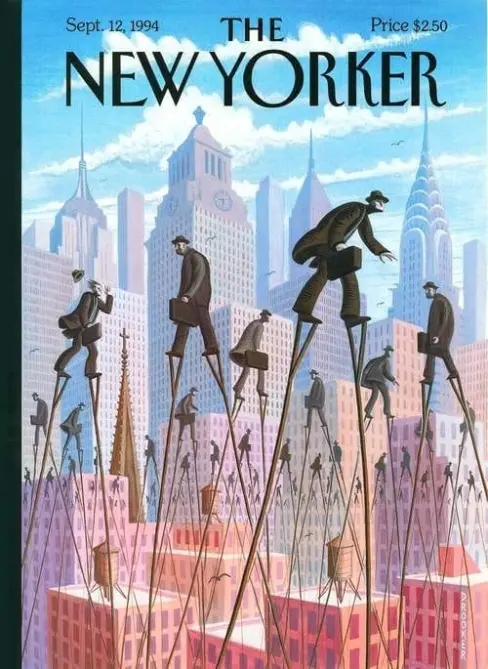
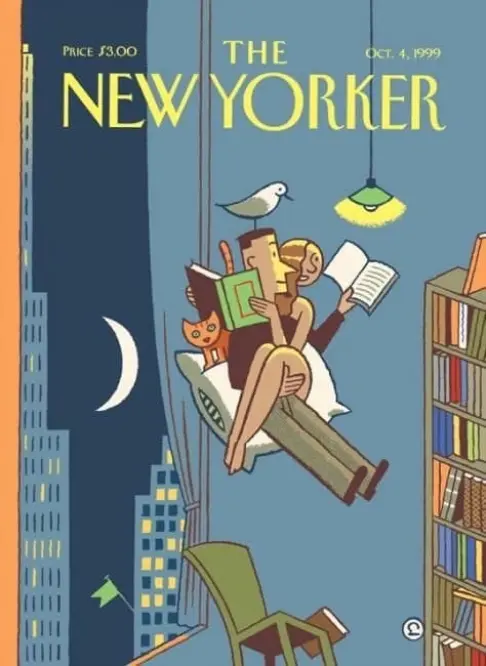
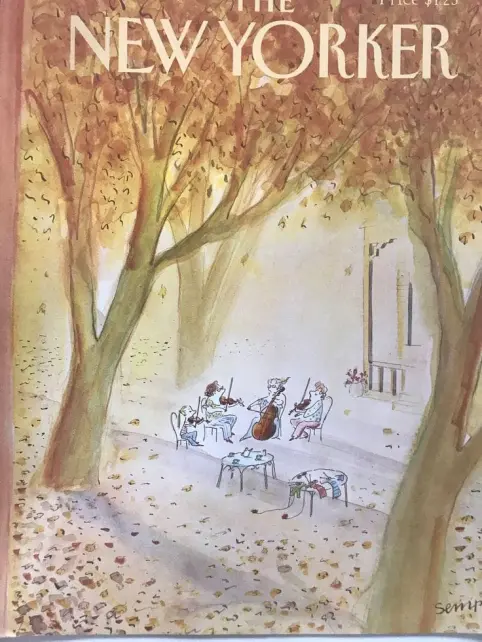
P.S. The covers of The New Yorker are the pinnacle of illustration, on which the best graphic designers in the world work.
And those Futura, Vogue, Caslon fonts used in the magazine's title on the cover... They were designed by Ray Irwin on the letters he drew.
In this style, one can feel such a strong influence of Art Deco, as if not the letters, but the lines of the railings from the hallway or architectural details.




Author's video content.
In collaboration with CMCproduction & SmartREC video studios
https://www.youtube.com/c/ViolettaWennman
https://ok.ru/shipshard1
https://vk.com/shipshardvk
https://www.pinterest.ca/omegagirs/
https://dzen.ru/shipshard
Publication in Russian on the Zen blog
https://dzen.ru/a/ZhbEYcwNrx0KeiO1






