
Mexico is hardcore. It's like a pretty girl with a switchblade knife. A beautiful scar. A soccer ball in headlights, bouncing through the street.
An inferno of confetti.
A homecooked meal on the sidewalk.
A cigarette of lemon dust.
A love song padlocked
To a fence.
We got out of the van and Alfonso gave me a knife. A folding pocket knife with a 2-inch blade. He told me to put it in my pocket. "In Mexico City the police would freak out if they saw it, but here, everybody carries a knife," he said. "If the delincuentes see it, they may not bother you." He said it with the natural, unconcerned air of a man deciding which restaurant to frequent for the night. Shall we have tacos, or rice and pizza? Have you ever had a jumper cable sandwich? The drunken cook is dreaming of a knife fight. I know a place with good Chiles Rellenos, unless you're in the mood for cow brain tacos? I'm not really into cow brains, I said, but I'll try them if you say they're good.
I put the weapon in my pocket. We turned the corner, to see what we could find.
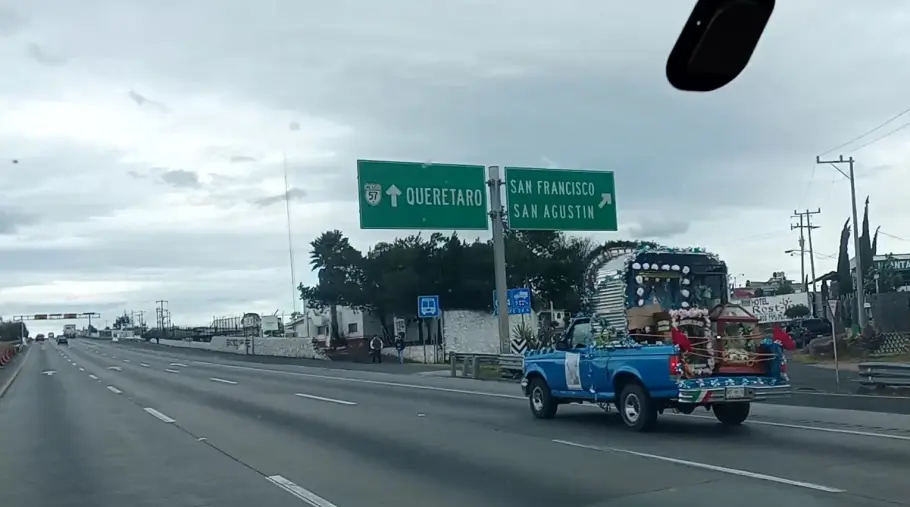
The drive up from the city was blissfully uneventful. Traffic was unseasonably light (every day is traffic season in Mexico City), and other than the procession of highway penitents trudging under assorted ornaments of pain behind a pickup truck on which was strapped several flower-framed Catholic dollhouses, and the Mexican army napping in the back of armored pickup trucks on the way to fight the cartels, there wasn't much to see. The beautiful, lawless high-desert landscape notwithstanding. I drove under the Querétaro aqueduct and made my way to my accomodations.
Alfonso led me through the streets. The Tianguis was tearing down, but we found a lady and her daughter standing behind some portable cooking equipment. Alfonso ordered something for us, and we sat at the small table under a tarp that was only attached to the ground by a strand of chewing gum, a sugary guy line which extended from the sidewalk to the heavens. The meal was surprisingly good. Beans, rice, and refrescos, rellenos of the street. The tarp flapped above us like the surface of a great, invisible ocean. We finished the meal and walked away. The tarp bid us goodbye.
To add a dimension of unwanted moral complexity to the digestive process, we wandered into the Wax Museum of Doctrinal Terrors. Dead Christs and other morbid mannequins were perched like doctrinal vultures behind the glass. Some of the mannequins held babies, others were lying in state, waiting to be buried. Or burned alive, perhaps. Alfonso told me it was impolite to turn your back on the death cookie, if you happened to be leaving during mass. Some of the parishioners gave us a disdainful eye, when they saw that we weren't there for the moribund oblations. Fortunately, there were no tainted cookies on display. We turned our backs on the proceedings, and walked into the street.

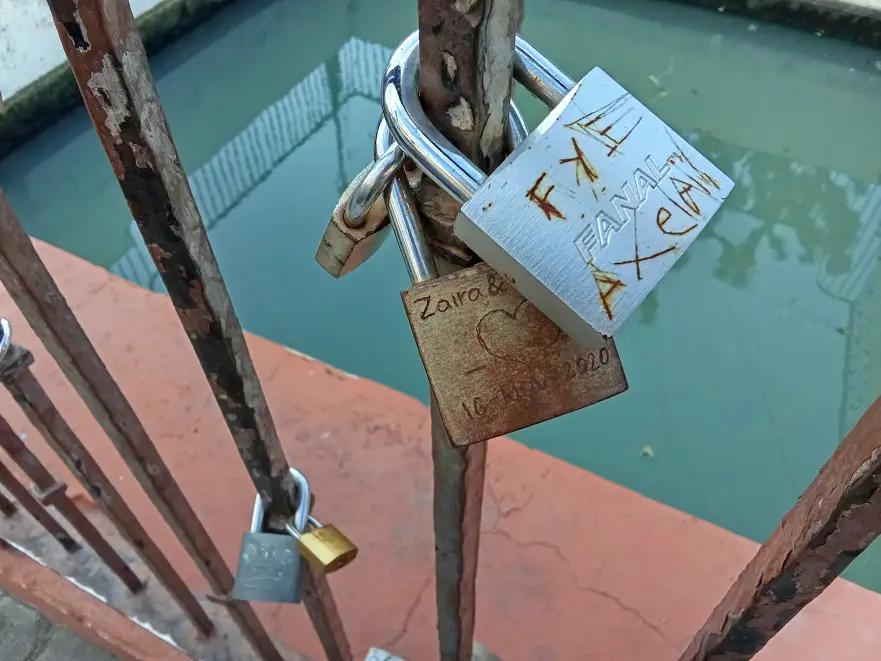
We passed Fuente El Caracol (snail fountain), which was full of green, stagnant water. Mysterious pieces of inedible refuse floated on the surface of the fountain, which was fortunately not working. It resembled a large, clogged, open-air toilet, and was surrounded by a fence on which were fastened many padlocks. Lovers had inscribed their names on the padlocks in a romantic gesture of commitment. I'm sure it was beautiful, if and when the fountain was ever working. It was beautiful anyway.
It was getting dark, so we went back to the van and drove to Alfonso's house, which he shares with his uncle and grandmother, who will have her 100th birthday next month. We talked with them awhile, and walked into the undeveloped neighborhood with his dog. His house wasn't new, and a handful of other properties hiding behind industrial garage doors and 10-foot walls had obviously been there awhile, but there was no one else around. The streets were laid out, and the electrical grid had been set up, but there were no houses. It was like walking through the streets of a ghost town that hadn't been built yet. We sat on an empty curb and smoked a couple rollies under the undeveloped stars.
"It looks like they're going to ruin this area with more houses," I said. Alfonso said that the streets had been sitting there for 5 years, with no end in sight. He said he liked to go out at night and watch eagles and falcons catch the numerous rabbits that lived in the area. He said there was a turf war between the rabbits and the birds, and sometimes the rabbits would ambush a falcon, but that usually the falcon would get away. A tired, sad rabbit walked by at that moment, pushing a cart of elotes. "Elotes?" he asked us, with the air of a man who had endured much sorrow and trauma. We weren't in the mood for elotes, and so the rabbit continued on his way.
We went back to Alfonso's house, where his grandma had since retired for the evening. He gave me a Vihuela, some kind of unfamiliar mariachi instrument, as a gesture of friendship and solidarity. I told him it was too much, but he insisted. I told him I would borrow it. We got in the van and started the drive back to my house. The dogs were dark in the streets around us. Buses with citrus-colored headlights bounced through the dusty streets, orange and yellow, pink and lime, roses in the fray. Then the light collapsed completely, and the city was behind us.
We pulled into my driveway, bid a heartfelt farewell, and went our separate ways.
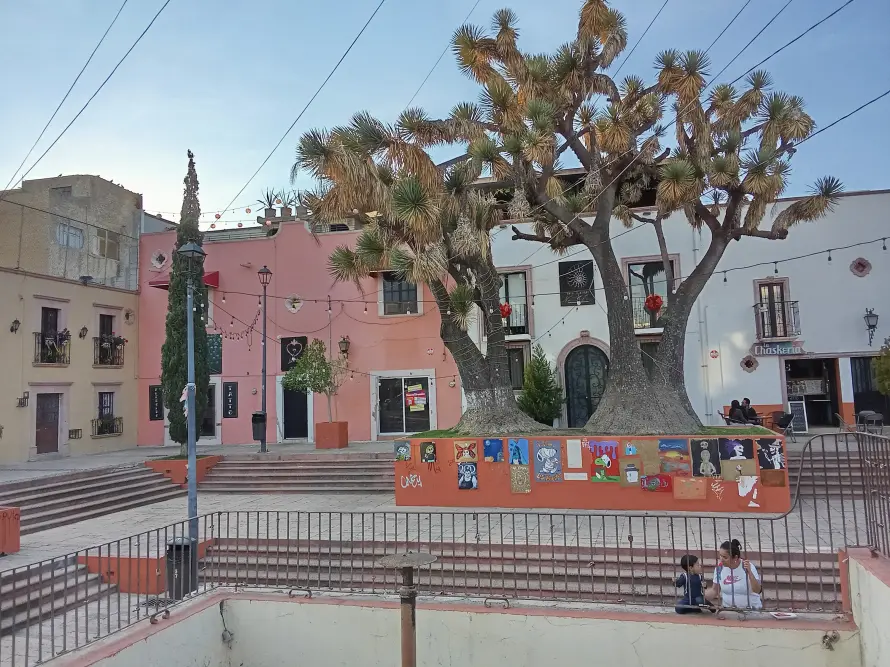
Plaza El Caracol, San José Iturbide





