
The pilot project is expected to begin only in the second half of 2027 and will last for 12 months.
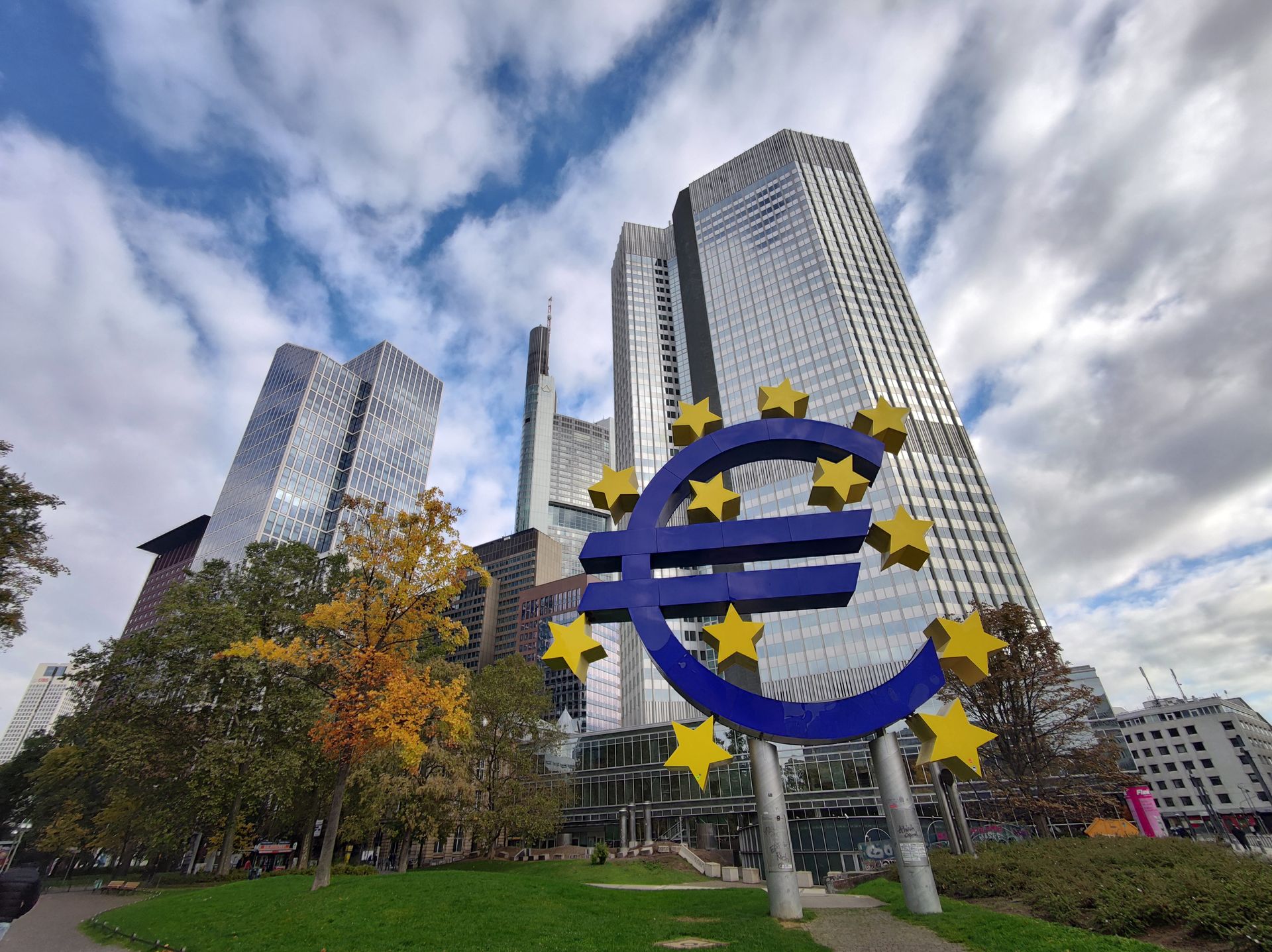 Implementation of the Digital Euro is progressing on several fronts. Image: Mat/Pexels.
The European Central Bank (ECB) is moving forward with the digitization of its currency. In a statement released this week, the monetary authority revealed the addition of 36 payment service providers to participate in the digital euro pilot project.
Among those selected are Deutsche Bank, Stripe, Revolut, UniCredit, and Adyen, demonstrating the interest of large private sector companies in the solution.
Regarding the end of paper money, Christine Lagarde, president of the ECB, recently commented that the digital euro will be a complement and will not replace cash .
Portugal is represented by three institutions, but the list is led by Italy and Germany.
The digital euro is advancing on several fronts. For example, the European Parliament approved a proposal at the end of June for the creation of a CBDC (Central Bank Digital Currency).
On Tuesday (14), the European Central Bank released a list with 36 participants approved to take part in the pilot project for its currency.
The list is led by seven institutions from Italy and five from Germany. Following them are three Portuguese banks and three from Greece.
Payment service provider Country Deutsche Bank Germany DZ Bank Germany Helaba Germany PAYONE Germany RS2 Germany BAWAG Austria Raiffeisen Bank Austria Bank of Cyprus Cyprus JCC Payment Systems Cyprus Corvus Pay Croatia Raiffeisenbank Croatia Tatra banka Slovakia NLB Slovenia CECABANK Spain Uinku Payments Spain OP Finland BPCE France Cooperative Bank of Chania Greece National Bank of Greece Greece Piraeus Bank Greece Stripe Ireland SumUp Ireland Monte dei Paschi di Siena Italy Sella Bank Italy Isybank Italy Nexi Italy Numia Italy Italian Post Italy UniCredit Italy Revolut Lithuania Satispay Luxembourg Worldline Luxembourg Adyen Netherlands Millennium bcp Portugal Caixa Geral de Depósitos Portugal Unicre Portugal
TABLE
According to the ECB, the proposal aims to test the technical functionality and operational processes of the digital euro, as well as improve the user experience.
“The objective is to support the ongoing preparatory work for a possible issuance of a digital euro. The launch is planned for the second half of 2027 and will last 12 months.”
ECB points out that pilot project shows strong interest from the private sector.
In total, more than 50 companies applied to participate in the digital euro trials. In addition, 19 central banks from the economic bloc will also participate in the endeavor.
According to Piero Cipollone, a member of the ECB's Executive Board, the strong market interest shows that the private sector is ready to actively engage and strengthen the European payments environment.
“We look forward to deepening this engagement as we work and learn alongside European payment service providers in developing a secure, efficient and inclusive digital euro.”
While some of the selected entities will offer services to end users, others will be responsible for serving the retail sector. Furthermore, employees of the ECB and participating national central banks will also have the opportunity to make payments with the digital euro.
According to the monetary authority, payments can be made both online and offline, whether between individuals and businesses or at physical points of sale. By the end of 2025, the ECB revealed that it would be allocating between €220.7 million and €662.1 million to create this offline solution.
ECB announces winners of Digital Euro tenders and discloses contract values.
The European Central Bank's main expense will be the offline solution for the Digital Euro, highlighting the complexity of its goals.
 Euro Digital is the ECB's response to the rapid expansion of US dollar stablecoins.
The European Central Bank (ECB) released on Thursday (2) a list of selected suppliers to work on five components of the Digital Euro , showing progress in the digitization of its currency.
Combined, the five contracts amount to an estimated €432.1 million (R$ 2.7 billion), but could reach a maximum of €1,164,000,000 (R$ 7.3 billion).
The announcement comes just days after a meeting between leaders of the European Union's financial and economic institutions , where Christine Lagarde declared that the digital euro is a political statement about Europe's sovereignty.
The European Central Bank reveals spending on the digital euro and development partners.
The bidding process for the development of the Digital Euro began in January 2024. Its winners were announced this Thursday (2) by the European Central Bank.
The first contract, 'alias research' , had an estimated cost of €27.9 million , potentially reaching €55.8 million . The winner of this tender was Sapient GmbH .
In short, this will allow users to make payments in a simple way, that is, by sending money to an account number, email, or phone number, similar to how Pix works in Brazil.
For the 'risk and fraud management' contract , a self-explanatory name, the ECB plans to spend €79.1 million , but the sum could reach €237.3 million . The winner of this tender was Feedzai – Consultadoria e Inovacao Tecnologica .
Next comes the limitation for 'application and software development kit (SDK)' , where the ECB plans to spend €76.8 million , with a ceiling of €153.6 million . The winner of the contract was Almaviva The Italian Innovation Company SpA .
"The main objectives of the Digital Euro App are to establish a uniform and user-friendly interface with a homogeneous appearance ," the ECB detailed.
"The availability of this app ensures access to the basic functionalities of the digital euro, as well as the incorporation of resources that support digital financial inclusion, meeting the needs of people with disabilities and those with low digital skills."
The ECB's biggest expense is for the 'offline solution' . In total, the Bank plans to spend €220.7 million on this tender, but the maximum value could reach €662.1 million , exceeding all other contracts combined.
The winner of this tender was Giesecke+Devrient advance52 GmbH .
"The ability to pay offline, without the participation of third parties in the transaction, is a fundamental characteristic of the digital euro, both for resilience and privacy purposes ," the Bank highlighted.
"The solution should enable instant and final settlement, consecutive offline payments, the ability to pay by proximity in P2P scenarios or at points of sale (POS), and include the possibility of depositing and withdrawing funds online (via smartphone) or at an ATM, also using cash."
The reason for the costs is linked to the complexity of this solution, mainly due to double spending. Back in 2023, Roberto Campos Neto, then president of the Central Bank of Brazil, stated that both Drex (Digital Real) and Pix would work without internet access .
Although he stated that this is "relatively easy," this practice has not yet been implemented.
Finally, the European Central Bank plans to spend €27.6 million on the 'secure exchange of payment information' contract , focused on protecting user privacy and security.
The winner of this contract, which could reach €55.2 million , was Senacor FCS GmbH .
Finally, all five contracts have a duration of 4 years, which could mean that the Digital Euro will arrive before 2030.





