
In recent years, Google has been at the forefront of cutting-edge innovations in artificial intelligence. Two of these breakthroughs — Veo 2 and Whisk — promise to transform how we create videos and images.
In this article, we will explore how these tools work and their potential impact on content creation, highlighting their functionalities and most promising applications.
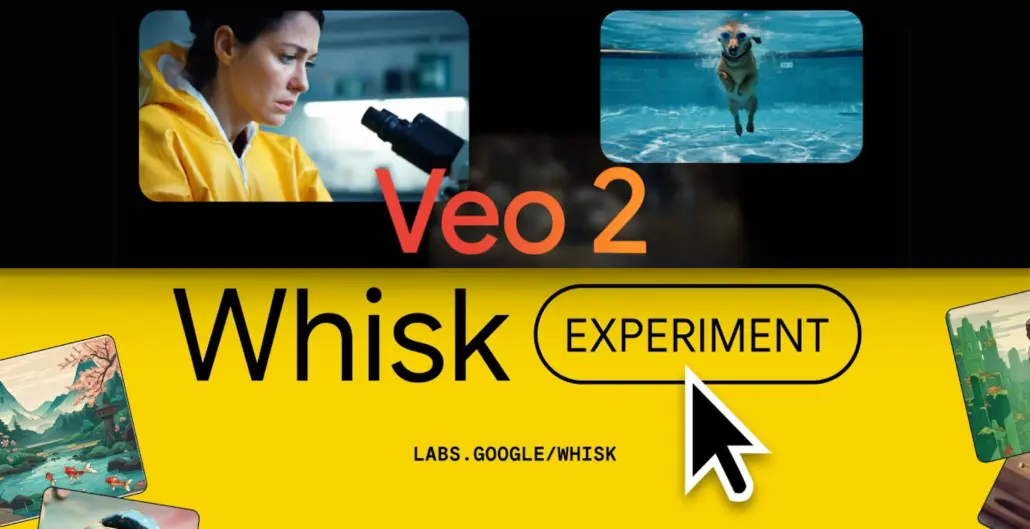
Veo 2: A New Era in Video Creation
Imagine generating high-quality videos simply by describing a scene in words. That’s what Veo 2, developed by Google DeepMind, offers. This tool uses advanced artificial intelligence models to create realistic videos in up to 4K resolution.
Veo 2’s standout feature is its ability to understand human movements and physical interactions, resulting in videos that appear as if captured in real life. For example, a content creator could describe a sports scene with dynamic movements, and Veo 2 would recreate a realistic video perfectly portraying the action. With cinematic features like adjustable camera angles and visual effects, creators have full control over the final output.
This tool is designed to cater to a wide range of users, from content creators to independent filmmakers, simplifying the production process and reducing costs associated with equipment and technical teams.
Availability: Currently, Veo 2 is in the testing phase and can be accessed via Google Labs. This phase also allows users to explore additional functionalities, such as integrations with other Google apps, to maximize Veo 2’s versatility. These initial tests are crucial for gathering user feedback and further refining the experience. Access is being granted via Google Forms for users who meet the specified criteria, available through this form.
Whisk: Intuitive Image Creation
While Veo 2 excels in video creation, Whisk focuses on image manipulation. Unlike other tools that rely on textual descriptions to generate content, Whisk allows users to combine existing photos to create new compositions. For example, a designer might drag an image of a sky and merge it with a photograph of a historic building, resulting in a unique composition where elements from both images are seamlessly integrated.
Based on the Imagen 3 model, Whisk offers a simple workflow: just drag and drop images to produce high-quality results. This approach is especially beneficial for design professionals and content creators looking for speed without compromising originality.
How It Works: Whisk leverages machine learning to understand visual elements and harmoniously combine them. This technology is ideal for creating graphic designs, mockups, and other visual applications.
Availability: Like Veo 2, Whisk is in the experimental phase, accessible through Google Labs for users in the U.S. (Learn more).
Impact on the Content Creation Market
Both Veo 2 and Whisk represent significant advancements in the creative market. By lowering technical and financial barriers, these tools democratize content production, enabling anyone to bring their ideas to life.
For instance, independent filmmakers can create complex scenes without the need for equipment rentals or extensive technical teams. Designers can quickly prototype ideas, accelerating the creative process. These tools also open new possibilities for small businesses and enthusiasts who previously lacked access to such sophisticated resources.
Challenges and Future Considerations
Despite their advantages, these tools also raise ethical questions about the use of artificial intelligence. The ease of creation may lead to concerns about copyright, deepfakes, and the misuse of technologies. To address these issues, Google is implementing authenticity verification systems and content tracking mechanisms, along with educational tools to guide users on responsible practices. These initiatives aim to mitigate risks and promote ethical use of technologies.
Another challenge lies in limited availability, as both tools are still in experimental phases and accessible only in selected markets. It is essential for Google to continue investing in security and accessibility to ensure these tools are used responsibly and inclusively.
Conclusion…
With Veo 2 and Whisk, Google reaffirms its commitment to innovation, offering tools that transform the creative landscape. These technologies not only simplify the work of content creators but also point to a future where human creativity and artificial intelligence collaborate to redefine what’s possible in the creative market. How will these tools evolve, and how will they influence new forms of artistic expression? The potential impact is immense, and only time will tell how they shape the future of digital creation. Whether for video creation or image manipulation, these solutions showcase how artificial intelligence can expand the boundaries of human creativity.
The question remains: how would you use these tools to bring your ideas to life?
-------------------------------------------------------------------------------------
If you enjoyed this content and would like to support my work, any small contribution is very welcome! 😊





