
When Elon Musk launched the Department of Government Efficiency, it came with two clear goals: cut waste and reduce spending. Now that the dust has settled, we can see what actually happened, and it's not quite what was promised.
The workforce numbers tell one story. Federal payroll is down 9%, dropping from over 3 million workers in January to around 2.7 million by November. More than 270,000 people left compared to the start of the year, with the biggest single drop exceeding 150,000 coming in October when former federal workers accepted that deferred resignation offer Musk had put out earlier. It's the largest peacetime workforce reduction on record.
But government spending hasn't stopped. It's actually up, rising from $7.135 trillion to $7.558 trillion by mid December, nearly a 6% increase. DOGE had no noticeable effect on spending, but it did help engineer that record workforce reduction.
The money didn't disappear. It just moved around. While USAID, the State Department, and Education saw significant cuts, those savings were dwarfed by increases in Commerce, Homeland Security, Defense, and Justice. Social Security payments alone are over $100 billion higher this year. Interest on the national debt is another $100 billion increase, with the debt itself growing more than $2 trillion since inauguration day.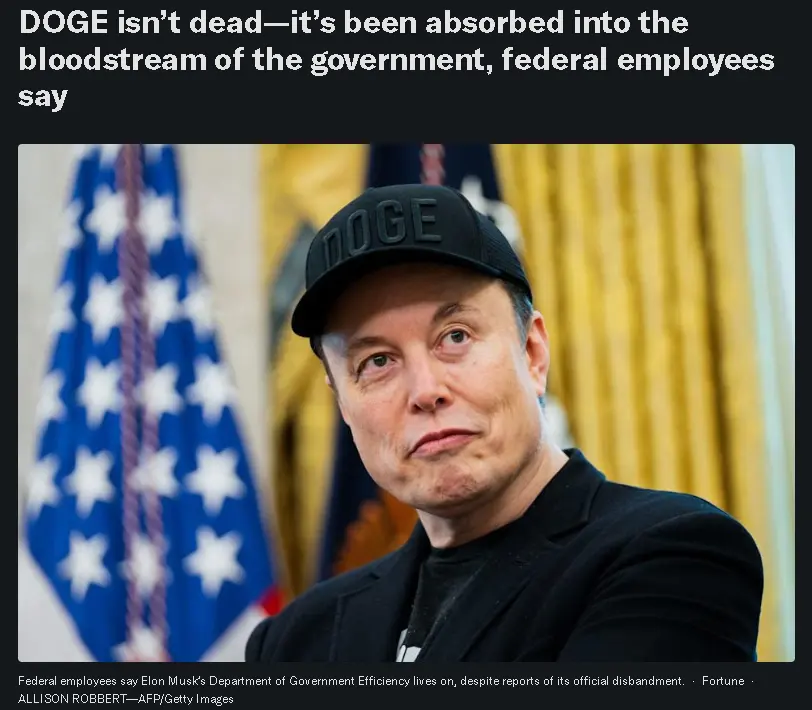
The narrative painted throughout was that people weren't doing their jobs, that the government was bloated. But that was always more story than substance. What it really looks like is an effort to make space for different projects without touching the reserves or the big entitlement programs that voters actually care about.
The timing reveals everything. DOGE burst onto the scene right as the election ended, creating the appearance of immediate action. Everyone knows real budget reform takes years, but you can terminate employees quickly. Even Musk seems to have moved on. He left at the end of May, recently calling the effort a little bit successful and saying he wouldn't repeat it. DOGE isn't even a standalone government entity anymore, though the latest work section of its website hasn't been updated since August.






