
Just started following @el-yosua and the latest post was opened with:
“There is a saying in Havana: "If you can fix a Lada with a piece of wire and a screwdriver, you are officially a mechanic." 😂😂😂
I do remember seeing the occasional Lada on the New Zealand roads and streets when I was a kid. That was before import restrictions were lifted and our roads were flooded with cheap Japanese used cars.
New Zealanders (Kiwi’s) have there own version of the Cuban saying:
”can fix anything with some number 8 wire”
number 8 wire
A 0.16 inch diameter (4.064 mm) gauge of wire on the British Standard Wire Gauge. It has entered into the cultural vocabulary of New Zealand and become part of a Kiwi’s identity. A symbol of a Kiwi’s in inventiveness, ingenuity and resourcefulness, living at the bottom of the world.
1860’s saw the introduction of new steel fencing wire of various gauges that allowed the quick construction of low-cost fencing and was quickly adopted for use on New Zealand sheep and diary farms.
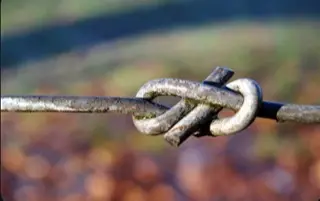
Remote farms often had rolls of number 8 wire in the shed and the wire would often be used inventively and practically to solve mechanical or structural problems other than fencing. No. 8 fencing came to be used to fix or make all sorts of machinery and tools.
the Taranaki gate
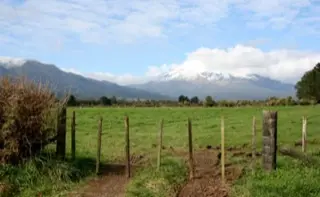
A Taranaki gate with Mount Taranaki in the background. The iconic gate is a makeshift wire and batten gate. One end is attached to a post. The open end has two number 8 wire loops on it’s post. The bottom of the end batten is placed in the bottom loop. This is used to lever the batten, pulling the gate taut. The top loop is lowered to secure the batten.
While widely used in the dairying region of Taranaki, the gate is also found through out rural New Zealand.
the split Totara battens
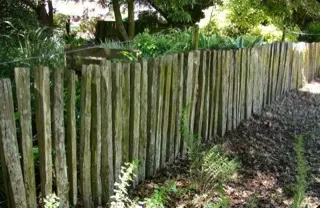
This rustic garden fence is made from 100+ year old split Totara battens.
Totara wood was highly valued for its strength and longevity, which was essential for early New Zealand farm fencing. It was not until the 1940’s, with the advent of timber treatment, that exotic species like Pinus Radiata began to replace the use of the split Totara battens, posts and strainers.
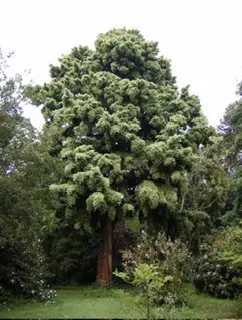
The native Totara tree had very straight grain which allowed the various lengths of timber to be split. We once were given some totara blocks (ex posts or strainers) in a delivered load of firewood. I was able to split into kindling the thickness of match sticks with the axe. We were able create a fire with out the use of paper as a fire starter. Just had to light the kindling directly.
DISCLAIMER: This post ended up in an unexpected place. I can promise no AI was harmed in the researching, editing and publishing of this. Just the rambling thoughts.

Support Your Local Bloggers Grandson Stacking Sats

Solpick.io offers their faucet, surveys and gaming. You can level up by earning from surveys or wagering. Been using for over a year and had no problem withdrawing to exchanges or the Ledger Nano. Allows 5 free withdrawals per day, minimum of 0.00250000 SOL per withdrawal.
https://solpick.io/?ref=VEH2024
The other Solana faucet we use daily is
https://solfaucet.togatech.org/
This the “first-ever Solana mainnet faucet”. 0.00001 SOL paid each day to your wallet, no strings attached. Only pays to wallets that have the minimum rent-exempt balance of 0.00089088 SOL (does that count as an attached string?)






