If you have walked into a gas station or corner store lately, you have probably seen one of those glowing Bitcoin ATMs sitting next to the lottery machine. For years, state lawmakers tried to tame them with daily limits, licensing rules, and pop-up scam warnings.newstribune+1
In 2026, patience ran out.
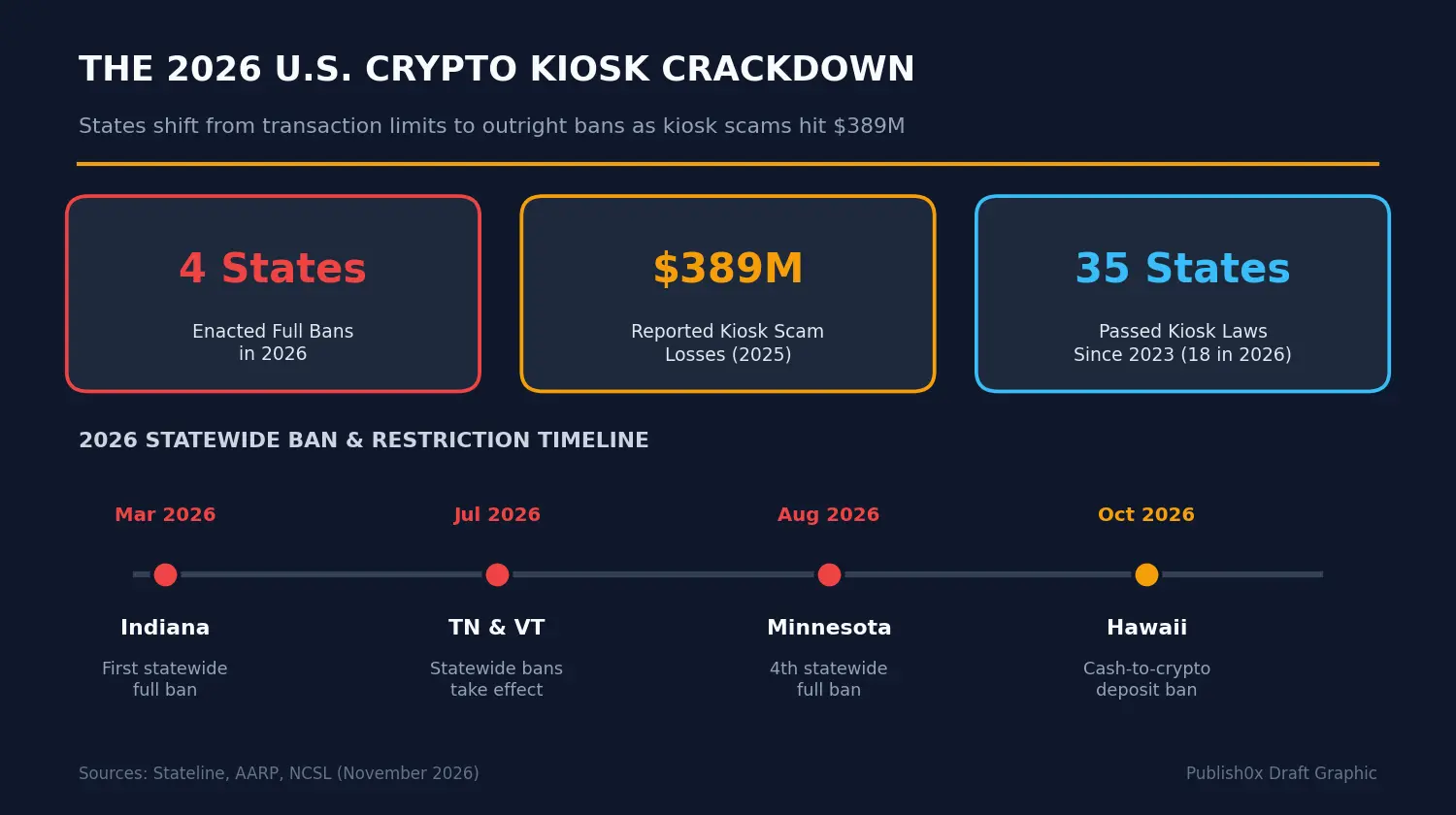
Four U.S. states—Indiana, Tennessee, Vermont, and Minnesota—have now enacted outright statewide bans on cryptocurrency kiosks. Hawaii followed in October with a law banning cash deposits into kiosks to buy crypto, and Michigan could be next.rmb.reuters+2
So what changed, and what does this mean for everyday crypto users? Let's break it down.
Why States Stopped Regulating and Started Banning
The short answer is scams. According to recent reports, financial fraud involving crypto kiosks cost Americans nearly $389 million last year alone. Scammers—often targeting older adults—pose as government officials or tech support and pressure victims into feeding thousands of dollars in cash into a nearby Bitcoin ATM.rmb.reuters+1
Once the cash is converted and sent to a scammer's wallet, it is gone for good. Because earlier guardrails like transaction caps and on-screen warnings failed to stop the bleeding, lawmakers shifted from regulation to prohibition.newstribune+1
Here is how fast the 2026 crackdown moved:
March 2026: Indiana became the first state to enact a full statewide ban on virtual currency kiosks.journalnow+1
July 2026: Tennessee and Vermont followed with their own statewide bans.
August 2026: Minnesota became the fourth state to ban the machines outright.
October 2026: Hawaii's ban on cash-to-crypto kiosk deposits took effect.newstribune+1
Up next: A Michigan ban proposed by Sen. Jeff Irwin unanimously passed the Senate Finance, Insurance and Consumer Protection Committee in October and now awaits a full Senate vote.
According to AARP, at least 35 states have passed laws addressing crypto kiosks since 2023, including 18 in 2026 alone.newstribune+1
The Bigger Picture for Crypto Users
If you buy your crypto on a regulated exchange or use DeFi, you might be wondering why you should care about gas-station ATMs. Most seasoned crypto users avoid kiosks anyway because of their steep fees.
Still, this trend matters for two reasons.
First, it shows that state-level regulators are moving much faster than Congress. While broad federal market-structure bills have stalled in Washington, state legislatures are actively reshaping how Americans can on-ramp into digital assets.stateline+1
Second, it highlights the ongoing tension between privacy and consumer protection. Cash-to-crypto kiosks were one of the last physical, accessible on-ramps for unbanked users. Banning them outright removes a major fraud vector, but it also pushes more retail activity exclusively onto bank-linked, KYC-heavy exchanges.
Final Thoughts
Nobody wants to see retirees lose their savings to phone scammers at a convenience store. At the same time, outright bans set a precedent that the crypto industry cannot ignore: when self-policing fails, lawmakers will pull the plug.
What do you think—are statewide Bitcoin ATM bans a necessary win for consumer safety, or an overreach that punishes legitimate users? Drop your thoughts in the comments below!