
Similar to tempeh and tofu, both XRP and BCH are derived from the same initial component, namely the concept of cryptocurrency; however, from this initial state they are processed differently and are thus meant to serve entirely different functions.
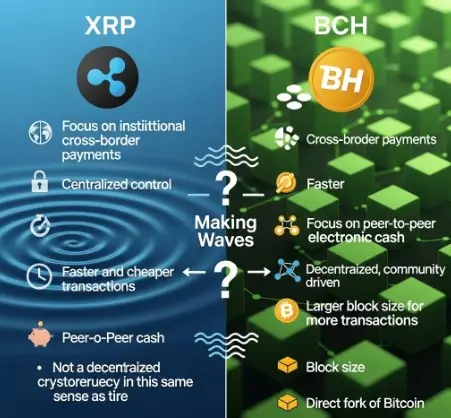
Whereas XRP is like tempeh, going through a dedicated process that makes it ready to use fast, efficient, and preferred by those trained in the art-it is all used in this case by banks and international remittance services-payouts can be accomplished "in just seconds and at very low cost," according to their fact sheet. Because XRP uses a unique validator consensus system instead of mining, it is fast and cost-effective, making it accessible to financial institutions.
BCH operates with the flexibility afforded through its adaptation to varying circumstances like tofu, the quirky cousin of tempeh in the food world. It's a Proof of Work mechanism like Bitcoin but with bigger block sizes that allow it to clear transactions faster and at lower rates. BCH commands a decent amount of acceptance at merchants for direct payments and overall small-scale retail transactions within the community.
The two are truly in the limelight at present as they indeed shine bright in different areas: XRP in cross-border payments while BCH stands for daily chore. The difference here is that while tempeh and tofu are cast from the same mold yet fare differently in taste, texture, and function, XRP and BCH come from the same crumbling crypto mold and behave differently in the market.






